





























Pairing ideas with Teucrium
6 ideas to invite her to the garden
Contents
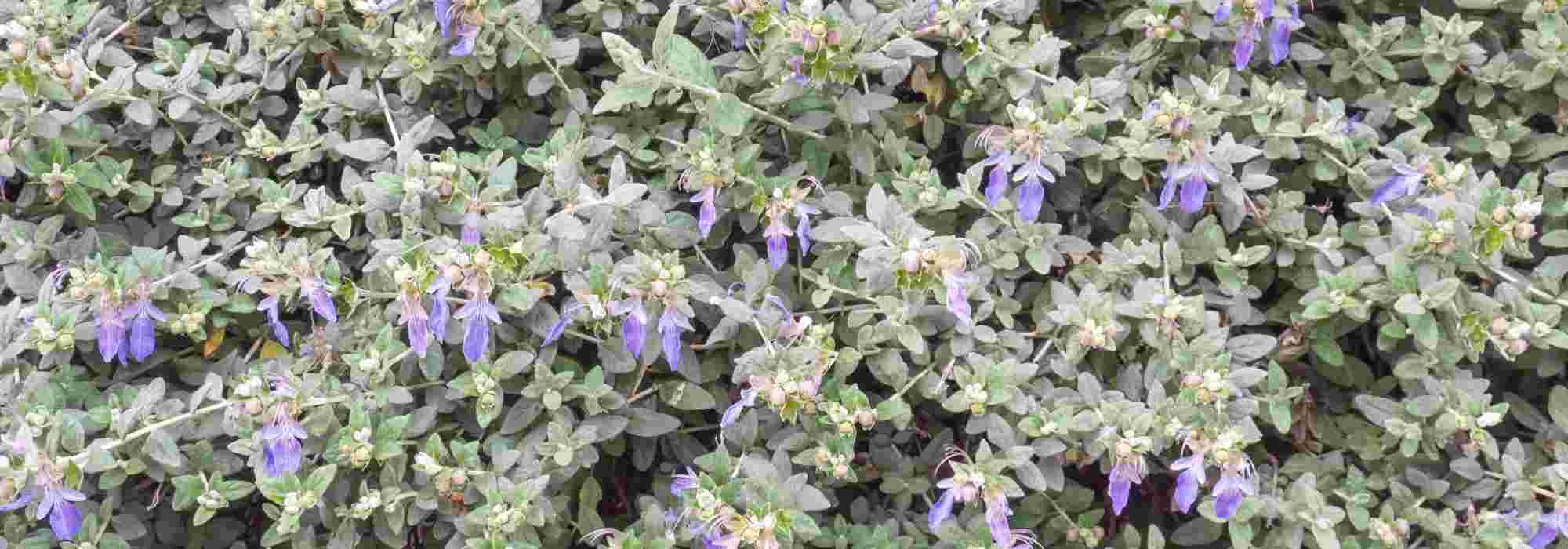
The Teucrium or Germander is, depending on the species, a groundcover genus like the Teucrium chamaedrys (the wall germander), which is valuable for rockeries and borders, or shrubby like the Teucrium fruticans that can reach up to 1.40 m, or even 2 m in all directions. These different varieties offer either compact or bushy habits, allowing them to be used as groundcover, in a border, as a flowering hedge, or even in pots. All charm us with their white, pink, or blue flowering, mainly in spring or summer.
Hardy and undemanding, it is easy to grow as long as it is planted in full sun, in dry, well-drained soil. It is a drought-tolerant plant well-suited to the long dry summers of the Mediterranean climate.
Discover our 6 pairing ideas to combine Teucrium in the garden!

In a dry and natural border
With Teucrium or Germander, you can create a beautiful, lush summer scene in a sunny border.
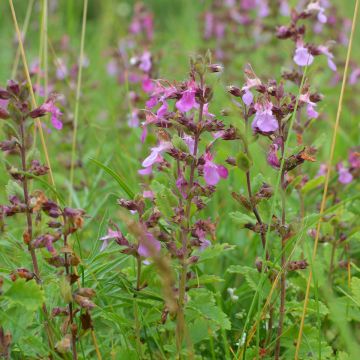
In the middle of the border, choose a lovely variety such as Teucrium hircanicum ‘Paradise Delight’ or the Teucrium hircanicum, which is very floriferous from May-June to August.
Their spikes of flowers in a purplish-pink or mauve pair well with shrubby lavateres, such as ‘Candy Floss’, a Caryopteris (x) clandonensis ‘Stephi’, prized for its pale lilac flowering, and hollyhocks in a similar harmony of tones. They will also complement the mauve of Buddleias. At the back of the border, you can also plant shrub roses in fresh shades.
Some Achillea ‘Cerise Queen’, Echinacea purpurea, and Verbena bonariensis or even Allium amethystinum ‘Red Mohican’ will joyfully contribute to creating a lovely opulent border.
A few clumps of Stipa tenuifolia and Stipa pennata will punctuate the view, while the light spikelets of Melica altissima ‘Atropurpurea’ will add a colourful and wild touch to the composition of this border.
The silvery foliage of Eryngium giganteum will temper this abundance of pink hues.
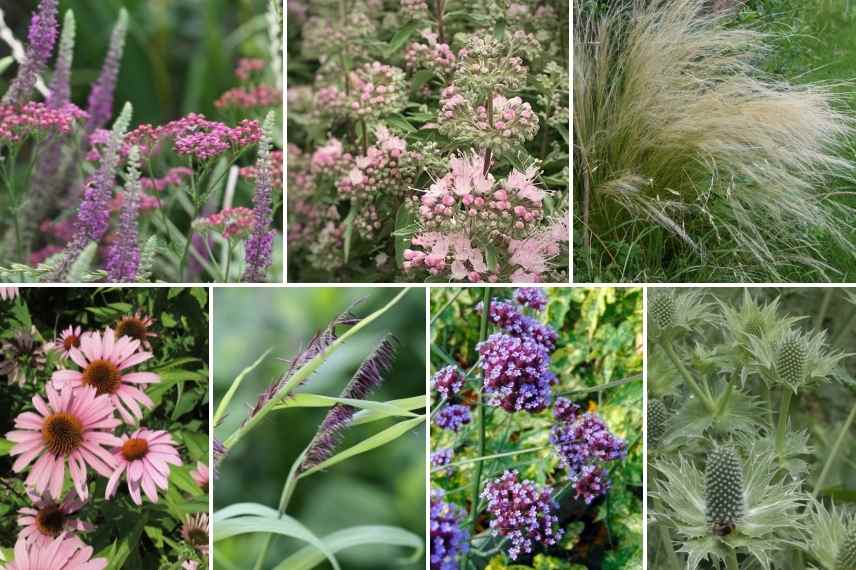
Teucrium hircanum, Caryopteris x clandonensis ‘Stephi’, Stipa tenuifolia, Echinacea purpurea, Melica altissima ‘Atropurpurea’, Verbena bonariensis, Eryngium giganteum
In a flowering hedge
The Teucrium fruticans ‘Azureum’ forms a small bushy shrub that can reach up to 1.40 m in favourable climates if it is not regularly pruned. With its elegant appearance, it makes a lovely feature in a small informal hedge, windbreak, or trimmed hedge, in a coastal garden or in a not too cold climate, as it is slightly less hardy than other species. Since it responds well to pruning, it can be maintained as a low hedge. Its evergreen silvery-grey foliage and beautiful blue flowering will provide interest for several months. It will bloom from February to June alongside spring-flowering shrubs or summer-flowering ones that are just as frugal, perfectly suited to dry and poor soils.
Create a persistent hedge that evokes the South by mixing the foliage of cistus, such as Cistus (x) corbariensis Rospico® (which blooms in April), and a Ceanothus (Ceanothus impressus ‘Lemon & Lime’ in April-May).
To accompany it, consider also Buddleia davidii ‘Groovy Grape’ with its rich dark purple flowers, escallonias, vitex, myrtles, and oleanders (Nerium oleander ‘Blanc’) to extend the flowering into summer.
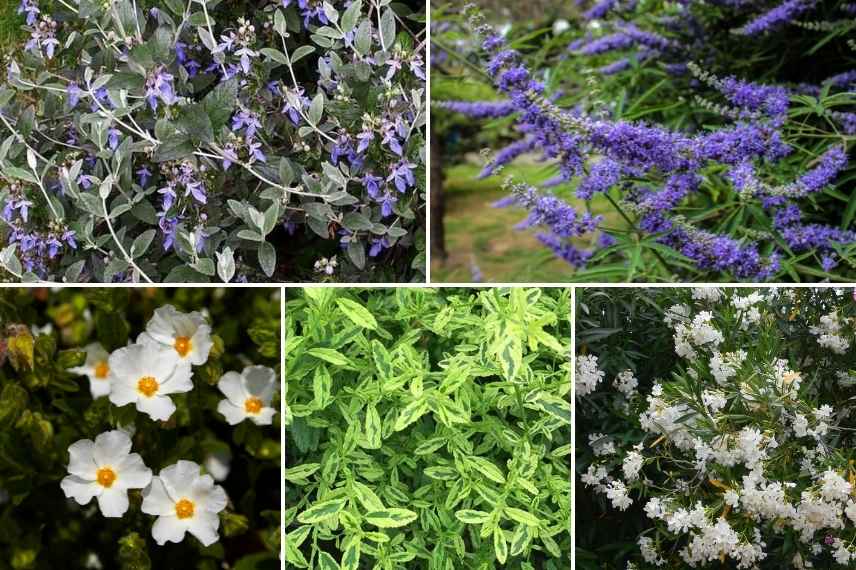
Teucrium fruticans ‘Azureum’, Vitex agnus castus, Cistus, Ceanothus impressus ‘Lemon and Lime’, Nerium oleander ‘Blanc’
Discover other Teucrium
View all →
Available in 2 sizes
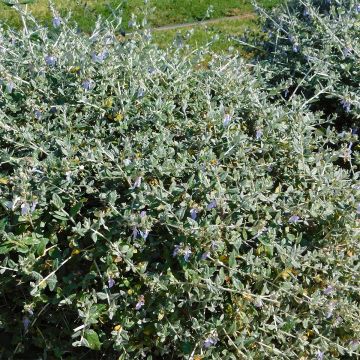
Available in 2 sizes
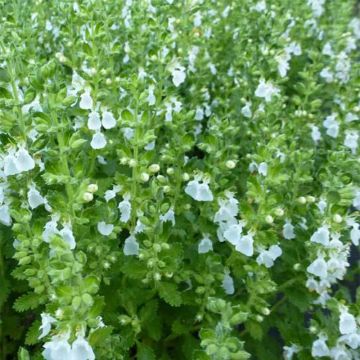
Available in 1 sizes
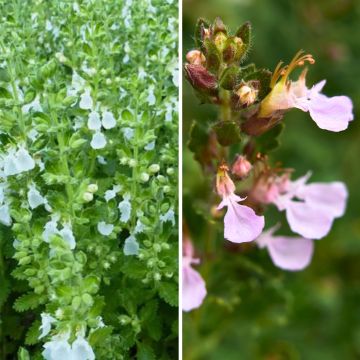
Available in 0 sizes
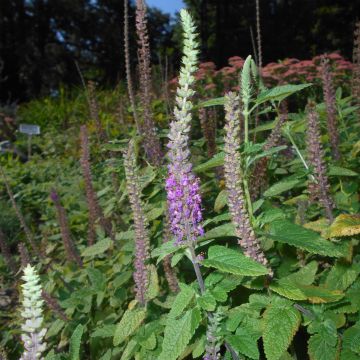
Available in 1 sizes
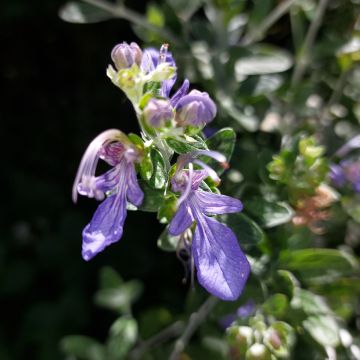
Available in 2 sizes
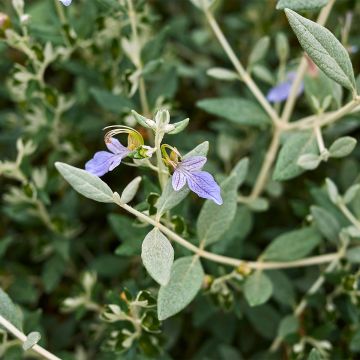
Available in 2 sizes
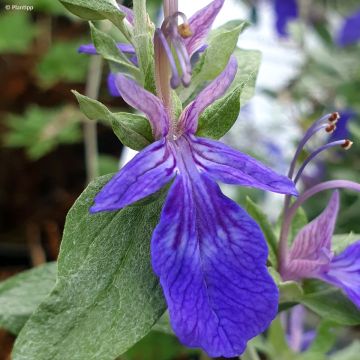
Available in 1 sizes
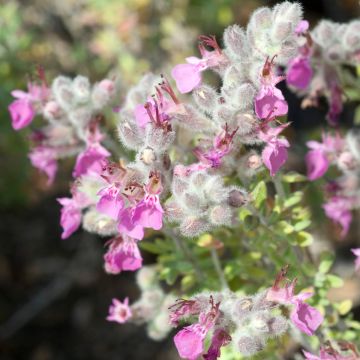
Available in 1 sizes
Available in 1 sizes
In a rockery
Appreciating dry, well-drained soils and full sun exposure, germanders are a boon for sunny rockeries. With its cream-yellow foliage turning to pistachio green, Teucrium lucidrys ‘Lucky Gold’ will bring a lot of brightness to a rockery reminiscent of the garrigue. It will accompany other low-maintenance plants that thrive in dry conditions, such as Sedum ‘Firecracker’, or grasses like Panicum ‘Sangria’, whose purple or blood-red foliage will contrast beautifully with its own. In a dry rockery, you can also pair it with Sedum sexangulare with its light green foliage for a fresher contrast.
It will also make a good companion for other rockery plants like Geranium sanguin ‘Max Frei’ or lovely low plants that appreciate the same spartan conditions and also tolerate summer drought, such as sages, rosemaries, and thymes, the alyssum (Alysse odorant ‘Royal Carpet’ with purple flowers), Caucasian Arabis, Helichrysum petiolare, which forms silver carpets, and other creeping wormwoods like Artemisia schmidtiana ‘Nana’.
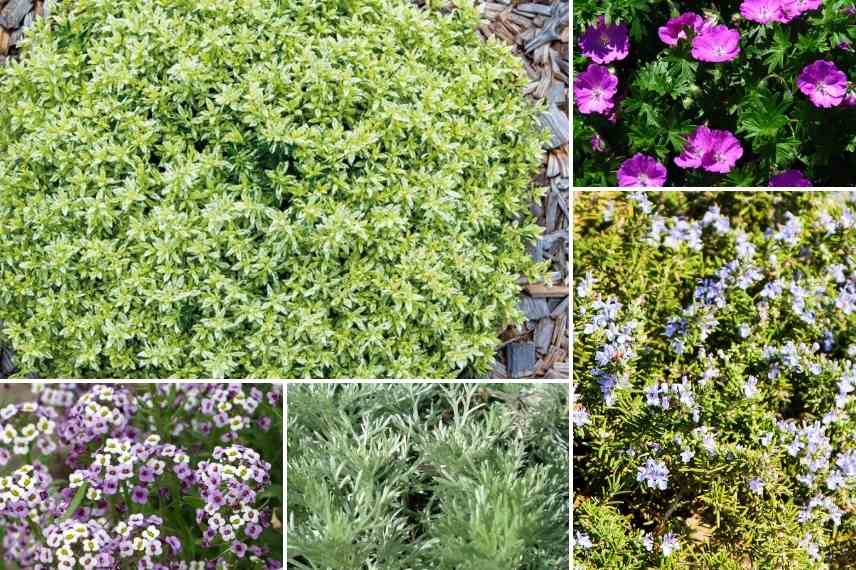
Teucrium lucidrys ‘Lucky Gold’, Geranium sanguin ‘Max Frei’, Alysse, Artemisia schmidtiana ‘Nana’ and rosemary
Read also
5 perennials for dry groundIn a border
To create beautiful borders without watering, in well-drained soil and full sun, teucrium proves to be a good ornamental choice. Alternate Teucrium chamaedrys ‘Alba’ or Teucrium lucidrys with lavenders and grey clumps of Santolina serratifolia. Both teucrium and santolines can be pruned and maintained as low hedges.
In a lovely herbaceous floriferous border, the lilac-pink or white flowers of these teucrium also pair well with small hardy geraniums or with Echinops ritro, which can be included in a more modern border. They will provide a lovely contrast with the complementary yellow flowers of coreopsis (‘Louis d’Or’) and small helianthemums.
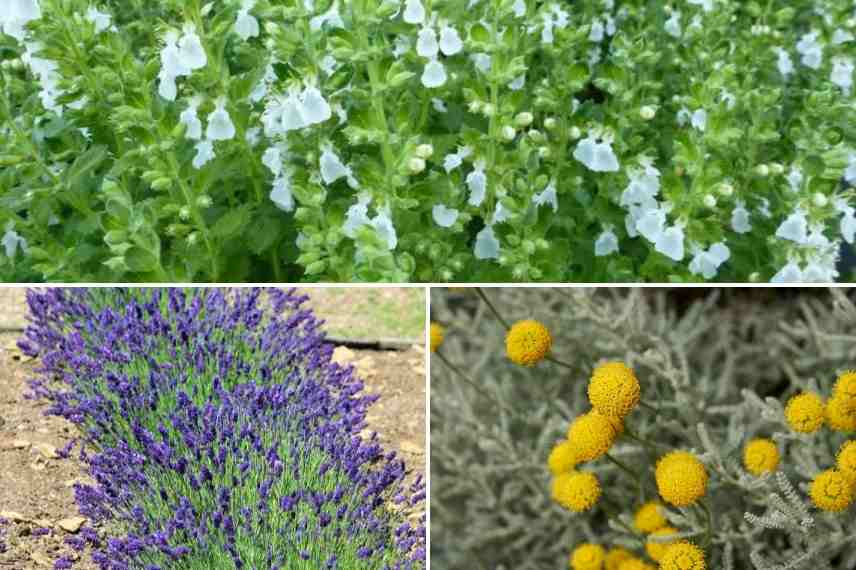
Teucrium chamaedrys ‘Alba’, lavender and santolina
To fill the base of bushes
Certain species of Germander have the unique characteristic of being ground-hugging, making them delightful flowering and bright groundcovers. This is the case with the Ackerman germander, which forms charming little grey-silver cushions in flower from spring to summer in the most challenging soils. It is a good plant for covering the base of Mediterranean shrubs such as lantanas, ceanothus with blue flowers, a Caryopteris clandonensis ‘Sterling Silver’, butterflies, or small drought-tolerant shrubs such as Hypericum calycinum. Its pink-purple flowering will contrast with the abundance of yellow flowers from a shrubby potentilla or echo the pink pea flowers of a Cytisus scoparius ‘Burkwoodii’.
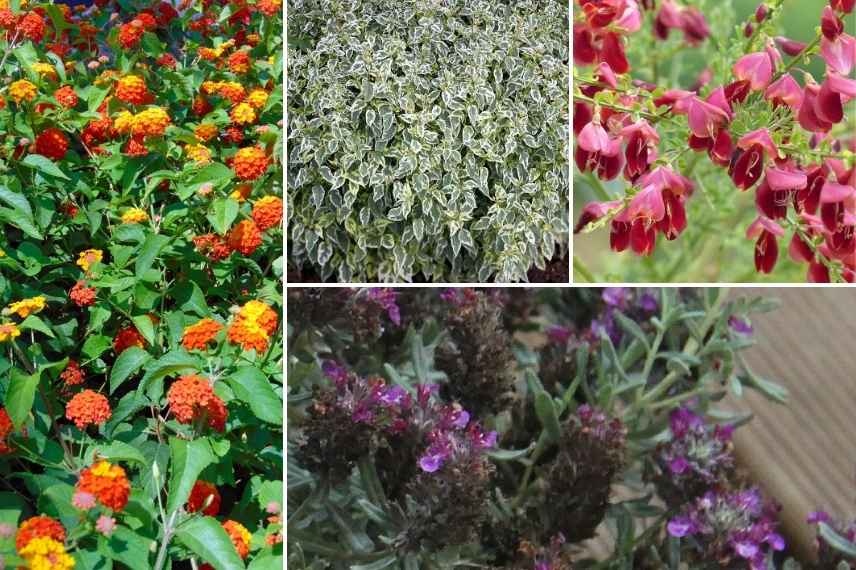
In the bottom right, Teucrium ackermanii, surrounded by orange lantana, variegated Pittosporum, and Cytisus scoparius ‘Burkwoodii’
In a pot
Small varieties of Teucrium, such as the compact Teucrium lucidrys (approximately 30 cm high and 50 cm wide), will make a statement in a pot or container placed on the terrace or balcony in full sun. To accompany it in a large pot, you can choose a Sedum (Sedum cauticola ‘Lidakense’), a Thyme, a lavender, a Nepeta, or even some small Dianthus.
Complete your pot with a plant of campanula or Aubrieta in the same purplish-pink hues; these small groundcovers will beautifully cascade.
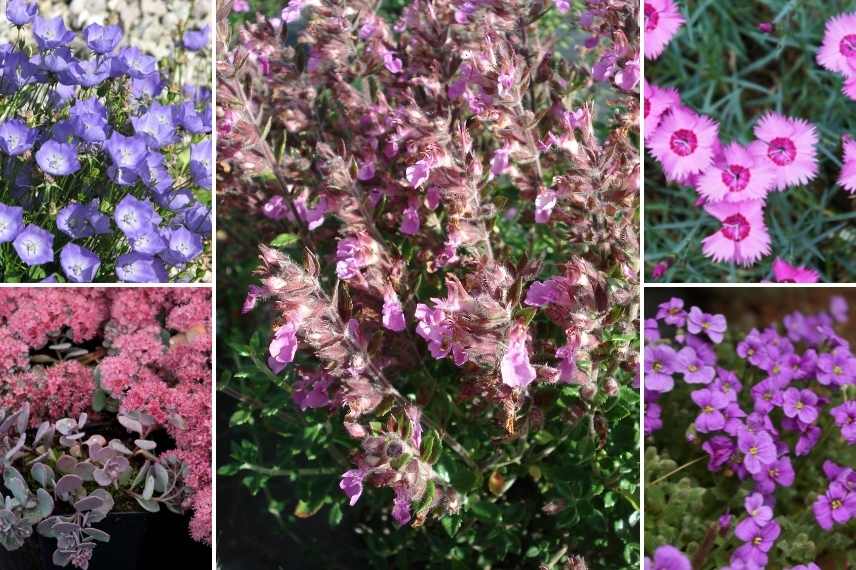
Teucrium lucidrys in the centre, accompanied by campanulas, dianthus, Sedum cauticola ‘Lidakense’, and Aubrieta
- Subscribe!
- Contents
![Associate the [teucrium] with other plants in your garden to create beautiful combinations.](https://en.promessedefleurs.eu/blogwp/wp-content/uploads/2022/03/Associer-le-teucrium-1.jpg "Associate the [teucrium] with the {glossary}Bush Germander{glossary}.")
Comments