





























What to do in the garden in October?
On with the autumn gardening tasks!
Contents
In the garden, October marks a transition between the beautiful season and the onset of autumn. Nature is preparing to rest, but not the gardeners, who are caught up in new planting projects, pruning, and weeding sessions. It’s safe to say that your outdoor space will demand your attention, and the coming weeks won’t be the most restful, but they will certainly be invigorating! So grab your spades and pruning shears and make the most of these lovely Indian summer days before the first frosts return.
Discover the gardening tasks to be carried out in October in the garden, on the terrace, and in the vegetable patch!

On the side of trees, shrubs, and fruit plants
The blazing of plant leaves signals their impending fall, and berries allow for the creation of lovely arrangements, as well as providing a boost of vitamins with Goji berries, cranberries, and hips to be harvested once the first frosts have softened the fruits.
Ornamental Trees and Conifers
- In October, the trees and conifers you selected in containers can now be planted in the garden. What joy to envision their future growth after planting them! By the way, don’t forget the few rules to follow regarding planting. We explain everything in the article “Hedges, shrubs, trees: What planting distances?“
- While it may still be a bit early to plant bare-root trees, you can already prepare the planting holes: it is commonly said that a good planting hole should be about twice the width and depth of the root ball or the entire root system in the case of bare-root specimens. Need a bit of relaxation after this tiring task? Discover with humour how to fail at planting your trees in 5 lessons!
Fruit Trees and Small Fruits
- Start planting fruit trees and small fruits in containers: consider unusual and exotic fruits if your region’s climate allows, as well as ancient and local varieties suited to the soil and climate of their region of origin. Do you live in the city and think home fruit harvests aren’t for you? Change your mind by discovering 6 fruit trees for urban gardens
- Finish harvesting walnuts, hazelnuts, and almonds. Also harvest chestnuts to make delicious chestnut jams by following the tips and tricks in our tutorial
- Apples, pears, quinces, figs…: finish picking ripe fruits, which should detach easily. Continue removing diseased fruits
- Harvest the clusters of grapes
Shrubs
- Berries from Callicarpa, viburnums, and hips from roses will have a lovely vase life, accompanied by late flowering. Let your creativity flow to create sumptuous late-season bouquets! And don’t forget that while they contribute to the ornamental appeal of the garden, the ornamental fruit shrubs also play a very important ecological role, as many species of birds and insects feed on their berries in autumn and winter. Plan to include them in your future plantings!
- The spindle tree Euonymus alatus ‘Compactus’ dons bright hues, just like Cornus alba ‘Siberian Pearls’ or Japanese maples. To enjoy them in the coming seasons, check out our collection of autumn-coloured shrubs and a selection of the most beautiful trees and shrubs with autumn colouring
- Once flowering is finished, you can remove the faded flowers from hydrangeas and take the opportunity to eliminate dead or damaged branches. This autumn pruning is optional, as it is mainly aesthetic. At this time of year, avoid severe pruning that could weaken the shrub before winter, making it more susceptible to cold. The most significant pruning will take place at the end of winter or the beginning of spring, around March.
- Plant Camellias and all heather soil shrubs
- Is frost likely to strike soon in your area? Prepare protection for the most tender plants (bananas, palms, Lagerstroemias…)
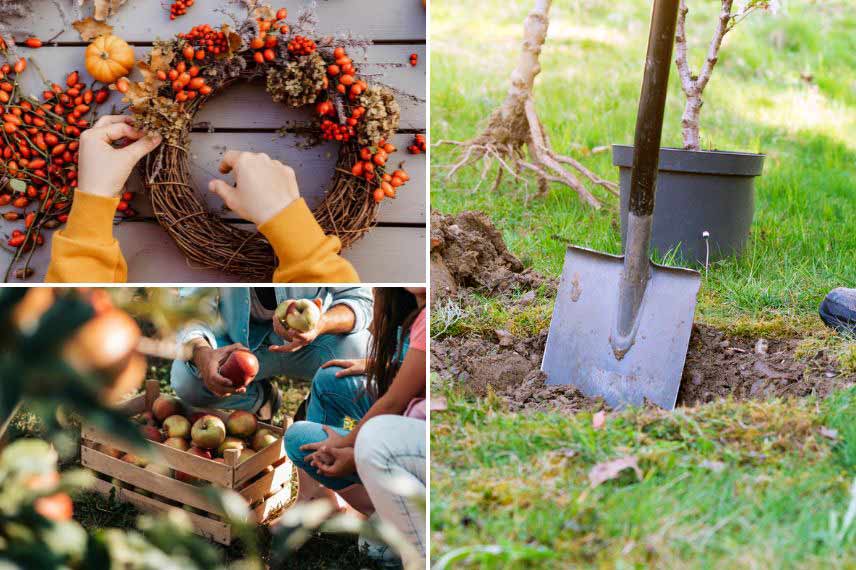 October berries allow for inspiration to flow. In the orchard, harvest seasonal fruits and plant trees and shrubs to enrich the garden!
Hedges
- If you didn’t have time to trim regular hedges in September, you can still do so in early October. Proceed with shears or a well-sharpened hedge trimmer
- Finish the trimming of topiaries
- Plant hedge shrubs in containers. Is gardening a recent passion for you? Don’t panic, discover 9 hedge shrubs for beginners, perfect for easily creating beautiful green screens
Read also
How to divide a perennial?Perennials, bulbs, climbing plants and grasses
In October, carry out a good weeding in the perennial beds to plant with peace of mind. It’s also the time for the bulb swap, between the summer bulbs bidding farewell and the spring ones that need to be planted now.
Perennials
- Cut back the faded stems of the perennial plants.
- Plant perennials in containers and divide your favourite varieties that flower in spring or summer, such as gentians, Epimediums, summer heathers, Heleniums, euphorbias, gypsophila, or peonies.
- Continue establishing the peony beds.
- Hardy geraniums and Columbines don their beautiful foliage colours during their last weeks of growth. The Japanese Anemones, some Cimicifugas, Salvia leucantha, and Escholtzia stauntonii take advantage of autumn to form lovely inflorescences. If your garden looks a bit sad this late season, consider planting them to enjoy next year.
Bulbs
- Tulips, daffodils, alliums, hyacinths, spring crocuses… ; the spring bulbs are waiting for you to join the garden. Plant all these varieties at the correct depth for each and choose the right tools.
- It’s the last moment to plant Colchicums.
- Lift the dahlias, the gladioli, and other summer bulbs when the foliage begins to decline or after the first frost. Be careful not to break them and cut the aerial parts. Remove excess soil and let them dry for about ten days in a cool place protected from frost. Then place them in labelled boxes, safe from rodents.
- Dahlia division can be done in spring, but also in October when you bring them in for winter.
- If you want to see them bloom at Christmas in your home, now is the time to plant an amaryllis in a pot for indoors: Place the amaryllis bulb in the pot, burying it only two-thirds in a mix of half potting soil and half garden soil or in potting soil for flowering plants. Place the pot in a warm, sunny spot, water sparingly until the stem appears, then water every 2 or 3 days. The flowers will appear about 6 to 8 weeks after planting.
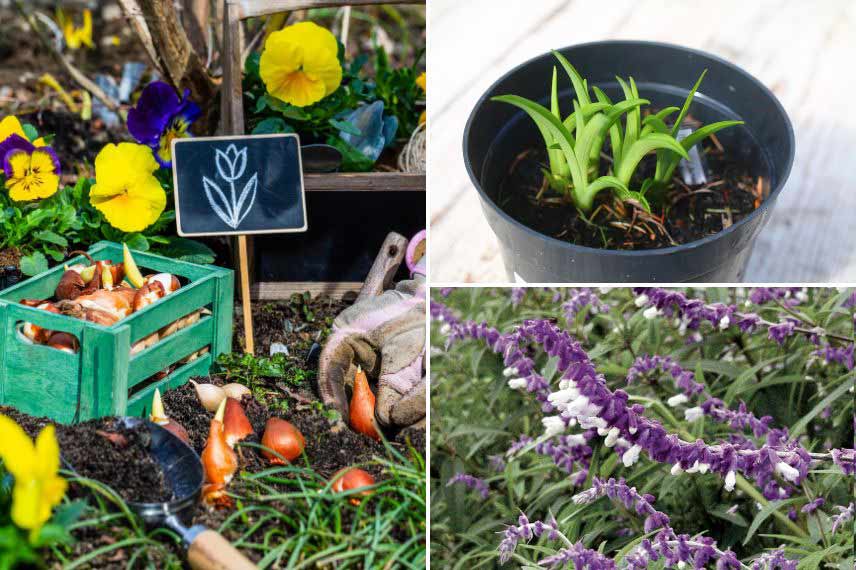 Spring bulbs are coming out of their bags to join the garden, as are the perennials that need to be planted now that the soil is more moist. Salvia leucantha allows us to enjoy its magnificent late-season flowering.
Climbers
- Plant climbing plants in containers. We recommend 7 climbing plants that have the longest flowering periods.
- At the end of autumn, shake the female cones of the hops to collect your seeds; store them in a cool, dry place to sow in February-March.
- Layer jasmine and Virginia creeper by layering.
Grasses
- Fescues, Calamagrostis, Miscanthus, or Panicum… plant beautiful grasses to enliven the garden with their lightness. We even explain how to create a grass garden.
- In October, grasses are decorative; wait until the end of the severe cold in late winter (February or March) to prune them.
Roses
- Without pruning, remove faded flowers, diseased leaves, and dead wood. Leave the hips: they brighten the garden with their colours and feed some birds!
- Very easy to do, layering of climbing roses and rambling roses can still be done in October.
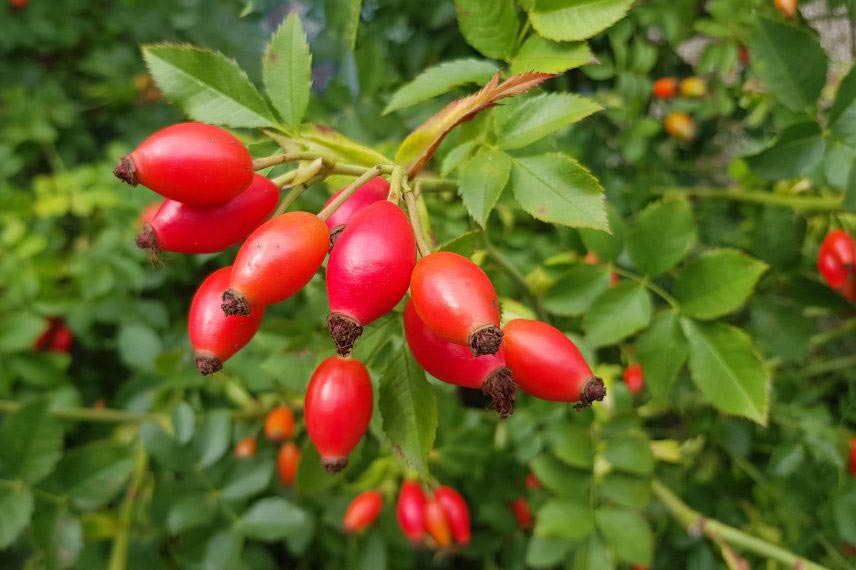
Rosa canina showcases the autumn colours of its berries
Read also
How to divide a water lily?Annuals and potted plants
- Harvest seeds from late-flowering annual plants.
- Outside of mild regions, bring in houseplants and all tender plants (citrus trees, succulents and cacti, oleanders, bougainvilleas, lantanas, plumbagos…).
- Plan for mulching and fleece and winter covers for pots and containers left outside all winter, so you can cover them as soon as the first frosts that could be fatal arrive. To avoid excess moisture, remove saucers and place pots on risers.
- Compose late winter and early spring pots with biennials such as primroses, pansies, or daisies. When well chosen and combined with each other or with perennials and small spring bulbs (crocuses, muscari, daffodils…), they will create charming displays to admire as spring begins. For a colourful garden as winter ends, take inspiration from our 6 successful combination ideas.
- Repot your azaleas in early October with good heather soil.
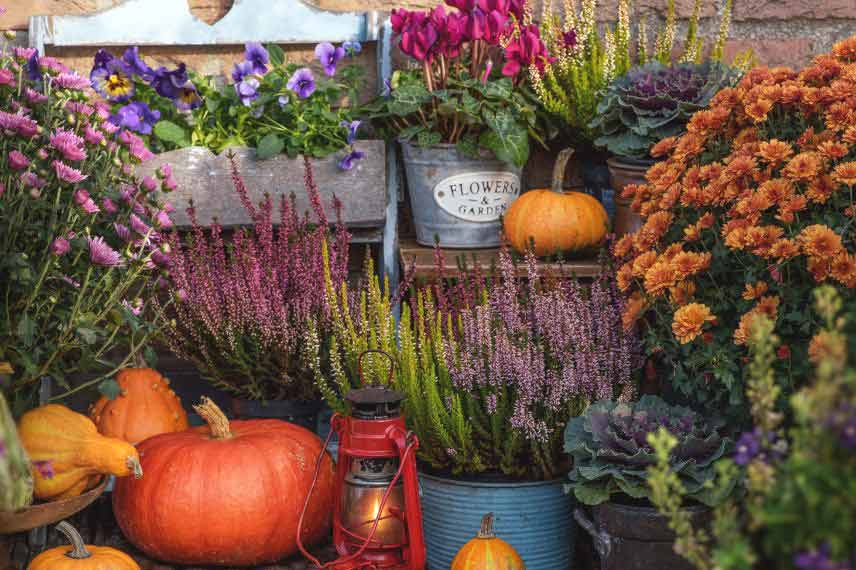
Create beautiful seasonal scenes near the house
In the vegetable garden
At the vegetable garden, the harvests are coming to an end: the reign of summer vegetables is over, while winter ones are growing and swelling!
Vegetables to plant in October, sowing and tasks to carry out:
- The vegetable garden needs a thorough clean-up. Do not leave in place the crops that have finished producing; they can harbour diseases and overwintering pests. Pull them out and compost the healthier ones. It is best to dispose of any crops that showed signs of damage at the waste disposal site.
- Weed all surfaces to eliminate the most invasive adventive species.
- Wait for the rains and sow green manures. At the beginning of October, you can still sow Alfalfa, White mustard, Crimson clover, Vetch, and Rye until November. Besides improving your soil, they will prevent “weeds” from invading your plots this winter.
- Incorporate manure in autumn: it needs to undergo a chemical transformation that requires moisture to properly amend your soil.
- After the first rains, hoe and plant the seasonal vegetables.
- Finish planting strawberries and to avoid excess moisture, remove the mulch from the strawberry patch.
- Complete the pruning of raspberries and fruiting brambles. This is also the time to propagate raspberries by taking young suckers.
- Harvest and dry small bouquets of thyme and bay leaves that you will use for your winter dishes.
- Harvest parsnips sown from March and cardoons sown in May: put on your gloves, pull out the clump, and place the leaves in a ventilated area, away from light. When stored properly, cardoons can be kept and consumed throughout winter.
- The little ones are preparing for Halloween and the grown-ups are getting ready to cook with squashes. Hokkaido, pattypan, pumpkin, butternut… harvest them and store them in a dry, healthy place to keep them for a long time.
- Blanch the escarole chicories by tying the leaves together or placing a pot over the centre of the tuft.
- Transplant cauliflowers.
- Pull out carrots, celery, and beetroot.
- Sow lamb’s lettuce, spinach, and carrots.
- Sow broad beans in the South-West or under cover elsewhere for a harvest from April to late June.
- Sow peas and sugar snap peas in mild climates.
- Hardier than pink garlic, white garlic is planted in autumn from October, provided the soil is well-drained. Otherwise, wait until spring.
- Clean and disinfect the supports that have been used in the vegetable garden (tomatoes, aubergines…).
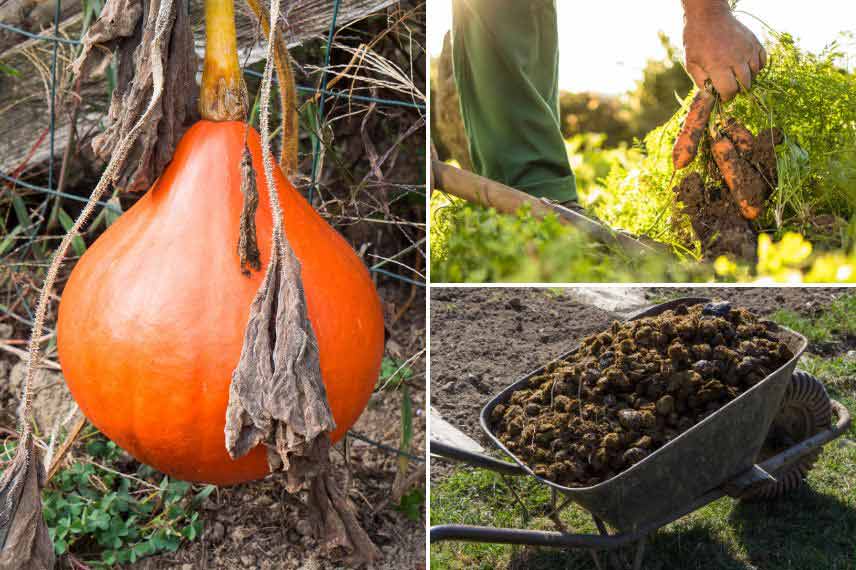 Squashes and carrots promise comforting, vitamin-rich recipes, and some plots in the vegetable garden are entering rest for winter, amended with manure.
Lawn and various works
October marks the beginning of hibernation for hedgehogs: leave fallen leaves under hedges or piles of branches in a quiet corner of the garden; they will provide perfect hiding spots for these valuable allies of the garden. Disturbed by overly zealous gardeners, they must seek alternative shelter, using up precious energy in the process.

Don’t forget to let the hedgehog settle in warmly in its winter shelter
The lawn and flowering fallows
- Before the first significant frosts, make the last mowings. You can then clean and carry out a general check of your equipment.
- As long as the soil is still warm, complete sowing and re-seeding of lawns.
- Rectify the edges before winter.
- When the dead leaves start to fall, rake regularly those falling on the lawn and spread them as mulch in the flower beds.
- Mow the flowering meadows.
Various tasks in the garden
- Plan to drain your irrigation systems before the first frosts and protect outdoor taps and valves from freezing.
- Clean and repair any damage to your greenhouse or shelters (tunnels, frames…).
- After the rains, check your exterior once a week to remove and empty all small water accumulations: mild weather and humidity encourage mosquito development!
- Check that downspouts and gutters are not blocked by plant debris: this is the time to take advantage of the rains to fill your water butts!
- Remember that burning plant material is prohibited. You can choose to use green waste as mulch, compost it, or take it to the tip.
By the pond
- Regularly remove dead leaves falling into the water.
- If you can and if you haven’t done it during the summer, renew a third of the water.
- Plant marginal plants and divide your favourite varieties.
- Divide water lilies to give them a lighter appearance, stimulate flowering, and/or replace damaged pots due to their powerful roots.

- Subscribe!
- Contents

Comments