





























Botanical daffodils: how to choose and combine them
In the garden or in pots, create colourful combinations!
Contents
Daffodils are bulbs particularly . Often referred to as Jonquils, although true Jonquils represent a specific botanical species, these bulbous plants are particularly easy to grow. Within this large family, we distinguish the botanical daffodils, which are derived from wild or ancient species. Very resilient, floriferous, and reliable, they also naturalise very well and return in greater numbers each year. Generally quite short (from about 10 centimetres to around 50 cm), the earliest can bloom as early as February, while the later ones only reveal themselves around April or May, and even June for the latest.
By choosing different varieties, it is possible to enjoy their beauty for nearly 4 months. They also exhibit a lovely diversity in their characteristics: single or very double flowers, solitary or grouped, with long or more flattened central crowns, some are also extremely fragrant. You can plant them in groups of about fifteen bulbs or scatter them randomly across a lawn to replicate a natural meadow. In any case, bury your bulbs under 10 to 15 cm of soil, in cool but well-drained soil, in sunny or partially shaded exposure. All can withstand -10°C, and even more depending on the species, and they have the ability to be less favoured by rodents. Don’t hesitate to take advantage of this asset by planting them alongside other bulbs, which they thus protect from attacks by these small mammals.
In all cases, allow the foliage to dry completely before cutting it, so that the bulbs can form their reserves for the following year. Emblematic of spring, they can brighten up a woodland or rockery, add colour in pots on a terrace or even indoors, or punctuate a lawn with their delicate flowering.
Discover our tips for selecting the best varieties, using them, and choosing companion plants for beautiful associations!

To celebrate the arrival of spring
Bring colour early in the season with early-flowering botanical Daffodils, such as Narcissus ‘February Gold’ or the original ‘Golden Bells’. Plant them in dense clumps of 15 to 20 bulbs scattered throughout your bed alongside other bulbs that flower at the same time (Chionodoxa, Crocus, botanical Fritillary, Ipheion, reticulate Iris, Snowdrop…). These delicate flowers can emerge among perennials such as Winter Heathers, Oriental Hellebores, or Primroses.
This colourful carpet then serves as a backdrop for flowering bushes such as an ornamental Almond, some Camellias, a male Cornel, fragrant Daphnes, Sarcococcas (also very fragrant), Edgeworthia, or the more classic Forsythia and Japanese Quince. Some Viburnums also bloom early in the season, such as Laurustinus Viburnum or Bodnant Viburnum. For a touch of originality, you can also consider the weeping Goat Willow, whose very trailing branches are adorned with a multitude of small, decorative aments.
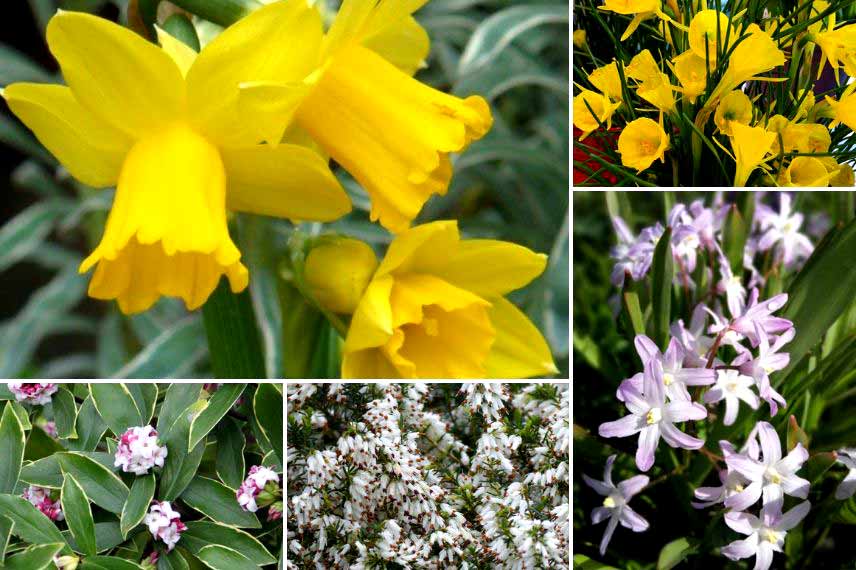
Narcissus ‘February Gold’ and ‘Golden Bells’, Chionodoxa forbesii ‘Pink Giant’, Winter Heather ‘Springwood White’ and Daphne odora ‘Aureomarginata’
Read also
6 highly scented varieties of NarcissusTo brighten up a woodland or an edge.
Trees that cast a light shade are not an obstacle to the flowering of Daffodils. These conditions can also be found at the edge of woodlands where, although not always direct, the light remains sufficient. Among the must-haves, there is of course the Woodland Daffodil, which you can pair, for example, with Narcissus ‘Quail’.
Carpet the area with Wood Anemones, Trillium flexipes, or Bluebells, all perfectly suited to these conditions, provided the soil does not dry out too much. Again, Hellebores will be excellent companions, and adding ferns is always an option that enhances the woodland atmosphere of a part of a garden. Dryopteris erythrosora is evergreen, quite drought-resistant, and displays stunning copper-orange fronds early in the season. The Royal Fern is deciduous, but its imposing silhouette never goes unnoticed, especially when it turns rusty in autumn.
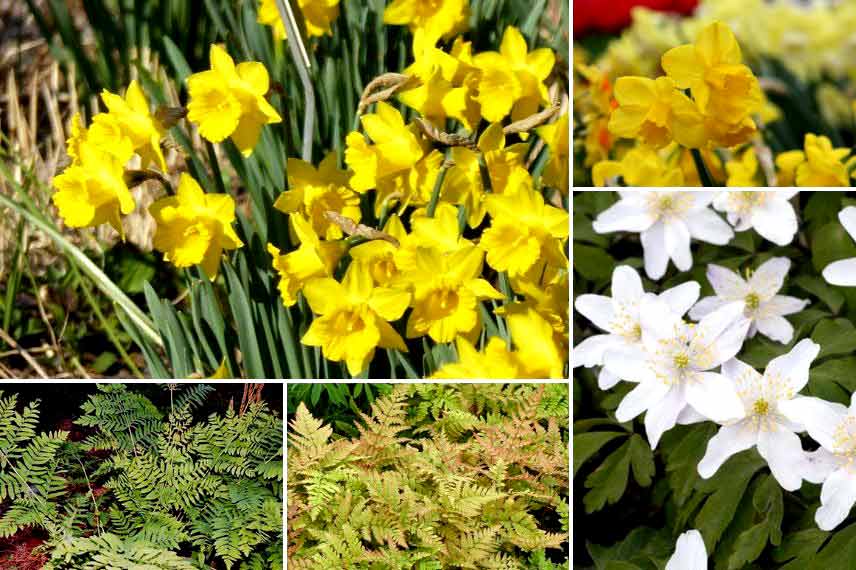
Narcissus pseudonarcissus ‘Obvallaris’, Narcissus ‘Quail’, Wood Anemones, Dryopteris erythrosora, and Royal Fern
Discover other Narcissi - Daffodils
View all →
Available in 1 sizes
Available in 1 sizes
Available in 1 sizes
Available in 1 sizes
Available in 1 sizes
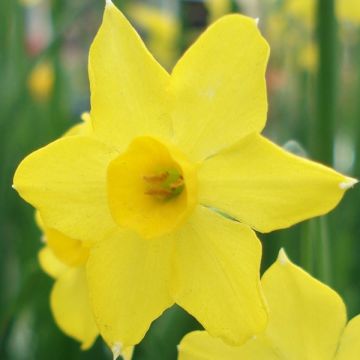
Available in 1 sizes
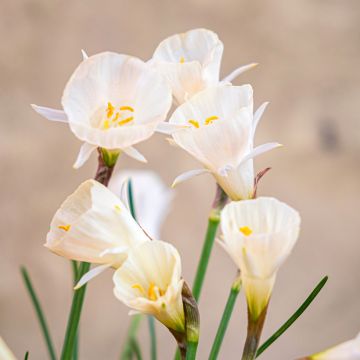
Available in 1 sizes
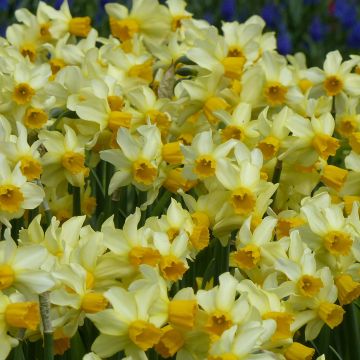
Available in 1 sizes
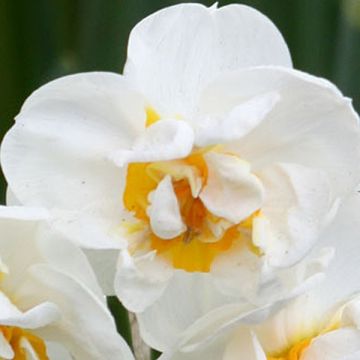
Available in 1 sizes
Available in 1 sizes
A bed dedicated to fragrances
Some botanical Daffodils are particularly fragrant. The Poet’s Daffodil is one of those that offers the most pleasant fragrances, but varieties like ‘Martinette’ or ‘Thalia’, as well as those of the species Narcissus tazetta, are also a delight for the nose as well as the eyes. Also plant Hyacinths, followed by Lilies that will fill the summer with their sweet fragrance.
When it comes to bushes, do not miss the early flowering of a Daphne odora ‘Marianni’ if you have a rather shady and acidic area, or opt for Daphne mezereum in a more exposed and calcareous situation. The Chinese Azaleas are deciduous, but often very fragrant and have beautiful autumn foliage. The Mexican Orange Blossom retains its leaves and blooms twice, spreading citrus notes in spring and again at the end of summer. Of course, your Daffodils can be placed among roses with their much-appreciated fragrance, Viburnums, Eleagnus, or Gardenia (in mild zones), ensuring you have a bed that can offer pleasant scents throughout the year.
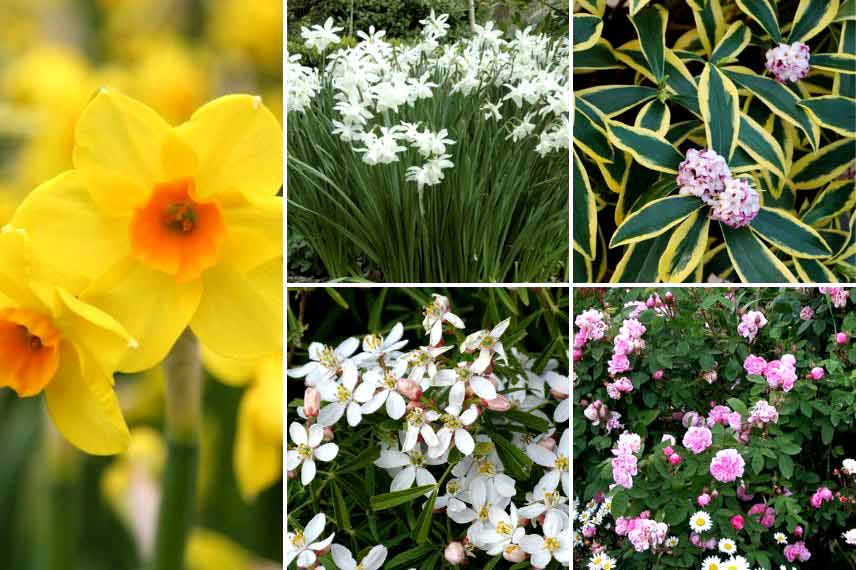
Daffodil ‘Martinette’ and ‘Thalia’, Daphne odora ‘Marianni’, Choisya ‘Aztec Pearl’, Old rose ‘Salet’
A balcony or terrace full of colour
Daffodils are particularly well-suited for pot cultivation. It is even possible to plant different bulbs in the same container to extend the display over several weeks. For example, you can mix very double-flowered Daffodils like ‘Tête Bouclée’ or those with unique colours like ‘Prototype’ or ‘Sinopel’ with Tulips and Crocuses, layering them as shown in this video.
These pots happily accompany cultivated bushes also grown in containers. All combinations are allowed since you control the nature of the soil. You simply need to ensure their hardiness, any necessary watering, and the exposure you can provide. In sunny situations, brighten up spring with ‘Goldflame’ Spiraea with its young bright orange foliage, a Ceanothus (its blue flowers pair wonderfully with the yellow of the daffodils), or an Exochorda ‘Lotus Moon’, which is covered in a cascade of white flowers. In less exposed situations, try an interesting Pieris for its changing foliage and beautiful flowering, a Japanese Azalea, or even a Fothergilla gardenii, with its fragrant white bottlebrush flowers and warm hues at the end of the season. In all cases, choose pots with a good diameter, greater than or equal to 50 cm.
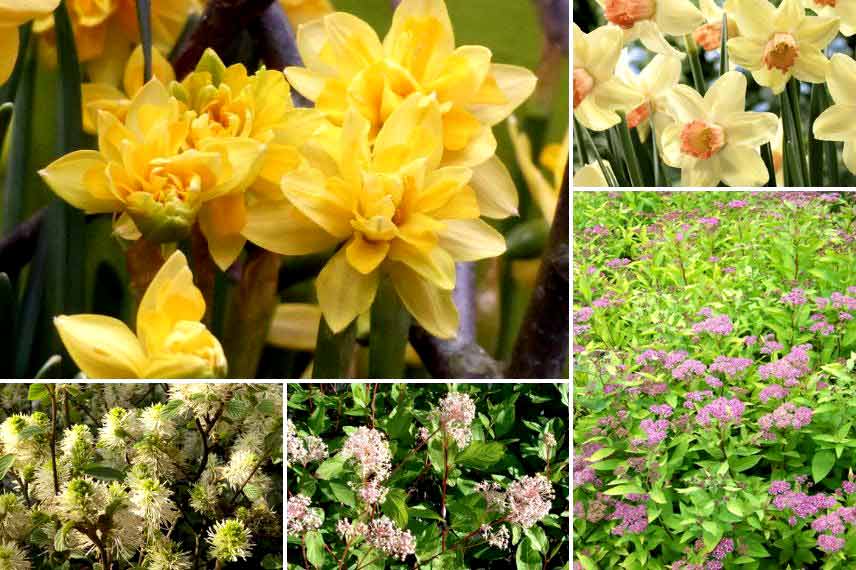
Daffodils ‘Tête Bouclée’ and ‘Prototype’, ‘Goldflame’ Spiraea, Ceanothus pallidus ‘Marie Simon’, and Fothergilla gardenii
In cheerful carpet on a lawn
Botanical daffodils have the ability to naturalise easily in cool but well-drained soil, thriving in both sun and partial shade, ultimately forming large patches of cheerful colours. Toss a few handfuls of bulbs over your shoulder and plant them where they land for a more natural effect. The variety ‘Petrel’ creates a white veil that you can pair with all other colours. ‘Martinette’ adds a bright yellow to your lawn, each flower enhanced by a small orange trumpet that accentuates the relief of the corollas.
Mix them with Crocus ‘Grand Maître’, which form a lower blue carpet that showcases the daffodils even better. Also consider botanical tulips and Muscari, which also settle in for many years. If you’re lacking inspiration, opt for ready-to-plant mixes with evocative names such as Pastoral Stroll or Contrasting Harmony, to install with your daffodils. In any case, wait for the foliage of the last bulbs to die back before mowing.
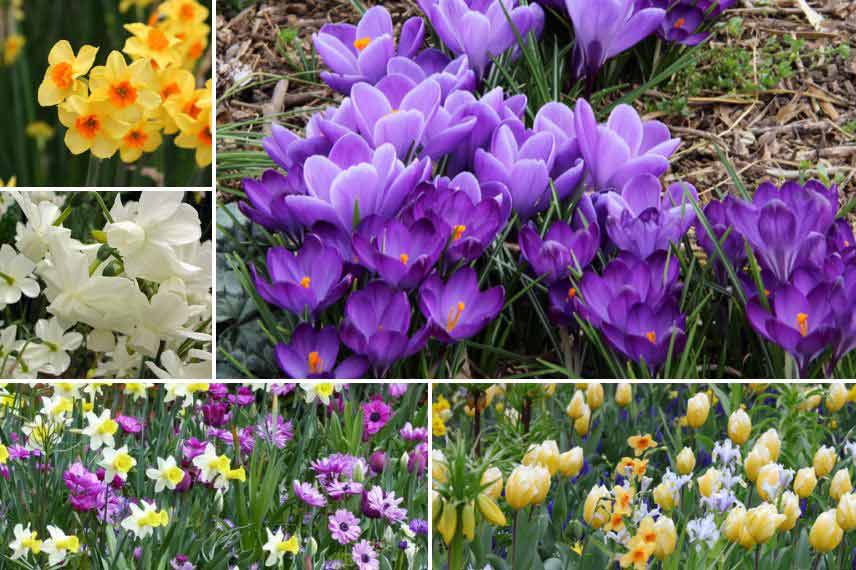
Daffodils ‘Petrel’ and ‘Martinette’, Crocus ‘Grand Maître’, bulb mixes “Pastoral Stroll” and “Contrasting Harmony”
A sparkling rockery
Well-drained and well-exposed soils in rockeries provide conditions appreciated by Narcissi. Plant clumps of Narcissus ‘Toto’, whose white flowers with pale yellow trumpets will add accents that rhythm the display. Pair it with rockery perennials such as yellow Basket of Gold that energise the composition, Arabis or Aubrietes in blue or mauve to provide complementary colour, small fragrant Pinks, Iberis in immaculate white, or charming moss Phlox that spread in colourful carpets.
Insert evergreen grasses such as Angel Hair, Carex, or Blue Oat Grass, and to give more body and structure to your rockery, opt for shrubs such as Cotoneaster dammeri, Ceanothus prostratus or dwarf conifers. Besides their decorative effect, these plants also require minimal maintenance.
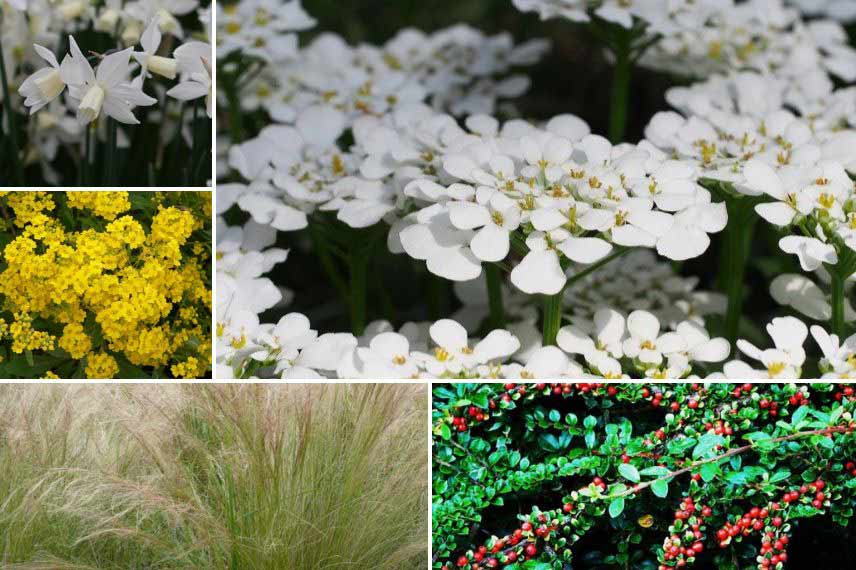
Narcissus ‘Toto’, Basket of Gold Alyssum saxatile ‘Goldkugel’, Candytuft Iberis sempervirens ‘Masterpiece’, Angel Hair ‘Pony Tails’ and Cotoneaster dammeri
Early flowering indoors
Forcing bulbs is a process that allows them to bloom well before their normal cycle, making it possible to obtain flowers as early as the beginning of the year, or even during the festive season. Choose Narcissi with relatively short stems, such as ‘Tête à Tête’ or ‘Minnow’, which will maintain a good upright position more easily. Wrapped in newspaper and placed in the refrigerator from October for about 4 weeks to simulate the cold period that initiates flowering, they are then planted shallowly in well-draining substrate and stored in a cool, dark place, such as a cellar or shed. When the flower stems have started to develop well, move them to a warm, light location (such as a living room). Ensure the substrate remains moist but not waterlogged, and enjoy their fragrant corollas. You can also force other bulbs such as crocuses, tulips, hyacinths, or muscari. Forced bulbs deplete quickly. You can attempt to transplant them to the garden once they have finished flowering, but it is likely they will not bloom again, at least for several years.
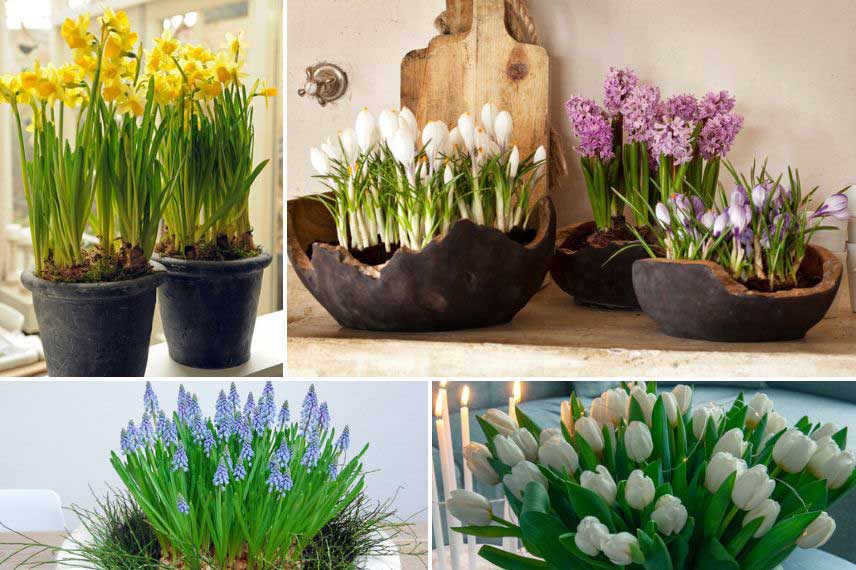
Narcissi ‘Tête à Tête’, crocuses, hyacinths, muscari, and tulips
- Subscribe!
- Contents
Comments