


Can cat litter layer and domestic animal litter be composted?
Our tips on eco-friendly practices and precautions
Contents
Composting is far more than a simple transformation of organic waste. At the heart of sustainable gardening practices, it gives a second life to residues, transforming our waste into black gold for our gardens. This natural method enriches not only the soil, boosting the vigour of plants, but it also significantly reduces our ecological footprint. So, in an era where every eco-conscious action counts, the question arises: can we compost cat litter layer and that of other domestic animals? If the idea sounds appealing, it nevertheless requires a nuanced approach and precautions. Let us dive into the subject and explore the possibilities and challenges of composting litter layer for greener gardening.

A quick reminder: what is composting?
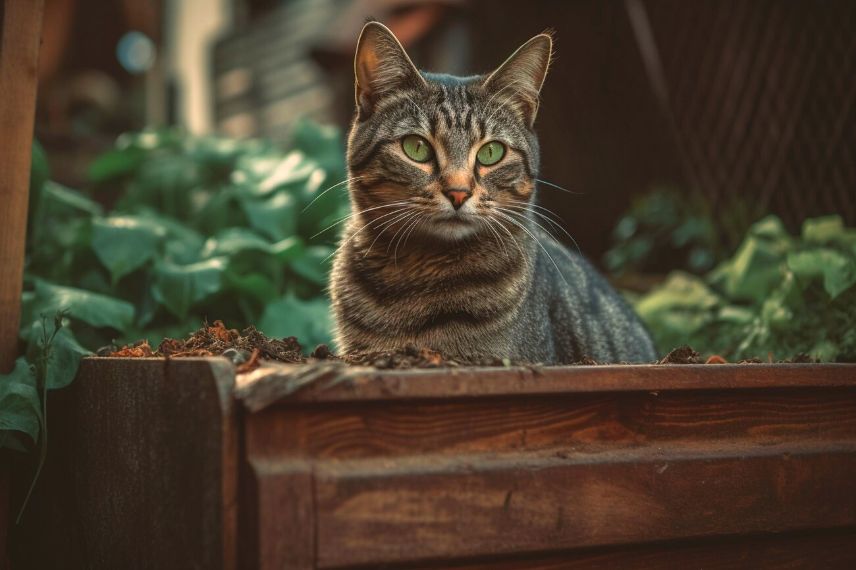
Composting is a natural method of decomposing organic matter. Through this process, waste is slowly decomposed by micro-organisms, thereby creating a rich and fertile soil amendment, commonly known as ‘black gold’. In addition to its nutrient contribution, compost improves soil structure, its water-retention capacity and promotes beneficial microbial life. In today’s drive to protect the environment, composting stands out as a prudent choice for sustainable gardening, reducing waste and boosting soil health.
Animal litter layer: to compost or not?
The litter layer for household pets is a major concern for many environmentally conscious owners. It is therefore tempting to want to compost our household pet litter, especially when considering the potential advantages:
Waste reduction: Composting litter reduces the amount of waste sent to landfill, combining waste management with environmental ethics.
- Soil enrichment: When properly composted, litter can contribute beneficial organic matter to the compost, enriching the soil.
Health concerns:
Animal faeces, and particularly those of cats, may carry pathogenous germs potentially dangerous to humans, including pregnant women. Some parasites, such as toxoplasma present in cat faeces, require very specific composting conditions to be eliminated. These health risks should not be neglected, but can be eliminated by well-controlled composting. To ensure the destruction of these germs, it is usually enough to raise your compost temperature above 50°C. A long decomposition of two years also helps destroy most of the pathogens and parasites contained in the faeces. It is therefore essential to adopt safe composting practices to avoid any health risk. It is recommended to dedicate the litter to a compost bin for ornamental plants and avoid using it for edible crops. It is recommended to remove cat faeces before composting the litter.
If you are worried about not mastering this specific composting, you can compost only the litter after removing the faeces.
Restrictions on litter layer composting:
- Shared composting: Shared or community composting is often set up in certain towns or villages for residents who do not have a garden. In this type of compost, the addition of animal litter is prohibited by local authorities, mainly for sanitary reasons and odour nuisance.
- Vermicomposting: Adding litter to vermicompost is not recommended in order to preserve the health of the worms, particularly for clay-based litter.
Which litter layers are compostable?
When discussing the composting of domestic pet litter, it is essential to distinguish the different types of litter available on the market. Indeed, not all are suitable for composting. Here is an overview of common litters and their compatibility with this practice:
Clay-based litter
Generally the most common, this litter is made from sodium bentonite, a clay that clumps upon contact with moisture. Its decomposition is fairly slow, but it is a natural component in soil. Once decomposed, it can be useful as an amendment for soils that are loamy and low in clay, thanks to its water-retaining capacity. Note, however, that its extraction has a non-negligible environmental impact.
Plant-based litter
Made from materials such as pine, wheat, corn, or recycled paper, these litters are generally well suited to composting. They are biodegradable and break down more easily than clay-based litters.
Paper-based litter
Made from recycled paper, this litter is a biodegradable option that can be composted. It is often used for small animals such as rabbits or rodents. Check before purchase that it is made from unbleached recycled paper and free from additives.
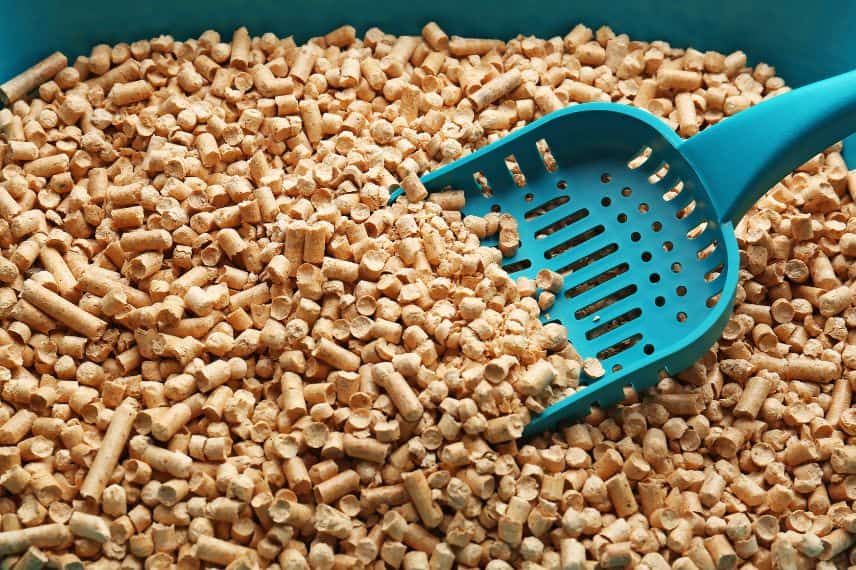
Sawdust and wood litter (chips or pellets)
Mostly made from sawmill residues (such as pine chips or pellets), they are biodegradable and compostable. They are particularly valued for their odour control properties. In compost, decomposed wood adds carbon.
Non-compostable litter: silica litter
Made up of silica beads or crystals, this litter is highly absorbent, but it is not biodegradable and therefore not suitable for composting.
Key points to consider:
- Chemical treatments and scented litter: Some litters, even those plant-based, may be treated with fragrances or chemicals to enhance odour control. These additives may not be suitable for composting, as they can affect the quality of the final compost or soil health. It would appear that these additives are removed during decomposition, but to date no robust scientific studies have certified this. In the absence of solid evidence, we advise against composting scented litters.
- Contamination: Before composting a litter, consider the nature of the waste it contains. Cat faeces, for example, can pose health risks, as mentioned above. In this case, it is important to follow good composting conditions (see Chapter 2) and remove the droppings.
- Ill or under treatment animals: If an animal is ill or under medicated treatment, it is likely that residues of these medicines or the pathogenous agents are present in its droppings. It is then preferable to avoid composting its litter. If you decide to compost it nevertheless, ensure your compost reaches high temperatures (above 50°C) for several days to kill the majority of pathogenous agents. Also allow the compost to mature for a minimum of 18 months to eliminate pharmaceutical residues. Finally, consider using this compost only for ornamental plants or trees, rather than for vegetables or fruit.
Read also
How to hide a compost bin?Step-by-step composting of the litter layer
Composting animal litter requires far more attention and maintenance than garden green waste, in order to ensure proper decomposition and the elimination of pathogenous germs. Don’t worry, it’s not difficult, and remember that this traditional method is used in many countries. The process is the same as for composting litter from dry toilets or manure.
- Before you start, wear gloves when handling the compost and always wash your hands afterwards.
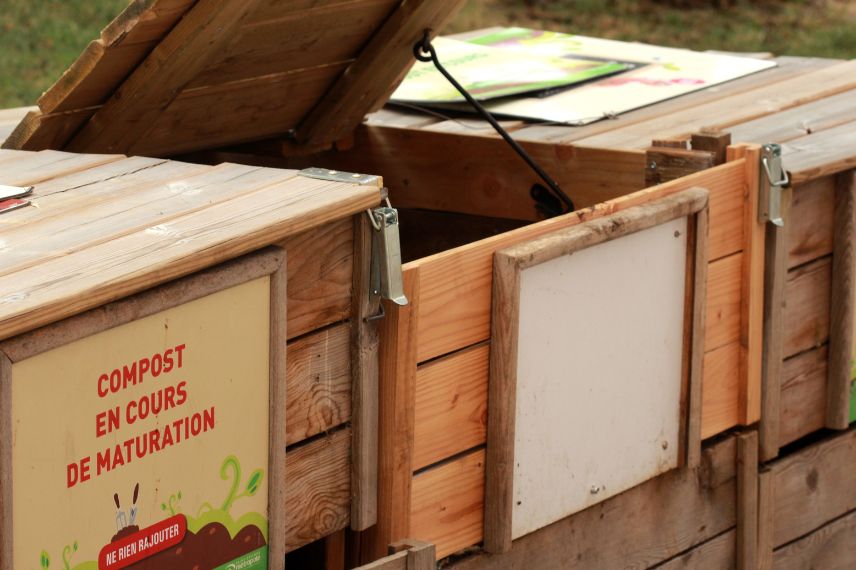
- If possible, create a separate compost heap specifically for animal litter. This helps ensure that composting is carried out correctly for this type of waste, particularly given its long decomposition.
- Next, take the animal litter. Note that at this stage, you may remove the excreta to reduce odours and concerns related to health risk.
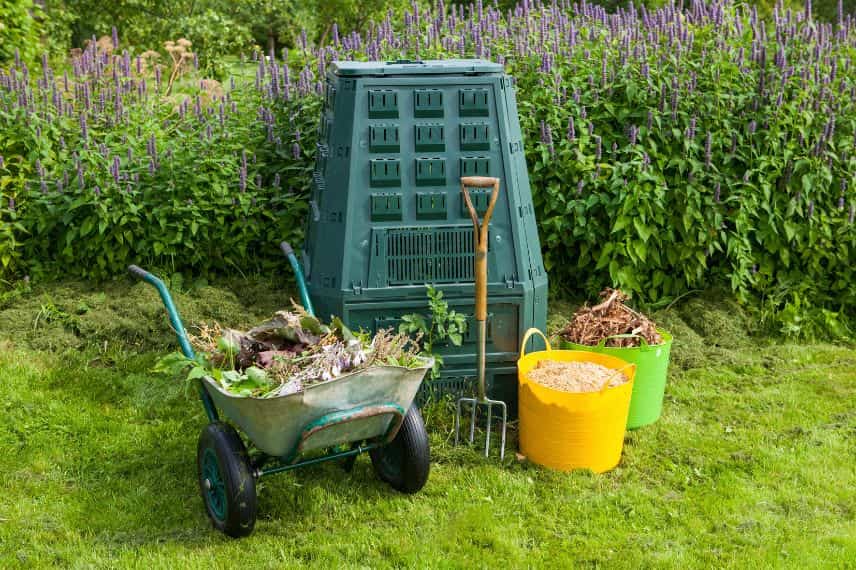
- Add the litter to the compost bin and give it a turn using a fork to mix it with the other components. Note that for a balanced compost, the litter should represent 10 to 20 per cent of the total volume of the compost. Mix it with fallen leaves, lawn clippings, hay or any other garden waste.
- With each addition, perform some more turns, or even turnings, to mix and homogenise the elements.
- Throughout the process, air the compost regularly. Also ensure that your compost heap reaches high temperatures (at least 60°C) for a few days to kill potential pathogens.
- Let the compost derived from animal litter mature for at least two years before use.
- Even after careful composting, it’s best to use this compost only for ornamental plants, trees or shrubs. Avoid using it on vegetables or fruit to prevent any health risk.
Find out more
- To learn everything there is to know about compost, we recommend the book (not to mention the Bible) by Denis Pépin, published by Terre Vivante: “Composting and Mulching, Recycling Your Organic Waste to Feed the Soil”.
- Also read our article: “Succeeding with composting in 5 steps”
- Subscribe!
- Contents
Comments