


How to obtain or multiply aromatic plants for free?
to enrich one's garden
Contents
Aromatic herbs brighten our gardens with their lush greenery and captivating fragrances, but they are also an invaluable asset in the kitchen. But did you know it’s possible to obtain these treasures of nature for free? A way to enlarge your herb bed or vegetable plot! In this article, we’ll explore clever, eco-friendly methods to enrich your garden with aromatic herbs without affecting your budget. From propagation by cuttings to exchanges between enthusiasts, get ready to discover tips that will transform your green space into a haven of flavours, while respecting nature and your wallet.
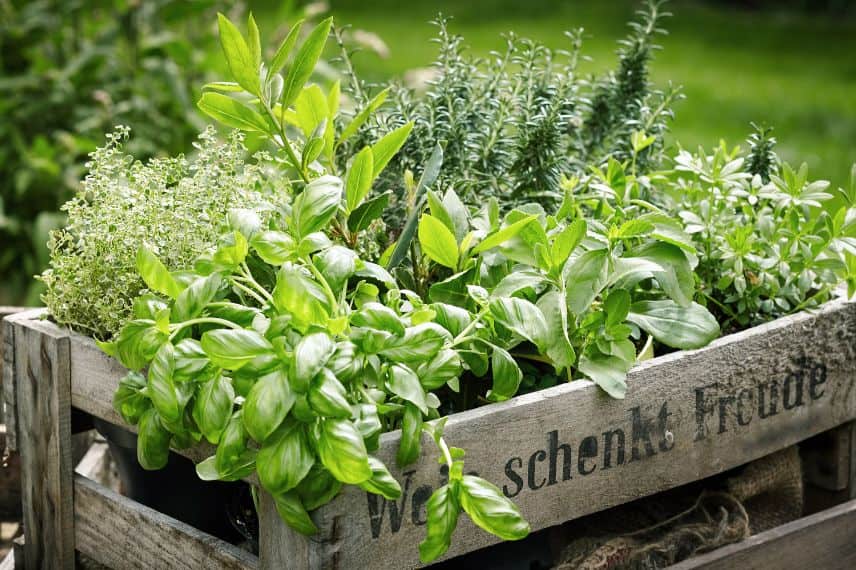
A small square of aromatic plants with a pretty wooden crate

propagation by cuttings
Propagation by cuttings is a vegetative propagation technique that allows a new plant to be created from a stem of the mother plant. It is a particularly effective method for aromatic plants and easy to carry out.
For which aromatic herbs?
Propagation by cuttings works for (almost) all aromatic plants, but some are particularly well suited to this method, such as rosemary, the thyme, sage, the mint, the lavender, the lemon balm, the oregano and verbena.
When to take cuttings?
Aromatic cuttings are taken in late summer, in August and September.
How to take an aromatic cutting?
1- Choose a healthy plant to propagate. This so-called “mother” plant must be vigorous and disease-free.
2- Select a young stem, well-developed and preferably without flowers.
3- Cut the stem to 10 to 15 cm with a pruning shear or gardening scissors, sterilised beforehand to prevent transmission of diseases. For better chances of success, we recommend making at least five cuttings. Cut your cuttings just below an eye, that is, below a leaf, as roots will develop from there.
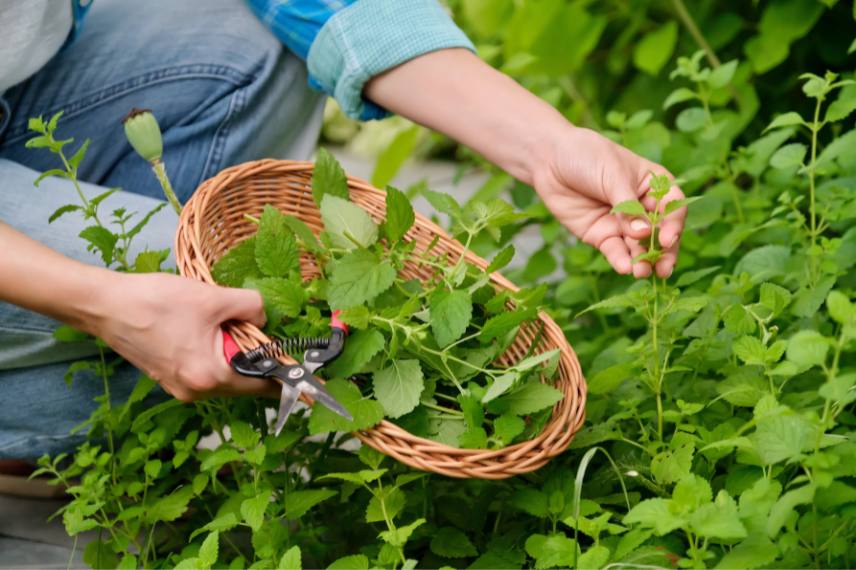
4- Remove the leaves from the bottom of the stem, leaving only a few leaves at the top. This helps the plant conserve energy and not exhaust itself by transpiring through the foliage.
5- Fill seedling cells, a pot or a tray with seed and potting compost for sowing and pricking out or a mix of two-thirds turf and one-third sand for the garden.
6- Moisten the compost with rainwater, then make a 4 cm deep hole with a pencil to avoid damaging the cuttings.
7- Optional: Dip the cut end in a rooting hormone to encourage root growth.
8- Insert the base of the cutting into the compost and press down firmly.
9- Cover the cutting with a clear plastic bag or a cloche or a bottomless plastic bottle to maintain humidity. Be careful, the stem and leaves must not touch the cloche to avoid mould!
10- Place the pot in a bright place, but not in direct sunlight and keep the soil moist, not waterlogged. Lift the cloche for 30 minutes every 3 to 4 days to refresh the air.
11- After 5 to 6 weeks, you can remove the cloche. Then, after 2 to 3 months, roots will have formed. You can then repot your young plants into a larger pot if needed.
12- During winter, we recommend keeping your young shoots in a non-heated greenhouse or conservatory. Reduce watering during this period.
You will be able to plant your young aromatic herbs in the garden in the following spring.
Read also
7 essential aromatic plantsPlant exchange with other gardeners
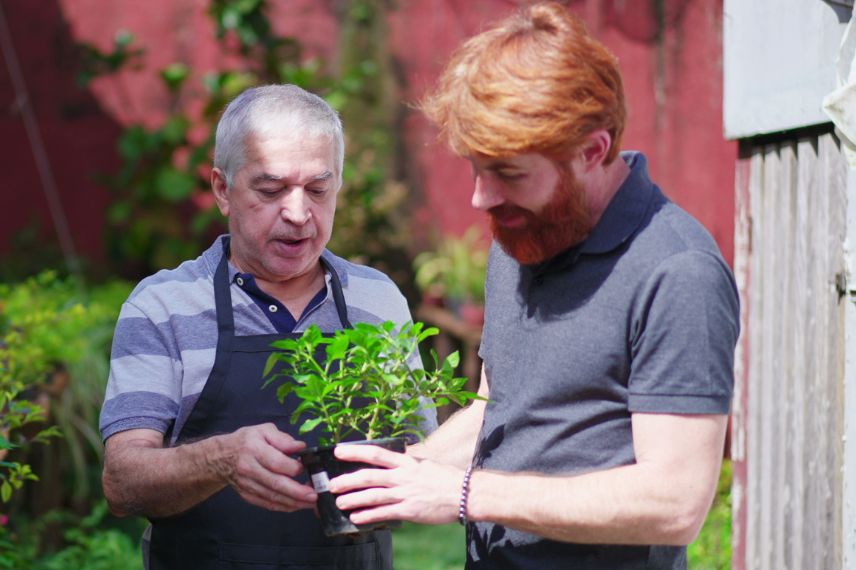
A plant swap is an activity warm that offers gardeners the chance to acquire new plants (aromatic herbs or other plants) at no cost, by swapping those they have in excess.
If you’d like to start a plant swap, begin by selecting the plants you are prepared to swap.
Next, reach out to friends and family, or explore gardeners’ groups on social media, gardening forums, or local associations dedicated to gardeners to find exchange partners. Don’t hesitate to check with your council, community or collaborative gardens to find out the dates of the next “plant swaps”.
Highlight your plants by mentioning that you are seeking aromatic herbs, and start a discussion about the swap terms with the people involved.
Once an agreement is reached with a partner, arrange a meeting to carry out the exchange.
Finally, plant your newly acquired plants in your garden and look after them.
Seed collection and sowing
Seed collection is a natural and economical method for obtaining aromatic herbs.
When to collect seeds?
Seed collection is generally carried out at the end of the growing season, when the seeds are ripe and dry.
How?
- Ask friends, family or amateur gardeners if they have the aromatic plants you are looking for. Check with them if they can harvest seeds for you.
- Identify healthy, vigorous plants, and ensure you are certain you are collecting the right plant and the right variety, to avoid mix-ups that could jeopardise your health. If in doubt, it’s better to harvest from gardeners than from the wild.
- Dry the seeds in the air, then store them in an airtight container in a cool, dry place.
When to sow?
The ideal time to sow depends on the plant and your climate. For many aromatic plants, early spring is often the most suitable period.
How to sow?
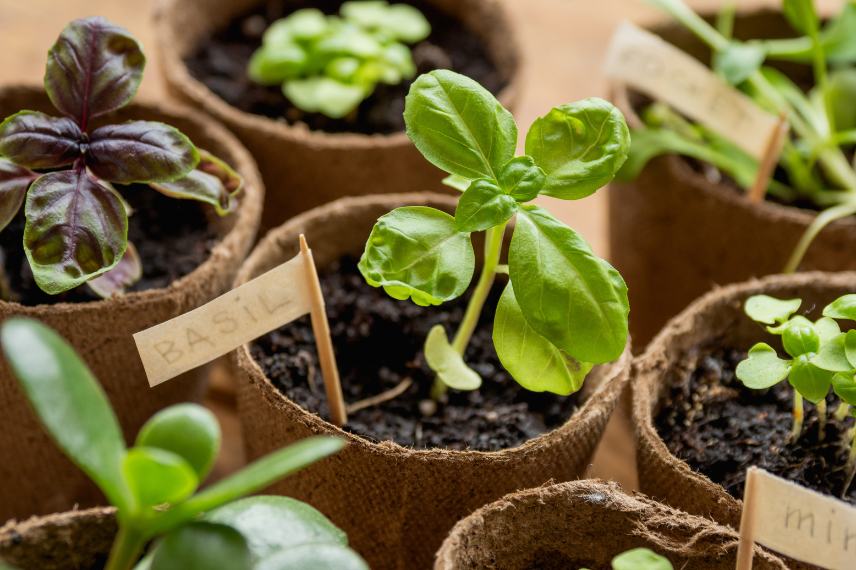
1- Depending on the variety and your climate, you can sow aromatic seeds in pots, seed trays or directly in the ground. Start by consulting the plant’s instructions on our site to know when to sow.
2- Prepare your soil or pots:
- For sowing in pots: use seed and pricking-out compost or a mix of two-thirds turf and one-third garden sand.
- For sowing in open ground: loosen the soil and remove weeds. Also add seed and pricking-out compost or well-decomposed compost to enrich the soil and make it lighter.
3- Sow the seeds at the recommended depth, following the specific instructions for each plant. Then cover them with seed compost.

4- Water the newly sown seeds gently. Use a watering can with a fine rose to avoid disturbing the seeds.
5- Place the seedlings in a sunny spot, in a greenhouse, behind a window or under a grow light if sowing indoors.
6- Keep the soil uniformly moist but not waterlogged. A plastic film or a glass cloche can help to maintain humidity for indoor seedlings.
7- If you have sown several seeds per hole or pot, thin them out once they have a few true leaves, leaving the strongest plant.
8- If you have sown indoors, transplant the young plants outdoors or into larger pots once they are strong enough. Continue to water, feed and care for the plants as they grow.
→ For more information, read our article: The sowing of aromatic plants
Read also
7 exotic aromatic plants easy to growRecycle your kitchen scraps
Did you know you could use your kitchen leftovers to obtain new aromatic herb plants for free? It’s a clever and sustainable method. For example, if you used basil for cooking, do not throw away the remaining stems. Rather than composting them, here are the steps to obtain a new plant:
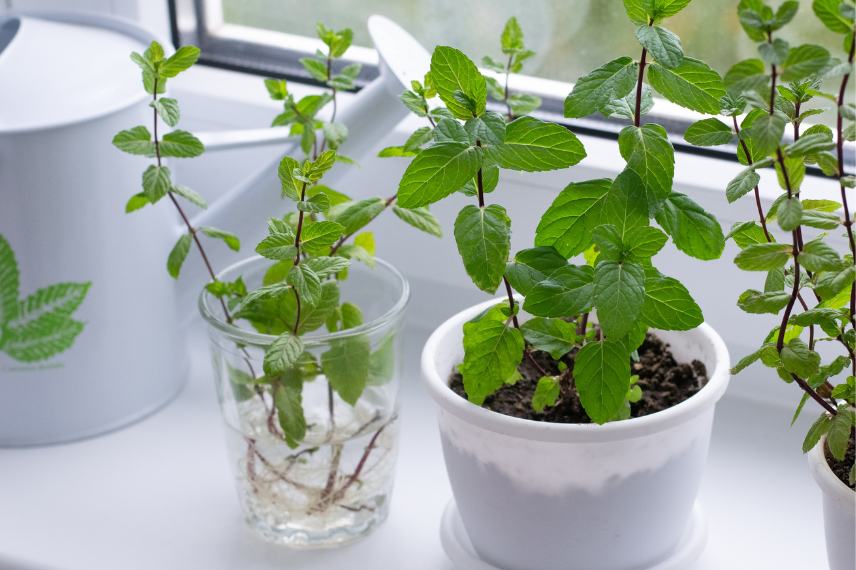
1- place the stems in a glass of water and place it in a sunny spot, for example near a window.
2- Refresh the water every 2 to 3 days. This will help prevent the growth of bacteria and mould that could hinder root growth. Clean water also provides the nutrients needed to encourage healthy growth of your plant.
3- In a few days, you will see roots starting to develop. Once the roots are long enough, you can transplant the stem into seed sowing and transplanting compost. Be very careful not to break this young root system.
This method also works well for other aromatic herbs such as the mint and rosemary. Not only is this practice economical, but it also helps reduce waste, killing two birds with one stone for environmentally conscious gardeners.
- Subscribe!
- Contents

Comments