





























6 pairing ideas with Molinia
Natural or graphic
Contents
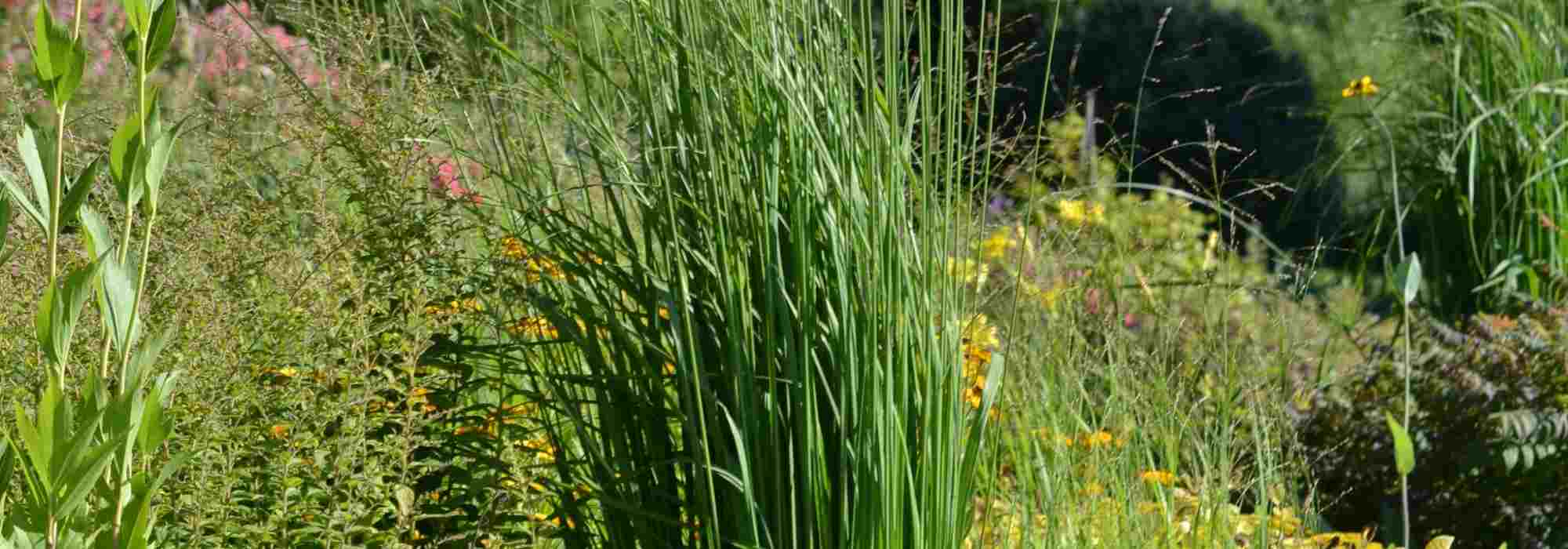
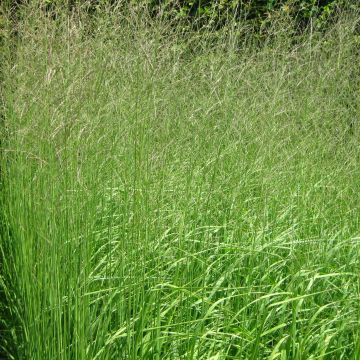
Molinia is a perennial grass valued for its deciduous foliage of lovely light green, variegated in Molinia caerulea ‘Variegata’, or with bluish hues in Molinia caerulea ‘Moorhexe’ or “Blue Molinia”. Some grow in very graceful upright clumps reaching up to 3 m tall, while others form small, graphic cushions not exceeding 40 cm. The plant is spectacular in autumn when its fine foliage takes on orange, blonde, or golden hues depending on the variety. Marcescent, it dries in autumn but persists, remaining decorative in winter. In mid-summer, and sometimes until December, it rewards us with panicles of airy spikelets. Very hardy and easy to care for, it thrives in full sun or partial shade, requiring no maintenance, in any fresh or even moist, well-drained soil.
This large herb with impeccable design is ideal for bringing lightness and a natural feel to both small and large wild spaces. Both structuring and light, this beautiful perennial plant is easy to combine, grouped in a naturalistic meadow or along a path, in a modern garden, or in a border.
Discover how to create beautiful associations with molinia!

In a beautiful late-season scene
The molinia is a particularly interesting grass for its beautiful autumn colours. It reveals itself in copper to gold tones, adorned with a spicy-hued mane that it will retain until the end of January. This is an asset in a garden, providing lovely splashes of colour during the cold season. You can create a stunning late-season scene by combining Molinia caerulea ‘Heidebraut’, which lights up in orange-yellow at the end of summer, with autumn flowering. Pair it with Sedum ‘Herbstfreude’ (syn. Sedum ‘Autumn Joy’) with its wine-red flowers, the Erica x darleyensis ‘Kramer’s Rote’, and Echinacea purpurea with its large purple daisies featuring a copper-brown centre, along with the Eupatorium purpureum. Enhance the lightness with tufts of Pennisetum orientale and Calamagrostis ‘Karl Foerster’, both equally ornamental grasses. In the background, consider installing other vibrant foliage, such as dogwoods, Cornus sanguinea ‘Mid Winter Fire’ with its orange-red stems and bright yellow leaves in autumn, and shrubs with decorative fruits like Nandina domestica ‘Gulf Stream’ with its intense red berries.
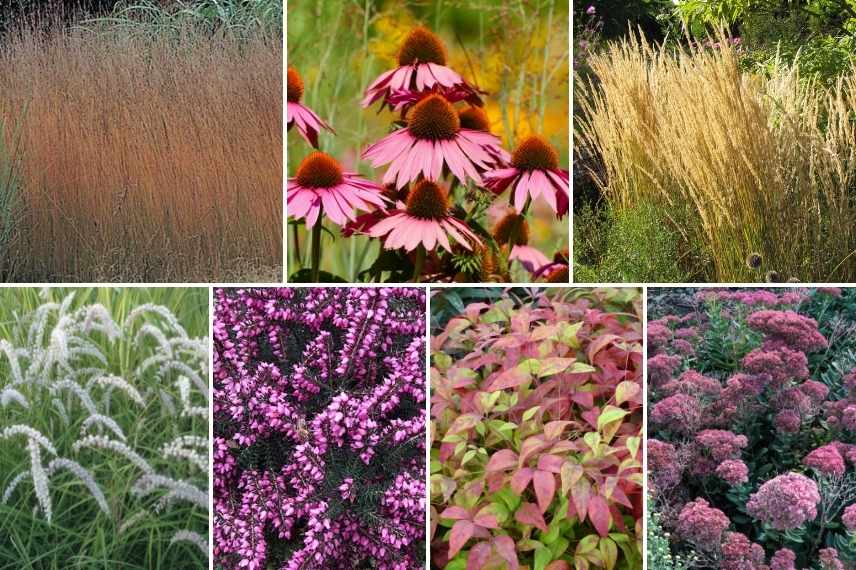
Molinia caerulea ‘Heidebraut’, Echinacea purpurea, Calamagrostis ‘Karl Foerster’, Pennisetum orientale, Erica x darleyensis ‘Kramer’s Rote’, Nandina domestica ‘Gulf Stream’ and Sedum
At the edge of the path
With their small size, some molinies are well-suited for this use. Planted in a line to border a path, they will form very graceful clumps that do not spread. ‘Moorhexe’ is a particularly interesting selection to bring a lot of natural charm to a border that remains quite fresh in summer. You can alternate it with other grasses like Pennisetum alopecuroides ‘Cassian or a Melica uniflora var. albida, which is very graceful. In a summer border, this trio will balance the more compact and regular forms of boxwoods or a Euonymus japonicus variegated topiary. These grasses bring a beautiful effect of movement and lightness. Interspersed within these shapes and foliage, add clumps of Daylily ‘Joan Senior’ with its creamy-white repeat flowering, Persicaria amplexicaulis ‘Pink Elephant’, with a compact habit, and lower plants, such as Heuchera ‘Plum Royale’ with its very intense coloured foliage. Also integrate plants with broad, thick leaves like bergenias. Accent this border by complementing it with the generous blooms of Allium karataviense ‘Ivory Queen’ and Anemone Dahlia ‘Take Off’ with their fresh, tangy colours.
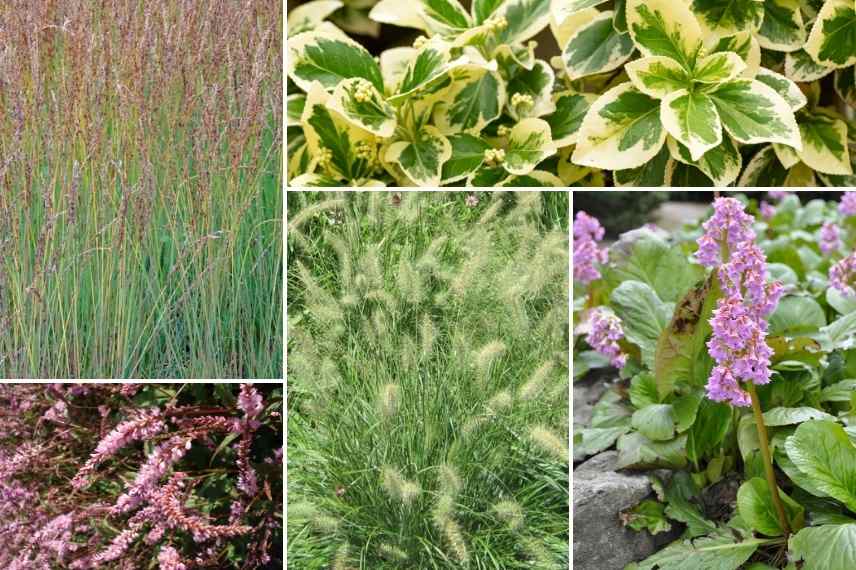
Molinia ‘Moorhexe’, Euonymus japonicus variegated, Persicaria amplexicaulis ‘Pink Elephant’, Pennisetum alopecuroides ‘Cassian’ and Bergenia
Discover other Molinia
View all →
Available in 2 sizes
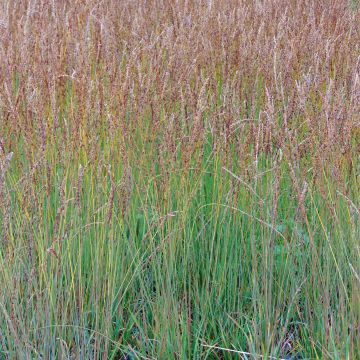
Available in 3 sizes
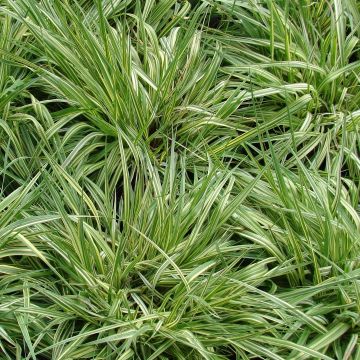
Available in 2 sizes
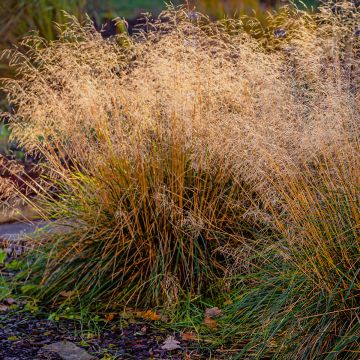
Available in 1 sizes
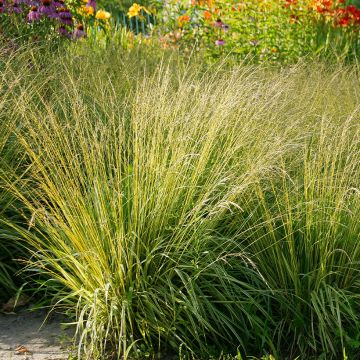
Available in 2 sizes
Available in 1 sizes
Available in 2 sizes
Available in 1 sizes
Available in 2 sizes
Available in 2 sizes
By the edge of a pond
As Molinia is capable of thriving in heavy, moist soils, it will flourish by the edges of a water feature. Surround the beautiful and delicate Molinia caerulea ‘Transparent’ with perennials for wet banks to create a natural scene. It will add a touch of whimsy and infinite lightness. Its slender silhouette forms a beautiful contrasting duo with the elegant purple-tinted fronds of Osmunda regalis ‘Purpurascens’. Surround them with gunneras, Carex pendula, the very graphic Juncus effusus ‘Spiralis’, the spiralled rush, and Imperata cylindrica ‘Red Baron’, a perfect grass for the edges of a pond, whose olive-green foliage turns blood-red over the seasons. Complete this original aquatic tableau with flowering clumps, such as those of Cirsium rivulare ‘Atropurpureum’ in the background and Lythrum salicaria ‘The Beacon’, another superb wet soil perennial with pink-red flowers and foliage that takes on beautiful reddish hues in autumn. The Veronicastrum virginicum ‘Fascination’ will add elegance and verticality to the edges of this water feature.
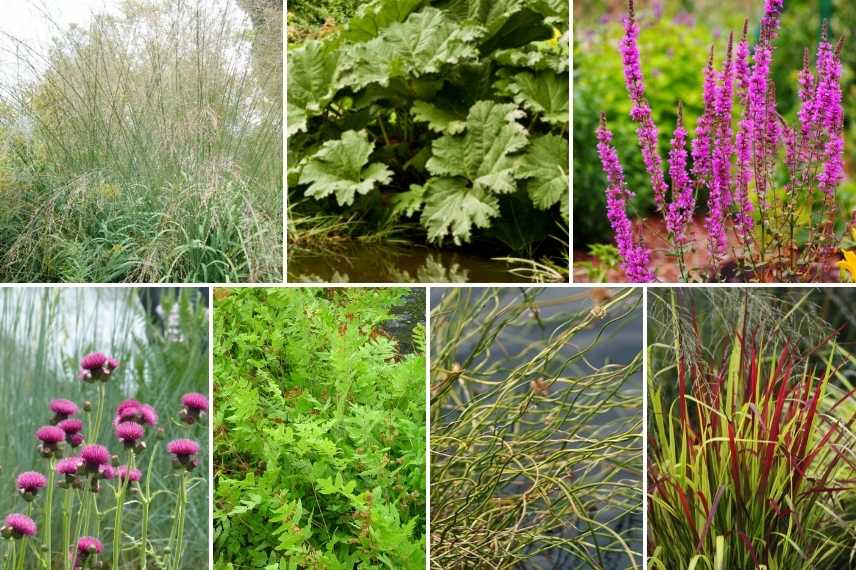
Molinia caerulea ‘Transparent’, Gunnera manicata, Salicaria, Cirsium rivulare ‘Atropurpureum’, Osmunda regalis, Juncus effusus ‘Spiralis’ and Imperata cylindrica ‘Red Baron’
Read also
Grasses: which variety to choose?In a contemporary garden
With their fine foliage, graphic silhouette, and light spikelets, molinies bring texture and movement to a contemporary, graphic garden. They blend well with their subtle colours and soften sharp angles. Create a backdrop with bamboo and horsetails for a scene that is both understated and elegant. A few clumps of Molinia caerulea ‘Edith Dudszus’, with its long black stems, will soften a minimalist decor while providing a strong structural presence. It will form a beautiful duo with Panicum virgatum ‘Blue Darkness’, another grass with variegated purple-black and blue-green foliage that will add verticality to the arrangement. You can also choose Ophiopogon planiscapus ‘Nigrescens’, with its black leaves. You will create a contrast of colours and shapes with Agapanthes (such as ‘Mount Everest’) and with the spherical heads of ornamental alliums. Also consider a Hydrangea ‘Annabelle’ with its immense white spherical inflorescences to add refinement and distinction. A few lush hostas (‘Halcyon’), and other grasses, such as Stipa pennata, Miscanthus, or Calamagrostis will complete this modern ensemble.
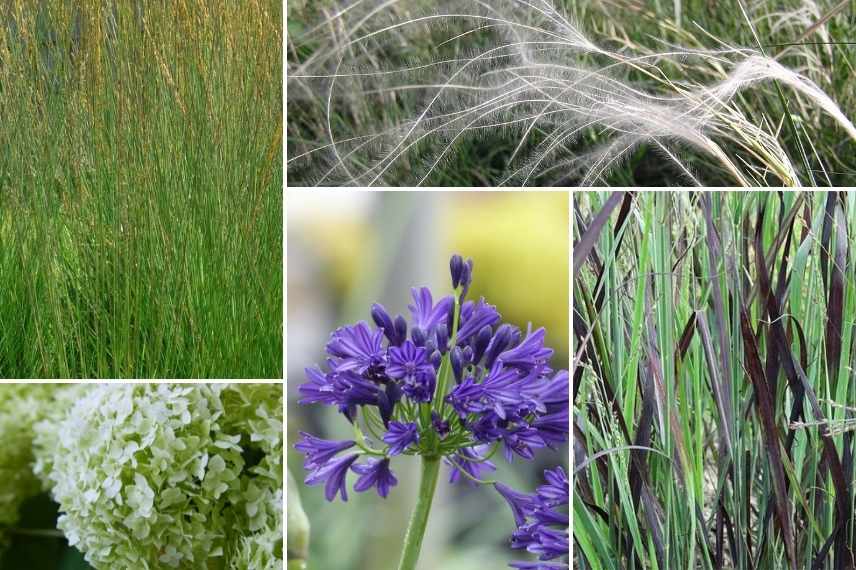
Molinia caerulea ‘Edith Dudszus’, Stipa pennata, Hydrangea ‘Annabelle’, Agapanthus ‘Royal Velvet’ and Panicum virgatum ‘Blue Darkness’
In a grass garden
Inspire yourself from the Plume Garden, where ornamental grasses reign in an orderly chaos! In a large garden, you can dedicate an area to grasses. You will admire their root hairs dancing with the wind, frost, or the light of the setting sun. With their strong presence, they bring beautiful structure, naturalness, and much grace to the garden. Plant them in masses for a striking effect. Light, transparent, and poetic, they combine perfectly with one another. In a wild and tousled atmosphere, combine Molinia caerulea ‘Heidebraut’ and Molinia caerulea ssp arundinacea ‘Fontäne’ with spectacular grasses all year round: from the majestic large plumes of Pampas Grass, to the light spikes of Miscanthus, Miscanthus Giganteus, for example, which easily reaches heights of 2.5 to 3 m, another architectural grass. Meanwhile, Stipa tenuifolia or Stipa barbata will form more flexible, arching tufts of intermediate size.
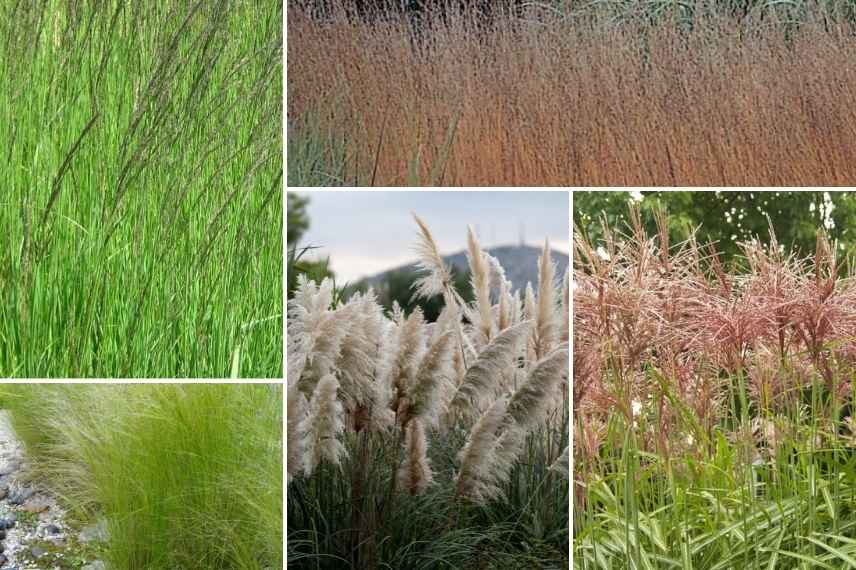
Molinia caerulea ‘Heidebraut’, Molinia caerulea ssp. arundinacea ‘Fontäne’, Stipa tenuifolia, Cortaderia, and Miscanthus sinensis ‘Malepartus’
In a naturalistic border
The molinia is essential in a naturalistic or rustic garden. With its misty inflorescences and changing blonde hues throughout the months, it blends seamlessly into lush scenes where plants with a soft habit are preferred. The clumps of molinia appear as punctuation, at the heart of a mix of summer-flowering perennials. To structure this natural space, the Sesleria automnalis will provide support. The Buenos Aires Verbenas will add beautiful verticality to this tableau, providing a lovely shape contrast with their cloud-like purple flowers, as will the Achillea filipendulina ‘Golden Plate’, for example, with its flat inflorescences. This type of display favours easy-going and highly floriferous plants such as Echinaceas, Helenium ‘Moerheim Beauty’, Agastaches, and Salvia ‘Caradonna’. Also favour fluid perennials like cosmos and giant Asters which will be placed at the back of the bed, the Aster laevis that will bloom abundantly in autumn will be a good companion. The flowering of Japanese Anemones ‘Honorine Jobert’ or dahlias will accompany your moliniae until the gates of winter. Accent the whole with a few clumps of Pennisetum alopecuroides ‘Hameln’ and you will achieve a blend with subtle and natural charm from early summer to late autumn.
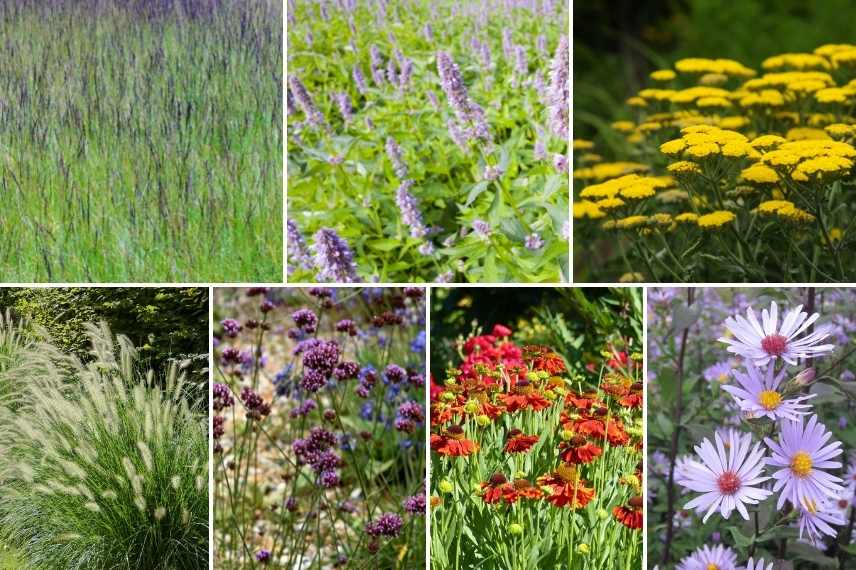
Molinia caerulea, Agastache Blue Fortune, Achillea filipendulina ‘Golden Plate’, Pennisetum alopecuroides ‘Hameln’, Verbena bonariensis, Helenium ‘Moerheim Beauty’ and Aster laevis
- Subscribe!
- Contents
Comments