



Permaculture kitchen garden: everything you need to know about vegetable companion planting
to optimise your vegetable garden
Contents
One of the principles of a permaculture kitchen garden is to plant densely to keep the soil from being bare. And there’s nothing better than pairing vegetables that thrive together. This method companion planting. It involves planting together different species of vegetables so that they support one another. Inspired by nature, this technique maximises space and resources while naturally deterring pests. The benefits are numerous in permaculture: richer soil, abundant harvests and thriving biodiversity. In this article, we will share concrete examples and practical tips to create your own vegetable pairings.

What are the benefits of plant associations in permaculture?
Unlike traditional monocultures, in permaculture we favour associations of beneficial crops with one another. This involves planting different species of vegetables side by side and even interspersed among them. This method has several advantages :
Increase in productivity
By combining different plants, we can maximise the use of space and available resources (light, water, nutrients). For example, fast-growing plants can be grown between rows of slower-growing plants, freeing space as they grow, and thus enabling several harvests on the same plot in a single season.
Imitation of Nature
Drawing inspiration from natural ecosystems, we do not leave the soil naked. Additionally, some plants are beneficial to one another, for example by repelling pests or by attracting pollinators. This method helps maintain the ecological balance of the garden and reduce pest infestations, and, consequently, the upkeep.
Legumes are also useful in recycling atmospheric nitrogen through a symbiosis with bacteria present in their roots. The nitrogen thus fixed is then released into the soil, enriching it and benefiting neighbouring plants. Thereby improving soil fertility without recourse to fertilisers.
Space optimisation
By using different heights and cultivation cycles, we can optimise the space of each plot. For example, climbing or tall plants (runner beans, tomatoes, sunflowers, …) can provide beneficial shade to low-growing plants that cover the soil. Similarly, warm-season crops can be preceded or followed by cool-season crops, enabling continuous and efficient use of space.
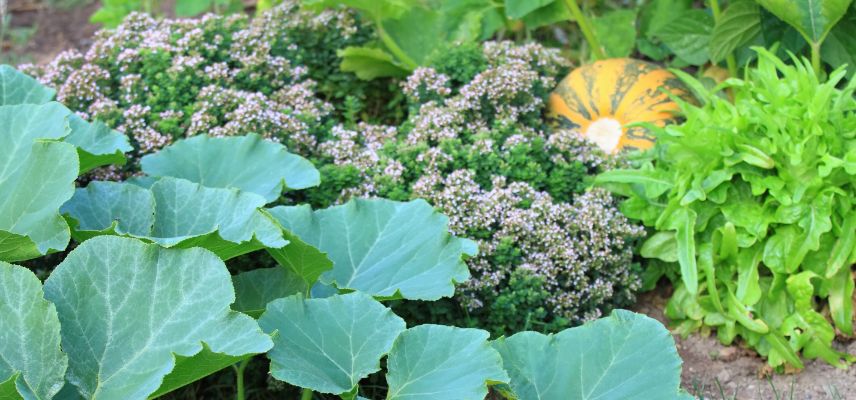
MILPA" association: maize, climbing beans and gourds.
MILPA, also known as ‘the three sisters’, is an ancient cultivation method practised in Latin America. This technique combines maize, climbing beans and squashes.
Maize provides a structure on which beans can climb. It also provides shade for the squashes.
Climbing beans fix nitrogen in the soil, enriching the soil for maize and squashes.
As for the squashes (pumpkins, gourds, spaghetti squash, butternut, etc), they cover the soil with their broad leaves, reducing unwanted weeds and conserving soil moisture.

maize, climbing beans and squashes
How to proceed?
1 – Choose a sunny spot. Loosen the soil without turning it over. You can enrich it with compost or well-rotted manure.
2- Sow the maize seeds first, spacing them 30 cm apart. Water regularly until germination.
3- Once the maize is about 15 cm tall, sow the climbing bean seeds around each maize plant. The beans will climb the maize stalks.
4- Sow at the same time the squash seeds between the rows of maize and beans.
5- Water regularly to keep the soil moist, but avoid overwatering.
Carrot-radish-salad combination
You’ve no doubt noticed that not all vegetable plants grow at the same rate. Some are quick, such as radishes, whereas others, such as carrots, grow much more slowly. Thus, by planting radishes beside carrots, you will harvest the radishes first, leaving space for the carrots to grow. Carrots or any other slow-developing root vegetables, such as the parsnips or the beetroot, etc.
Furthermore, they do not all take up the same space : here radishes and carrots grow underground, which leaves space on the surface for sowing or planting lettuce! Or any other leafy vegetables.
This association allows harvesting radishes first, followed by lettuce, then carrots, maximising the use of the plot over an extended period. In addition, radishes can attract certain pests, keeping them away from carrots and lettuce.
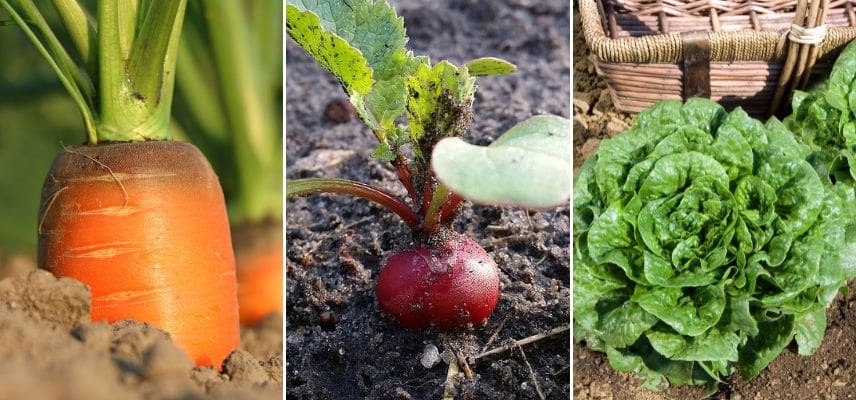
carrot, radish and lettuce
How to proceed?
1- Prepare the soil by loosening it. You can add compost to enrich it.
2- Sow radish seeds first, spacing them five centimetres apart.
3- Sow carrot seeds between the radish rows.
4- Finally, sow lettuce seeds around the radishes and carrots.
5- Water regularly to keep the soil slightly moist during germination.
6- Thin out carrot seedlings if necessary.
7- Harvest the radishes first, after about three to four weeks.
8- Harvest the lettuce as you need.
9- Harvest the carrots when they reach the desired size, usually after two to three months.
Note :
- You can also replace carrots with cabages, which develop more slowly than lettuce.
- Lettuces also enjoy shade, so you can plant them at the base of tomatoes, peppers, aubergines or sunflowers.
Read also
Kitchen garden: crop rotation in autumnTomato-basil-calendula association
Are you familiar with the tomato–basil pairing in the vegetable garden? tomato and basil in the vegetable garden? Basil is reputed to improve the flavour of tomatoes when grown together. Additionally, the tomatoes provide partial shade for the basil. And to further deter aphids and other greedy insects, you can sow calendula seeds among the plants.

Tomato, Basil and Calendula Flowers
How to proceed?
1- Choose a sunny spot and prepare the soil by loosening it. You can enrich it by adding compost.
2- Plant young tomato plants 50 cm apart. Use stakes to support the plants as they grow.
3- Plant the basil between and around the tomato plants, spacing them 20-30 cm apart.
4- Plant calendula along the border of the tomato and basil rows.
5- Water regularly, taking care not to wet the tomato leaves to prevent diseases.
6- Pinch out the basil to promote denser growth and a continuous production of leaves.
7- Remove the lower leaves of the tomatoes to improve air circulation and reduce the risk of diseases.
Tips :
- Harvest basil leaves regularly to encourage new growth.
- Harvest calendula flowers to encourage continued flowering.
Note :
- Tomatoes can be replaced with peppers or aubergines.
- Calendula flowers can be replaced by nasturtiums.
- You can also plant small vegetables at the base of the tomato plants to fill the space: lettuces, radishes, carrots, beetroot, etc.
Tips for companion planting in the vegetable garden.
Every garden is unique, and the best associations can vary depending on soil, climate and growing conditions. Observe and do not hesitate to experiment to create your own combinations. A few tips:
- Think about crop rotation in the vegetable garden.
- Combine plants of different heights to maximise space: climbing varieties, low-growing vegetables and root vegetables.
- Pair fast-growing plants with slow-growing ones. The former can be harvested before the latter occupies all the available space.
- Choose plants with similar water and light requirements to avoid competition.
- Some plants protect each other from pests and diseases, as shown in the previous chapters.
- Keep a notebook of the associations used, planting dates and results obtained.
- Don’t be afraid to experiment with different plant combinations. Some associations that are not commonly recommended can still work well in some gardens.
- Don’t hesitate to swap ideas with other gardeners nearby, to discover new ideas.
Further reading on this topic
We recommend reading a few books on the subject:
- “I optimise space in the kitchen garden” by Joseph Chauffrey – Terre Vivante
- “Splendours and Miseries of a Permaculturist” by Stuart Anderson – Terre Vivante
- “Leek prefers strawberries” by Hans Wagner – Paperback
- “Good companion planting in the kitchen garden” by – Paperback
- Subscribe!
- Contents
Comments