


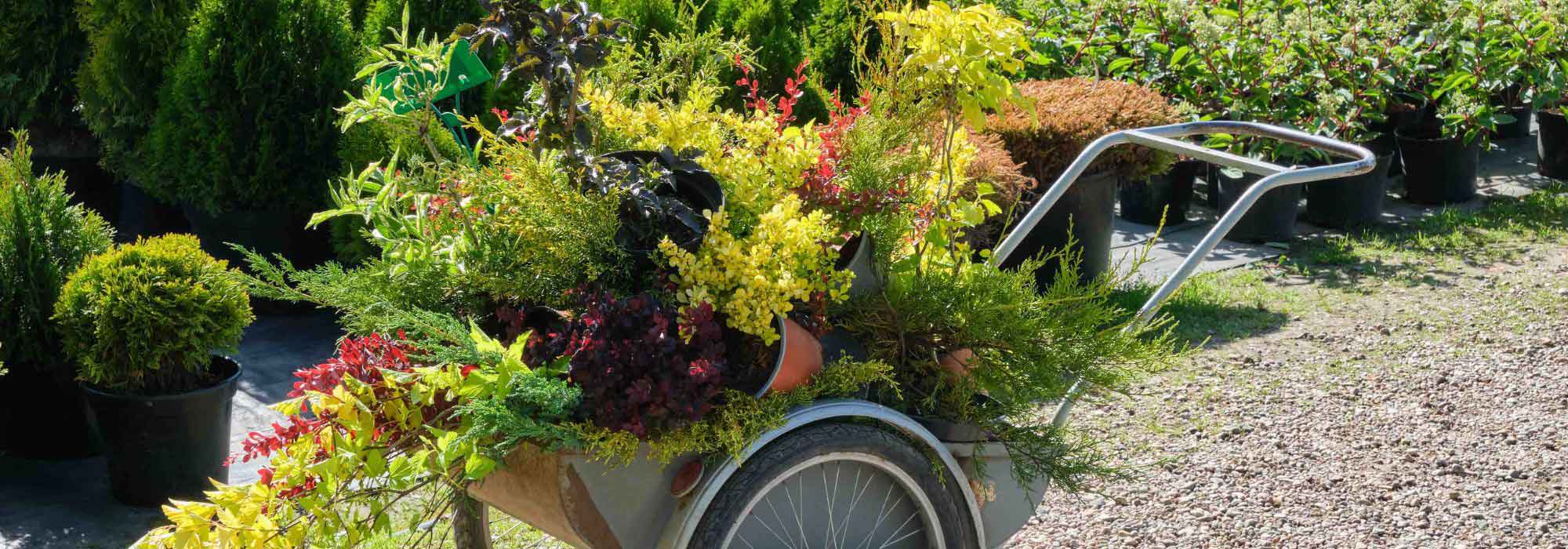
What to plant in autumn?
the best season for most plantings
Contents
Autumn is undeniably the best planting season for many of our garden plants: the soil has not yet cooled down, and in most regions, the rains have brought welcome moisture.
When planted in autumn, plants benefit from these conditions and, during their winter dormancy, will have plenty of time to establish roots before the next summer arrives, bringing its share of heat and dryness. In short: all the conditions are in place for plants to settle in easily, provided you take into account the specific needs of each plant and those of your garden (climate, type of soil…). Discover what you can plant in autumn to prepare for a beautiful, vibrant season in the garden.

Ornamental and fruit trees
Whether they are deciduous (losing their leaves) or evergreen (keeping their leaves all year round), whether they are fruit-bearing or ornamental, and whether you buy them as bare roots or in containers, with the return of the rains, the spade is back in action, and autumn months are the most suitable for planting trees!
First and foremost, planting a tree requires finding its ideal location. Make sure to research the mature size of the subject(s) you have chosen and select its future home accordingly.
Container planting can begin in October for both leafy trees and conifers, but wait until early November for bare roots; they are delivered during their ideal planting period, which also corresponds to their resting phase. If you plant bare root trees quickly after receipt (within a week), store them in a cool place and protect them from frost, in your garage or cellar, with the roots shielded by the packaging cardboard. If you need to wait longer, put them in a heel. Absolutely avoid planting when the soil is waterlogged, frozen, or when the wind is blowing strongly.
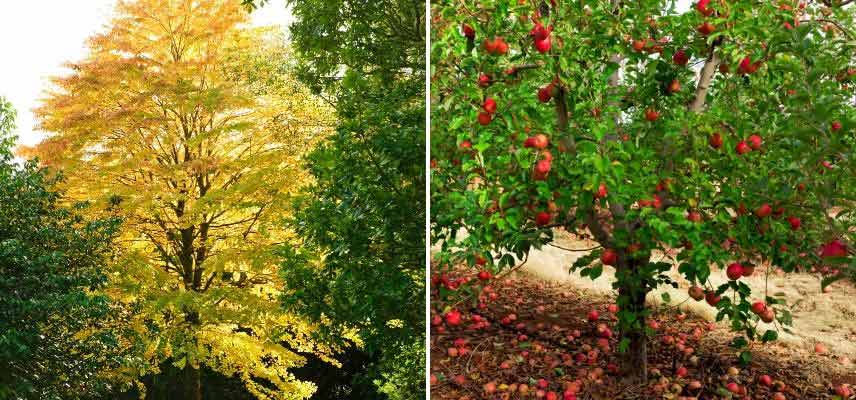
Ornamental trees like Cercidiphyllum japonicum or the Caramel Tree and fruit trees like the ‘Reine des Vergers’ peach should be planted in autumn.
→ To plant like an expert, find our best tips for planting trees and shrubs in bare roots.
Hedge plants
Ideal season for planting hedge shrubs, autumn will allow you to create green screens, windbreak hedges, or flowering hedges.
Evergreen hedge shrubs such as Eleagnus, Photinias, Leyland Cypress, or Cotoneaster should ideally be planted in early autumn, around September-October. Deciduous bushes should be planted from September to mid-December until the first significant frosts: Buddleia, Japanese Quince, Deutzias, Altheas, or Cornus will allow you to create charming flowering hedges with decorative foliage.
If you are unsure about the choice of species, we offer evergreen and privacy hedge kits, suitable for various functions in the garden (fast growth, coastal areas, flowering…).
If your budget is tight or if you have many bushes to plant, don’t hesitate to plant small, in pots or bare roots: these plants will have the advantage of rooting easily and quickly.
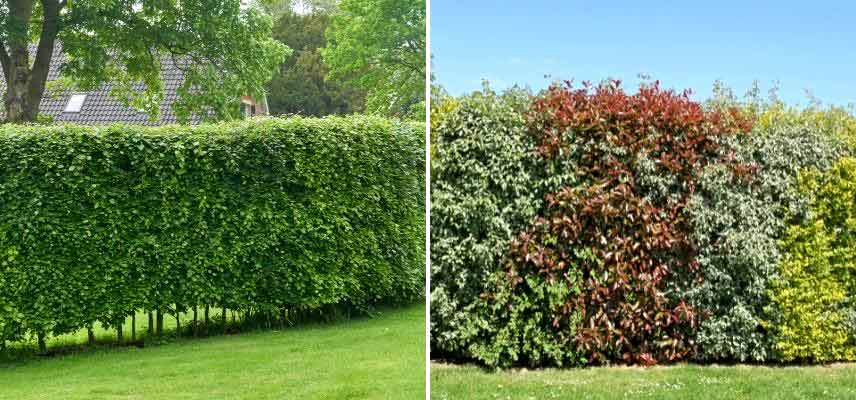 Hedge of hornbeams and diverse hedges take place between October and December in the garden; they will benefit from winter dormancy to root
→ Find in our article 9 hedge bushes for beginners: they are foolproof and require little maintenance.
→ Follow our tips on how to plant a hedge properly.
Ornamental shrubs
As with hedging bushes, shrubs for your flower beds or to plant as specimens will thrive when planted in autumn, whether as bare roots (from November) or in containers.
Large or small, for sun or shade, to be planted in the garden or in pots, evergreen bushes will remain decorative all year round and help to provide structure to your garden. Plant them in early autumn (October), before planting deciduous bushes, and then install the latter. If you wish to brighten up the surroundings of your home with beautiful decorative bushes, plant them in a large container or pot, ensuring proper drainage.
Flowering shrubs, decorative habit, for small gardens, fragrant, with striking foliage… our extensive collection is sure to help you find the perfect subjects for your garden. And don’t forget the melliferous bushes, which are invaluable for biodiversity!
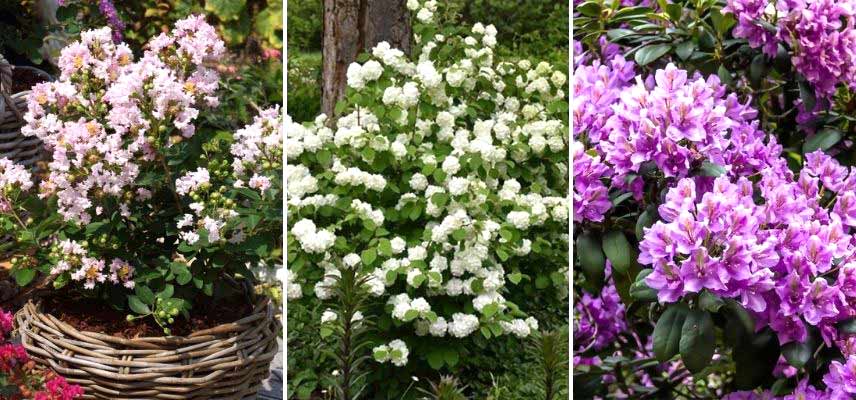
Lagerstroemia indica ‘With Love Babe’, Viburnum plicatum ‘Opening Day’ and Rhododendron catawbiense ‘Boursault’ are decorative bushes that you can plant in the ground or in pots during autumn.
→ Find all the useful tips for planting an evergreen shrub
→ For months of flowers, check out our selection of 10 shrubs with long flowering and for a resilient garden, discover drought-resistant bushes
Climbing plants
To brighten up your façades or to green your pergolas and arbors, climbing plants are, of course, essential. Some climbing roses are available as bare roots, but most other climbers are typically grown in pots. Again, for better establishment of the root system, climbers benefit from being planted in autumn, with the exception perhaps of the more tender varieties – Bougainvilleas, Hardenbergia, certain Passionflowers or Jasmines – which are best planted in spring to avoid fatal winter frost at planting, unless you live on the Mediterranean coast.
Clematis, wisterias, Virginia creepers, trumpet vines or honeysuckles will therefore take their place in the garden from October, and some compact varieties, suitable for small spaces for growing in large pots, can be planted at the same time.
At planting, tilt the root ball towards the support and tie the first stems with ties. Backfill the hole and water, continuing to water during the establishment period if rainfall is insufficient. Some climbers, such as honeysuckle or clematis, need to be tied to a support with ties to train them, while others like Virginia creeper or trumpet vine cling on their own using climbing roots on their stems.
Bamboos
Running or non-running, intended for planting in the garden or installed in pots, bamboos in containers can theoretically be planted all year round. However, the best time for good rooting of bamboos is from September to November, that is to say in autumn. Be cautious with tender varieties like Fargesia papyrifera and the varieties they originate from. Hardy down to -9/-11 °C, in milder regions, it is safer to plant it in spring, so that the stump has time to root properly to withstand the next winter. In harsher climates, it is better to plant it in a large pot to winter it.
Don’t forget to place a rhizome barrier in the planting hole or trench for bamboo hedges; buried 50 cm deep in the soil, it will effectively stop the suckers to control the spread of running varieties. Bamboos tolerate container cultivation very well, provided you keep up with watering; choose your species carefully and favour non-running or slow-growing bamboos.
→ Discover our selection of 6 fast-growing bamboos and which varieties to choose for creating a bamboo hedge
Roses
Whether they are bushes, groundcovers, climbers or standards, the best time to plant roses is between late October and mid-December. This allows them to take advantage of their winter dormancy to establish roots and be ready to offer you their profusion of flowers in the next beautiful season, without suffering too much during the upcoming summer. We offer them in containers, bare roots, or clumps.
Container roses can theoretically be planted all year round, but autumn is the most favourable time, while being attentive to watering in the weeks following their planting if rainfall is insufficient.
Dug up in October to be available for sale, bare root roses should be planted from mid-October until the end of March, avoiding frost periods.
→ Also read: When to plant roses?
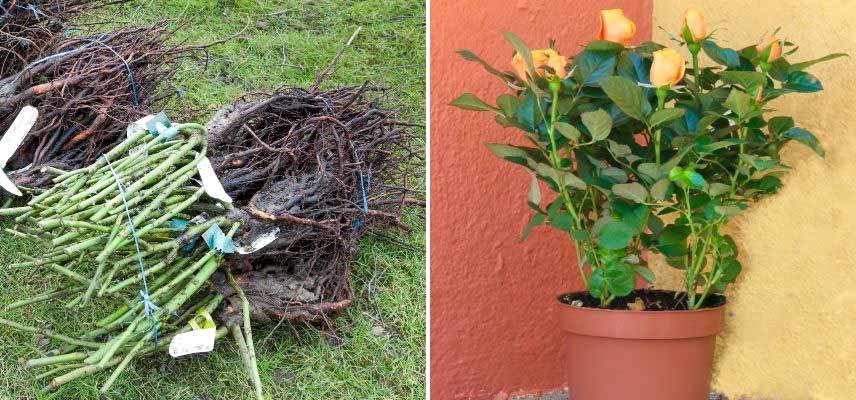
Bare root roses or container roses: make your choice and plant in autumn for beautiful blooms next season
→ Read our article our tips on how to plant roses .
→ And if you are passionate about roses, discover how to create a rose garden or rosarium!
Small fruits
Blackcurrant bushes, strawberry plants, raspberry plants or more unusual Goji berries and Mayberries: all the small fruits have in common that they delight us with their vitamin-rich harvests and can be successfully planted in autumn. They are available as bare roots, which you will plant from November, depending on your local climate and outside of frost periods, or in pots and containers, to be installed in the ground from October. If you lack space but not appetite, plant these nourishing plants in large pots or containers on your terrace or balcony!
Thanks to this autumn planting, the small fruits will revive more easily in spring and will better withstand the heat and drought episodes of the following summer, with regular watering during the first years and in case of heatwaves.
Soak the root balls in water for a few moments before planting or coat the roots if they are bare-root plants. Dig a hole about three times the volume of the root balls, place the plants, and cover with soil. Firm well and water.
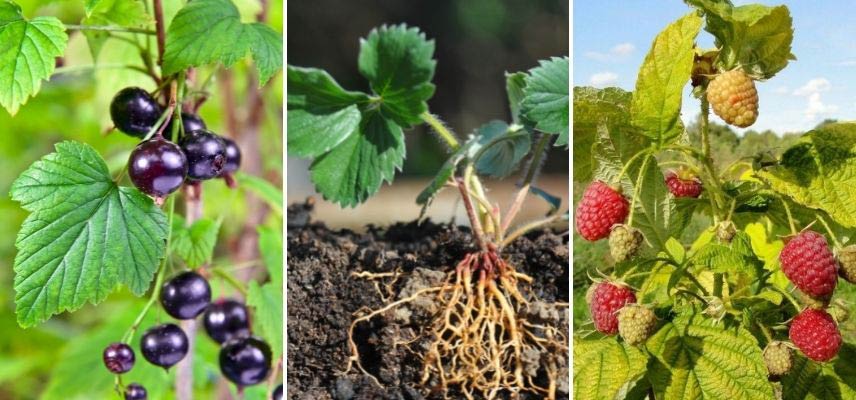
Blackcurrant bushes, strawberry plants, and raspberry plants join the vegetable garden from October, but you can also install them in pots if you don’t have a garden
→ For more details on planting small fruits, consult our detailed sheet
Perennials and grasses
Planted in autumn, perennials and grasses quickly settle into the garden, taking root in optimal conditions to provide us with beautiful flowering when spring arrives. The choice is more than vast, so indulge yourself and think about combining colours and textures, designing your beds according to your type of soil and climate, while not forgetting the exposure.
Economical to purchase, perennials delivered in pots can be planted all year round, just like those in larger containers. However, autumn planting during their dormant period is very conducive to their successful establishment and vigorous growth: the soil is still warm, temperatures are mild, and ambient humidity is favourable.
Some perennials, such as peonies or agapanthus, are also available as bare roots: they can be planted from mid-September (only in regions south of the Loire where winters are milder for Agapanthus).
Even though spring is the best season for planting aquatic perennials, they can also be planted until around 15 October, depending on your region’s climate, ideally when the water temperature has not yet dropped below 10 °C in your pond. Marginal perennials, benefiting from the moisture provided by the pond or water feature (such as a small lake…), can be planted in the ground throughout autumn, outside of frost periods.
→ Note that the absence of foliage, or unattractive foliage (yellowed, dried leaves…) on your newly purchased perennials during their dormant period is perfectly normal; consider marking the presence of your new plants with garden labels to avoid accidental spade strikes!
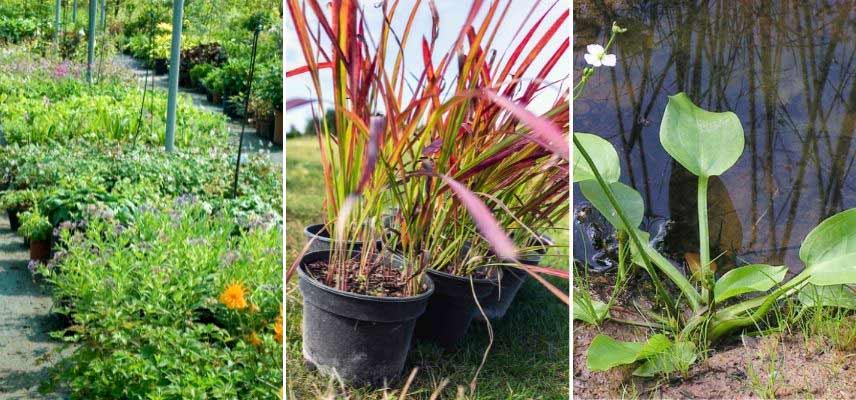
Select the perennials and grasses that will join your beds this autumn to flower and brighten up the garden easily and quickly
→ Will you choose your perennials as plug plants, in pots, or in containers? Read our dedicated guide to help you decide more easily.
Spring-flowering bulbs
Tulips, daffodils, hyacinths, spring crocuses, chionodoxas…; spring bulbs are waiting for you to join the garden this autumn, from September to November. They will take advantage of winter to settle in and will brighten the garden with their vibrant flowering in spring.
Late spring and early summer bulbs like camassias or alliums can also be planted in late winter, but if planted in autumn, they will have more time to settle in and will flower much better.
Plant all these varieties at the correct depth for each and by choosing the right tools.
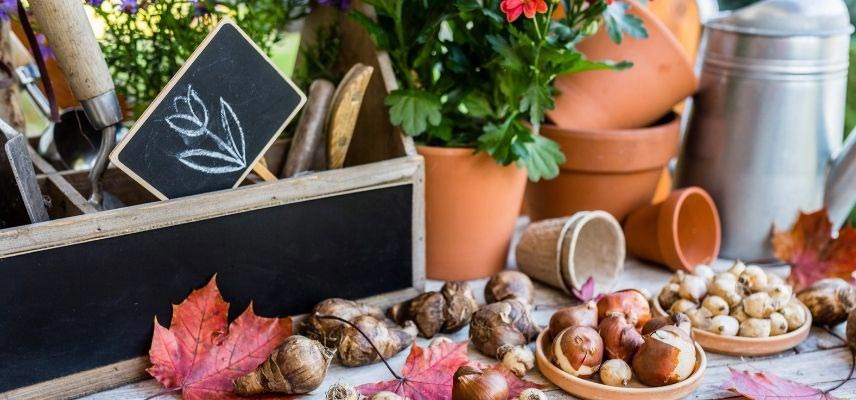
We plant spring-flowering bulbous plants in autumn
→ Follow our 7 practical and useful tips for planting bulbs
Biennials
Biennial plants are planted in autumn, between September and November. Highly appreciated by gardeners for their bright and cheerful colours as winter fades, they thrive in various conditions and are easy to grow.
Daisies, Forget-me-nots, Pansies and Violas, or Garden primroses can be planted in the garden as plug plants or in pots, nestled among perennials or along borders, but also in containers or window boxes to brighten up the home’s surroundings during a time when winter lingers and their colours bring much-needed cheer.
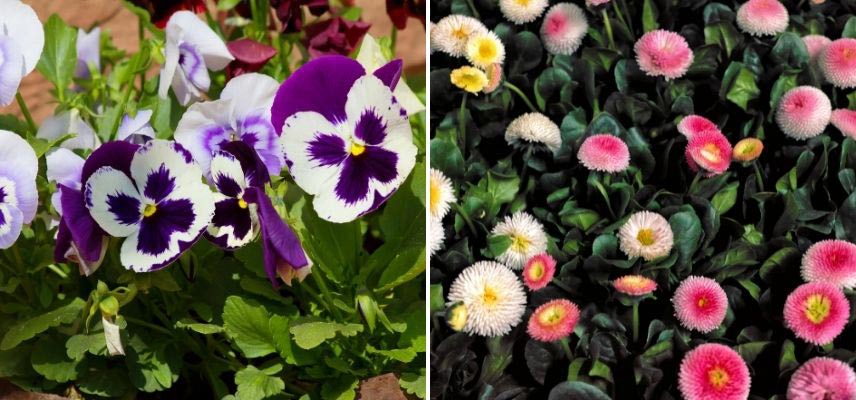
Biennials should be planted by October to flower around the home as winter fades
→ For a colourful garden as winter fades, discover 6 successful combinations with autumn biennials

- Subscribe!
- Contents

Comments