


6 yellow-flowering trees you should have in the garden
Our selection and growing tips
Contents
Dreaming of a bright garden, with radiant flowering? Why not plant a yellow-flowering tree that will catch the eye and bring a touch of light to your outdoor space? We present to you, in this article, six yellow-flowering trees to illuminate your garden. Discover Tipuana tipu with its long exotic flowering, the majestic large-leaved lime, the spectacular laburnum, the brilliant Pride of India, Magnolia brooklynensis ‘Yellow Bird’, and the must-have Fragrant wattle.

Tipuana tipu for its long, exotic flowering
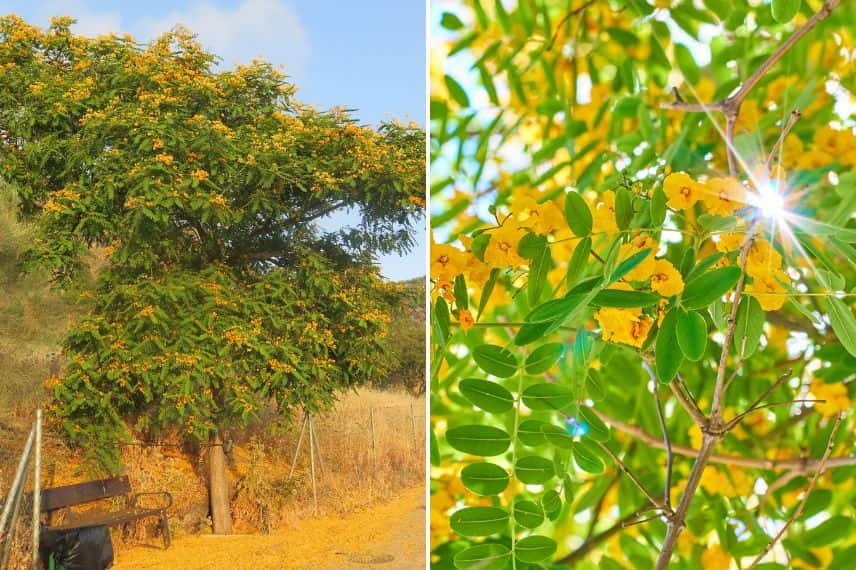
If you have a large garden on the Mediterranean coast, in Corsica, Italy or Spain, and you enjoy exotic flowering, the Tipuana tipu could well appeal to you! This semi-evergreen tree, native to South America, bears beautiful yellow-to-orange flowers that resemble butterflies, which bloom all summer. This bright flowering is enhanced by a small red mark at the centre of each flower, creating an attractive contrast, all on delicately cut green foliage. The flowers give way to long, helically shaped pods. Also known as “Palo rosa” in Argentina, it has brown-red fissured bark.
Tipuana tipu is ideal for providing shade thanks to its broad crown, reaching 10 metres high and wide in our regions. It thrives in full sun and requires very little maintenance. It tolerates acidic, neutral or calcareous soils and even saline, provided they are well drained. This tree is drought-tolerant once well established, but it is not frost-hardy, down to about -5°C, perhaps -7°C.
It is best suited to large gardens, as its powerful root system needs planting well away from dwellings.
Splendid as a specimen, one can also pair it with exotic-looking shrubs, such as the Callistemon viminalis ‘Hot Pink’, for its pink fuchsia bottlebrush flowers, or the Alyogyne huegelii, with its remarkable blue-lilac flowers.
Read also
7 yellow flowering shrubsThe majestic large-leaved lime tree (Tilia platyphyllos 'Rubra').
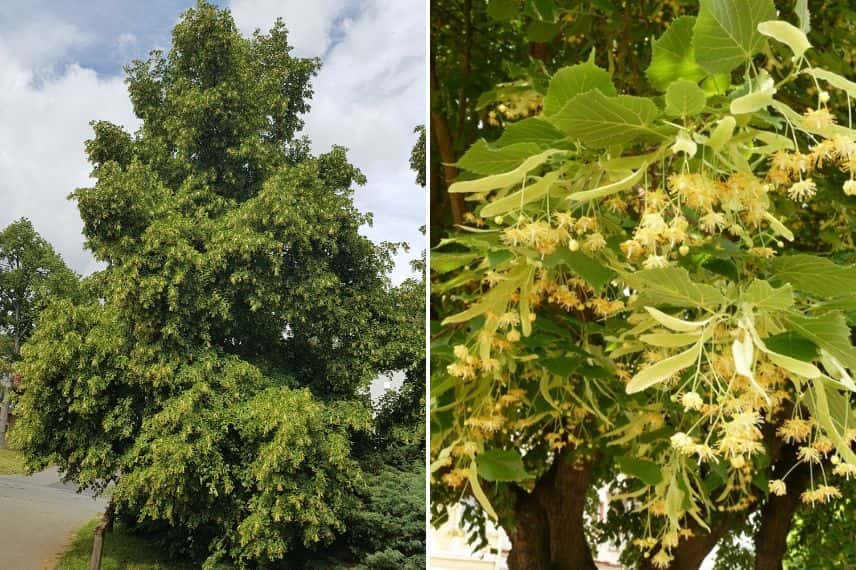
Large-leaved Lime ‘Rubra‘, is a majestic deciduous tree, ideal for large gardens, which adapts easily to all regions. In early summer, it bears pale yellow flowers, tending towards white, very fragrant, with a sweet and lemony flavour, rich in nectar, valued by both herbal tea enthusiasts and foraging bees. The flowers are followed by small globose fruits with five prominent ribs, called samaras. Its large green leaves, heart-shaped, turn golden yellow in autumn, adding a touch of colour to your garden.
This lime variety also stands out for its young shoots of coral red, bringing colour in winter. With slow growth, it typically reaches a height of 15 metres, but lime trees of 35 metres have been seen in optimal growing conditions. Not particularly demanding, it thrives in ordinary soil, deep, fertile and moist, tolerating both calcareous and acidic soils, but not too damp, nor too dry. Very hardy, it tolerates frost down to -29°C.
Ideally, one would plant the ‘Rubra’ Lime as a specimen tree, in full sun or partial shade, where it will provide shade for the garden. It also pairs with other trees and shrubs such as the Katsura tree or the Winged spindle tree.
The laburnum (Laburnum anagyroides) for its cascading displays of flowers
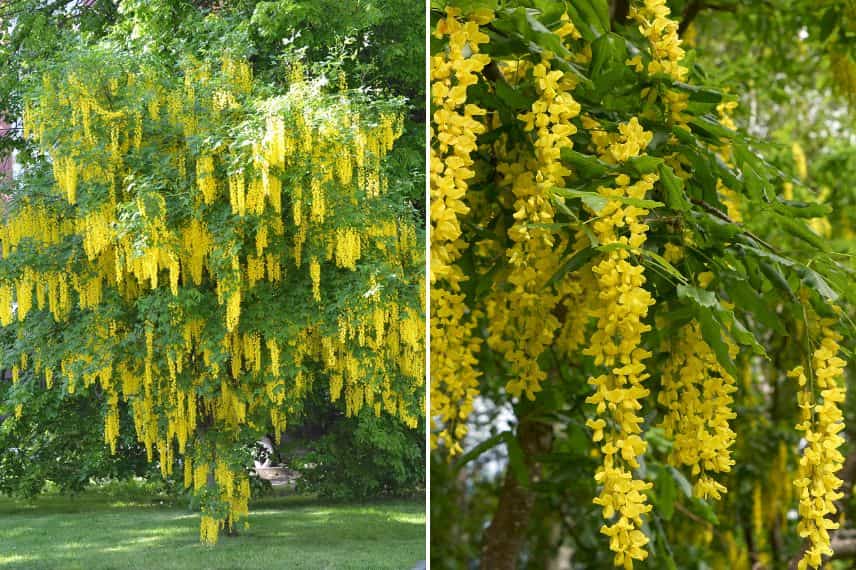
Do you love cascades of flowers? Then laburnum (Laburnum anagyroides) may be for you. Note that it is often called “false ebony” or “Cytise aubour“. It is prized for its spectacular flowering, with long clusters of golden-yellow, fragrant flowers, which appear from May to July. Its pinnate foliage, bright green, sometimes slightly greyish, highlights the beauty of the flowers. It can reach up to 8 metres across and displays very rapid growth (up to 1 metre per year).
Originating from Mediterranean regions, this laburnum prefers hot and sunny areas, and it is hardy to -15°C. For abundant flowering, give it a sunny or semi-shaded position, in well-drained soil, neutral or calcareous, with no waterlogging. The laburnum is drought-tolerant, but it does not like draughts or strong winds, which can reduce its flowering.
The laburnum is perfect as a specimen plant or in a large cottage-style hedge, paired with other shrubs such as the lilac and the abelias. However, all parts of this tree, particularly the seeds, are toxic.
The Pride of India (Koelreuteria paniculata) for its brilliant yellow flowering
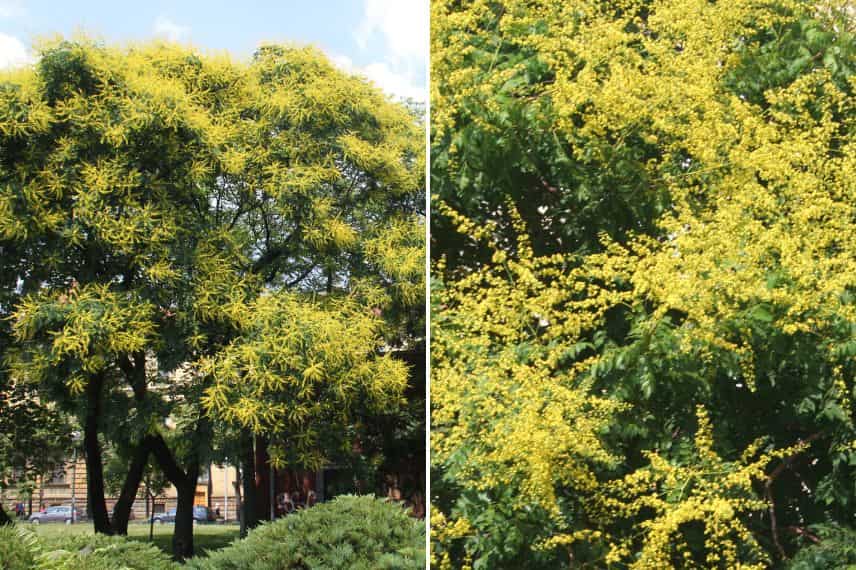
Pride of India (Koelreuteria paniculata), is also nicknamed “golden rain tree” because of its numerous bright yellow flowers appearing in summer, generally in July–August. But the charm of this small deciduous tree does not end there. These flowers transform, after pollination, into lantern-shaped capsules, persisting for a long time on the branches. Moreover, its rapid growth and finely cut foliage, ranging from pale spring green to deep summer green, then to orange-yellow in autumn, make it an ornamental choice ideal for medium to large gardens.
Its rounded silhouette reaches about 6 to 7 metres in height and almost as wide, widening with age. It is hardy down to -20°C and requires little maintenance. Its cultivation is easy in almost all soil types, provided they are not too compact, preferably neutral to calcareous. It tolerates varied climates well, although it prefers sunny, warm locations for abundant flowering.
The Pride of India is perfect as a specimen plant or can be paired with trees such as Sophora japonica, the Cercis siliquastrum or the Carpinus betulus ‘Rockhampton Red’, to create harmonious, easy-to-maintain groves.
The Magnolia brooklynensis 'Yellow Bird' for its rarity
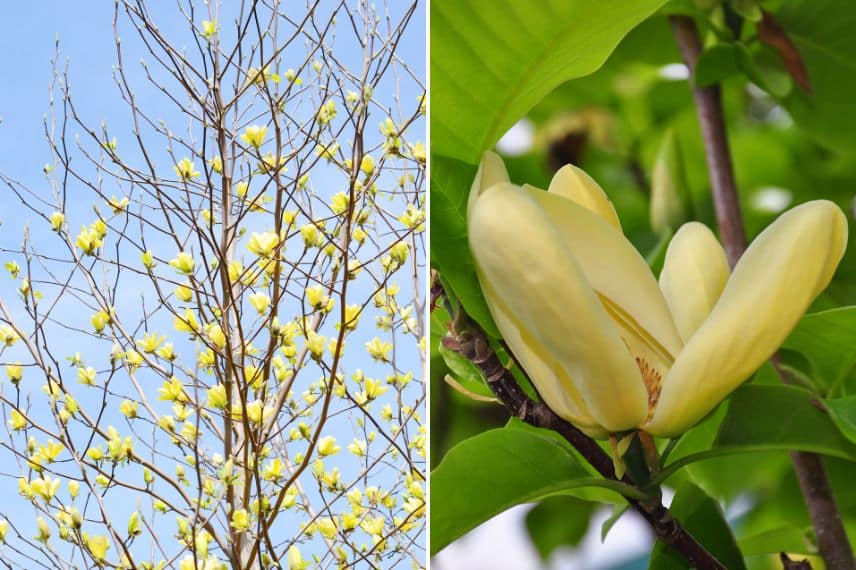
And what if, to mix things up from pink-flowered magnolias, we chose one with yellow flowers? Such as the variety ‘Yellow Bird’, remarkable for its tulip-shaped flowers in a bright yellow, a rare colour for magnolias. Its flowers appear in early May, at the same time as the leaves, and sometimes reappear in summer depending on the conditions. This deciduous, large shrub reaches 8 metres in height at maturity, with a pyramidal habit.
Magnolia ‘Yellow Bird’ se distingue aussi par son excellente rusticité, tolerating temperatures down to -20°C. Its large, dark green, glossy leaves with a finely velvety underside add to its aesthetic appeal. To encourage good flowering, provide soil that remains slightly moist, well-drained, neutral or acidic, and a sunny or partial-shade exposure. It dislikes overly dry soils, windy sites, or root competition.
This magnolia is ideal as a standalone specimen, in the middle of a lawn or in front of a house, where its spectacular spring flowering draws all eyes. It can also be paired, in a shrub border, with a Japanese maple, a Sweetshr ub, or a Cornus kousa ‘Satomi’.
Wattle (Acacia dealbata) for its enchanting fragrance
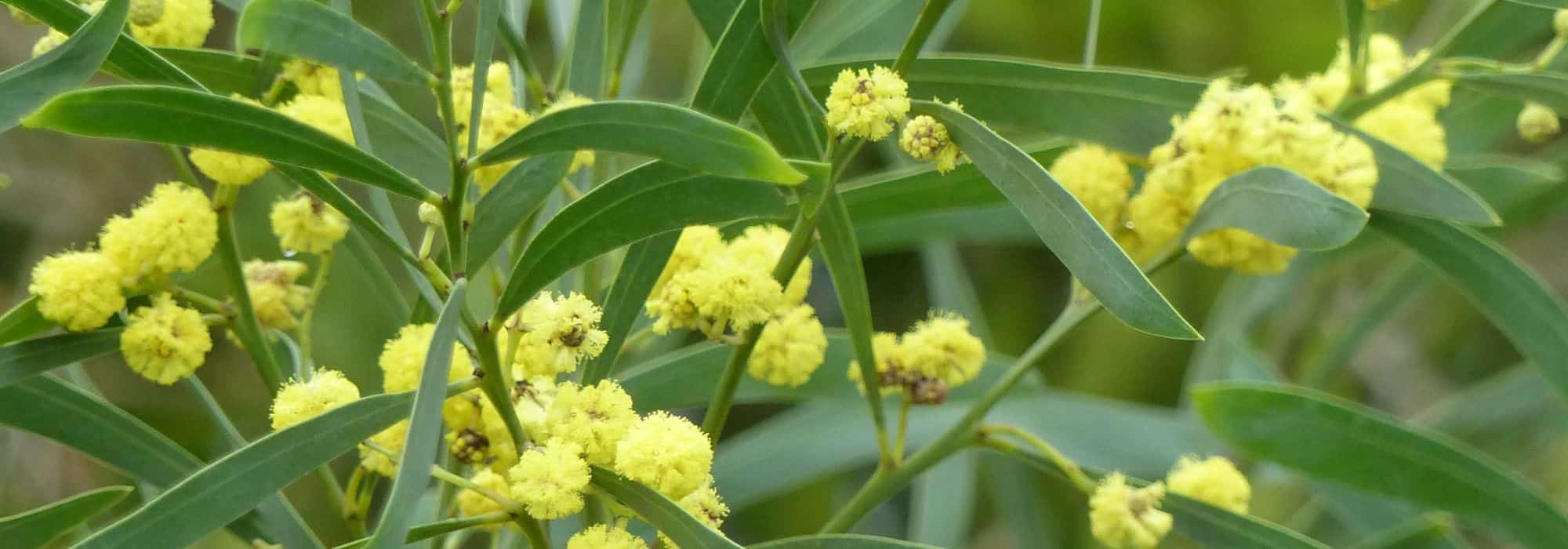
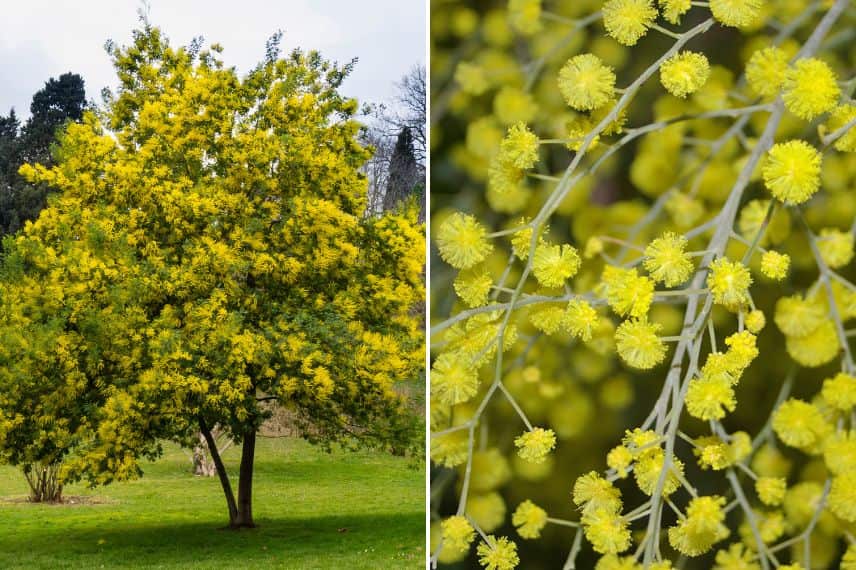
We couldn’t finish this article without mentioning the unmissable wattle (Acacia dealbata). This small deciduous tree (or rather, large bush) is perfect if you love fragrant flowers. At the end of winter and the start of spring, it bears lovely small yellow pom-pom flowers, very fragrant, which brighten the garden. Its finely cut foliage, a glossy dark green, adds a touch of delicacy and charm. And what about its fragrance, blending fresh herbaceous notes with a powdery honey scent? It’s one of the main reasons it’s mentioned here.
Not very hardy (down to -6°C), this mimosa is grown in the ground in mild climates, where it can reach 5 metres in height and 4.5 metres in breadth. It tolerates calcareous soils and endures drought once well established. In other regions, it is grown in a pot to overwinter indoors.
As a standalone specimen, in a hedge, or in a row, it also serves as a privacy screen thanks to its dense, screening foliage. Moreover, it pairs perfectly with other exotic shrubs such as Jacaranda mimosifolia or the Callistemon.
- Subscribe!
- Contents

Comments