





























Pairing ideas with nasturtiums
for stunning displays in the garden or on your balcony
Contents
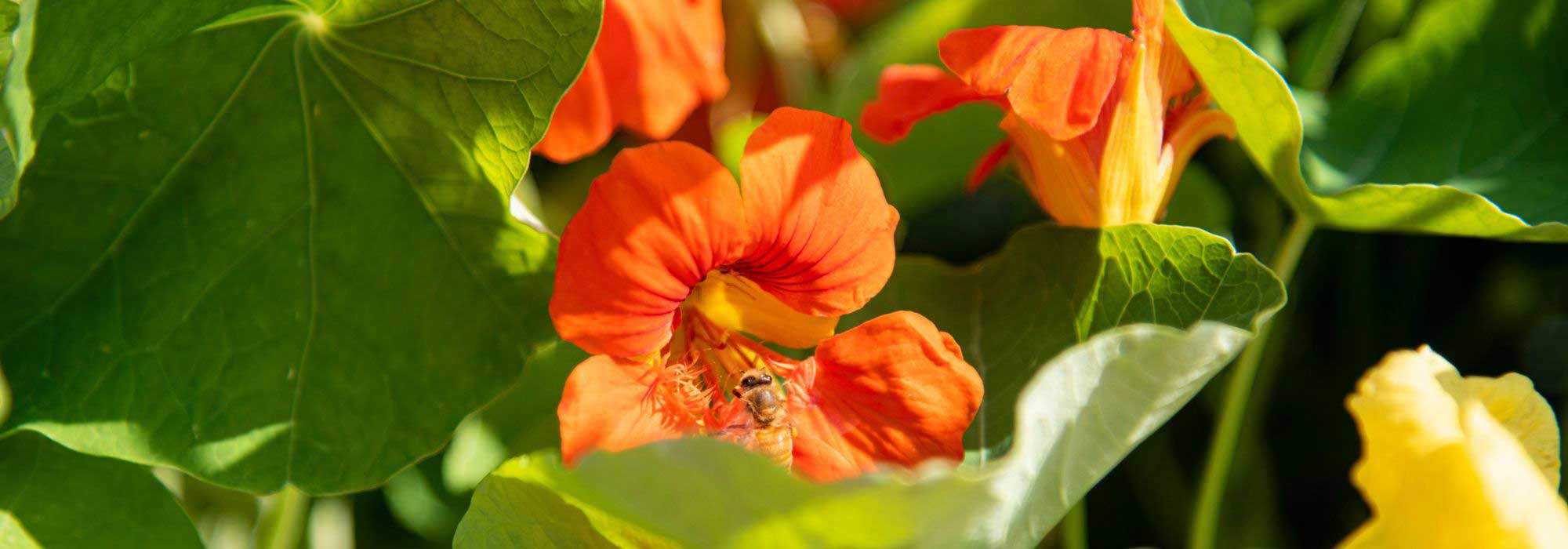
Charming and easy to grow, nasturtiums have many qualities to utilise in a garden or on a balcony. Climbing, they adorn a wall, gate, or path with an elegant and wild touch. Dwarf varieties brighten up pots and serve as an original groundcover in gardens. They can also be inserted into gardens alongside vegetables to protect them from parasitic insects. Moreover, they blend beautifully in a flower bed to create successful tropical or bucolic atmospheres. Discover our 6 pairing ideas with nasturtiums in the garden and on a terrace.

In climbing plants along a wall or in a pathway
With their round leaves and trumpet-shaped flowers, nasturtiums brighten up gardens during their orange, yellow, or red flowering between June and the first frosts. Among the nasturtiums, some are climbing plants. This is practical for dressing up or brightening a wall or gate in the sun, or for creating a green wall on your balcony!
What’s very convenient about climbing nasturtiums is that they can be combined together for lovely results. Plant the ‘Baby Orange’ nasturtium with its pretty yellow flowers speckled with orange, the ‘Red Wonder’ nasturtium with its red flowers, and the tuberous nasturtium Tropaeolum tuberosum ‘Ken Aslet’ with its orange flowers.
You can also, of course, pair climbing nasturtiums with other climbing plants. Try for example the combination of ‘Red Wonder’ nasturtium, the climbing rose ‘Alaska’, and the ‘Light Blue Star’ ipomoea.
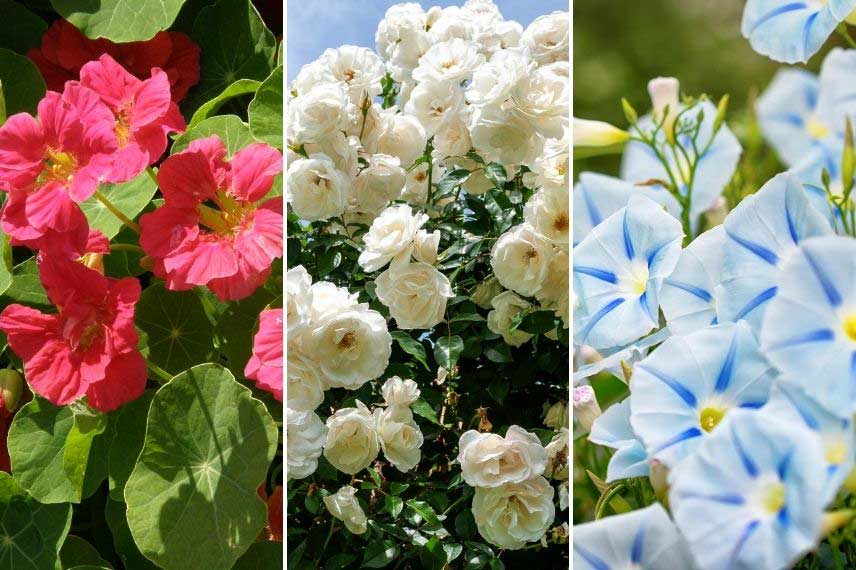
Trio of climbing plants: Tropaeolum majus ‘Red Wonder’ (SandraOp27no2 – FlickR), climbing rose ‘Alaska’, and ‘Light Blue Star’ ipomoea
Another option is to let a climbing nasturtium, such as the tuberous nasturtium Tropaeolum tuberosum ‘Ken Aslet’, climb on a hedge of yews, which will serve as its support. It will thus bring a beautiful sunny colour to the heart of these trees.
Read also
Nasturtium: planting, sowing, caring forAs a flowering groundcover
There are two categories of nasturtiums: climbing and dwarf. Both can be used as groundcover in the garden. If you leave climbing nasturtiums without support, they will grow horizontally and invade the soil. This is what the painter Claude Monet did in his garden in Giverny: he let the nasturtiums crawl along the ground and cover the path. A charming idea that is easy to replicate.
You can also use dwarf nasturtiums more traditionally as groundcover to fill your borders or hide the base of bushes.
For example, combine Canary nasturtium Tropaeolum peregrinum, unusual with its lobed leaves and canary yellow flowers, with hardy geraniums ‘Rozanne’ to create a bright carpet. You can add lady’s mantle Achemilla erythropoda, a few plants of Lavandula angustifolia ‘Dwarf Blue’, as well as verbena ‘Lavender White’.
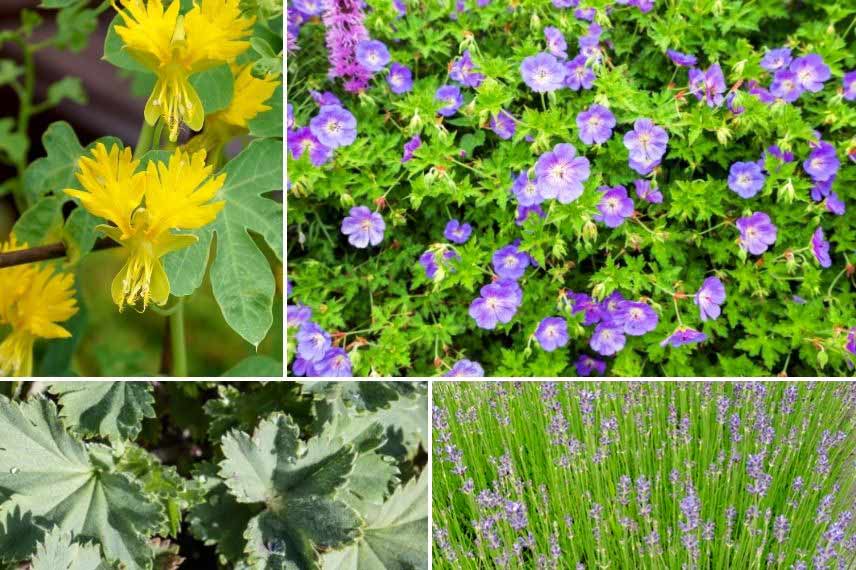
Tropaeolum peregrinum, hardy geranium ‘Rozanne’ and Lavandula angustifolia ‘Dwarf Blue’
Discover other Nasturtium
View all →
Available in 1 sizes
Available in 0 sizes

Available in 1 sizes
Available in 1 sizes
Available in 1 sizes
Available in 1 sizes
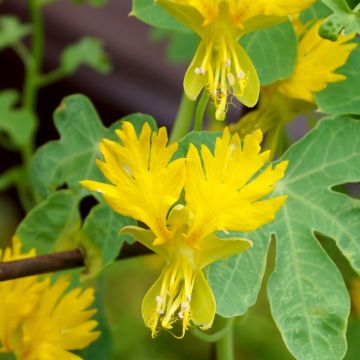
Available in 1 sizes
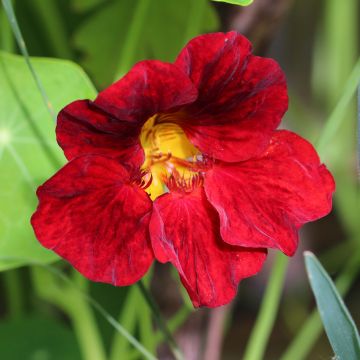
Available in 1 sizes
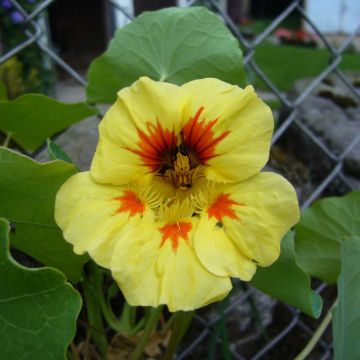
Available in 1 sizes
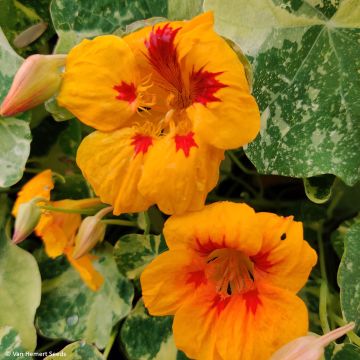
Available in 1 sizes
In a vegetable garden to deter parasitic insects
Nasturtiums are renowned for attracting aphids and can thus serve as natural traps to protect your vegetables.
Plant nasturtium seeds, such as Nasturtium Tropaeolum majus ‘Whirlybird mix’ or dwarf nasturtium ‘Tom Thumb Mix’, alongside vegetables susceptible to aphids like cabbages and broad beans.
For a beautiful visual effect, you can alternate rows of nasturtiums with rows of vegetables and add other flowers that also protect vegetables from parasitic insects. Consider marigolds, African marigolds, lavenders, and mint. Phacelia and borage can also be included in these associations, as they attract hoverflies, which are predators of aphids.
For the pleasure of the eye and the palate, you can add to your flowering vegetable garden ‘Rhubarb Chard’ red-stemmed chard, aubergines, tomatoes, carrots, and salads.
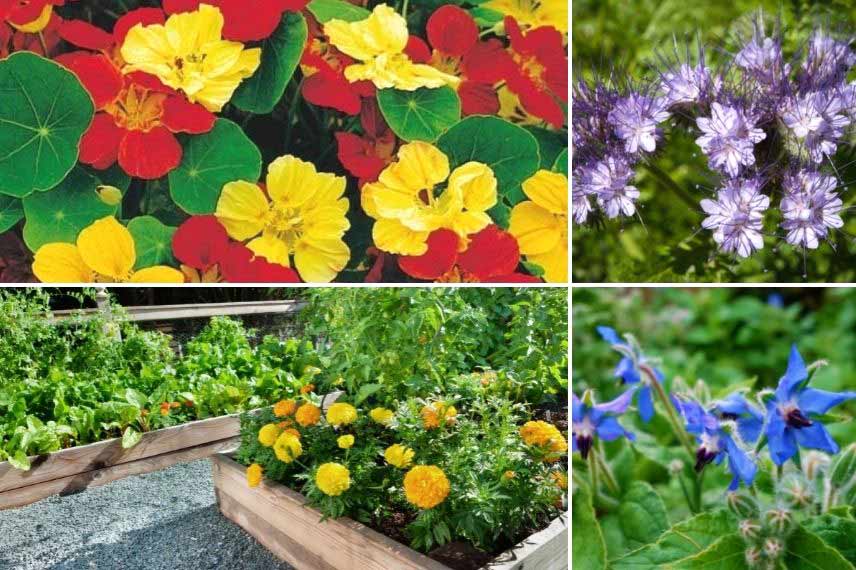
Tropaeolum majus ‘Whirlybird mix’, Phacelia tanacetifolia, vegetable garden with African marigolds and borage
Read also
How to sow nasturtiums?In a square of edible flowers
Nasturtiums are edible plants, and both the leaves, flowers, and flower buds can be eaten. The flowers and leaves have a peppery taste and can be used in salads, while the flower buds can be pickled in vinegar like capers.
If the idea of consuming flowers appeals to you, why not create a small corner or a patch of edible flowers in your garden or on your terrace?
Plant dwarf ‘Whirlybird’ nasturtiums alongside borage, ‘Buttercup’ daylilies, marigolds, violas, roses, and courgettes (to harvest the flowers).
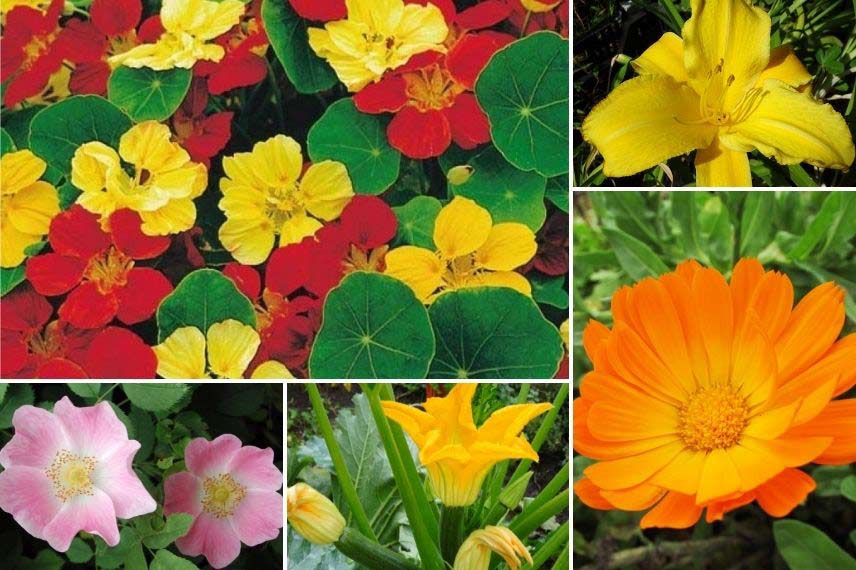
Dwarf ‘Whirlybird’ nasturtiums, ‘Buttercup’ daylily, Calendula officinalis, courgette flowers, and rosa canina
You can enhance this with herb plants such as thyme, bay, parsley, basil, and cherry tomatoes.
If this type of combination appeals to you, discover more ideas in our article on 18 edible flowers for your garden.
In flowering hanging baskets and pots
To create beautiful cascades of flowers, you can use nasturtiums as trailing plants in your hanging baskets. They pair well, in particular, with pelargoniums, begonias, petunias, and scaevolas.
For example, combine nasturtium Tropaeolum minus ‘Baby Rose’ with petunias ‘Sophistica Lime Green’ and Lobelia erinus ‘Cambridge Blue’.
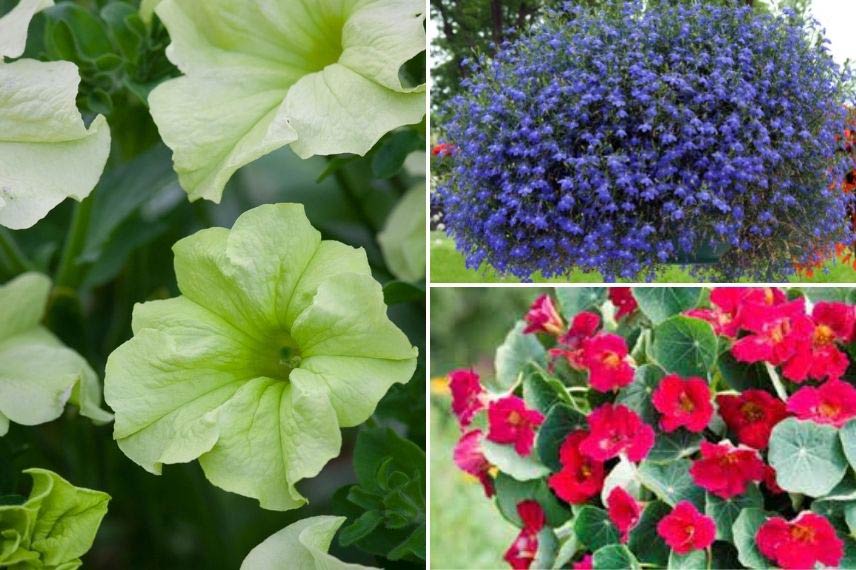
Petunia ‘Sophistica Lime Green’, Lobelia erinus ‘Cambridge Blue’ and Tropaeolum minus ‘Baby Rose’
In a pot or window box, you can also combine dwarf nasturtium ‘Phoenix’ with a Pelargonium ‘Fantaisy Crystal Palace Gem’, a petunia ‘Designer Cappuccino’, and a young plant of Sturdy Jo F1 tomato.
For your flowering displays, you can choose some unusual nasturtiums like the perennial nasturtium Tropaeolum tricolor, which produces small red flowers with a yellow centre surrounded by a purple ring, and pair it with alyssum ‘Snow Crystals’ and lobelia ‘Anabel Blue’.
Another original combination, in a large pot, is to pair dwarf nasturtium ‘Alaska’, which is very decorative with its white marbled foliage, with a Cordyline australis ‘Pink Champagne’, which will add verticality and a bright touch, thanks to its variegated cream foliage.
In a flower bed in the sun
Nasturtium with its leaves and flowers in various shapes and warm colours is perfect for creating a display of exotic flowers. You can for example combine the Nasturtium Tropaeolum speciosum with Canna ‘Perkeo’, a Sikkim banana tree, a palm Chamaerops humilis ‘Compacta’, castor bean ‘Honolulu’, and Fuchsias ‘Bush Gartenmeister Bonstedt’ and add at the base of the Candytuft Iberis sempervirens ‘Masterpiece’ to create a tropical atmosphere.
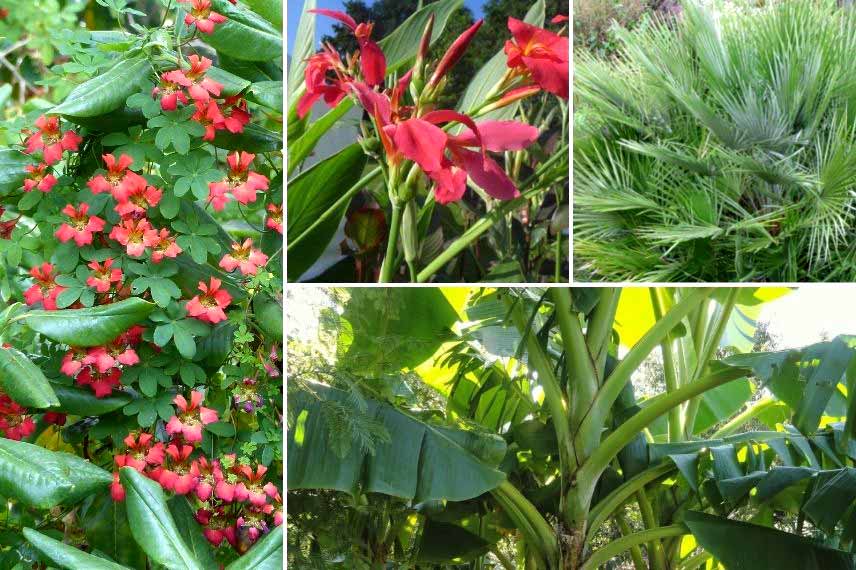
Tropaeolum speciosum, Canna ‘Perkeo’, Chamaerops humilis ‘Compacta’ and Musa sikkimensis
Nasturtium can also be part of a sunny flower display with a natural and bucolic charm. Let large nasturtiums Tropaeolum majus climb along a wooden fence and plant at the base sunflowers, Chinese fountain grass for a touch of lightness, some Cactus Dahlias ‘Ludwig Helfert’, Cosmos bipinnatus ‘Sonata White’, Rudbeckia maxima and Osteospermum ‘Cape Daisy White’. A slightly wild atmosphere guaranteed!
For further reading
For everything you need to know about growing nasturtiums, check out our comprehensive guide dedicated to this lovely plant.
And to help you choose plants suitable for your garden or balcony, feel free to adopt our Plantfit web application!
- Subscribe!
- Contents
![[association_capucine]
If you are looking for ideas to associate {glossary} in your garden, consider planting them with other flowers such as lavender, roses, or geraniums. Capucines also pair well with herbs like basil and parsley. Their vibrant colours can create a beautiful contrast with green foliage plants like ferns or hostas. Additionally, planting capucines near vegetables such as tomatoes can help repel pests and attract beneficial insects to your garden.](https://en.promessedefleurs.eu/blogwp/wp-content/uploads/2022/05/Associer-les-capucines.jpg "[plant1=\"nasturtiums\"]")
Comments