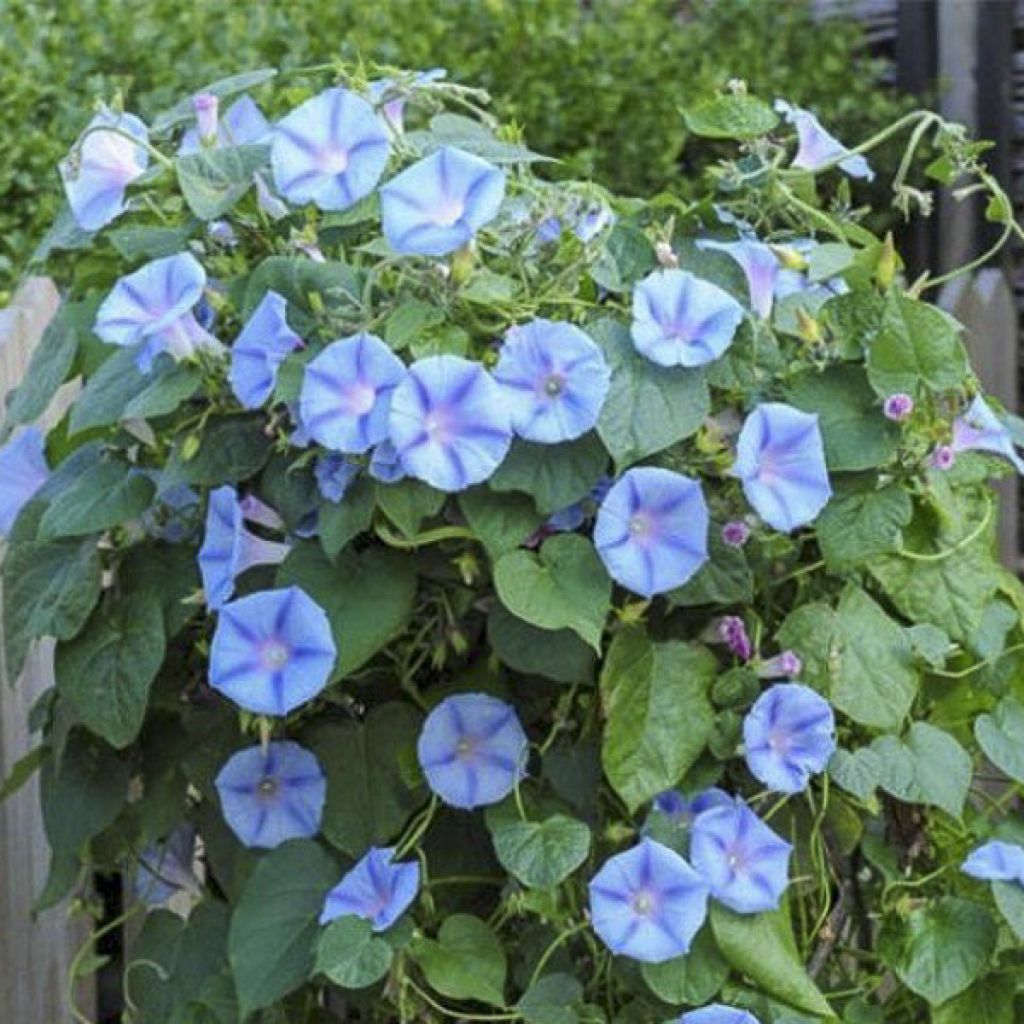
Ipomoea purpurea - Morning Glory Light Blue Star Seeds
Ipomoea purpurea - Morning Glory Light Blue Star Seeds
Ipomoea purpurea Light Blue Star
Common Morning Glory, Volubilis
Very good seeds, all sprouted. But few flowers emerged. Perhaps sown too late.
nanou, 22/09/2024
Back-to-school special offer!
Get €10 off for every €50 you spend! And get up to €40 off on a single order.
How does it work?
1. Shop your favourites
Add your favourite plants to your basket. For every €50 you spend (excluding delivery charges, store credit and the plastic-free option), you’ll receive a €10 voucher.
€50 spent = €10 voucher
€100 spent = €20 voucher
€150 spent = €30 voucher
€200 spent = €40 voucher
2. Place your order
Once your basket reaches one of the spending thresholds, place your order. You can even choose your delivery date!
3. Receive your voucher
As soon as your order has been shipped, you’ll receive an email containing your personal voucher code and its value.
4. Use it on your next order
Your voucher is valid for 90 days from the date you receive it. It can be used once only, on a new order worth at least the value of the voucher, excluding delivery charges.
Please note: Vouchers can be combined with other offers, but cannot be split or refunded.
Home or relay delivery (depending on size and destination)
Important: You may be charged customs duties by your country’s customs authorities upon delivery.
Schedule delivery date,
and select date in basket
This plant carries a 6 months recovery warranty
More information
We guarantee the quality of our plants for a full growing cycle, and will replace at our expense any plant that fails to recover under normal climatic and planting conditions.
Would this plant suit my garden?
Set up your Plantfit profile →
Description
Ipomoea purpurea 'Light Blue Star' is a rare selection that features eye-catching pale blue trumpet-shaped flowers, decorated with a violet blue star and white throat. In one season, it sends out long, twining stems loaded with buds that burst into bloom against mid-green foliage. Morning Glory is ideal for ground covers or airy displays when grown up a support. It thrives in a warm, sunny, sheltered position in loose, cool soil.
Ipomoea purpurea, poetically named Morning Glory, is a very vigorous perennial climber that belongs to the Convolvulaceae family. It is native to tropical America, probably Mexico. This tuberous rooted plant is not cold-hardy and is often treated as an annual in colder climates. 'Light Blue Star' produces 2 m long, twining stems that are quick to scramble up nearby supports. From July until the first frosts, it produces an abundance of funnel-shaped corollas, each measuring between 5 and 7 cm in diameter. Silky-smooth to the touch, they display light blue petals with a darker violet blue star and white throat. Although the delicate blooms open and close in the space of day, they are constantly replaced on the plant. The stems bear 5 to 10 cm, oval to heart-shaped leaves, occasionally three-lobed. Their matt, mid green colour really sets off the brightly coloured blooms. Each plant produces about 100 seed pods, i. e. about 600 seeds at the end of the growing season, before the first frosts.
Ipomoea is a distant cousin of common bindweed. Although it is distinctly less cold-hardy, it is such an enthusiastic grower that it makes an excellent annual. It thrives in any well-drained garden soil in a warm, sheltered position. It combines well with other short-lived climbers such as sweet peas or nasturtiums. It eagerly scrambles over trellises, pergolas, arches, balcony railings, trees, shrubs and even other vines such as clematis and wisteria. If it can't find a support, it can be left to roam free on the ground. Morning Glory is ideal for hiding unsightly walls or dead trees.

Flowering
Foliage
Plant habit
Botanical data
Ipomoea
purpurea
Light Blue Star
Convolvulaceae
Common Morning Glory, Volubilis
Cultivar or hybrid
Planting and care
From May to June, sow the Morning Glory in open ground or in a large pot. Soaking the seeds in a bowl of water for 24 hours before sowing will accelerate seed germination.
Make small holes 1 cm deep, spaced 50 cm to 1 m apart. Place 4 or 5 seeds in each hole, then cover them and water.
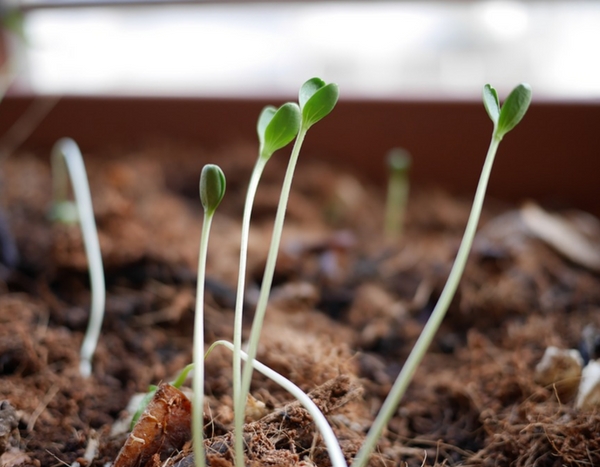
It takes about 18 days to see the first shoots emerge from the ground.
To save time on flowering, you can start your sowings in March-April in pots at a temperature of 18°C, then transplant your plants to the garden after the last frost.
In summer, make sure your Morning Glories don't lack water as it would harm their beautiful flowering. Water preferably early in the morning or in the evening. Avoid a scorching location, as the foliage wilts quickly and the heat dehydrates the plants. You can remove faded flowers so that the plant doesn't exhaust itself producing seeds. Morning Glories are so fertile that the first seeds that fall to the ground can germinate very quickly and form new young plants before winter.
The soil they are planted in should not be excessively rich in nitrates, as this would promote foliage growth at the expense of flowering.
Sowing period
Intended location
Planting & care advice
-

-

-
-

-

-

-

-

-
, onOrder confirmed
Reply from on Promesse de fleurs
Recently viewed products
Haven't found what you were looking for?
Hardiness is the lowest winter temperature a plant can endure without suffering serious damage or even dying. However, hardiness is affected by location (a sheltered area, such as a patio), protection (winter cover) and soil type (hardiness is improved by well-drained soil).

The flowering period indicated on our website applies to countries and regions located in USDA zone 8 (France, the United Kingdom, Ireland, the Netherlands, etc.)
It will vary according to where you live:- In zones 9 to 10 (Italy, Spain, Greece, etc.), flowering will occur about 2 to 4 weeks earlier.
- In zones 6 to 7 (Germany, Poland, Slovenia, and lower mountainous regions), flowering will be delayed by 2 to 3 weeks.
- In zone 5 (Central Europe, Scandinavia), blooming will be delayed by 3 to 5 weeks.
In temperate climates, pruning of spring-flowering shrubs (forsythia, spireas, etc.) should be done just after flowering.
Pruning of summer-flowering shrubs (Indian Lilac, Perovskia, etc.) can be done in winter or spring.
In cold regions as well as with frost-sensitive plants, avoid pruning too early when severe frosts may still occur.
The planting period indicated on our website applies to countries and regions located in USDA zone 8 (France, United Kingdom, Ireland, Netherlands).
It will vary according to where you live:
- In Mediterranean zones (Marseille, Madrid, Milan, etc.), autumn and winter are the best planting periods.
- In continental zones (Strasbourg, Munich, Vienna, etc.), delay planting by 2 to 3 weeks in spring and bring it forward by 2 to 4 weeks in autumn.
- In mountainous regions (the Alps, Pyrenees, Carpathians, etc.), it is best to plant in late spring (May-June) or late summer (August-September).
The harvesting period indicated on our website applies to countries and regions in USDA zone 8 (France, England, Ireland, the Netherlands).
In colder areas (Scandinavia, Poland, Austria...) fruit and vegetable harvests are likely to be delayed by 3-4 weeks.
In warmer areas (Italy, Spain, Greece, etc.), harvesting will probably take place earlier, depending on weather conditions.
The sowing periods indicated on our website apply to countries and regions within USDA Zone 8 (France, UK, Ireland, Netherlands).
In colder areas (Scandinavia, Poland, Austria...), delay any outdoor sowing by 3-4 weeks, or sow under glass.
In warmer climes (Italy, Spain, Greece, etc.), bring outdoor sowing forward by a few weeks.
Shipping country and language
Your country of residence may be:
Your country of residence is:
For a better user experience on our website, you can select:
Your shipping country:
-
 Austria
-
 Belgium
-
 Bosnia & Herzegovina
-
 Bulgaria
-
 Croatia
-
 Cyprus
-
 Czechia
-
 Denmark
-
 Estonia
-
 Finland
-
 France
-
 Germany
-
 Greece
-
 Hungary
-
 Iceland
-
 Ireland
-
 Italy
Italy
-
 Latvia
-
 Liechtenstein
-
 Lithuania
-
 Luxembourg
-
 Malta
Malta
-
 Netherlands
-
 Poland
-
 Portugal
-
 Romania
-
 Serbia
-
 Slovakia
-
 Slovenia
-
 Spain
Spain
-
 Sweden
-
 Switzerland
Language:
-
French
-
 English
-
Spanish
-
Italian
-
German
-
Portuguese
-
Dutch
-
Finnish
My Account
Hello
My wish lists
My cart
Log in / Register
Existing customer?
This form is protected by reCAPTCHA - the Google Privacy Policy and Terms of Service apply.
New customer?
Create an account to track your orders, access our customer service and, if you wish, make the most of our upcoming offers.