





























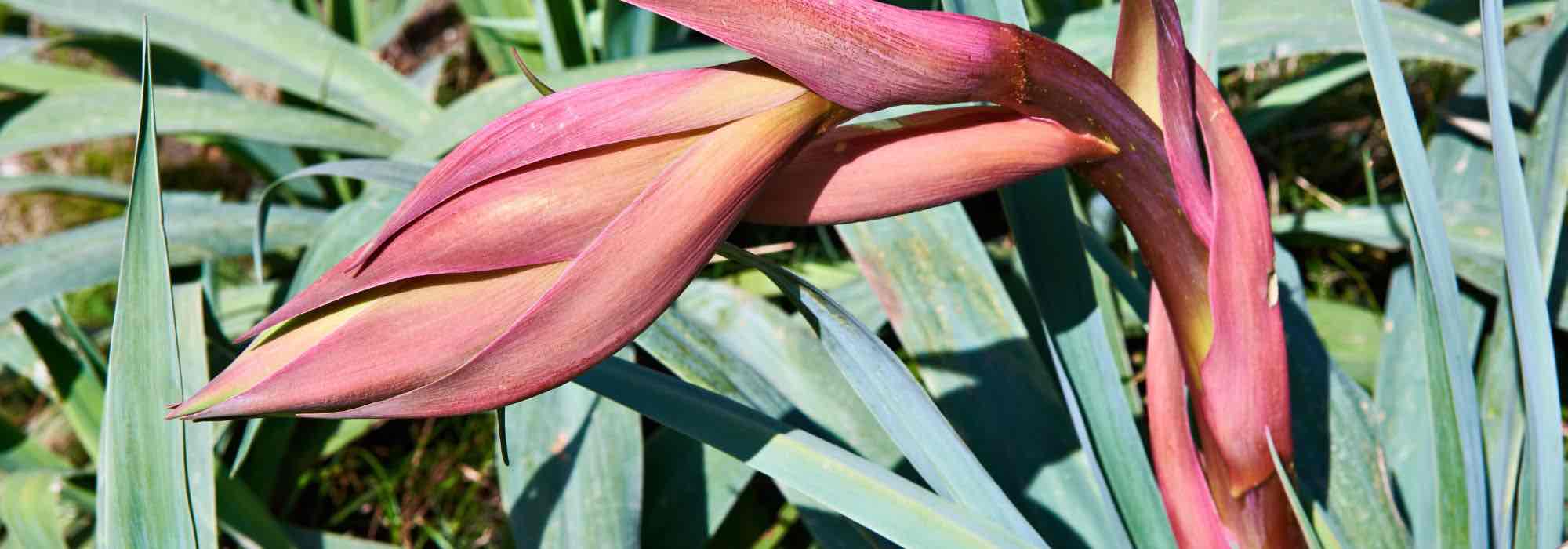
Choosing a Beschorneria
Buying guide to finding the ideal Beschorneria.
Contents
Beschorneria, or Mexican Lily, is a succulent-looking plant with exotic, graphic look that produces spectacular coral-red flowering from June to August. Also called ‘false yucca’ or ‘false agave’, Beschorneria consists of a tuft of strap-shaped, flexible, spineless leaves. This herbaceous perennial belongs to the Agavaceae family, like Agave and Yucca. Originating from Mexico, it comprises ten species that adapt to temperate, not-too-cold climates. Hardy to −8 to −15°C depending on the species, it should be planted in full sun or partial shade in very well-drained soil. It reaches a height of 60 cm to 3 metres and can be grown in the ground or in a large container. Very decorative, Beschorneria plants feature varying foliage and flowers and come in different sizes and growth habits. Discover our buying guide to choose a Beschorneria based on several criteria and find the one that best suits you.

Choose a Beschorneria according to its height and habit
By size
A Beschorneria can reach, at maturity, a height of 60 cm to 3 metres.
You have a choice between:
- the Beschorneria septentrionalis which grows to a height of 60 cm and a spread of 50 cm
- the Beschorneria yuccoides and ‘Quicksilver’ which can reach 70 cm and a spread of 60 cm
- the Beschorneria yuccoides ‘Flamingo Glow’ which climbs to 80 cm and widens to the same dimension
- the Beschorneria albiflora which can grow up to 3 metres tall with a 70 cm spread, forming a palm-like habit.
According to habit
The Beschorneria forms a rosette of basal leaves arising from the soil. Only the Beschorneria albiflora forms a small trunk. It also reaches a greater height, up to 3 metres.
Read also
Pairing ideas with BeschorneriaChoose a Beschorneria according to the colour of its foliage
Beschorneria features large evergreen, strap-shaped leaves, 90–120 cm long and about 10 cm wide, usually resting directly on the soil and interlocking with one another.
- Lanceolate, the leaves of Beschorneria are blade-shaped, flexible, not prickly and curved outward.
- Soft and sometimes slightly rough to the touch, these succulent, glaucous leaves take on a true green colour.
- If you’re looking for slightly different foliage, the Beschorneria yuccoides ‘Quicksilver’ has foliage that is more silvery than the others, while the Beschorneria yuccoides ‘Flamingo Glow’ offers cream-variegated foliage.
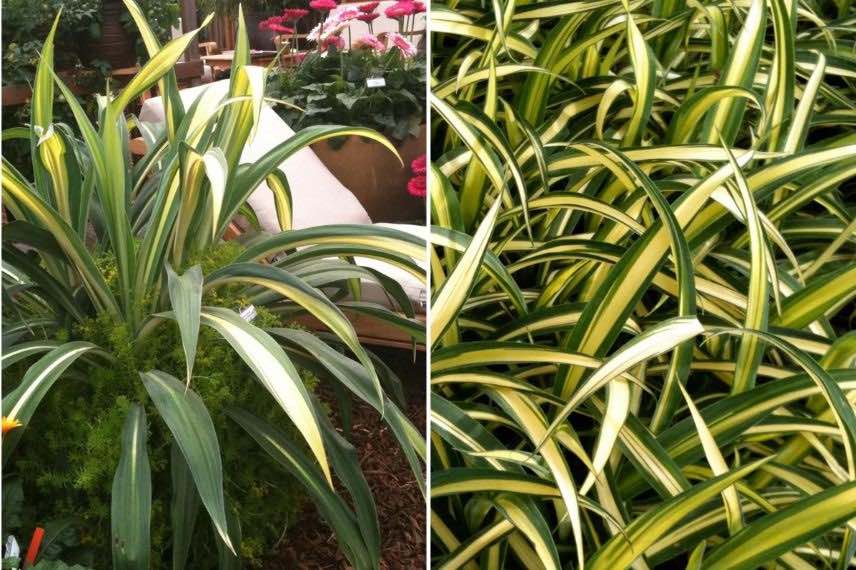
The variegated foliage of Beschorneria yuccoides ‘Flamingo Glow’
Choose a Beschorneria according to the colour and shape of the flowers
- Overhanging the clump of foliage, a flowering stalk emerges, rising up to 1.5–2 metres tall. Flowering occurs after 3 to 4 years of cultivation. It blooms from May to August and does not kill the plant, unlike other agaves.
- The flowering stalk forms a large, fleshy pinkish-red stem that rises toward the sky and leans to one side. It is adorned with tubular, pendant flowers, reminiscent of small tulips or bells. Bent downward, they bear nectar and attract pollinating insects.
- They are apple green and then become coral red. The Beschorneria albiflora differs from other species by a paler colour of the flowers, pinkish-white. The Beschorneria septentrionalis offers flowers more delicate than the Beschorneria yuccoides.
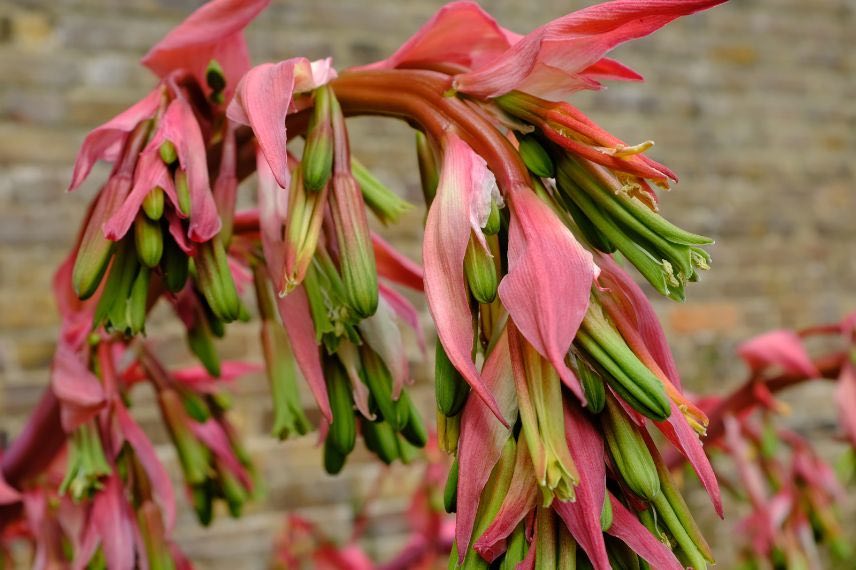
Flowering of Beschorneria yuccoides
Read also
How to propagate Beschorneria?Choose a Beschorneria for its hardiness
Beschorneria comprises ten species well suited to our temperate climates and not too cold.
- The most widespread species, Beschorneria yuccoides, is hardy to -8 to -10°C. It is often grown in Brittany and the Mediterranean.
- The Beschorneria septentrionalis is less well known and has greater hardiness, to -15°C in perfectly drained soil, which allows it to be grown in colder regions.
Choosing a Beschorneria for its growth rate
Beschorneria grows rather slowly but has a long lifespan. It reaches maturity after 5 to 10 years and develops over the years through offsets from its rootstocks, which can sometimes become invasive.
Depending on growing conditions:
- For faster growth, choose Beschorneria septentrionalis.
- If you prefer slow growth, favour the Beschorneria albiflora.
- The other species: Beschorneria yuccoides, Beschorneria yuccoides ‘Flamingo Glow’ and Beschorneria ‘Quicksilver’ are considered to have normal growth.
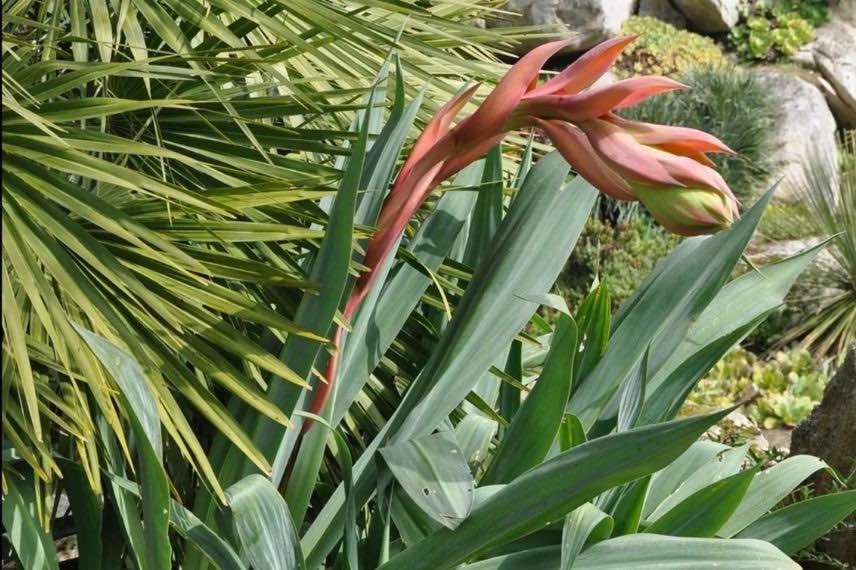
Beschorneria septentrionalis
Choosing a Beschorneria according to the use
Beschorneria can be grown in the ground as well as in a large container. In regions where frosts are severe and winters are cold, pot it up to make it easier to protect it from the cold by bringing it indoors or wrapping it in an overwintering fleece.
→ Learn more in our article Growing Beschorneria in a pot.
Choosing a Beschorneria based on sun exposure
Beschorneria prefers sun but can also be grown in partial shade, notably the Beschorneria albiflora, Beschorneria yuccoides ‘Flamingo Glow’ and Beschorneria ‘Quicksilver’.
For more information, discover our full range of Beschorneria as well as our care sheet on the cultivation and planting of Beschorneria.
- Subscribe!
- Contents
Comments