





























Growing Beschorneria in pots
Tips for planting and care in pots or containers
Contents
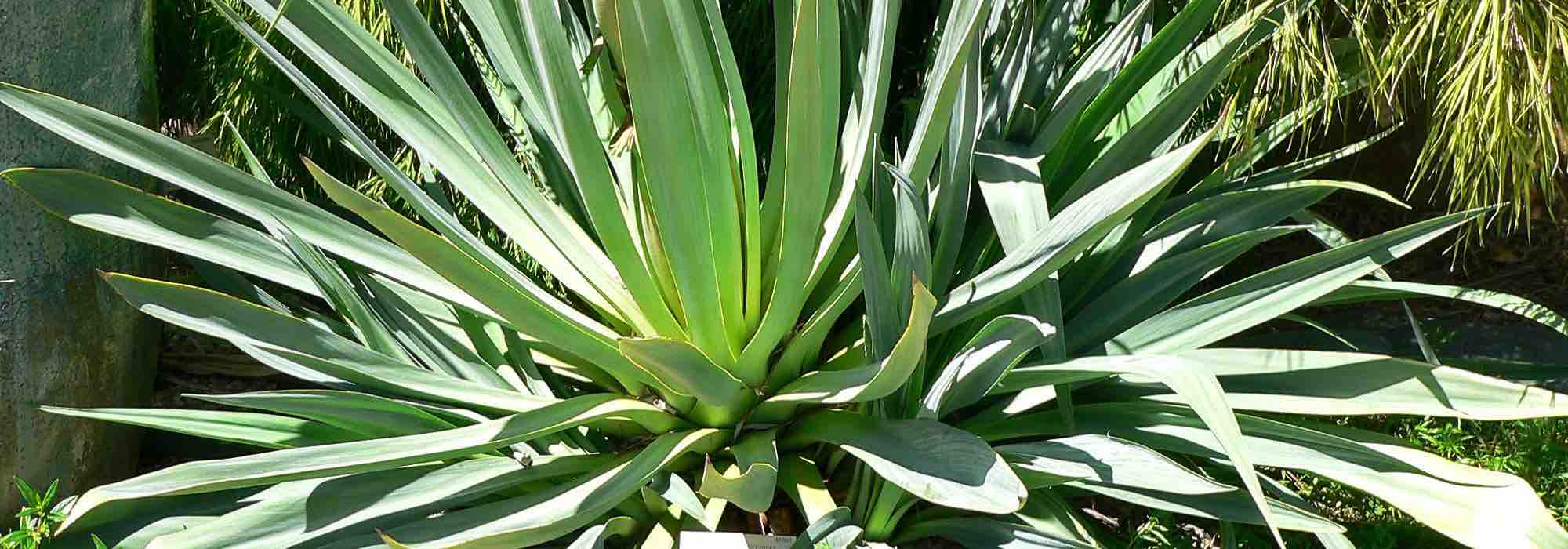
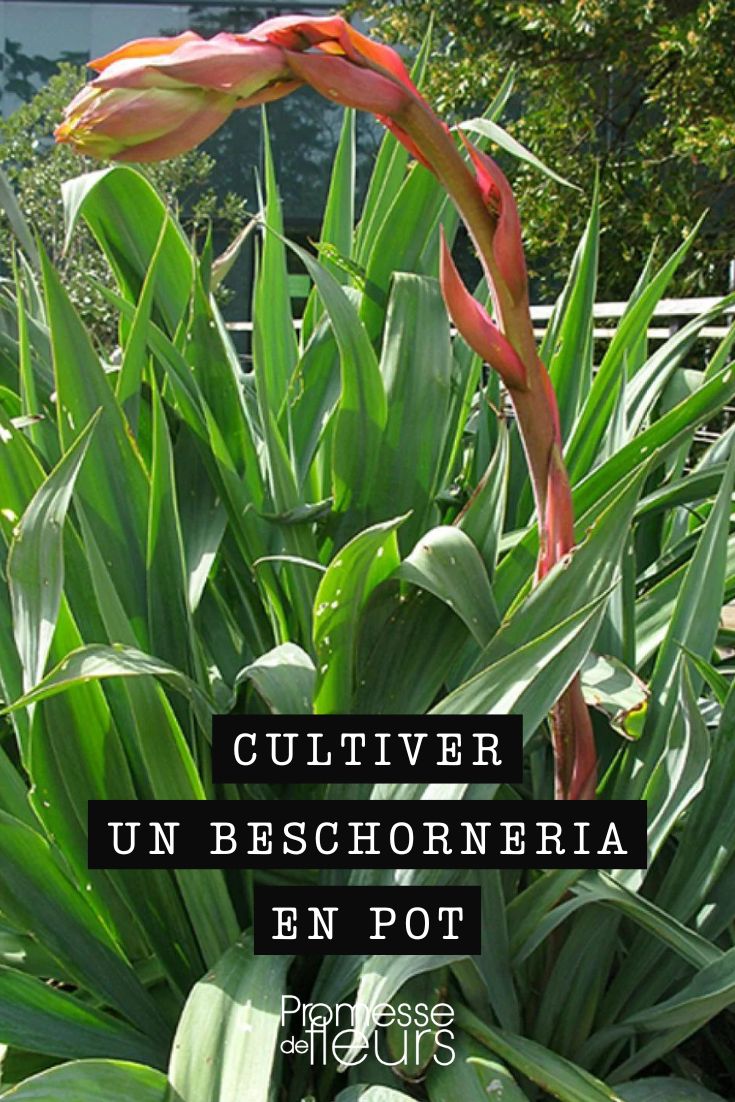
Beschorneria is a large succulent plant, closely related to yuccas and agaves. Also known as Mexican lily, it is native to Mexico’s understory and semi-desert rocky slopes, growing up to 3,500 metres. It forms a large rosette of basal leaves, 50 cm to 2 metres tall and 1.5 metres wide. The strap-shaped leaves are 10 cm wide and interlock with one another. They are sword-shaped, but soft and non-pointed. In summer, a spectacular flowering stem emerges that can reach 2 metres. The flowers resemble small pinkish-red tulips bowing downward. Easy to care for and hardy to -8 to -15°C, depending on the species and when grown in the ground, it is a plant suited to Mediterranean and temperate climates if winters are not too cold. Beschorneria is easy to grow in a pot, in full sun and in a well-drained substrate. This allows you to bring it indoors for protection in winter or during frosts if you are in a region with a cold or humid climate. Discover our tips for growing Beschorneria in a pot on your balcony or terrace.

Which Beschorneria varieties to grow in pots?
For growing in pots, you can choose:
- Beschorneria yuccoides : it is often grown in Brittany and the Mediterranean region. This large perennial reaches 70 cm tall by 60 cm wide. It bears a large rosette of narrow evergreen leaves, bluish-green in colour, drooping downward. From the foliage, in summer, a spectacular inflorescence emerges, reddish, which leans under the weight of tubular flowers. They are bright green with red bracts, attracting pollinators. This plant is hardy to −9.5°C in soil, and is somewhat less hardy when grown in a pot. It requires well-drained soil.
- Beschorneria septentrionalis : it is less well known than the first, but is hardier to cold, tolerating short frosts down to about −15°C in very well-drained soil and in the ground. It reaches a height of 60 cm and a width of 50 cm. Its flowering spike bears flowers in a redder shade than Beschorneria yuccoides. Its foliage is also a brighter green.
- Beschorneria albiflora : it differs from the others by developing a small trunk and greater height, which can reach up to 3 metres in height.
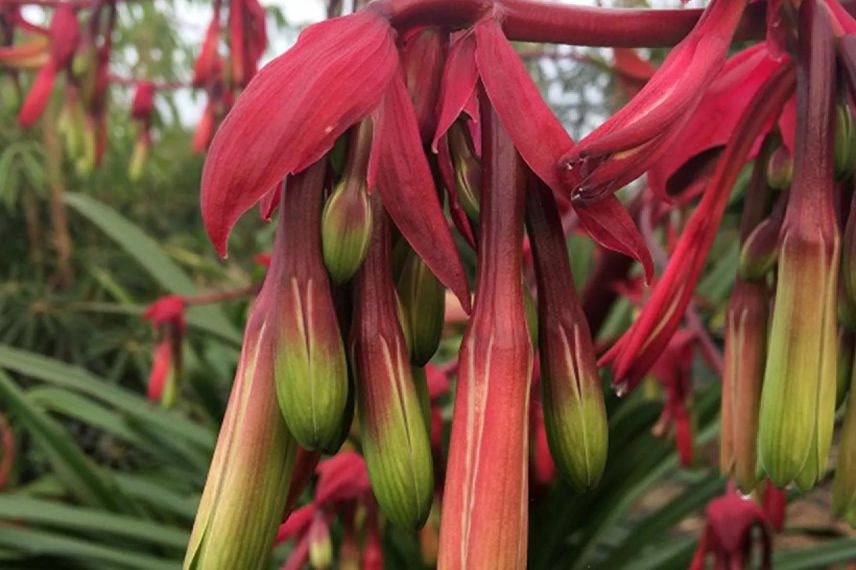
The flower of Beschorneria albiflora
Read also
Choosing a BeschorneriaWhen and where to plant a Beschorneria in a pot?
- Planting should take place in spring, from April to May, or at the end of summer, between August and September, and outside frost periods.
- Plant Beschorneria in full sun and exposed to heat, two conditions for the young plant to thrive.
How to grow a Beschorneria in a pot?
What type of pot?
You can plant it in any type of pot, those in terracotta provide better aeration for the roots. It can also be grown in a large wooden tub.
Which substrate?
The growing medium must be very well-drained to prevent the roots from rotting. Add sand and gravel to the soil to ensure good drainage.
Planting
- Choose a container with a large volume, as the Beschorneria grows quite substantial after a few years. Allow for at least 60 cm in diameter.
- Place at the bottom of the pot (which should have a drainage hole) a layer of gravel or clay pebbles to ensure very good drainage for the roots.
- Add a mix of garden soil, soil for Mediterranean plants and sand.
- Place the Beschorneria in the centre and cover with the remaining substrate, pressing down firmly and not burying the collar of the shrub.
- Cover the surface with pebbles or gravel to prevent the collar from rotting.
- Water the plant.
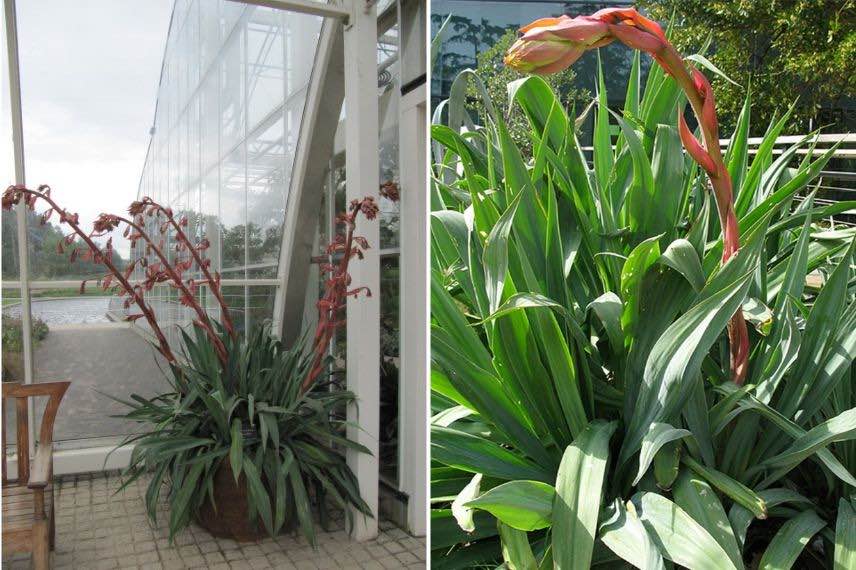
A Beschorneria yuccoides in a pot (©Leonora Enking)
Read also
Beschorneria: planting and careCare
Watering
- Practice regular watering, allowing the substrate to dry between waterings.
- In summer, water every fortnight.
- Stop watering in winter, the combination of humidity and cold can be fatal to the bush.
If you bring it indoors for the winter, you can water sparingly once a month. - You can also mist the leaves lightly from time to time.
Protection from the cold
- Move the Beschorneria into a cool room before the first frosts arrive.
- You can also, depending on where you are located, leave it on your balcony and protect it with a winter veil.
Pruning and repotting
- Regularly remove spent flowering stems and trim any spent or damaged leaves with a well-sanitised pruning shear.
- Repot every three to four years in spring, in a pot slightly larger.
- You can also perform a simple top-dressing by adding a layer of garden soil and potting compost to one third of the depth.
Pests and diseases
Beschorneria is not prone to pests and diseases, but it is sensitive to humidity in winter and to severe frosts.
To learn more about this plant, read our full profile dedicated to the cultivation and care of Beschorneria. In addition, you can consult our advice sheet on growing plants in pots.
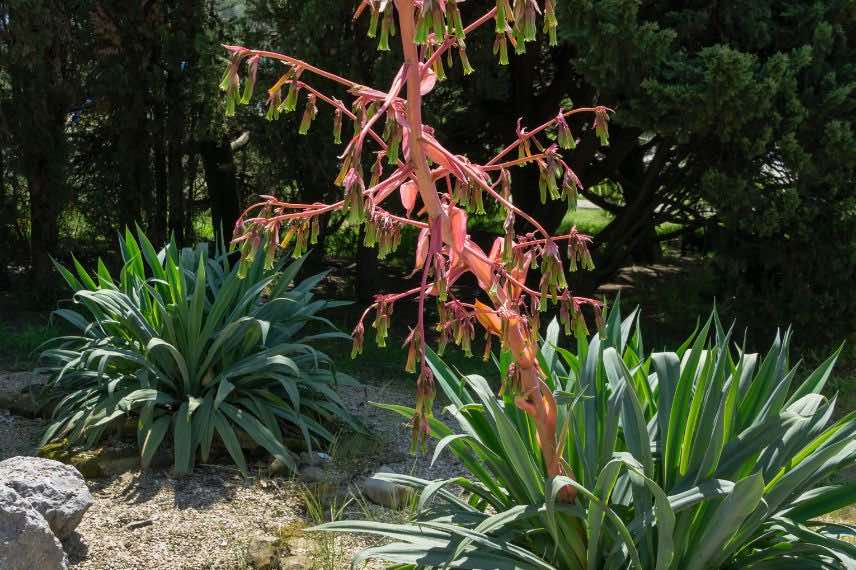
Beschorneria are exotic plants suited to Mediterranean climates and to temperate climates, provided they are not too cold, as they are fairly hardy.
- Subscribe!
- Contents
Comments