





























Growing Dasylirion in pots
Tips for potting and care
Contents
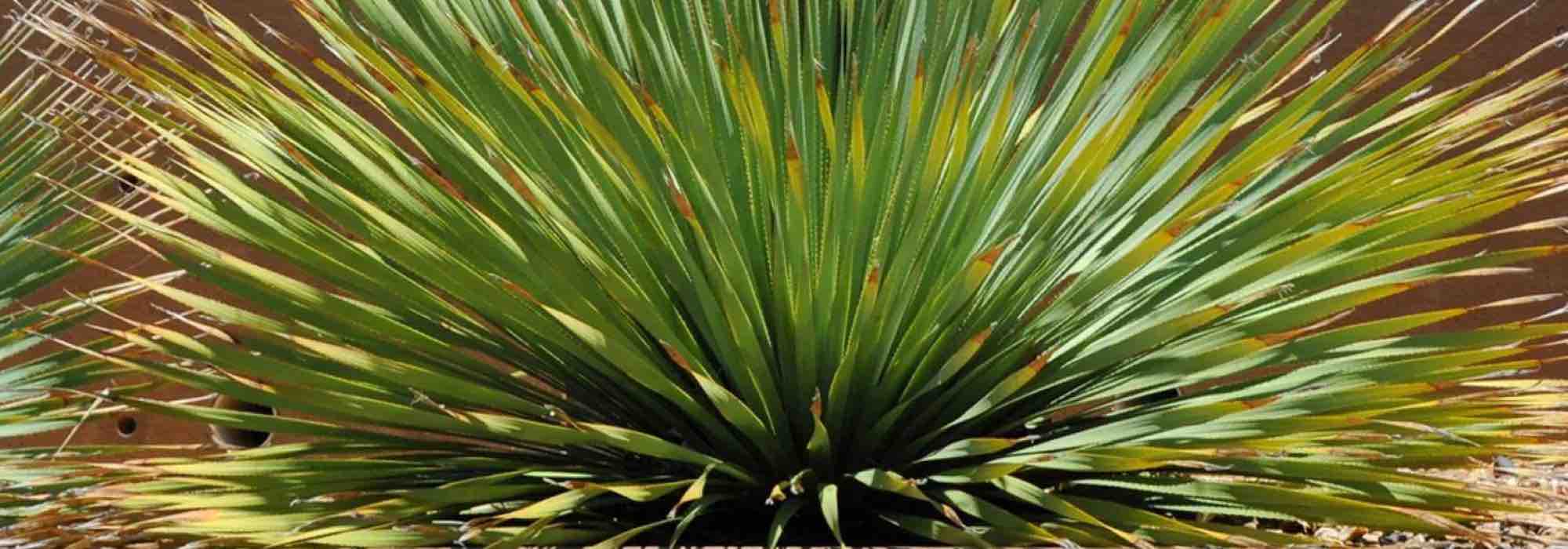
Dasylirion is a shrub that comes from the deserts of the Southwestern United States, notably Texas, as well as from Mexico. With its long, slender, grey-blue leaves, armed with sharp, curved spines and fibres, this plant brings an air that is both exotic and graphic to a contemporary garden. Its foliage is evergreen, and its inflorescences, borne on long cream-white paniculate panicles, can reach up to 3 metres high. This bush adapts well to a hot, dry Mediterranean climate. It offers good drought resistance, but also frost tolerance. Easy to grow when planted in suitable conditions, it is a hardy plant that dislikes only excess water. It grows very well in pots. Discover our tips for growing the Dasylirion in pots on your balcony or terrace.

Which Dasylirion varieties to grow in pots?
For pot culture, you can opt for different varieties :
- Dasylirion wheeleri : it is distinguished by its linear leaves ending in a tuft of fibres, which are bluer and shorter than those of its relatives. This bush can reach a height of 1.75 metres with a spread of 1.20 metres. It offers great hardiness, down to -15°C when grown in the ground, slightly less so when grown in a pot. Its foliage forms a sphere topped by an inflorescence composed of small yellow flowers when it flowers, i.e., every 10 to 15 years.
- Dasylirion longissimum : this shrub with a short trunk can reach up to 1.70 metres tall with a width of 1.20 metres. It bears a spherical tuft of long, linear, flexible leaves. It flowers when it reaches 10 to 15 years of age and produces a spectacular inflorescence that can reach 4 metres in height. It tolerates temperatures down to -15°C in the ground and slightly less in a pot.
- Dasylirion glaucophyllum : this bush is endowed with a trunk about 50 cm tall, finished with a sphere of linear, very rigid, glaucous-green leaves. After a few years it flowers, offering a large flowering spike that emerges from the centre of the plant up to 4 metres tall. It consists of small yellow flowers. In terms of hardiness, it is hardy to -12°C in the ground and is slightly less hardy when planted in a pot.
- Dasylirion lucidum — glossy Sotol : it is notable for offering several rosettes of linear leaves on a single trunk. The leaves are a bright green and less spiny than those of other species. It can reach 2 metres tall with a width of 1.20 metres. After 10 to 15 years, it bears a spectacular inflorescence of pale-yellow flowers. It is hardy to -9.5°C in the ground and therefore a little less hardy in a pot.
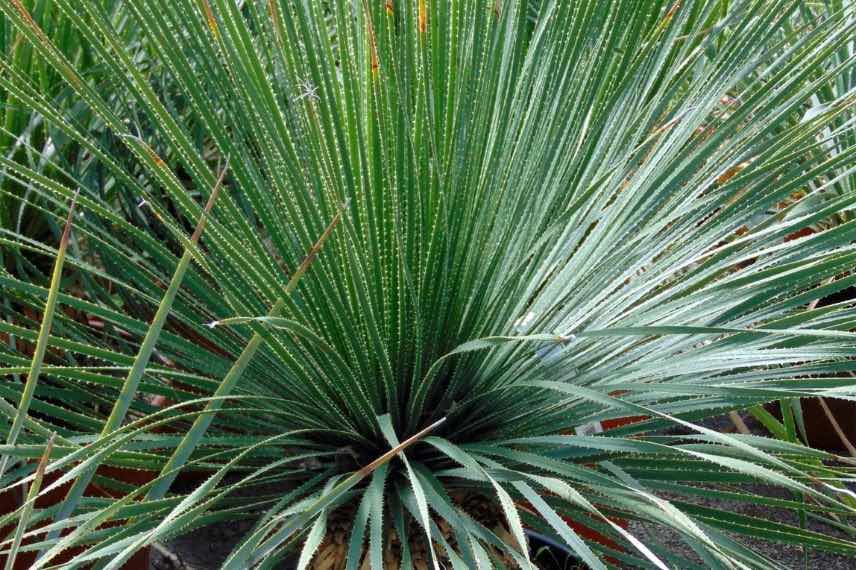
Dasylirion glaucophyllum
When and where to grow Dasylirion in a pot?
- Planting takes place outside cold periods, in spring or summer, between April and July.
- To thrive, Dasylirion requires a warm, sunny exposure.
- The soil in which you plant it must be very well-drained.
How to grow a Dasylirion in a pot?
What type of pot?
You may choose any pot you like, but terracotta pots allow better evaporation of water.
What substrate?
- Use a substrate that provides very good drainage for the roots to prevent them from rotting.
- You can make a mix of garden soil and sand or gravel.
Planting
- Choose a container large enough to accommodate the Dasylirion for several years. This plant has growth that is slow, but does not tolerate being moved or transplanted. Take a pot with a pierced bottom and a volume at least three times larger than the root ball of the plant.
- Moisten the root ball
- Pour into the bottom of the pot a layer of gravel to ensure good drainage.
- Then place in the pot a draining substrate formed of 2/3 universal potting compost and 1/3 coarse sand
- Position the Dasylirion in the centre of the pot and cover with substrate
- Firmly press the substrate to remove any air pockets and ensure good contact between the substrate and the roots
- Water well and cover the surface of the soil with pebbles, which will protect against cold.
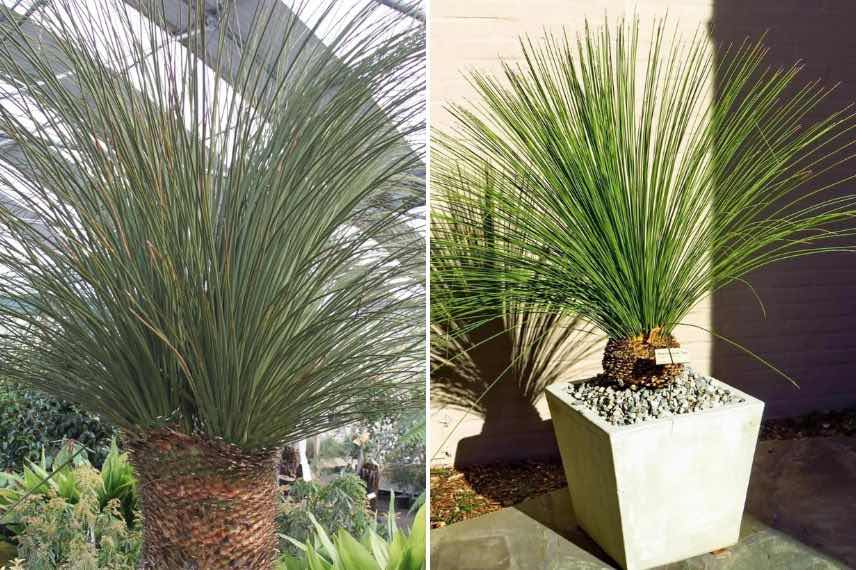
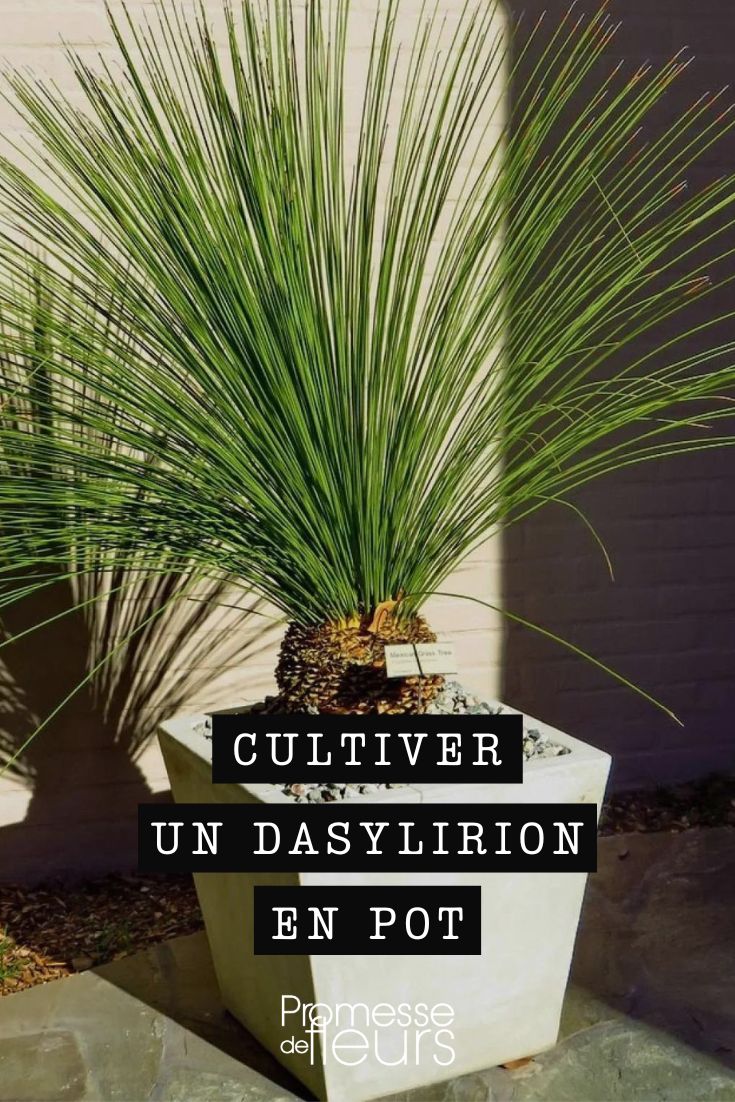
The Dasylirion in a pot forms a fan-shaped clump that adapts well to pot planting
Maintenance
Watering and fertilising
The Dasylirion requires little maintenance. Water it moderately during dry spells and stop watering in winter. This plant does not require fertiliser.
Frost protection
When temperatures fall below -10°C, wrap the Dasylirion and its pot in a frost-protection fleece to protect it from frost.
For more information on this topic, see our tip sheet: How to winterise a Dasylirion?
Pruning
The Dasylirion does not require pruning.
Diseases
The Dasylirion experiences few diseases and parasites. Its main weakness is essentially excessive watering and poor drainage, which can lead to root rot.
Pour en savoir plus, découvrez notre fiche complète sur la planting and care of the Dasylirion ainsi que sur la cultivation of potted plants.
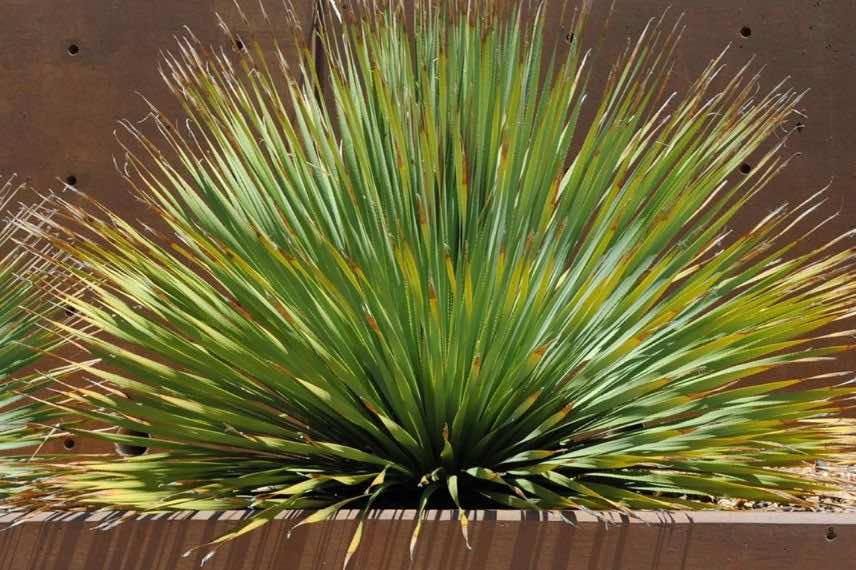
Dasylirion wheeleri
- Subscribe!
- Contents
Comments