





























Household pets and houseplants: the dangers of Dracaena
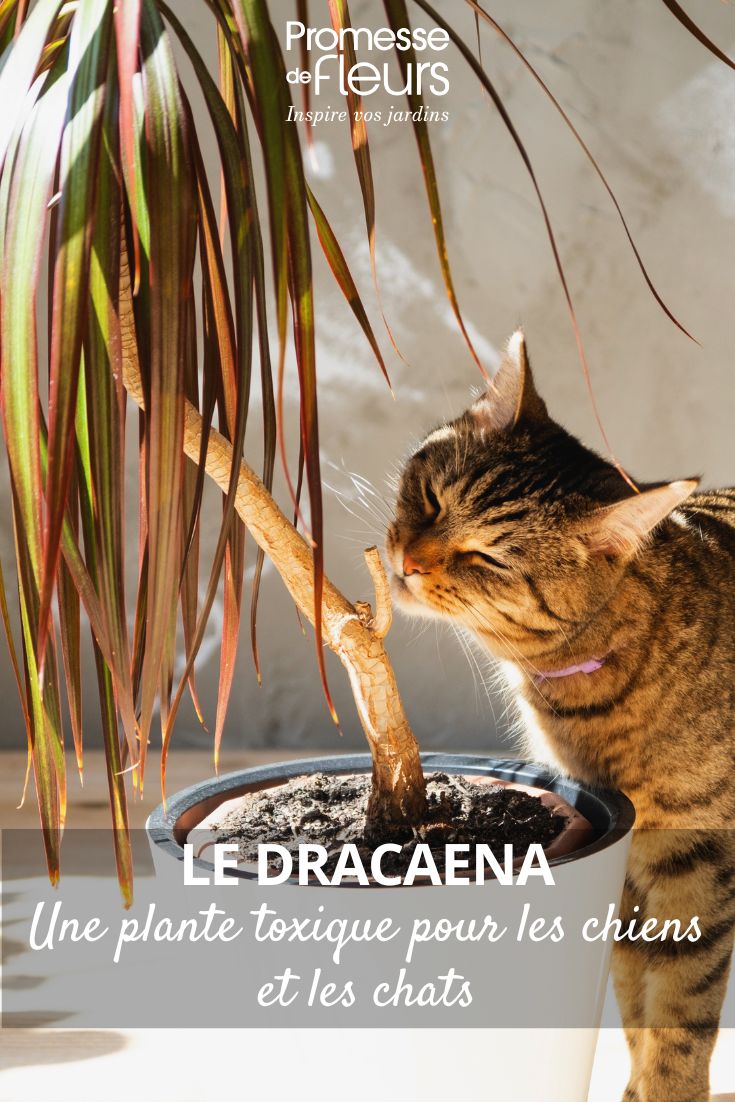
Dracaena, or dragon tree, is a toxic plant to cats and dogs
Contents
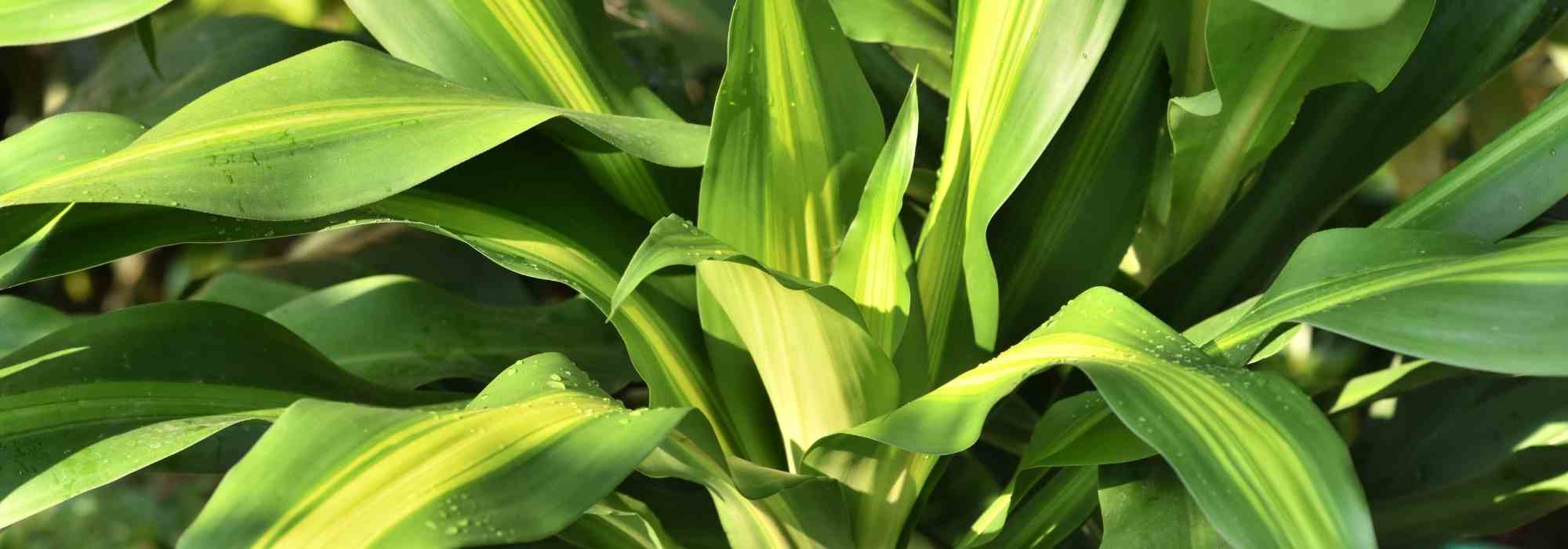
Dracaena, also known as the dragon tree, is a popular indoor plant for its elegance and ease of cultivation. Formed of cut trunks or a single ramified trunk, it bears rosettes of leaves that are long and broad, sometimes variegated. It is a plant with an exotic appearance, comprising multiple species and varieties that sit among the most effective air-purifying plants against xylene and formaldehyde. Yet behind this idyllic portrait lies a toxic plant for animals that does not mix well with our dogs and cats.
Discover the dangers Dracaena poses to our animals, to learn how to recognise the symptoms of poisoning and to know how to protect your four-legged companions.

What is Dracaeana?
The Dracaena is undoubtedly a star among indoor plants. With its architectural silhouette, its long, graphic leaves, and its ability to survive even when you forget to water (or two…), it has won over many indoor plant enthusiasts. It also adds, in a flash, an exotic or distinctly modern touch to the décor.
An easy-care plant
Originating from Central Africa and Asia, the Dracaena belongs to the Asparagaceae family, alongside Sansevieria or mother-in-law’s tongue, and Yucca. It is particularly appreciated because it is a houseplant low-maintenance: you don’t need green fingers to keep it looking good. It enjoys bright light but not direct sun, needs moderate watering, and grows slowly but steadily. It also benefits from good longevity and relatively slow growth.
A wide range of varieties to suit every taste
There are many different Dracaena species and varieties:
- Dracaena marginata stands out for its long, slender, pointed leaves, often edged in red.
- Dracaena fragrans, also known as the ‘corn plant’, offers broader and softer foliage. Among the various varieties, one can cite ‘Janet Craig’ with its dark green and glossy leaves, ‘Dragontree Tornado’ with its spiralled foliage, ‘Kanzi’ with its cream-edged leaves…
- Dracaena compacta is a bushier, more compact and structured plant, perfect for small spaces
- Dracaena sanderiana is recognised for its bamboo-like appearance.
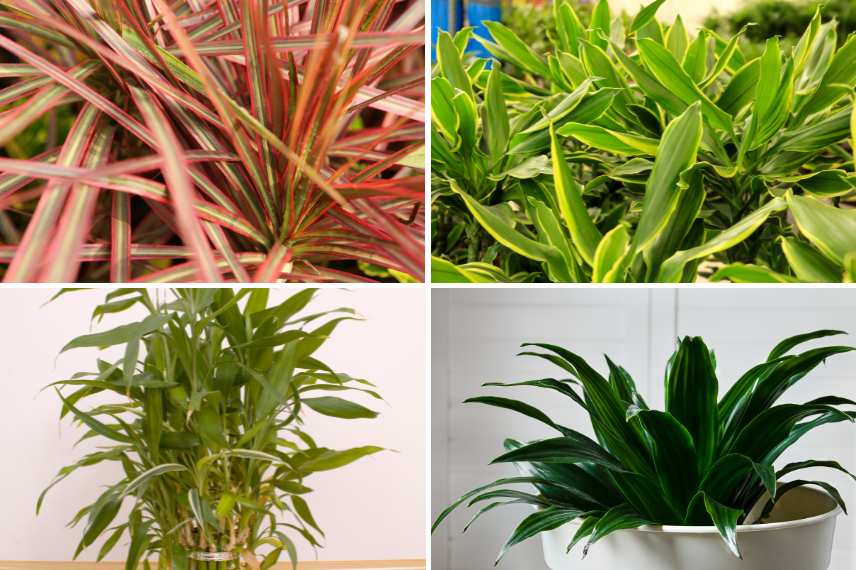
Dracaena comprises several species: clockwise: Dracaena marginata, fragrans, compacta and sanderiana
Dracaena and pets: what is the danger?
Behind this popular plant lies a less pleasant, even dangerous, aspect for our pets. A real danger often overlooked by cat and dog owners who buy this indoor plant with ease. Indeed, Dracaena is a toxic plant for our four-legged companions.
Why is Dracaena toxic?
The plant contains saponins, compounds naturally present in certain plant species, intended to deter pests. If these substances, with a bitter taste, pose no problem for humans, they can be irritating and toxic to animals, especially if ingested.
Cats and dogs are the animals most at risk, but it is mainly cats that are affected most often. And for good reason: they love nibbling on the leaves that protrude, especially those that hang down or have a fun texture… like Dracaena leaves! This instinct to chew plant leaves often stems from a need to purge, particularly for cats that do not have access to a garden.
What are the symptoms if ingested?
- Vomiting, sometimes haemorrhagic
- Excessive drooling
- Diarrhoea
- Dilated pupils (in cats)
- Unusual fatigue
- Lethargy, weakness, apathy, listlessness or a depressed state
- Loss of balance (in dogs).
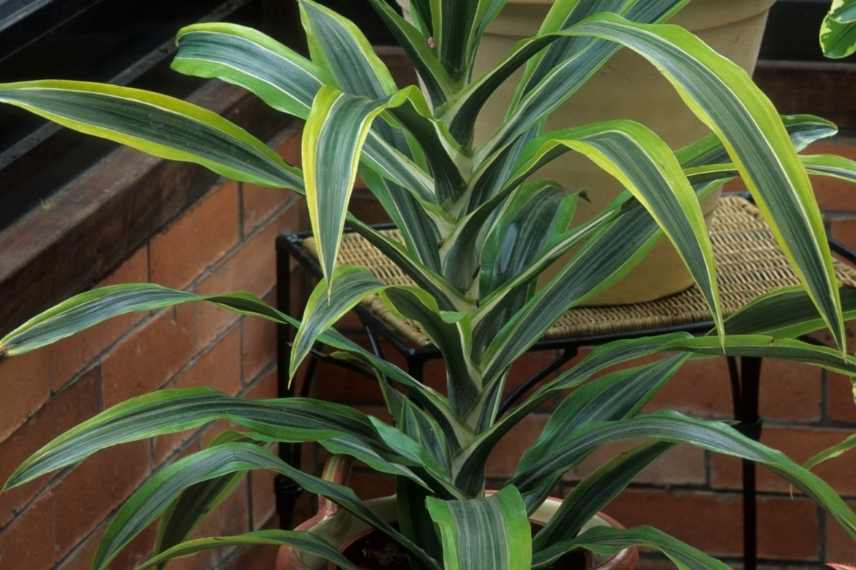
Dracaena leaves are very attractive to a curious or playful cat.
How severe is the poisoning?
In most cases, poisoning is not fatal, but it can be very uncomfortable for the animal… and stressful for its owner! Generally, Dracaena poisoning is moderate if the animal has not eaten a large amount. But in all cases, it should never be taken lightly. A quick veterinary consultation is always preferable, especially if the symptoms are visible. Do not attempt self-medication or any home remedy, and call the vet or the emergency vet line immediately.
What precautions should be taken?
If you have a Dracaeana that you particularly treasure, a playful dog or a curious cat, a few precautions are needed for smoother cohabitation:
- Choose a location out of the animal’s reach, high up on a stable shelf or suspended, on a tall piece of furniture, or in a room that is inaccessible or off-limits. Remember that cats are acrobats of the stubborn kind…
- Use natural repellents such as lemon or white vinegar. Natural repellents can also be bought in pet shops or veterinary clinics.
A quick tip: always keep the labels on your houseplants so you have the exact name in case of ingestion.
Read also
The easiest indoor plants to growWhat are the alternatives to Dracaena?
Rest assured: just because Dracaena is toxic doesn’t mean that all other indoor plants are. There’s no need to forgo greenery if you have a cat or a dog. There are a multitude of plants non-toxic to cats and dogs, equally pretty and easy to care for.
Discover a few examples of houseplants, compatible with the presence of animals, that bring a green touch to your home:
- Chlorophytum or spider plant: Fast-growing, it produces long stolons and long, narrow leaves. It is an ultra-hardy plant that purifies the air
- Calathea: with its graphic leaves in incredible colour patterns, it always makes an impression. It loves humidity and bright spots without direct sun.
- Maranta, or prayer plant: it’s a real spectacle with its very colourful leaves that fold up at night! Moreover, it’s completely harmless to animals
- Peperomia : compact, adorable and very easy to care for, it comes in many varieties with different shapes and colours
- Areca: with its palm-like appearance, it brings a tropical touch without risk. It loves light and adds volume to a room.
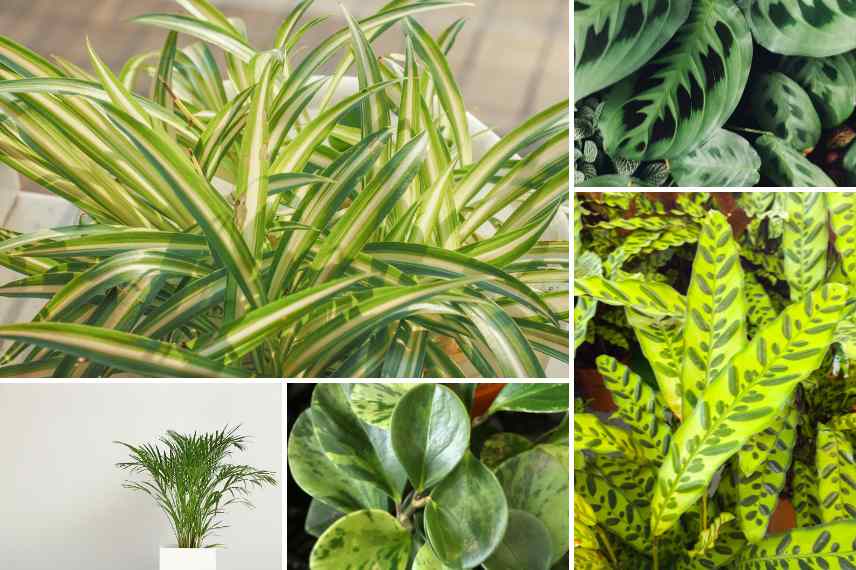
To replace Dracaena, you can choose a Chlorophytum, a Maranta, a Calathea, a Peperomia or an Areca
For more information, feel free to read our article: Non-toxic houseplants: which ones should you choose to keep your pet safe?
- Subscribe!
- Contents
Comments