





























How to design an East-facing garden?
Tips and tricks for garden design and plant selection
Contents
You have an east-facing garden and want to know how to make the most of it? An east-facing exposure offers advantages, such as morning sun, but can also have drawbacks. Other factors come into play when planning a garden, such as shade cast by trees, walls or buildings, or the region’s prevailing winds. Discover our tips to get the most from your east-facing outdoor space and select the most suitable plantings.

Characteristics of an East-facing garden
- An east-facing garden benefits from light and the morning sun. The sunlight is gentle and gradual, before giving way to shade in the afternoon. This exposure is ideal for plants that cannot tolerate the full sun at midday, as they can thus benefit from a few hours of direct light without risk of sunburn. This type of garden is suitable for plants that tolerate partial shade and that enjoy the coolness later in the day.
- The orientation of a garden is not the only criterion to consider when planning it. Indeed, it is advisable to observe the sunlight exposure of your garden throughout the day and across the seasons before you start planting and in order to ensure their success as well as possible. If it has trees or a house façade, a garden located to the east may have additional shaded areas. In that case, you will need to plant shade-tolerant plants in these spots.
- In winter, an east-facing garden is more exposed to morning frost and thaw. It is therefore preferable to plant hardy plants there, which will withstand the cold.
- Another factor to consider: regional winds. Depending on the region in which you live, some east winds can disrupt the tranquillity of your garden and create problems for your plantings. East winds can be, for example: the Marin, a south-easterly wind that blows along the Mediterranean coast; the Autan, a south-easterly wind that prevails in the Midi Toulousain and the Tarn; the Levant, an easterly wind that blows on the Southern Alps and the Mediterranean coast.
Find out about these potential regional winds so as to plan protections for your plantings or the area you have set aside for outdoor meals or for relaxing. To protect yourself from winds, various solutions exist, such as creating a hedge of bushes or the presence of a wall.
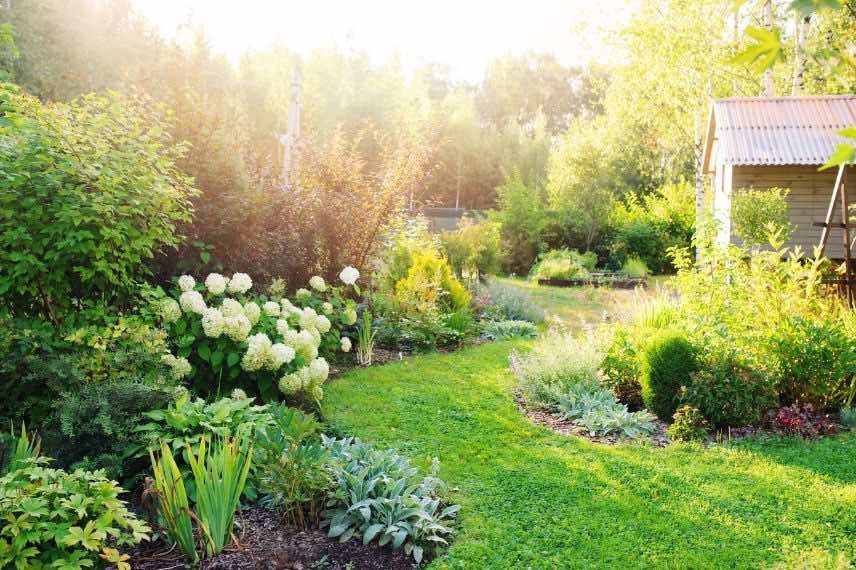
An east-facing garden receives only the morning sun
Which flowers should I plant?
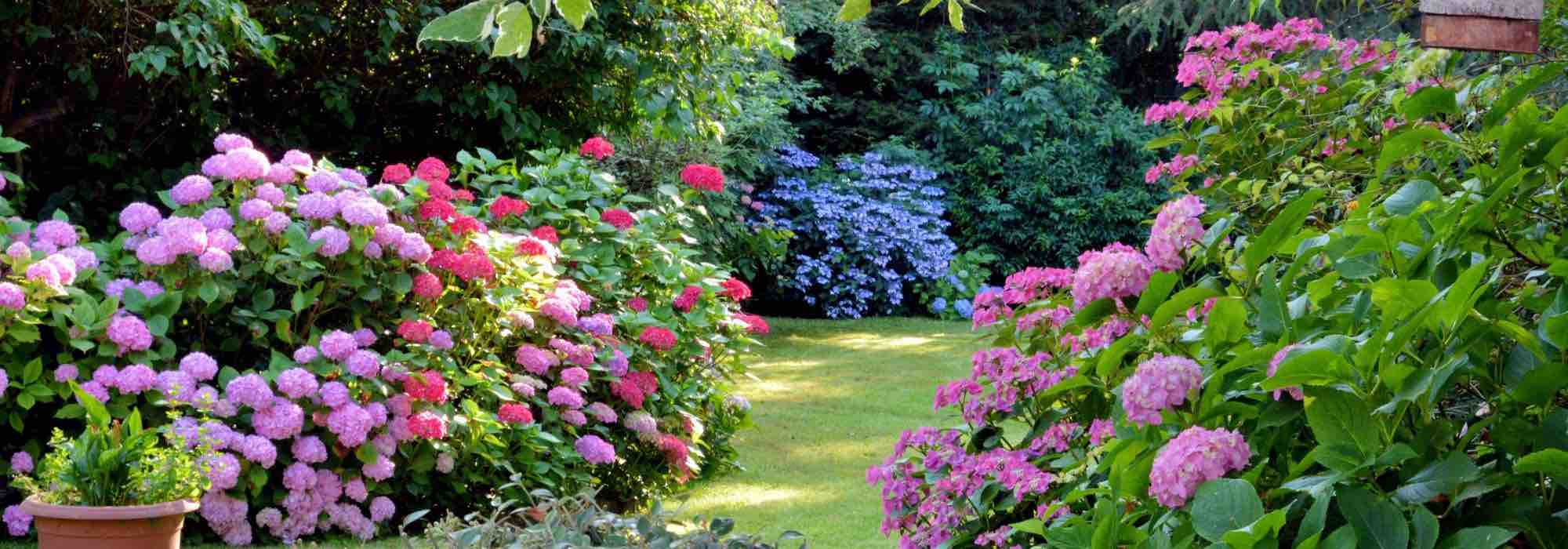
For flowers, choose species that enjoy the soft morning light, without being too frost-tender. Think of hydrangeas, with their stunning inflorescences, which are ideal for this type of garden, just as hostas are plants suited to shade or partial shade and bring a lush touch of greenery. The hardy geraniums, fuchsias, and the impatiens are also suited to partial shade or shade and will brighten your east-facing garden. Also consider the roses which tolerate partial shade and offer a wide range of colours, shapes and sizes. Hellebores provide distinctive winter flowering and good hardiness. For continuous flowering, also consider Japanese anemones, which tolerate dry shade and bloom in late summer and autumn, or heucheras, which tolerate partial shade well and bring colour thanks to their semi-evergreen foliage almost year-round.
Hardy climbers suited to partial shade are also plants that can thrive in an east-facing garden. You could opt for clematis, which enjoy having their roots in shade and their flowers in the sun, honeysuckles appreciating partial shade and frost-hardiness, or a climbing Russian vine, which shares the same qualities.
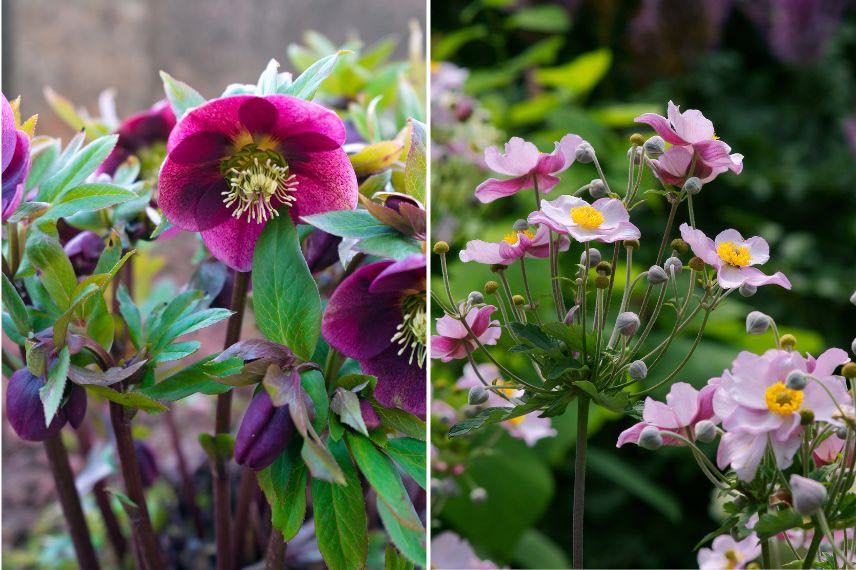
Hellebores and Japanese anemones thrive in this type of exposure
Which shrubs and trees to plant?
Spring-flowering shrubs, such as the azaleas and rhododendrons, are planted in partial shade and are particularly suited to an east-facing garden. These plants enjoy the morning cool and protection from the scorching afternoon sun. Also consider the Mexican orange blossom is a hardy shrub that tolerates partial shade and will provide fragrant flowering and evergreen foliage. The dogwoods are very ornamental shrubs that can be planted in partial shade and are likewise hardy. The Spireas are shrubs with delicate flowering that can bloom from April to August and are planted in partial shade while being hardy.
The Weigelas, the fragrant mock oranges, the Elaeagnus and the laurustinus are also shrubs suited to cultivation in an east-facing garden.
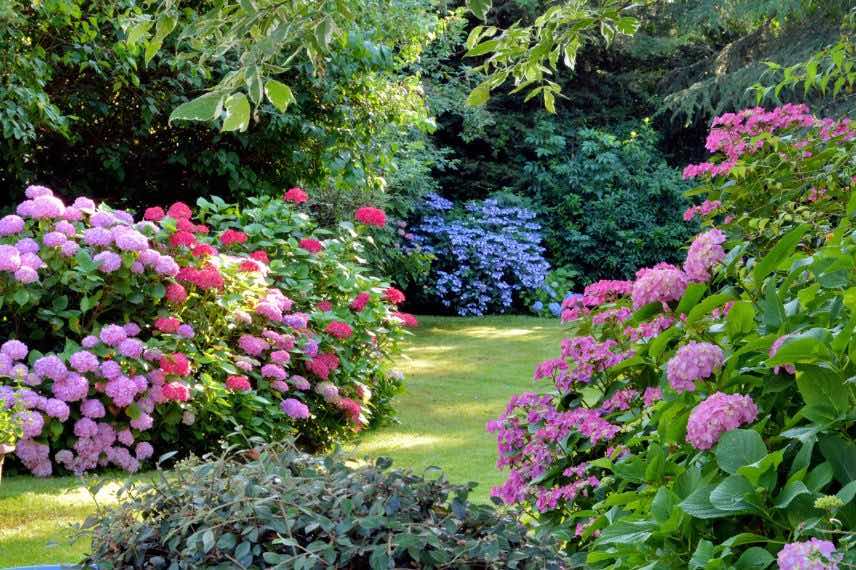
Hydrangeas, or hortensias, of the macrophylla, serrata, aspera and involucrata types, are ideal shrubs for this exposure
Which vegetables to plant?
Vegetables generally need about six hours of sunlight per day to grow well.
In an east-facing garden, the sun will be present only in the morning, and this will limit the vegetables you can grow there.
Prioritise vegetables that tolerate partial sun exposure, such as leafy vegetables, which are the most shade-tolerant. You can thus plant lettuce, salad leaves, rocket, Chinese cabbage, leeks, spinach, and rhubarb which thrive particularly well in these semi-shaded conditions.
Aromatic herbs such as tarragon, parsley, sorrel, and mint also tolerate a little shade.
Root vegetables such as carrots, beetroots, parsnips and radishes are also relatively shade-tolerant.
You can also opt for growing strawberries or raspberries, which are small fruits that originally grew in woodland understory.
By contrast, growing fruiting vegetables such as tomatoes and aubergines will be more difficult, as they require much more light and sun for optimal production.
Garden design tips
- An east-facing garden offers shaded areas in the afternoon you can use to create relaxing spaces. If you live in an area that is particularly sunny, these shaded spots will be refreshing and especially well suited for hosting a table and chairs where you can enjoy a drink or a meal.
- Use light colours to brighten dining or relaxing areas. As for flowers, opt for bright and cheerful colours to brighten your garden.
- Also consider incorporating decorative features such as fountains or benches to enjoy the shade and the cool of the afternoon.
- Add organic mulch to protect your plantings, helping to retain soil moisture and protect roots from temperature fluctuations.
- In windy conditions, shield your most vulnerable plantings with hedges or screens.
- Subscribe!
- Contents

Comments