


Invasive pampas grass: how to limit its spread or remove it?
Our tips for reducing the spread of Cortaderia or removing it naturally
Contents
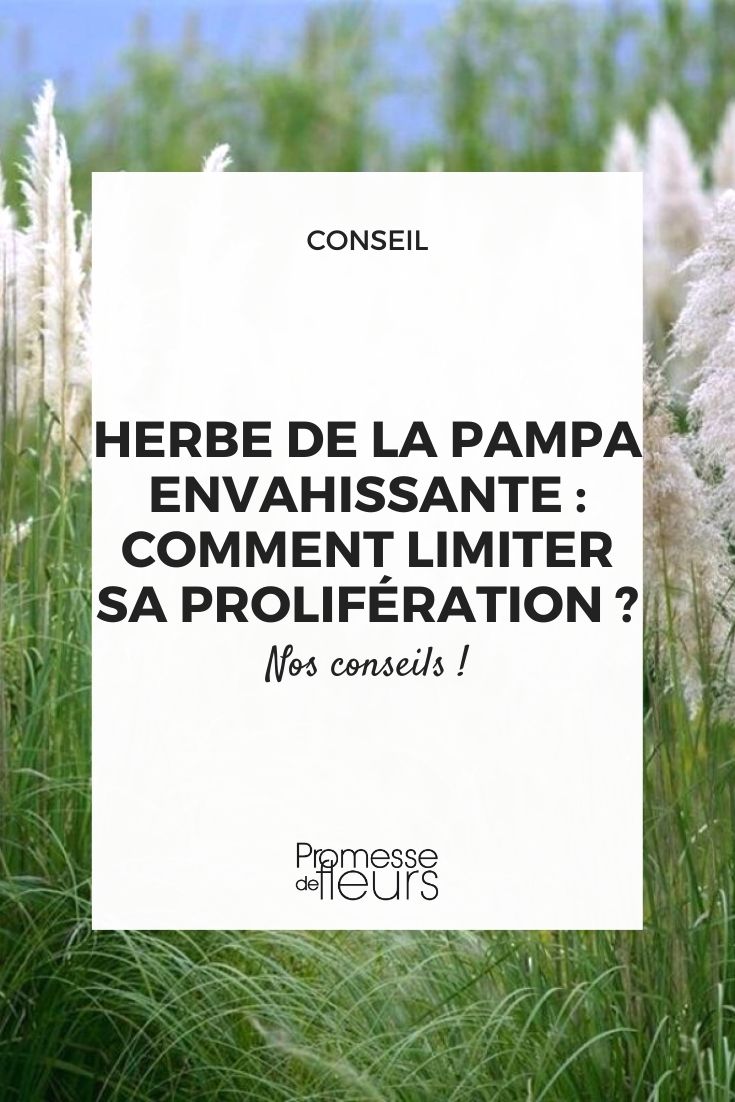
Pampas grass is a grass prized for its architectural and graceful silhouette. Its large feathery spikes and evergreen foliage add a lot of volume to the garden. Easy to grow, hardy and low-maintenance, this plant, however, has the drawback of being invasive.
We offer a few steps to help control its spread. And if you wish to remove it, we also provide our tips for getting rid of it naturally.
For more information: Pampas grass, Cortaderia: planting and care.

Identifying Pampas grass
This grass is easy to recognise, thanks to its imposing silhouette and plume-like flowering, which is hard to miss.
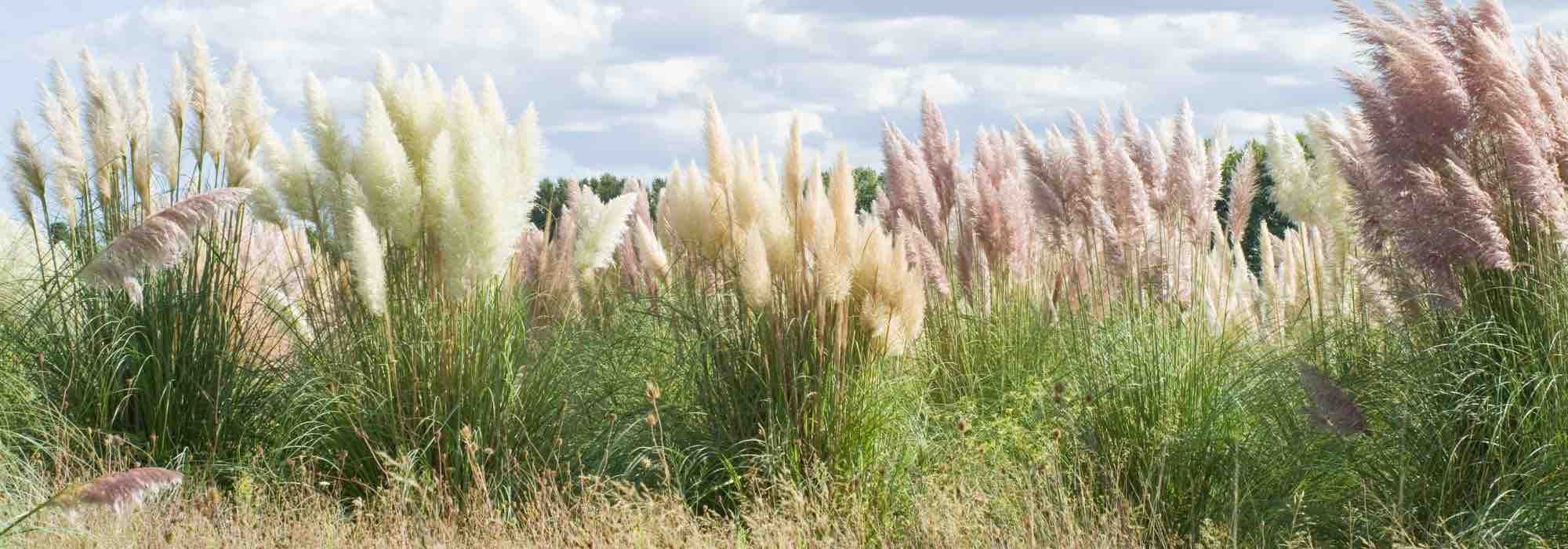
Pampas grass consists of tall herbaceous culms (often referred to as culms), which can reach nearly 2 metres in height. They can be shorter in some more compact varieties. At the tops of these culms, in late summer, large, plume-like and silky inflorescences appear, usually silvery-white in colour. They stay in place throughout the winter.
Pampas grass has evergreen foliage (which remains year-round), forming an imposing clump of tough, sharp leaves.
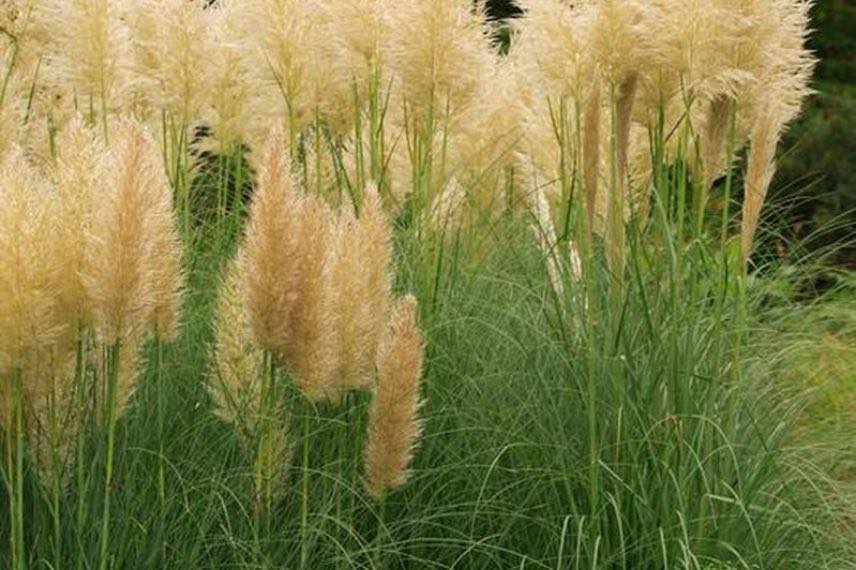
Pampas grass is commonly seen in gardens
Why does this grass spread so easily?
Pampas grass is a grass native to the southern hemisphere, thriving in sunny conditions, even when dry and windy.
This plant, just a few years ago highly regarded, is singled out for its invasive nature. This is especially true in mild climates, on the Atlantic and Mediterranean coasts. It is now listed as an invasive plant, leading to a ban on its sale since April 2023. This applies to the type species Cortaderia selloana, but also to all its derived varieties (dwarf forms, pink-spiked inflorescences, colourful foliage, etc.).
Pampas grass gradually forms imposing colonies, which threaten native flora and contribute to the reduction of biodiversity. As a result, it also impacts local fauna, which depend on these plants for shelter and food.
If Pampas grass proliferates so rapidly, it is due to several characteristics:
- It is an easy-to-grow grass, resistant to harsh climatic conditions (drought, heat, frost) and requires no special care to establish itself.
- It has a great capacity for reproduction. In late summer, it develops inflorescences laden with numerous seeds on the female flowers, which then burst open at maturity. Each plant can produce over one million wind-dispersed seeds, which take advantage of a highly effective dispersal mode. Carried by the wind, they can travel long distances, sometimes over a range of up to 25 kilometres. The seeds also germinate very rapidly.
- It is resistant to pests and diseases.
Limit the spread of pampas grass
Pampas grass is a fairly difficult plant to contain. But if it is already established in your garden and you do not wish to remove it, a few steps will help limit its spread and impact.
Prune the flowering spikes
To limit the proliferation of Pampas grass, cut the flowering spikes before seed release. Do this in late summer, using a well-sharpened pruning shear or a hedge trimmer. We recommend you equip yourself with gloves and wear long sleeves, to avoid injuring yourself with the particularly sharp foliage. Do not leave pruning waste on site and do not compost it either.
You can also choose to prune only the male plumes, to prevent reproduction and seed formation. But it is not always easy to distinguish them from the female spikes.
Don’t give it overly favourable growing conditions
To try to limit the spread of Pampas grass, do not give it overly favourable growing conditions, especially in mild regions. If it tolerates drought, this plant will grow more in moist, fertile soil. So be careful not to overwater the soil or fertilise it.
Opt for pot growing
Some Pampas grass varieties, more compact than the species, can be grown in pots. This can be a solution if you have these varieties in your garden and you wish to keep them for their aesthetic qualities, while limiting their spread. This is the case of Cortaderia selloana ‘Tiny Pampa’, of ‘Mini Pampa’ or of ‘Mini Silver’.
Noting toutefois que cela n’empêchera pas la dispersion de graines, si vous ne procédez pas à une taille des épis chaque année.
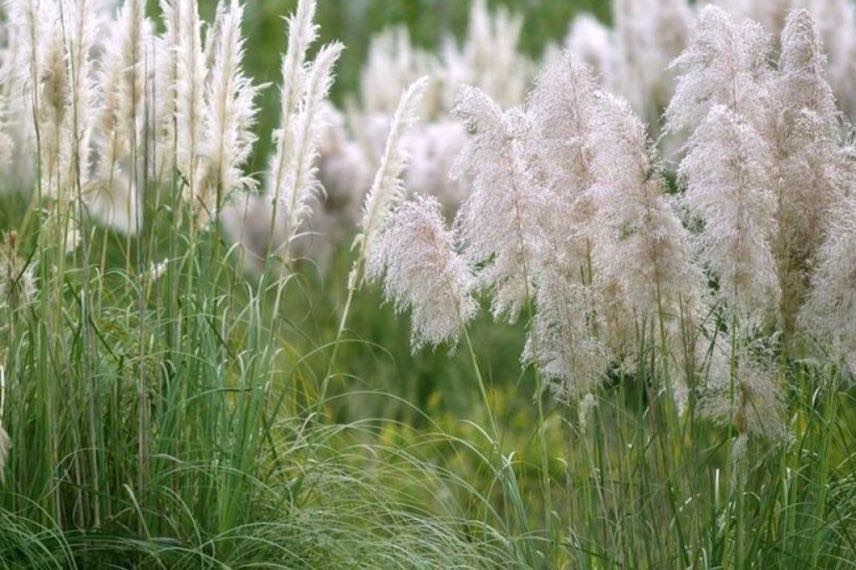
Cortaderia selloana ‘Mini Silver Pampas’
Read also
The indestructible grassesGetting rid of pampas grass naturally
If you want to eradicate Pampas grass, you’ll need patience and determination. Note that the younger the plant, the easier it will be to get rid of it.
As always, we discourage you from using chemical herbicides to try to remove Pampas grass. These solutions are often ineffective and only pollute the soils, further impacting biodiversity. Similarly, some “old wives’ remedies” (spraying the plant with bleach, laying coarse salt on the stump…) do not seem very effective and contribute to soil imbalance.
Uprooting
Removal by uprooting remains the most effective natural method. To do this, start by cutting all the stems close to the ground, using a hedge shears or a sickle.
Dig around the stump using a spade, to locate where the roots stop and to delineate the work area. Dig again deeper. By proceeding from the outside in, remove the root system gradually while loosening the clump. This operation can take time and may require several passes.
Be vigilant in the months following uprooting, to quickly spot any potential regrowth and be able to eliminate it before it develops.
Tarpauling
Install an opaque tarpaulin over the Pampas grass clump to deprive it of light, and thus gradually cause it to wither.
Là encore, start by cutting all the culms of the plant close to the ground. Then place your tarp so that it covers the clump well. Choose a thick, sturdy model, which you will weight down to keep it in place over the months. This solution will take time (at least 1 to 2 years), but can prove naturally effective and without effort.
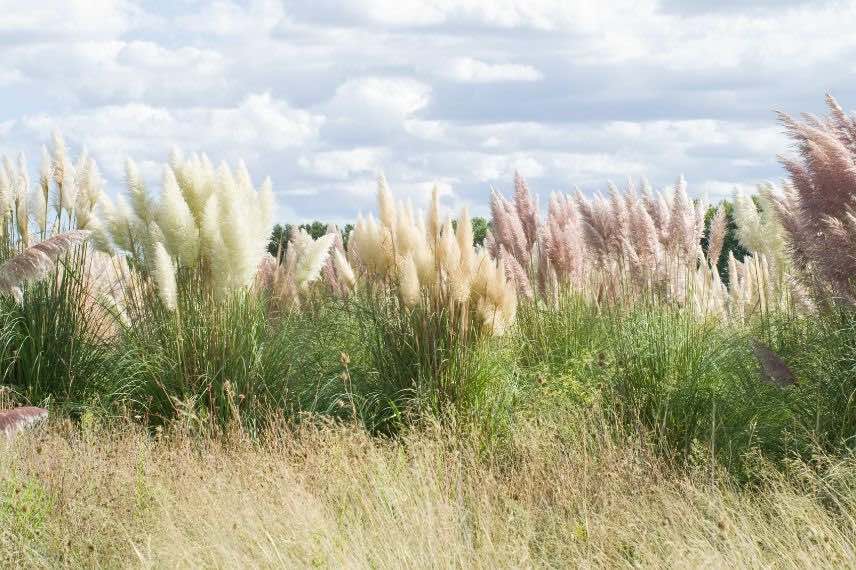
Pampas grass has spread widely in natural spaces
- Subscribe!
- Contents
Comments