


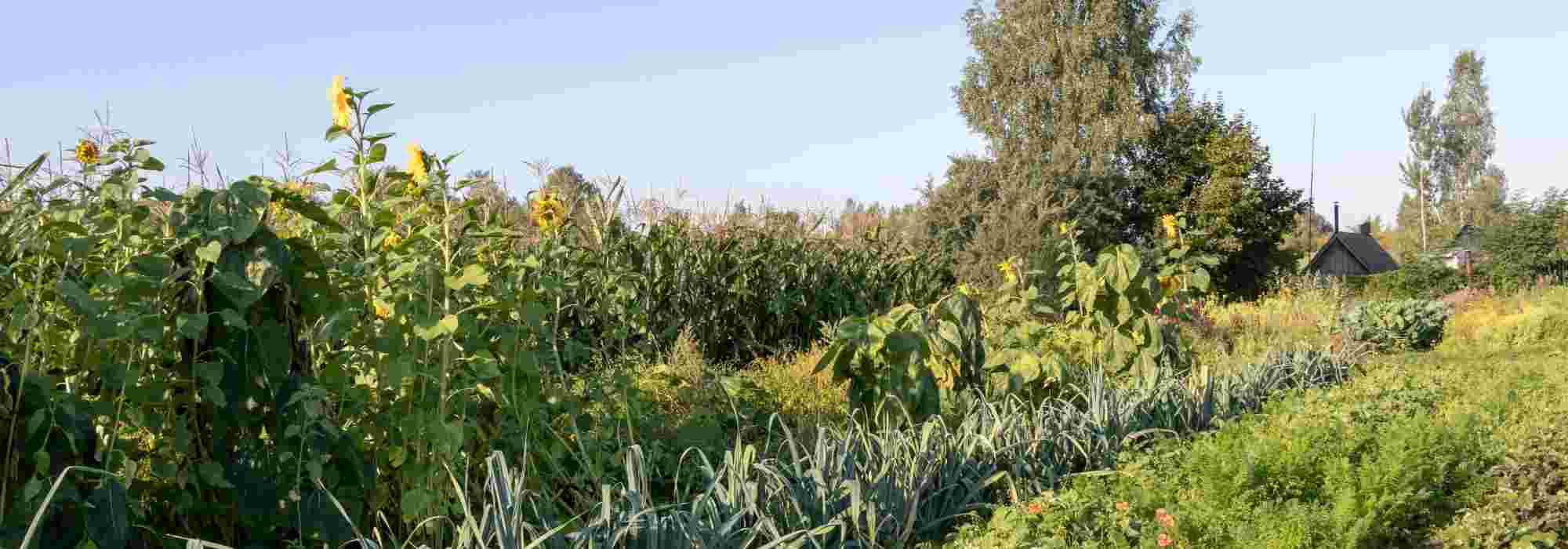
Permaculture: the key steps to prepare the soil for your vegetable garden
Our tips for working the soil in a way that respects yourself and the environment
Contents
To keep things simple, permaculture can be defined as a method of cultivation inspired by nature to create sustainable, resilient and productive ecosystems. Applied to the home vegetable garden, permaculture involves adopting natural and sustainable techniques to create a rich and living soil, capable of supporting biodiversity and producing vigorous and productive plants. The aim is to develop a self-sufficient, productive and environmentally friendly garden.
From there, preparing the soil of your permaculture vegetable garden becomes essential as it is the first step in the process. A necessary but non-destructive and life-respecting task.
Discover how to prepare, fertilise, improve and work the soil, while respecting the principles of permaculture.

Observation and analysis of vegetable garden soil
Whether you are starting your permaculture vegetable garden or you are already a devotee of this cultivation method, observation remains essential. It is, after all, one of the foundations of permaculture: You should continually set out to discover your garden, its soil, the insects and birds that pass through, and the native plants that grow there. Far from being time wasted, this observation will, on the contrary, save time by avoiding unnecessary actions.
That’s why, in autumn or winter, it’s time to evaluate the past season with its successes and failures, but also to take stock of the areas conducive to growing one vegetable plant or another. Similarly, don’t hesitate to (re)observe the structure and texture of your soil with the spade test, and to estimate its richness in organic matter by observing its colour, roots, worm casts, earthworms, aggregates… You can also redo a test to assess the acidity or alkalinity of your soil.
To learn more, please read the following articles:
Improvement of soil structure
To create fertile soil, it is essential to till it to improve its structure. And this to allow water and air to circulate freely. Indeed, living beings, as well as plant root systems, need oxygen to grow. This step in the cultivation work is therefore intended to improve water retention and soil aeration. Not to mention how easy the work is. Growing vegetables in soil that is completely compacted and packed is utopian.
Soil cultivation without disturbing its layers
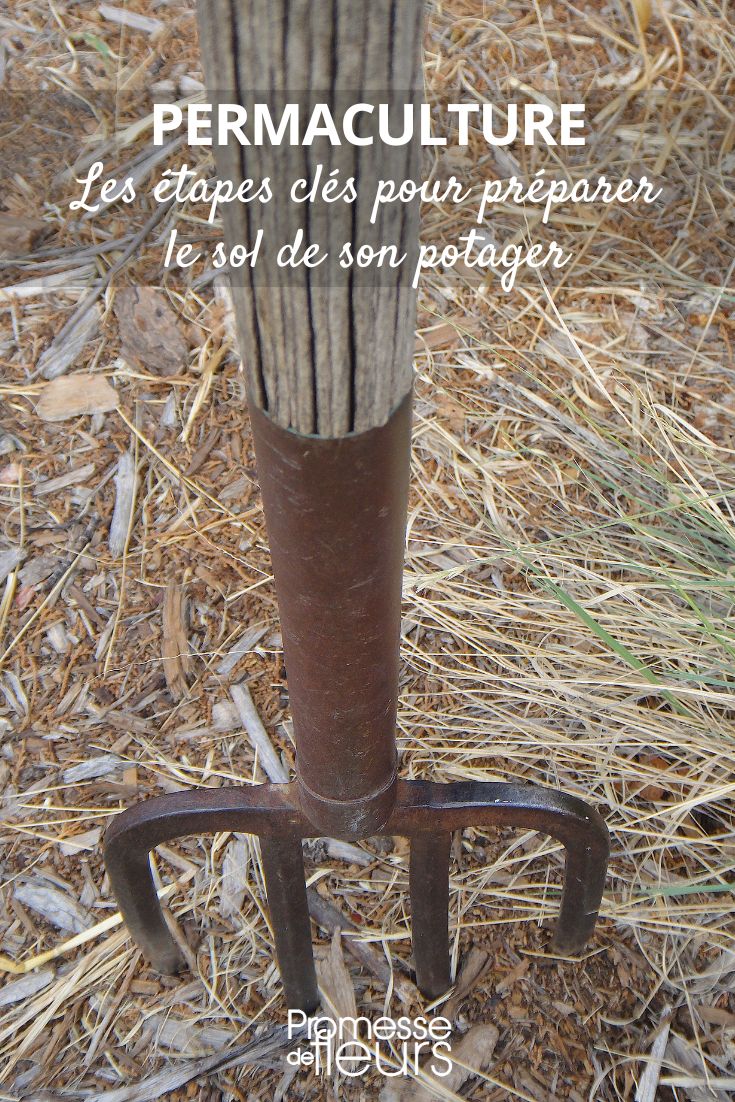
For that reason, in permaculture, soil work should be as gentle as possible, both to respect soil life and for the gardener’s well-being. That is why mechanical machines like the rotavator are banned, as they disturb the soil structure, but also the soil fauna (the subterranean life) that lives underfoot. The soil work will be carried out with tools such as the digging fork, also known as biofork or grelinette® which allow intervention at depth, but without turning the soil. And thus without disturbing soil life, and in particular bacteria, fungi and earthworms that live near the surface.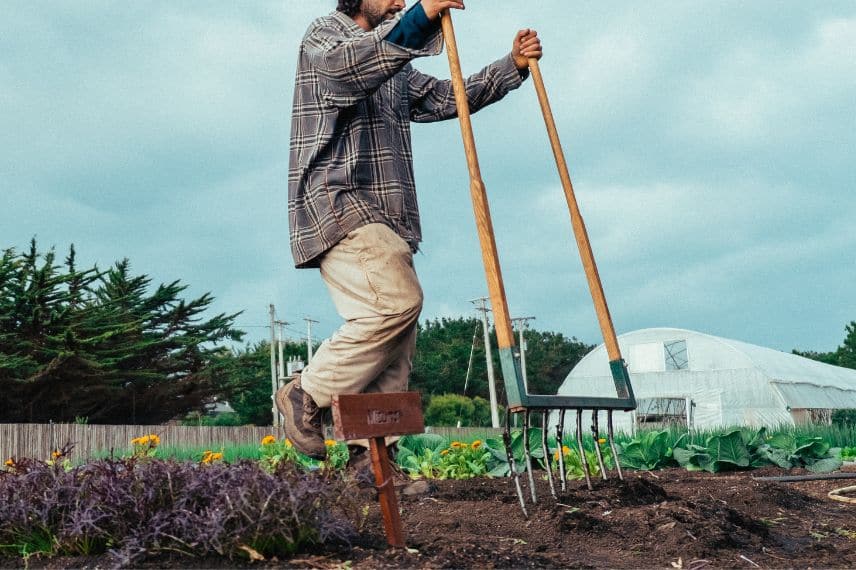
Handling this tool is also very comfortable for the gardener. This soil aeration work in the vegetable garden with a fork and spade is usually carried out in late winter. However, heavier, clay soils, more difficult to work, can be dug traditionally and roughly in autumn. Winter weather and frost will do their work to break up clods, which will be broken up with a hoe in spring, before the fork and spade work.
Amending the soil to nourish it
Improving soil structure also comes from adding organic matter. Compost is thus ideal for enhancing soil properties, to lighten it, help it retain water, aerate it, warm it, and of course nourish it with nutrients such as nitrogen, phosphorus, potassium, as well as minerals and trace elements.
It is also possible to add manure, well decomposed and composted in spring, possibly fresher in autumn. All manures are beneficial for the soil, but horse manure or chicken droppings, well dried, are rich in nitrogen.
Finally, the last step of this work is to cover the soil. In nature, soil never stays bare. Why should it in the vegetable garden? That is why, once the soil has been worked and amended, it is essential to apply mulch which will have multiple functions: to reduce water evaporation and space out watering, to prevent the proliferation of weeds, to prevent soil erosion, to create a favourable ecosystem for beneficial insects and to feed earthworms, to insulate plants from heat or cold… Mulching can be done with many materials such as straw, hay, fallen leaves, lawn clippings, woody chips, etc.
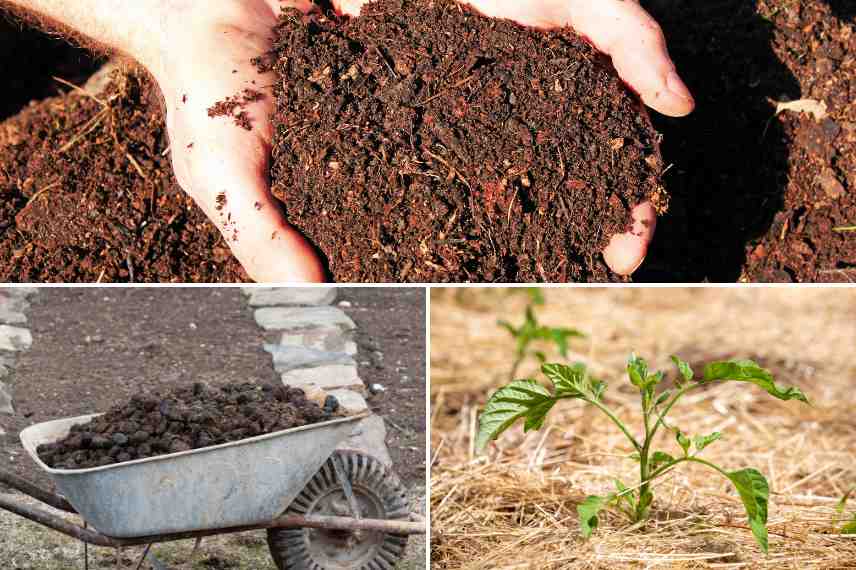
The addition of compost or manure, and mulching, are essential steps in soil preparation for a permaculture garden
Further reading :
Natural fertilisation of the soil
In a permaculture garden, beyond compost and manure, and also the mulch that decomposes, the soil can be enriched with other natural methods. You can use natural fertilisers such as crushed horn which can be added to the soil in autumn. Indeed, crushed horn is regarded as a slow-release fertiliser that benefits from lasting action. Similarly, the dried blood, very rich in nitrogen, can be spread when preparing the soil.
To fertilise the soil, it is also possible to sow green manures that feed it by supplying nutrients, improve its structure through their root system, and protect it from erosion and runoff. Green manures also have the ability to limit weed establishment and attract beneficial insects, essential for biological control of pests and for pollination. Some green manures are sown and cut in spring, just before the summer crops, others in autumn. Among green manures, one can cite Fabaceae or legumes (broad bean, vetch, clover, peas…), the brassicas such as mustard or rapeseed, or grasses and cereals (rye, oats…) not forgetting phacelia.
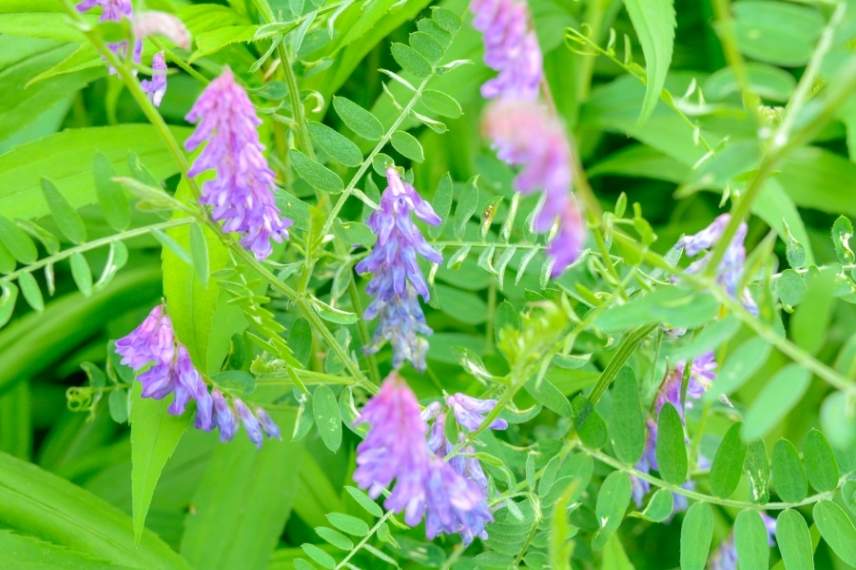
Vetch is a green manure to sow in spring or autumn.
Further reading :
- Crushed horn, dried blood, guano… What are these fertilisers used for in the garden and the vegetable plot?
- Green manures: all you need to know!
Adoption of no-dig cultivation techniques
It’s hard to talk about permaculture without mentioning raised beds and lasagne gardening, no-dig cultivation techniques. These techniques should only be implemented after observing the soil. It would be a waste of energy and time to waste it! Indeed, in good garden soil that is light and humus-bearing, raised beds aren’t necessarily useful. Raised beds can be advantageous on land with poor soil that is hard to work, stony, clayey and heavy… In cold and damp regions, it’s also a good idea.
As for lasagne gardening, raised beds made up of layered organic matter (dead leaves, lawn clippings, straw, manure, compost…), they help create fertile soil. But they also require some work to establish. They can be tested in a small garden.
To find out more :
- Subscribe!
- Contents
Comments