





























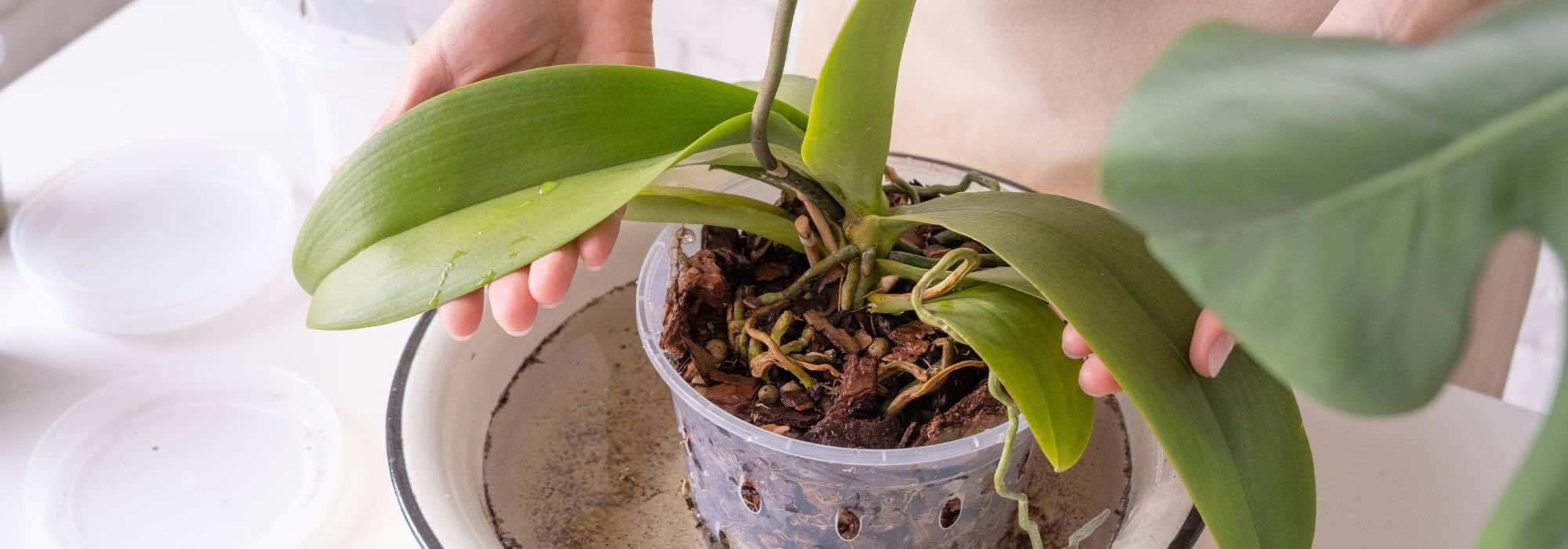
Phalaenopsis orchid care throughout the seasons
Look after your indoor plant all year round
Contents
Phalaenopsis orchids, often called ‘moth orchids’ due to the graceful shape of their flowers, are plants popular with indoor gardeners for many years.
Their delicate beauty, long-lasting flowering and their ability to rebloom make them favourites in many households.
Despite their exotic appearance, Phalaenopsis orchids are surprisingly approachable, even for beginner gardeners. However, to help them thrive and continue to bloom year after year, it is essential to understand their specific needs and the seasonal adjustments to follow.
In this article, explore how to care for your Phalaenopsis orchid all year round. You’ll discover how to tailor your actions to the plant’s natural cycle, encourage flowering and avoid the most common mistakes!

The basics of care for a Phalaenopsis orchid
Phalaenopsis are among the easiest orchids to grow. But to keep them healthy and continuing to bloom regularly, it is essential to understand their specific needs.
Understanding Phalaenopsis orchid needs
Phalaenopsis are epiphytic plants, meaning they naturally grow on trees in a tropical environment. They do not live in soil but cling to tree bark, where their roots absorb moisture from the air and nutrients leached by rain. Recreating these conditions at home is the key to successful care.
The orchid’s roots are aerial and play an important role in photosynthesis. That is why they must remain exposed to light and air, without being smothered by a dense or waterlogged substrate.
Suitable substrate and pot
To imitate its natural habitat, Phalaenopsis should be planted in a light, well-drained substrate, often composed of pine bark, coconut fibre or sphagnum. This type of substrate allows the roots to breathe while retaining just enough moisture.
The choice of pot is also important. Opt for a transparent pot to let light reach the roots, which promotes photosynthesis. Perforated pots are essential for good drainage, as Phalaenopsis hate having roots constantly wet.
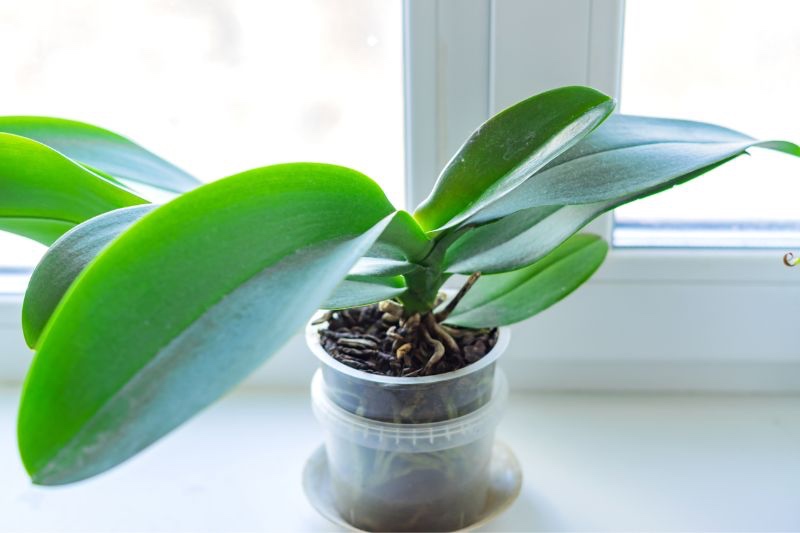
In basic Phalaenopsis cultivation, choose a transparent pot with a bark-based substrate
Watering: the key to care
Watering is one of the most delicate aspects of Phalaenopsis care. Too much water can cause root rot, while too little can dry them out.
A common method is to immerse the pot in a bowl of water for 10 to 15 minutes, then allow it to drain thoroughly before returning it to its place. Generally, a weekly watering frequency is sufficient, but it varies with the season, temperature and ambient humidity.
Water used should be at room temperature and low in lime. If your tap water is too hard, opt for rainwater or filtered water.
Where to place an orchid in the home?
Phalaenopsis prefer soft, indirect light, such as on a windowsill facing east or southeast. Too much direct light can scorch the leaves, while insufficient light prevents flowering.
The ideal temperature for an orchid lies between 18 and 25 °C, with a slight day–night difference. Avoid areas exposed to drafts, such as near doors or windows that frequently open, as well as areas near radiators, which dry the air.
Ambient humidity: a factor often overlooked
In their natural habitat, Phalaenopsis benefit from high humidity. To replicate these conditions indoors, you can lightly mist the aerial roots, especially in summer or in a dry environment. Humidity of 50 to 70% is ideal, but it can be supplemented with a humidifier if necessary.
Common mistakes to avoid
- Root rot is the most common cause of Phalaenopsis death. Ensure water never stagnates in the pot or saucer.
- Roots must be able to breathe. A substrate too compact or too old should be replaced regularly.
- Drafts or sudden changes in temperature can stress the orchid.
Seasonal care for Phalaenopsis
Phalaenopsis orchid care changes with the seasons as their needs evolve with changes in light, temperature and humidity. Here is how to adapt your care throughout the year to ensure their health and flowering.
Spring: the active growth period
Spring marks the resumption of activity for Phalaenopsis after winter dormancy. It is a crucial period to stimulate growth and prepare for the next flowering.
- Watering: watering should be increased as the plant uses more water to develop its roots and leaves. In general, water once a week, ensuring the substrate dries between waterings. Avoid leaving water standing in the pot or saucer to prevent root rot.
- Fertilising: apply a special orchid fertiliser every two weeks. Use a nitrogen-rich product to support the growth of leaves and roots. Always dilute fertiliser in water to avoid burning the roots.
- Repotting: spring is the ideal time to repot your orchid if the substrate is compacted or if the roots are protruding from the pot. Regular repotting, every two or three years, ensures good drainage and healthier roots.
During this season, place your orchid in a bright location, but not in direct sun, to support its growth.
→ Read our tutorial on repotting Phalaenopsis
Summer: heat and bright light
With long days and high temperatures, summer can be demanding for your orchid. When well managed, it should stay healthy despite the heat.
- Light: place your Phalaenopsis in a very bright spot, such as a windowsill facing east or north, but protect it from direct sun with a curtain. Excessive exposure can cause leaf burns, visible as brown spots.
- Watering: heat speeds up evaporation, so regularly check the substrate. Water once to twice a week depending on the temperature and lightly mist the aerial roots if the air is dry.
- Pests: the drier summer conditions favour certain pests. Regularly inspect the leaves, especially underneath, for signs of infestation.
During summer, your orchid benefits from conditions close to its tropical habitat, provided it is not exposed to overly dry air.
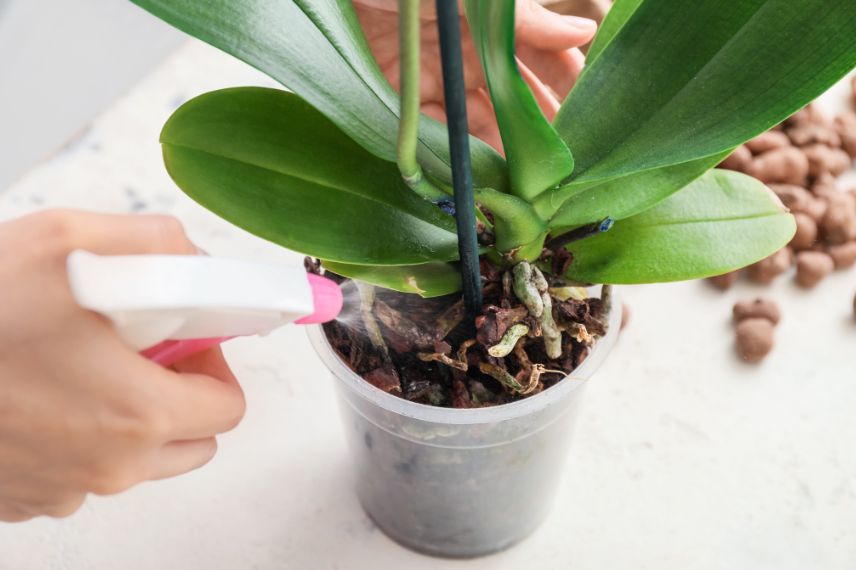
In summer, do not hesitate to mist the aerial roots of Phalaenopsis
Autumn: preparing for flowering
Autumn is often a crucial period for Phalaenopsis, as this is when they prepare their flower spikes.
- Watering: slightly reduce the frequency of watering, spacing waterings every 10 to 14 days. This decrease mimics the drier autumn tropical conditions and encourages the formation of flower spikes.
- Temperature: to stimulate flowering, create a day–night temperature difference, ideally 5 to 10 °C. Place your orchid in a cooler room at night.
- Pruning: if an old flower spike is still green after the flowers have fallen, cut it above a node. This can encourage a new flowering. If the spike is dry, prune it at the base to allow the plant to concentrate its energy on new shoots.
During autumn, be attentive to the appearance of new flower spikes and adjust care to encourage their development.
Winter: rest and patience
In winter, the orchid’s activity slows down, but it is also often the period when flowers begin to open if flower spikes formed in autumn.
- Watering: space watering to every two or three weeks, as evaporation is lower and the plant uses little water. Ensure you do not overwater, as roots could rot in the damp substrate.
- Light: place your orchid near a well-lit window to compensate for the low winter light. If natural light is insufficient, you can use a grow light to supplement.
- Protection from the cold: avoid cold draughts, abrupt temperature changes and locations near radiators, which dry the air.
The orchid typically flowers in winter, and you can enjoy its flowers for several weeks, or even several months. Once flowering is finished, let it rest before attempting to rebloom.
After its first year of care: how to get a Phalaenopsis orchid to rebloom?
It’s a common question, especially after the plant has lost its beautiful flowers. Contrary to what some think, once the flowers have fallen, the orchid isn’t dead: it simply enters a rest period to regenerate before producing new flowers. Here’s how to encourage this process and maximise your chances of seeing your Phalaenopsis in bloom again.
A rest period is necessary after each flowering to allow the plant to rebuild its strength. On average, a well-cared-for orchid will rebloom once a year, but some can flower twice if conditions are ideal.
What to do after flowering?
When the flowers fall, the first step is to inspect the flower spike. Depending on its condition, here are the actions to consider:
- If the spike is still green: You can trim it lightly, just above a node (a small bulge along the stem). This can stimulate the production of a new flowering branch. However, this method can be taxing for the plant if it has not had enough rest.
- If the spike is dry and brown: Cut it back at the base, as it will no longer produce flowers. This pruning allows the orchid to concentrate its energy on its leaves, roots and the formation of a new spike.
In both cases, make sure to use clean, sterilised scissors to avoid introducing diseases.
Apply the guidance covered in the previous chapters on light, watering, the day/night temperature difference and fertiliser so that your orchid reblooms for many years.
Patience and observation
Getting a Phalaenopsis orchid to rebloom takes time and care. A new flower spike can take several weeks to appear, and you may still have to wait about three months for the flowers to fully open.
And if it doesn’t rebloom?
If your orchid shows no sign of flowering after several months:
- Ensure it receives sufficient light. Leaves that are too dark may indicate insufficient light.
- Try to create a more pronounced day/night temperature difference to stimulate it.
- Check that the potting mix is in good condition. If it is compacted or old, repotting may be necessary.
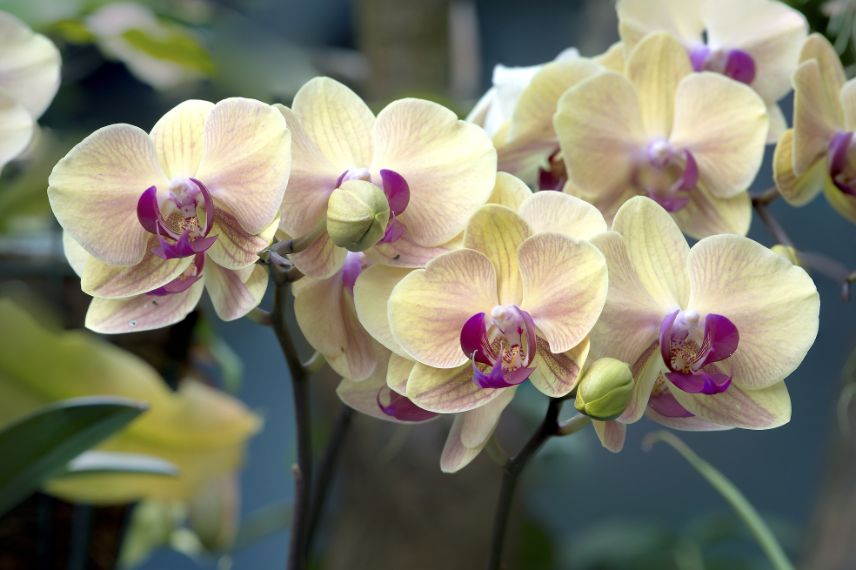
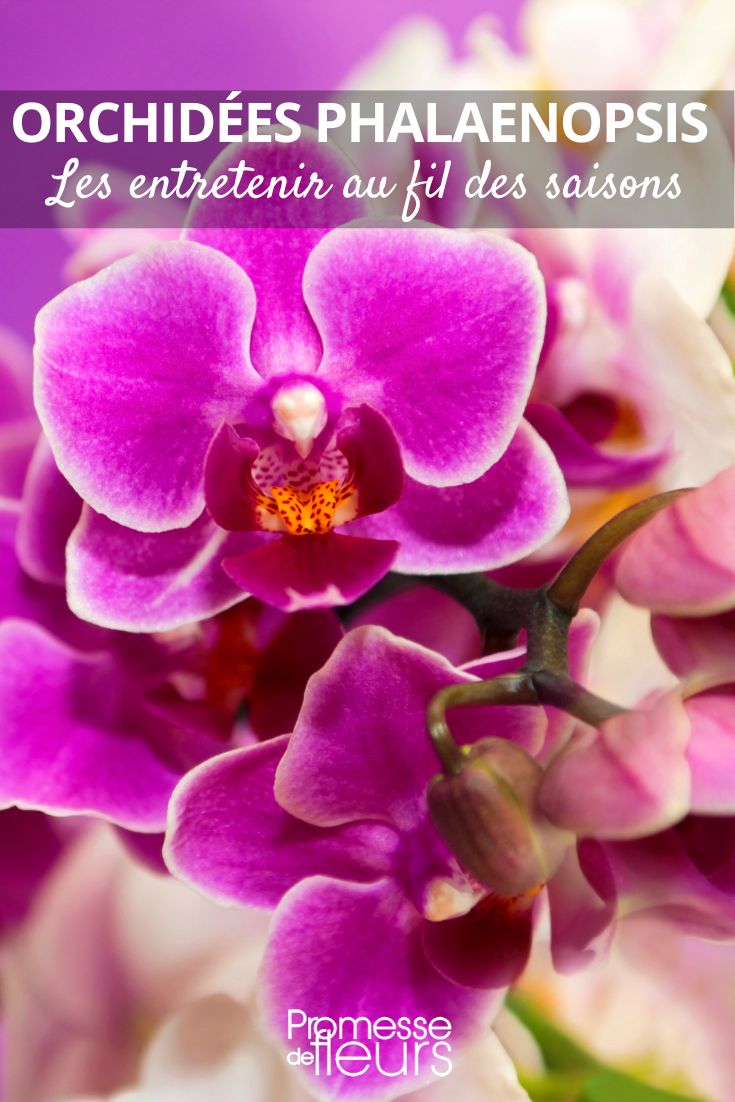
The stunning flowering of Phalaenopsis
- Subscribe!
- Contents
Comments