





























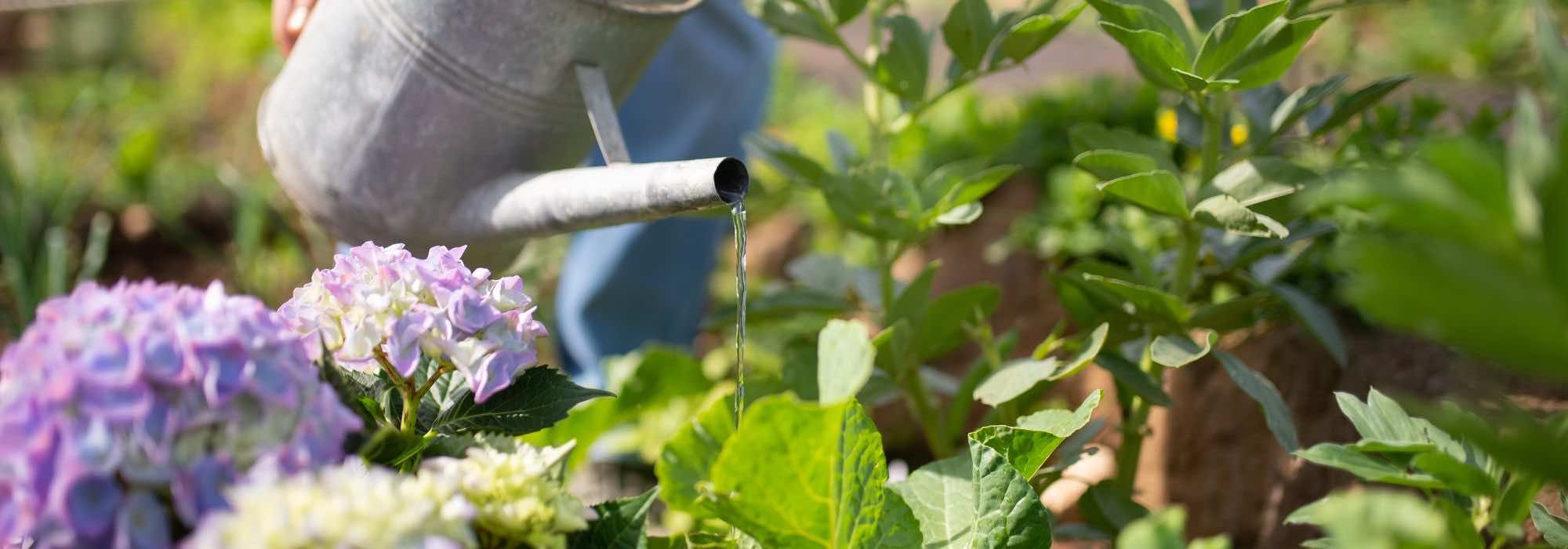
Should you water the leaves of garden plants?
Tips for watering foliage
Contents
Should you water the leaves of plants? Here’s a question you may ask when tending to a garden! Watering is generally advised for the roots and is carried out at the base of the plants, but in some cases it may be tempting to water the leaves of plants. Discover why we generally don’t water the leaves of plants, the cases where it can be useful and what precautions to take.

Why not watering the leaves of garden plants?
Generally, it is advisable to water at the base of the plants to hydrate the roots and avoid watering the leaves in a garden. This is for several reasons.
Watering the leaves can promote the development of diseases, particularly for plants prone to blight and cryptogamic diseases such as tomatoes, roses and grapevines. You should therefore water at the base of the plants, avoiding wetting the leaves. This is also recommended for growing vegetables in a vegetable garden.
Watering the leaves can damage certain plants. In addition to those that are susceptible to cryptogamic diseases, cacti, succulent plants and Mediterranean plants are also not suited to leaf-watering.
Watering the leaves can cause burns, especially if done in bright sun or during the hottest hours of the day. Indeed, droplets stay suspended on the leaves and with the sun’s rays, a magnifying-glass effect occurs, which intensifies the rays and causes leaf burn.
For more information, see our articles on: Watering the garden: how to do it?, Watering the vegetable garden: our tips, Watering plants: during or after a drought.
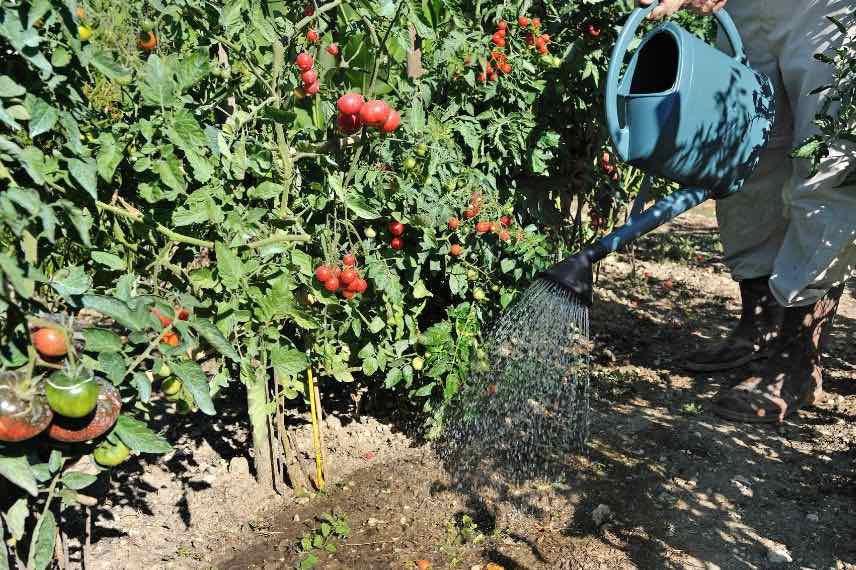
An example of what not to do: tomatoes should be watered at the base, without wetting the foliage.
Read also
Should you water plants in full sun?When should you water the foliage of your plants?
It can sometimes be useful to water the leaves of plants. It is then important to follow a number of precautions to avoid damaging your plants.
In some cases, such as tropical plants or ferns accustomed to a humid atmosphere, you can mist the foliage to rehydrate them.
You may also need to mist a garden in very hot weather.
When dust settles on the leaves of plants, such as if you live in a dusty environment and it hasn’t rained for some time, it may be useful to clean the leaves and remove the dust by spraying them. This helps the plant to breathe more easily and promotes photosynthesis.
Another case: you can spray the foliage of plants infested by parasitic pests such as aphids or red spider mites. A jet of water or spraying a solution helps to dislodge the insects and get rid of them.
Nevertheless, when watering or misting the leaves of plants, several precautions must be taken.
Do not water in direct sunlight for fear of creating a magnifying-glass effect due to droplets that will remain on the foliage and could burn the leaves. It is better to mist early in the morning very early or in the evening (before 8am and after 8pm in general), ensuring that droplets do not remain on the foliage. To do this, you can use a mist sprayer or a jet of water to limit the deposition of water droplets on the leaves.
Finally, it is important to check, before watering the leaves of plants, their needs and not to water those that risk developing diseases (tomatoes, roses, vines) or for which this would not be beneficial (cacti, succulent and fleshy plants, and Mediterranean plants).
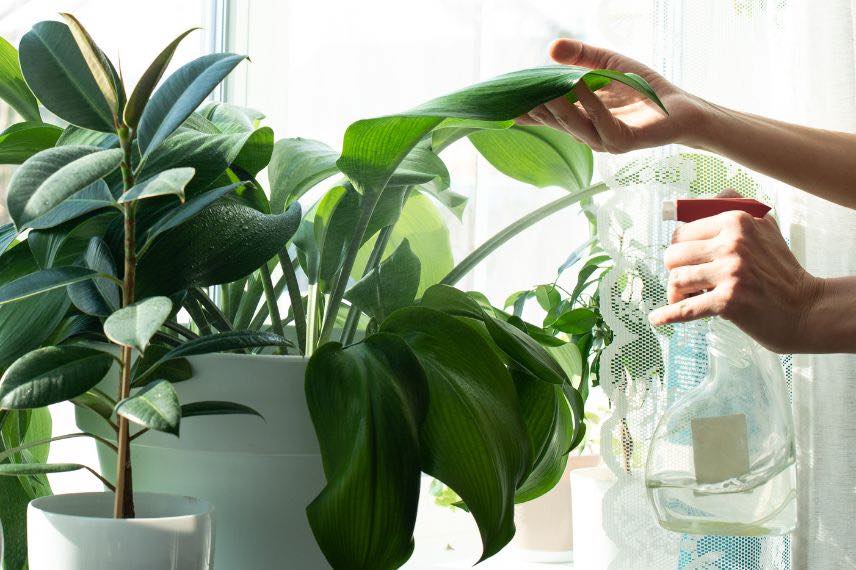
Tropical plants, whether indoors or in a greenhouse, enjoy having their foliage misted
What watering solutions should you plan for effective irrigation?
Using a simple watering can makes watering at the base of the plants easy. But it quickly becomes tedious if you have a large garden.
Watering with a hose has the advantage of being able to carry out the task without bearing heavy loads and of accurately targeting the base of the plants. This is more suitable for watering large areas.
Automatic drip irrigation, installed at the base of the plants, is the ideal solution. It is the most water-efficient and energy-efficient for the gardener.
One can also equip oneself with a hand-held mister or a hosepipe set to mist mode for plants that need cleaning or leaf watering, while observing the precautions outlined above in the article.
Among other garden watering recommendations, it is also advised to use rainwater that is collected in a container. This helps conserve tap water and use water that is less hard and untreated.
Finally, mulching the soil and hoeing helps keep the soil cooler, keeps the plant better hydrated, and reduces the need for watering.
In addition, watch Olivier’s video which explains how to water the plants properly.
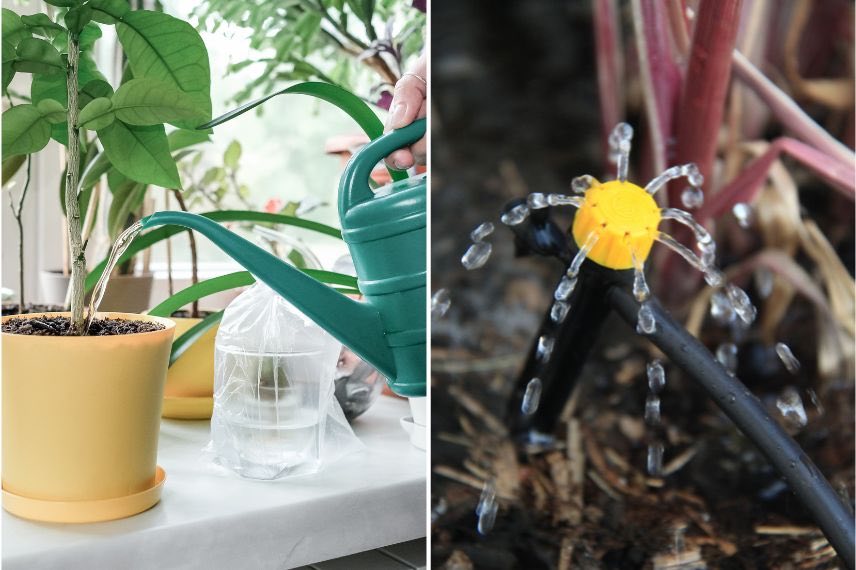
To avoid wetting the foliage, a watering can without a rose or a drip irrigation system are good methods
- Subscribe!
- Contents
Comments