





























The rain gauge
What is it? Where to install it and how to use it?
Contents
Ah! The weather and its whims! When you have a vegetable garden or a garden, it’s hard not to worry about the weather. The weather and temperatures have a significant impact on the growth of vegetables and the onset of diseases on our beloved plants. Alert and on the lookout, the gardener would like to summon rain or sunshine according to their needs. Lacking the ability to perform a rain dance, how about installing a rain gauge, that little instrument that measures the amount of rain that falls in the garden? Follow us, and we will explain what a garden rain gauge is for and how to use it.
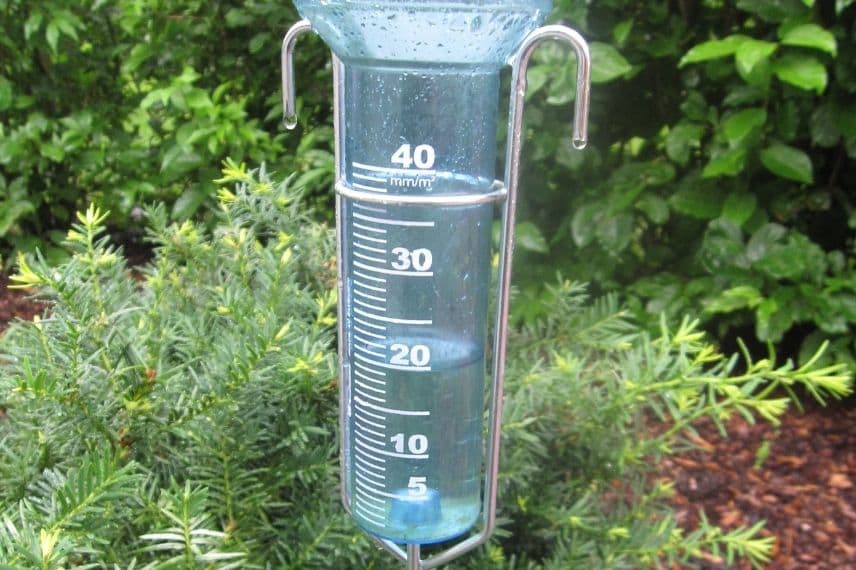
The garden rain gauge is an instrument for measuring the amounts of rainwater

What is a rain jauge ?
The rain gauge is a meteorological measuring instrument, cone-shaped and resembling a large test tube, that is used to measure the amount of precipitation that falls per square metre in a specific area of the garden during a shower.
There are mainly three types of rain gauges for the garden:
- The standard rain gauge, shaped like a translucent plastic funnel, is graduated like a measuring cup. It is simple and allows for direct measurement of precipitation. It requires no power source, but it is important to remember to empty it regularly.
- The electronic rain gauge often features an LCD screen and combines several measuring instruments. It can measure outdoor temperature, humidity (air moisture), weather conditions, and rainfall.
- The electronic and connected rain gauge records and transmits data remotely, allowing you to stay indoors during rainy and cold weather. A true mini weather station, it measures temperature, records atmospheric pressure, and relative humidity with a probe. Sometimes equipped with a wind vane, it also measures wind speed. It can be linked to a mobile app that allows for alarm settings in case of heavy rainfall or to view upcoming rain forecasts. Some models have an automatic water drainage system to measure precipitation amounts.
Why install a rain gauge?
Measuring the amount of rainwater that falls in the garden allows gardeners to adjust their watering. For instance, sometimes light rains do not provide enough water for our plants. It is also useful during dry periods when rainfall may be insufficient. This measuring device helps to avoid overwatering.
It also indicates heavy precipitation, allowing us to counteract the onset of certain diseases in the garden, such as blight or powdery mildew. The gardener can then be proactive and treat the garden before the first symptoms appear.
One can also record precipitation in a notebook over a year to adjust automatic watering according to the periods in the following year. Additionally, one can compensate for exceptional droughts by comparing current year data with previous years.
The rain gauge is also a useful tool for understanding the moisture levels in your garden and consequently choosing plants suited to your weather conditions. It can also help in planning vegetable crops based on their water needs.
Photo by Michael Podger
Where to install a garden rain gauge?
Install your rain gauge in the heart of a flower bed or vegetable garden, preferably on flat, open ground. Insert its metal stake as vertically as possible. The collector for measuring should be positioned between 50 cm and 2 m above the ground. Choose a sheltered area from winds to prevent rainwater from being blown away by a draught or evaporating too quickly.
Avoid placing the rain gauge under or near trees, garden sheds, or buildings. Indeed, these obstacles could shelter the measuring system and thus distort the amount of rain collected. Additionally, leaves from trees could block the funnel, preventing liquids from entering.
How to use a rain gauge?
On a graduated rain gauge, the unit of measurement is usually indicated in millimetres and allows for a direct reading of the water height. One mark equals 1 mm of rain, which is equivalent to 1 litre of precipitation per square metre.
Make it a habit to quickly check the water level in the rain gauge to avoid skewing the results. Indeed, water can evaporate quickly due to heat, sunlight, or wind.
Record your rainfall measurements collected in the container in a notebook and note the date. This will allow you to adjust your watering and treatments by comparing one year to another. Also, record the intervals between each shower.
After each rainfall measurement, remember to systematically empty the water from the gauge to avoid the accumulation of rainwater. Note that some electronic and connected measuring devices can automatically empty themselves or request to do so remotely.
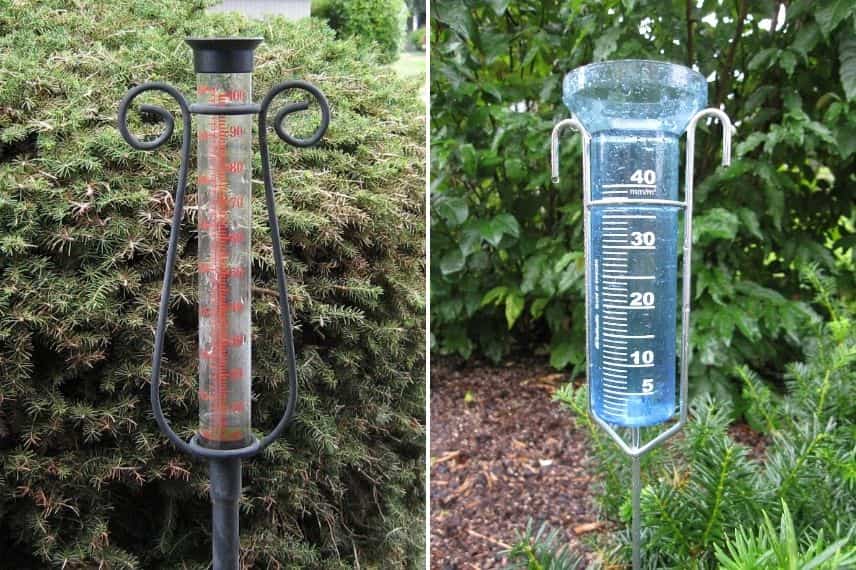 Two models of graduated rain gauges used to measure the amount of rain that has fallen</caption]
Read also
How to manage watering in a greenhouse?Further reading:
- Find our article on automatic watering: the different systems, which one to choose?
- Discover our guide on watering the garden: how to do it?
- Subscribe!
- Contents
![[pluviometre]Utilisation : "valeur1](https://en.promessedefleurs.eu/blogwp/wp-content/uploads/2022/08/Le-pluviometre.jpg "The rain gauge")
Comments