





























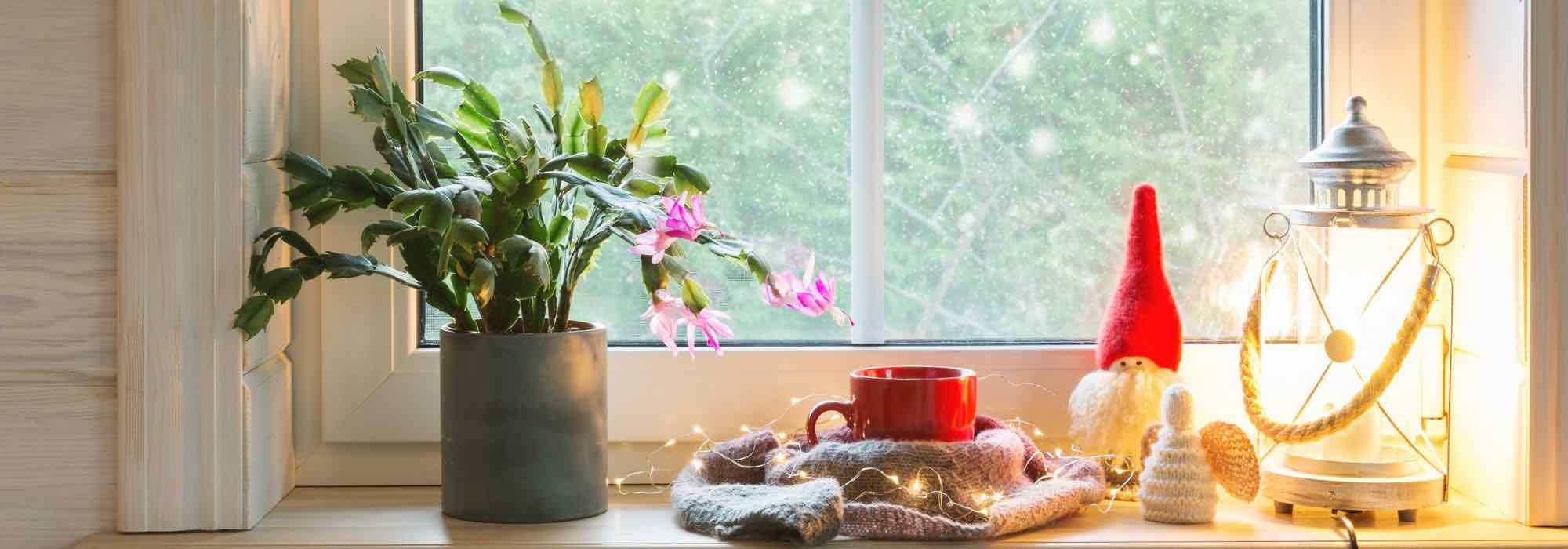
Growing the Christmas cactus
Our tips to welcome Schlumbergera into your home
Contents
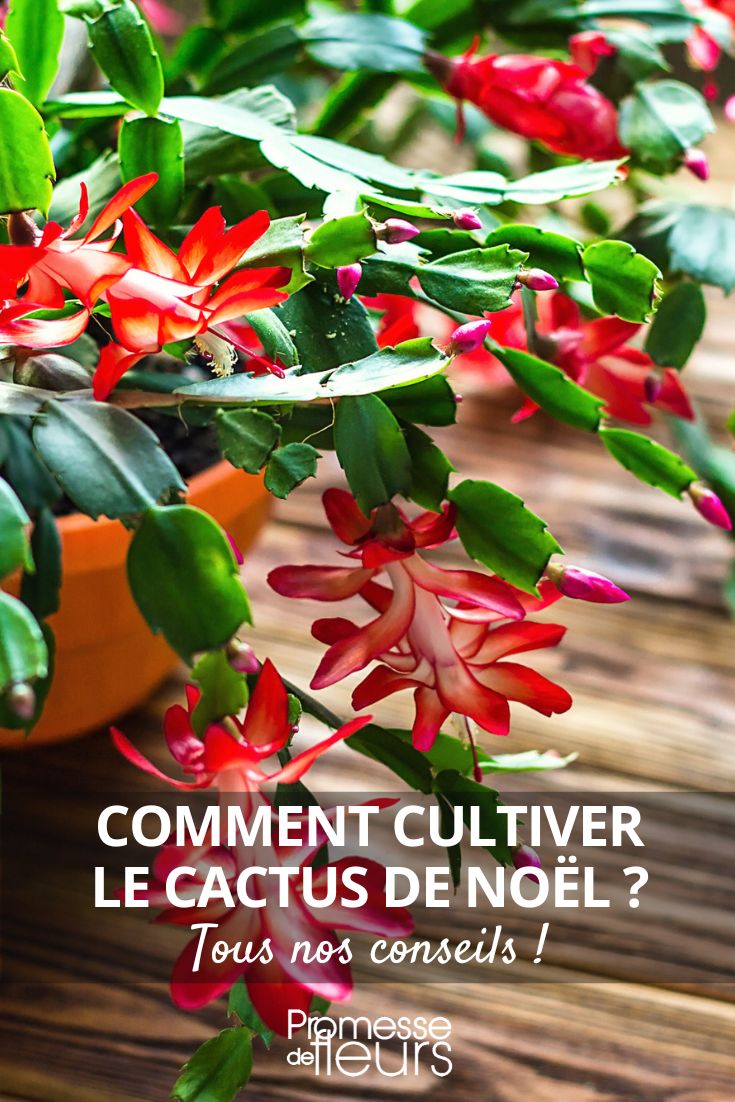
Schlumbergera, commonly called Christmas Cactus, is a plant native to the tropical forests of Brazil. This cactus without thorns is famous for its spectacular flowering that often coincides with the Christmas season, hence its evocative name. Contrary to the spiky, arid image usually associated with cacti, the Schlumbergera stands out for its segmented stems and its flowers in vivid colours that can range from red to pink, white or purple. Its ability to flower in winter, when most plants are dormant, makes it an interesting choice to add a touch of colour and life inside homes during the coldest months and the festive season.
Growing the Schlumbergera is not complicated, but it requires particular attention to mimic its natural habitat and encourage annual flowering. In this article, discover our tips for taming the Schlumbergeria and caring for it sustainably, as well as ideas to incorporate it into your Christmas decorations.

Description of Schlumbergera
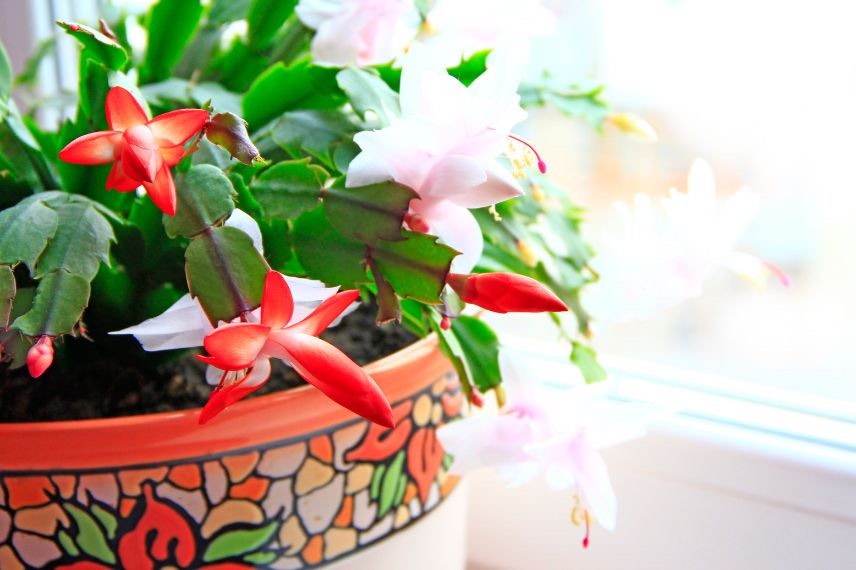
Schlumbergera is distinguished by its winter flowering and its unique appearance. This succulent epiphytic plant develops in the wild not in soil, but attached to trees and rocks, where it benefits from ambient humidity and light filtered through the foliage. It occurs in several species, each presenting variations in flower shape and colour. The best-known species are the Schlumbergera truncata with its zygomorphic flowers and the Schlumbergera bridgesii, often cited for its large, delicate flowers. These flowers, which can be single or double depending on the cultivars, bloom at the tips of the plant’s flattened, segmented stems.
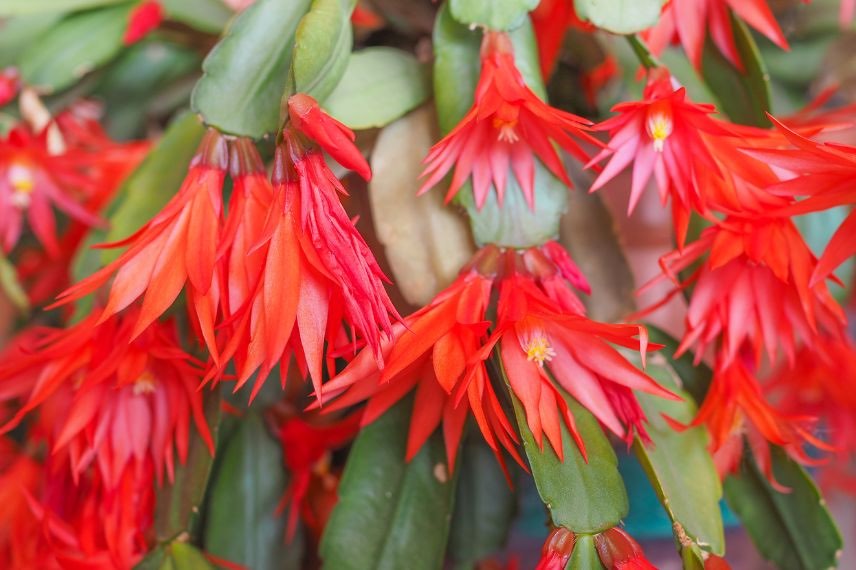
The colours of Schlumbergera flowers are particularly varied, ranging from pure white to deep red, through shades of pink, salmon, violet and even yellow, depending on the hybridizations. The flowering period generally extends from late autumn to the end of winter, thus offering a colourful note during the darkest months of the year.
Easy to care for and long-lived, it can live for many years with appropriate care. As an indoor plant here, it can be hung or placed.
Growth conditions
For a Schlumbergera to thrive and produce its characteristic flowering, it is essential to provide it with growth conditions that mimic its natural habitat.
Light
Schlumbergera prefers bright but indirect light. In its natural habitat, under dense canopies, it is accustomed to filtered light. Although it can be placed outdoors in summer, direct sun exposure can scorch its leaves and compromise its flowering. The ideal location would be near an east- or west-facing window, where the light is gentle. During the winter months, more direct light is tolerated and may even encourage flowering.
Temperature
This cactus is sensitive to extreme temperatures. The ideal temperature for its active growth is between 18 and 25°C. It can tolerate lower temperatures in winter, but they should not fall below 10°C. Sudden temperature changes, as well as cold or warm drafts, should be avoided, as they can stress the plant and affect its health.
Watering
Watering should reproduce the natural moisture the Schlumbergera receives in its original habitat. It needs regular but moderate watering, with a potting mix that should be allowed to dry slightly between waterings. Stagnant water at the bottom of the pot must be avoided, as it can lead to root rot. During the flowering period, the plant needs more moisture, whereas after flowering it is advisable to reduce watering to allow it to rest.
Potting mix and pots
A well-draining potting mix is crucial for the health of the Schlumbergera. A cactus mix or a quality multipurpose potting compost amended with perlite is perfectly suitable, in a ratio of 30% perlite to 70% potting mix. The pot should be proportional to the size of the plant and must above all have drainage holes to avoid excess water. Terracotta pots are preferable, as they allow better evaporation of moisture.
Care
The Christmas Cactus requires regular care to keep it healthy.
Pruning
Schlumbergera benefits from pruning after flowering to encourage bushy growth and better flowering the following year. Simply pinch or gently cut the segments after the second or third node. This encourages the plant to produce new shoots. It is also important to remove faded flowers and dead or damaged segments to prevent disease and pest infestations.
Repotting
Repotting is an important stage in the life cycle of Schlumbergera, but it is not necessary to do it every year. Every two to three years is sufficient, or when you notice that the plant is becoming too large for its pot. The best time to repot is in early spring, after the resting period.
Pest and disease management
Mealybugs can sometimes attack Schlumbergera. Regular inspection of the leaves, especially under the segments, allows early detection of these pests. In case of infestation, a natural treatment with a black soap solution may be necessary.
Read Virginie’s article on mealybugs to find out how to treat them naturally.
For fungal diseases, often caused by excess moisture, it is crucial to allow the potting compost to dry out between waterings and to ensure good air circulation around the plant.
Schlumbergera is a robust plant, but it can be susceptible to root rot if the potting compost remains wet for too long. Appropriate watering and a well-draining compost are the best prevention against this problem. If signs of rot occur, such as a softening at the base or blackening of the stems, it is often necessary to repot the plant into fresh compost after removing the affected parts.
The flowering
The flowering period of Schlumbergera requires particular attention so that the plant can produce its distinctive flowers.
Fertilisation
During the active growth period and until the formation of the flower buds, Schlumbergera needs regular feeding. Use a balanced fertiliser for flowering plants, diluted to half strength, applied every two weeks. However, as soon as the plant begins to form buds, it is recommended to switch to a potassium-rich fertiliser, which encourages flowering. It is important not to over-fertilise, as this can do more harm than good to the plant, particularly during flowering.
Light and temperature
Light plays a crucial role in Schlumbergera’s flowering cycle. The plant needs well-defined periods of light and darkness to initiate bud formation. Ensure the plant receives as much indirect light as possible during the day and uninterrupted periods of darkness at night. Temperature should also be monitored; a slightly cooler night temperature can encourage flowering, but avoid temperatures below 12 °C, as they can damage the plant and its buds.
→ Read also : Get cacti to flower: our foolproof solutions and tips.
After flowering
Keeping the Schlumberger involves a well-deserved rest period after its spectacular flowering. This resting phase is crucial for the plant, as it influences the quality and abundance of flowering in the year to come.
After flowering, generally towards the end of winter, it is recommended to gradually reduce watering, allowing the potting mix to dry out more between waterings. This reduction mimics the natural dry season that the Schlumbergera would experience in its native habitat. During this period, the plant also needs less fertiliser. A cooler nighttime location, with temperatures around 12 to 15 degrees Celsius, promotes rest and prepares the plant for the next growth season.
Ambient humidity should be maintained, especially if the indoor environment is dry due to heating. Light misting can help provide this humidity without wetting the potting mix.
Ideas for incorporating Schlumbergera into Christmas decorations
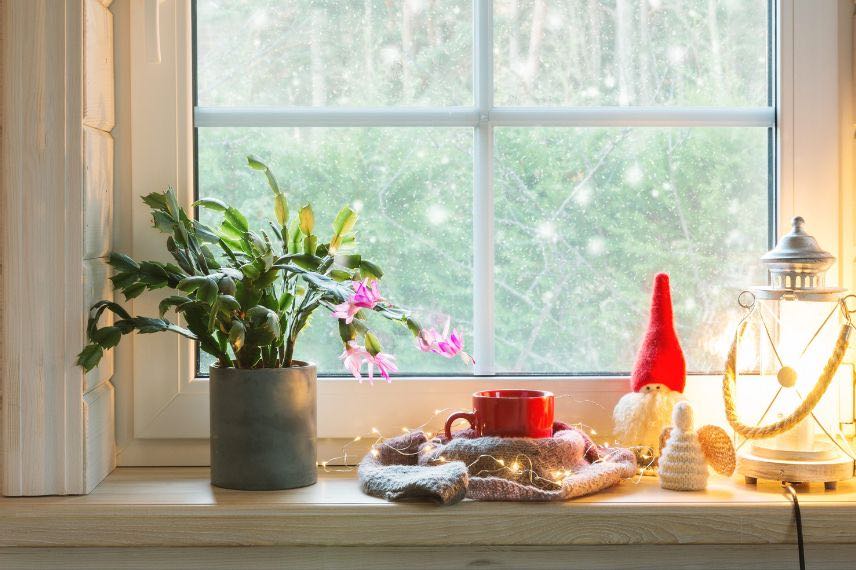
The Schlumbergera, with its vibrant flowers, is a plant that naturally fits into festive settings. Here are creative ideas to showcase this plant during the Christmas season and tips to harmonise it with your interior décor.
- Use decorative pots that complement the colours of your Christmas décor. Red, white or gold ceramic pots can match the Schlumbergera’s flowers.
- Place the plant up high so it is clearly visible, such as on shelves or wall-mounted stands, where its trailing stems and flowers are highlighted.
- Create a table arrangement by placing your Schlumbergera at the centre, surrounded by candles, pine cones and other natural elements for a festive touch.
- For a more dynamic decoration, place the Schlumbergera in hanging baskets with ribbons in Christmas colours.
- Incorporate decorative elements that echo the texture or colour of the Schlumbergera’s flowers for a cohesive theme. For example, cactus-shaped Christmas ornaments or soft fairy lights can complement the plant’s look.
Make sure the location you choose for your Schlumbergera is not too close to heat sources such as fireplaces or radiators, as this could dry out the plant and shorten the lifespan of its flowers.
Avoid placing the plant in cold drafts or directly near entrances, which could be harmful to its health.
- Subscribe!
- Contents
Comments