





























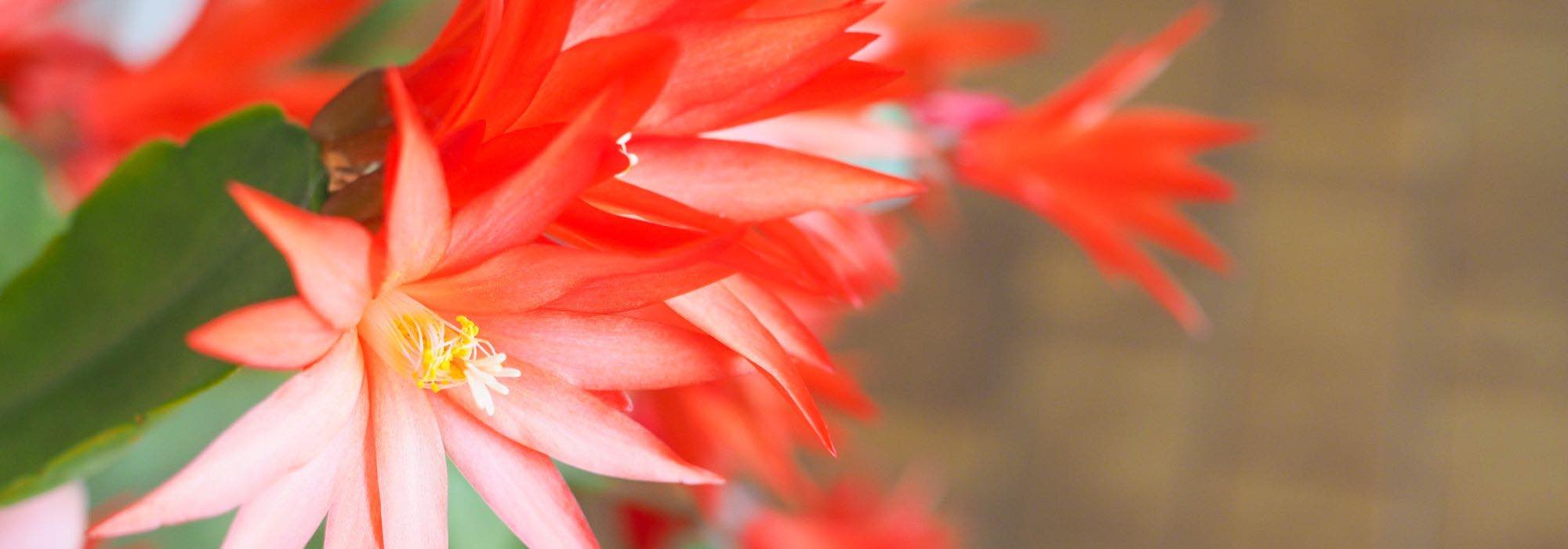
Why isn't my Christmas cactus flowering?
The cycles of Schlumbergera
Contents
The Christmas cactus, or Schlumbergera, is a popular houseplant prized for its spectacular flowering in winter, a period when most plants are dormant. This succulent is characterised by its flat stem segments and its colourful flowers, which generally appear as the year‑end festivities approach.
Unlike desert cacti, Schlumbergera is a succulent plant that thrives in a humid, shaded environment, in its natural habitat, under the canopy of trees, in the tropical forests of Brazil. Sometimes Schlumbergera does not flower as expected, which can raise questions and disappointment. Flowering is not only a matter of beauty but also an indicator of the plant’s health and well‑being.
In this article we explore the various aspects of the Christmas cactus’s flowering, to understand its natural cycle and identify the factors that can influence its ability to flower. We will also cover some practical tips to encourage flowering and common mistakes to avoid.

When does the Christmas cactus bloom?
The Christmas cactus, with its dazzling flowers, is synonymous with winter festivities. However, for the Schlumbergera to reveal its characteristic flowers, it must follow its unique flowering cycle which is closely linked to the light and temperature conditions of its natural environment.
Usual flowering period
Typically, the Christmas cactus enters flowering in late autumn and can continue to flower until early spring. This period coincides with the shortest and darkest months of the year in the Northern Hemisphere, from November to February, when days get shorter and nights lengthen. This reduction in light is a signal for the plant to begin its flowering process.
It is important to note that flowering can vary slightly depending on the species of Schlumbergera and specific growing conditions. Some varieties may flower earlier or later in the season, and factors such as room temperature, exposure to natural light and even humidity can influence the timing of the flowers’ appearance.
The Schlumbergera requires periods of indirect light and partial shade to induce flowering. In its natural habitat, the plant is accustomed to longer periods of darkness that signal the arrival of the flowering season. Indoors, reproducing these conditions may require placing the plant in a seldom-used room where artificial lighting will not disturb its natural cycle of light and dark.
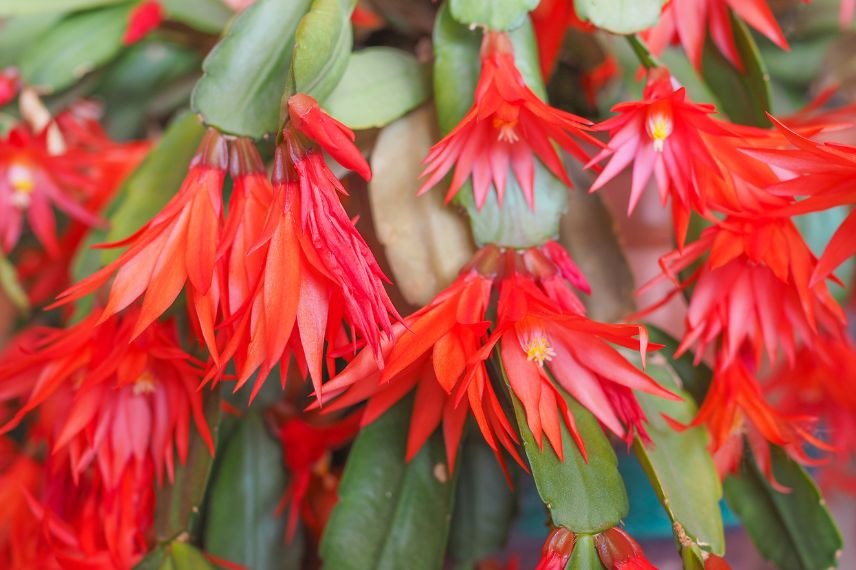
The long-awaited flowering of Schlumbergera
Natural cycle of Schlumbergera
The flowering of Schlumbergera is a phenomenon that follows a precise annual cycle, dictated by specific environmental cues. To flower, the Christmas cactus needs a period of growth followed by a period of rest.
Life cycle of Schlumbergera
After the winter flowering, the Christmas cactus enters an active growth phase in spring and summer. During this time, the plant takes advantage of indirect light and warmer temperatures to develop new stem segments. As autumn approaches, the Schlumbergera must undergo a period of rest to prepare for the next flowering. This rest period is characterised by shorter days and cooler temperatures, simulating the conditions of its natural habitat.
Key stages of flowering
To induce flowering, the Christmas cactus needs shorter days and longer nights for about six to eight weeks before the desired flowering period. Temperature also plays a crucial role: cool nights, around 12 to 15 °C, are ideal to encourage bud formation. Once the buds have formed, the plant can be returned to normal temperature and light conditions so that flowering can continue.
Factors that influence flowering
Several environmental and care factors are essential to ensure a good flowering of Schlumbergera. Each of these elements must be carefully controlled to create the optimal conditions for flowering.
Light and its role in flowering
Light is one of the most critical factors. The Christmas cactus prefers bright, indirect light. Direct exposure to the sun, especially during the summer months, can cause sunburn on the stems and inhibit the formation of buds. Conversely, a lack of light can prevent the plant from storing the energy necessary for flowering.
Optimal temperature for flowering
Temperature should be lowered gradually as the rest period approaches to simulate Schlumbergera’s natural environment. A marked difference between daytime and night-time temperatures favours the formation of buds.
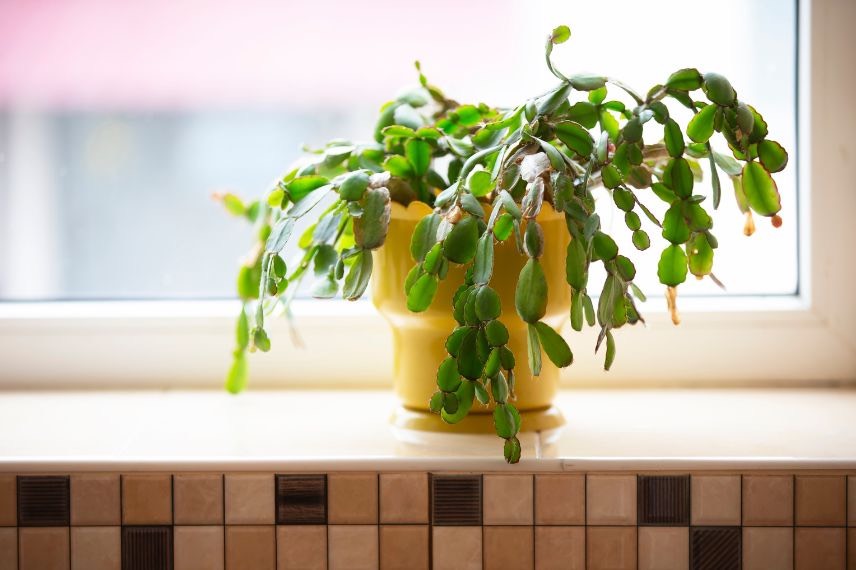
Schlumbergera needs good indirect light
Importance of the rest period
The rest period is crucial for Schlumbergera. Without this period of dormancy, the plant may not flower. It is therefore essential to reduce watering and provide appropriate temperature and light conditions during this phase.
Watering
Watering should be reduced during the rest period, but the plant should never be completely dry. Moderate watering is necessary to keep the fleshy stems hydrated without causing root rot.
Fertilisation
Fertilisation plays a supporting role in the overall health of the plant and therefore in its flowering. A balanced fertiliser, applied during the period of active growth, can help supply the necessary nutrients. However, all fertilisation should cease as the rest period approaches so as not to disrupt the plant’s natural cycle.
Read also
7 trailing indoor plantsWhy isn't my Christmas cactus flowering?
It can be disappointing to find that your Christmas cactus, despite attentive care, shows no sign of flowering. Several reasons can explain this phenomenon, and it is often possible to identify the problem with a little observation and knowledge of the plant’s needs.
The first step is to examine the growing conditions. A Schlumbergera that does not bloom is generally a sign of an imbalance in one or more of the following factors: light, temperature, watering, rest period or fertilisation. Excess water, for example, can lead to root rot, while a lack of light can prevent the formation of buds.
Environmental factors such as excessive artificial light, cold drafts, or temperature fluctuations can disrupt the plant’s natural cycle and inhibit flowering. Likewise, inadequate care, such as using an inappropriate fertiliser or watering during the rest period, can also be at fault.
How can I diagnose why it isn't flowering?
To understand why your Schlumbergera is not flowering, it is crucial to review the care practices and environmental conditions to which the plant is exposed.
Observe your plant carefully. Wilted stems or drooping leaves can indicate overwatering or underwatering. Pale or stretched stems can signal a lack of light. If the plant has been exposed to high temperatures or drafts, this could also explain the absence of buds.
To diagnose the problem, start by checking whether the plant has been exposed to at least 14 hours of continuous darkness each night during the rest period. Ensure that the night-time temperature is cool and that the plant is kept away from heat sources such as radiators or heaters. Also check that watering is moderate and that the fertiliser used is suitable for succulents.
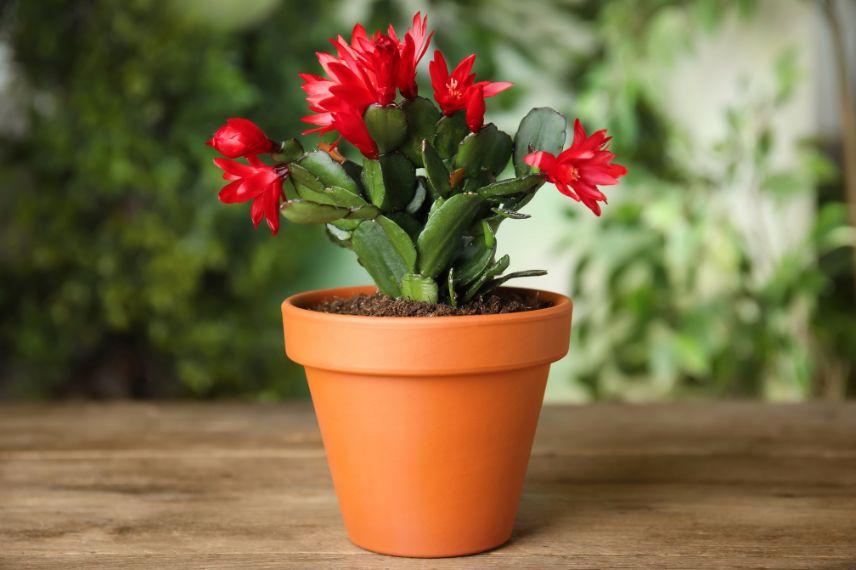
To avoid wilted leaves or root rot, a terracotta pot is a good option
Tips for encouraging flowering
If your Schlumbergera is not flowering, there are several strategies you can adopt to encourage the plant to produce flowers. These tips are designed to optimise the growth conditions and stimulate the Christmas cactus to enter its flowering phase.
Adjusting light conditions
Make sure your Christmas cactus receives enough indirect light. Avoid direct sun exposure, which can be too intense, especially in summer. If necessary, move the plant to a well-lit spot in the home where it will receive light without being directly exposed to the sun’s rays.
Regulating temperature and humidity
Maintain a stable ambient temperature during the day and provide cooler conditions at night to mimic the Schlumbergera’s natural climate. Also ensure humidity is sufficient, particularly during the heating period in winter, to prevent the air from becoming too dry.
Watering and fertilisation
Reduce watering during the resting period to avoid saturating the soil, which could compromise root health and future flowering. Use a balanced fertiliser specific to cacti and succulents during the growing season, following the recommendations for frequency and dosage.
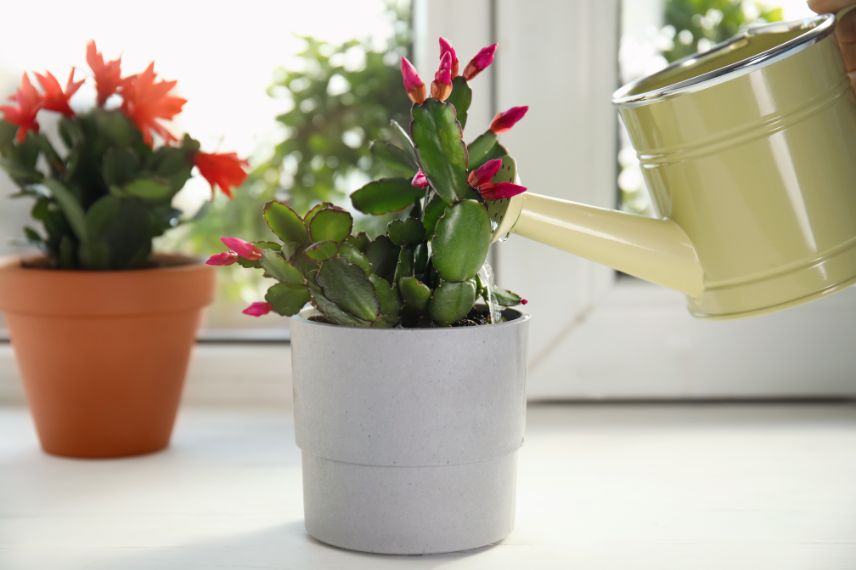
Do not water the Schlumbergera in the same way all year round
Precautions and mistakes to avoid
To ensure the flowering of your Christmas cactus, it is crucial to take certain precautions and avoid common mistakes in the care of this indoor plant.
One of the most common mistakes is disrupting the rest period of the Christmas cactus by providing too much light or fertiliser. It is also important not to move the plant once the buds have begun to form, as this can cause them to fall.
To prevent problems, pay attention to the specific needs of your indoor plant. Respect its rest cycle, adjust watering and fertilisation according to the seasons, and ensure the plant is placed in an environment that imitates its natural habitat.
- Subscribe!
- Contents
Comments