





























Diseases and pests of hellebores
Identification, prevention and natural solutions for treating your Christmas roses
Contents
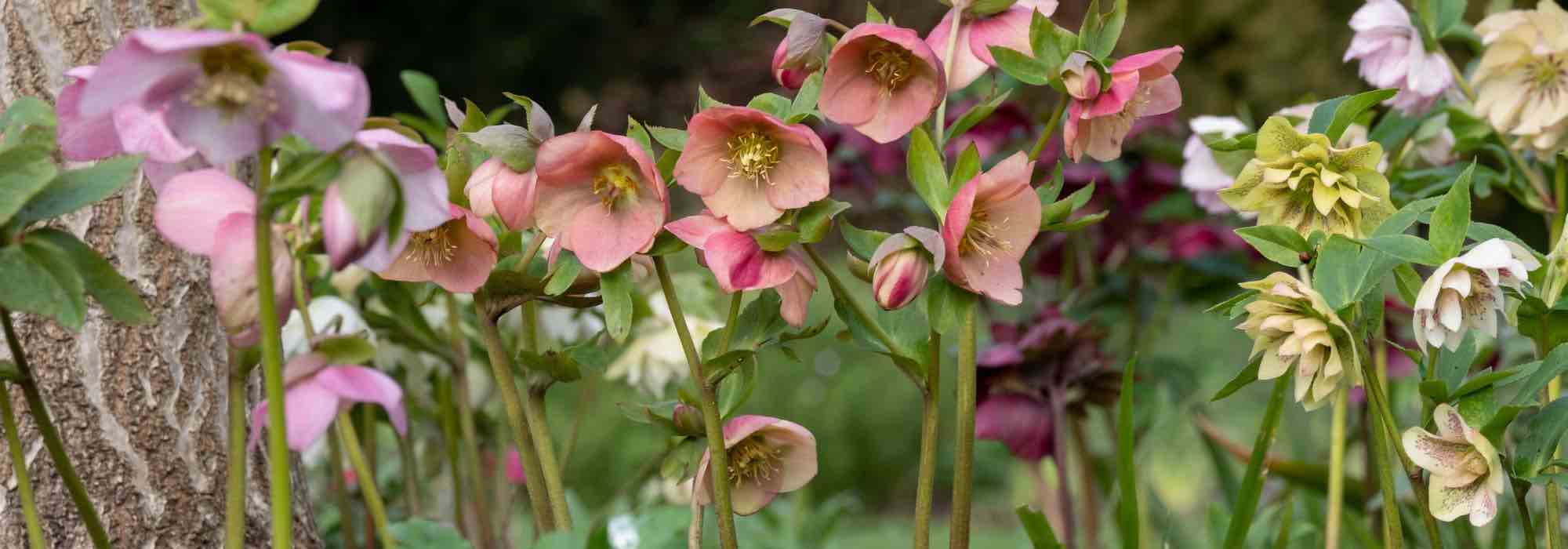
We love the Hellebores or Christmas Roses for their winter flowering. Leur belle diversity de colours et de forms brightens the cold season, bringing a touch of light. Although they are fairly easy to grow, these plants can nevertheless be susceptible to certain diseases or to attacks by parasites.
This article aims to inform gardeners of all levels about common problems that can affect hellebores. We will also give you possible natural remedies, so that you don’t need to use harmful chemical products.
To learn more: Hellebores: how to plant and grow them?

Aphids
Description and symptoms
These are the pests gardeners know best. These piercing-sucking insects attack as well leaves as stems or flower buds. By feeding on the sap of hellebores, they weaken them little by little. Visible symptoms include leaf curling and a reduction in growth.
Above all, aphids secrete honeydew, a sticky substance, which favours the development of a fungal disease (fungus): sooty mould. This disease is easy to identify thanks to the black, soot-like deposit that can be seen on Christmas roses. It affects the photosynthesis of the plant and can eventually cause its decline.
Prevention
As a preventive measure, check your hellebores regularly so you can intervene as soon as the first aphids appear. The presence of ants, which feed on the honeydew secreted by the pests, is also an indicator.
Encourage biodiversity in the garden to attract the natural predators of aphids, such as ladybirds or lacewings. There are many ways to do this: install water features, build insect hotels, keep areas of fallow land, cultivate wild plants, put up nest boxes and bird feeders, etc.
Natural treatments
At the start of an infestation, it is entirely possible to remove the invaders manually.
If the colonies are larger, you can use a homemade natural insecticidal solution based on black soap.
For this:
- dissolve 1 tablespoon of black soap in 1 litre of lukewarm water;
- add 1 tablespoon of vegetable oil (rapeseed);
- place the mixture in a spray bottle;
- wait for this insecticidal solution to cool before spraying the affected areas.
This treatment should be applied early in the morning or in the evening, out of direct sunlight.
For more information: “Aphid: identification and treatment”
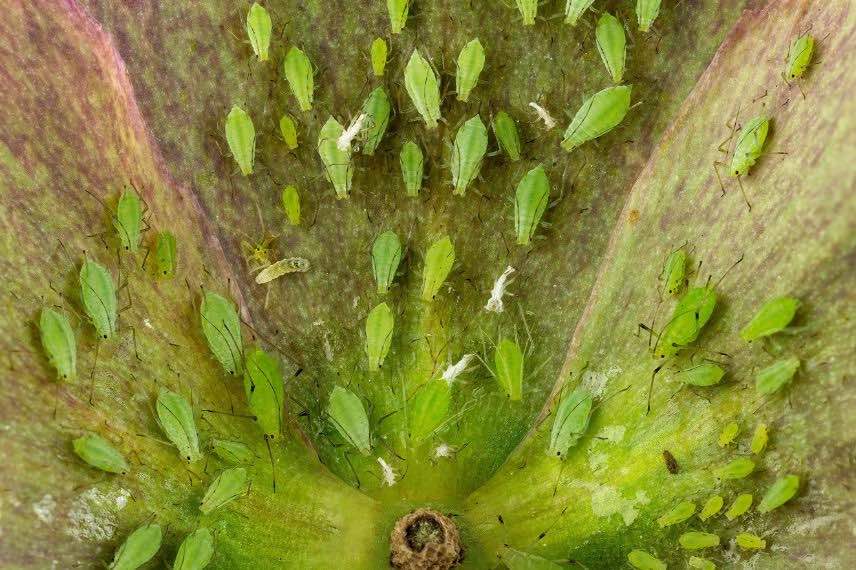
Green aphids on a hellebore flower
Read also
Growing a hellebore in a potBlack spot disease
Description and symptoms
This fungal disease is caused by a fungus (Coniothyrium hellebori). It can be recognised, as its name suggests, by the black or brown spots it leaves on hellebore leaves. These spots are circular in shape and first appear on the edge of the foliage before spreading. It is usually the oldest leaves that are affected first. But if the disease spreads, for example in the case of an already weakened plant or a particularly humid environment, all the above-ground parts may dry out. The hellebore will unfortunately eventually die.
Prevention
Many simple measures can be taken to limit the development of fungal diseases.
- Ensure good growing conditions for your Helleborus: naturally healthy plants will be less prone to disease. Provide them with a partly shaded position, in cool soil rich in organic matter but well drained (so that water does not stagnate).
- Keep adequate planting distances between your plants, to allow natural aeration.
- Do not plant Christmas roses in an area previously infected by a fungal disease.
- Always clean your cutting tools (pruning shear, scissors) before use, to avoid transmitting diseases between plants.
- Avoid wetting hellebore foliage. Moisture indeed favours the development of fungi.
- Quickly remove any plant debris that favours the development of spores (dead leaves, damaged stems, withered flowers, etc.). When flower buds appear, remove the old leaves.
Natural antifungal treatments
If you observe the first symptoms of black spot disease, immediately remove the affected parts. Use a pruning shear which you should clean thoroughly after use (with alcohol, for example). Do not place this plant debris in the compost; instead take it to a household waste centre.
Against fungal diseases, you can use natural copper sulphate-based fungicides. The best known is the Bordeaux mixture. It is a product usable in organic farming. However, its use is not without consequences: in large amounts and when used regularly, it can unbalance soils and encourage the emergence of diseases. Therefore, use it sparingly.
If you wish to use even more natural treatments, opt for plant manures. Their effectiveness is not scientifically proven, but many gardeners report beneficial effects, both preventively and curatively. Turn to nettle manures and horsetail decoction, to dilute in water (ideally rainwater). Spray the affected parts, sheltered from direct sunlight.
For more information: “All you need to know about fungal diseases” and “Bordeaux mixture and other copper-based treatments in the garden“.
Gastropods
Description and symptoms
Nous connaissons tous ces petits gloutons baveux, qui peuvent faire de gros dégâts au jardin. Les escargots et limaces se nourrissent des jeunes pousses d’hellébores, mais aussi parfois des boutons floraux. Ils peuvent rapidement venir à bout d’une jeune plante.
Prevention
Il existe de nombreuses solutions préventives pour empêcher les gastéropodes de se délecter de vos roses de Noël. Certains jardiniers utilisent les pièges à bière, quand d’autres privilégient les barrières naturelles mécaniques, à base de cendre, coquilles d’œufs ou terre de diatomée.
Natural treatments
Vous trouverez en magasins ou sur internet des produits à base de ferramol, utilisables en agriculture biologique pour lutter contre les escargots et limaces. Les granulés consommés par les gastéropodes agissent comme un coupe-faim et provoquent leur dépérissement.
Une récolte des indésirables à la tombée de la nuit peut aussi se révéler efficace. C’est une solution 100 % naturelle et gratuite, mais chronophage.
Pour en savoir plus : « Limaces : 7 façons de lutter efficacement et naturellement ».
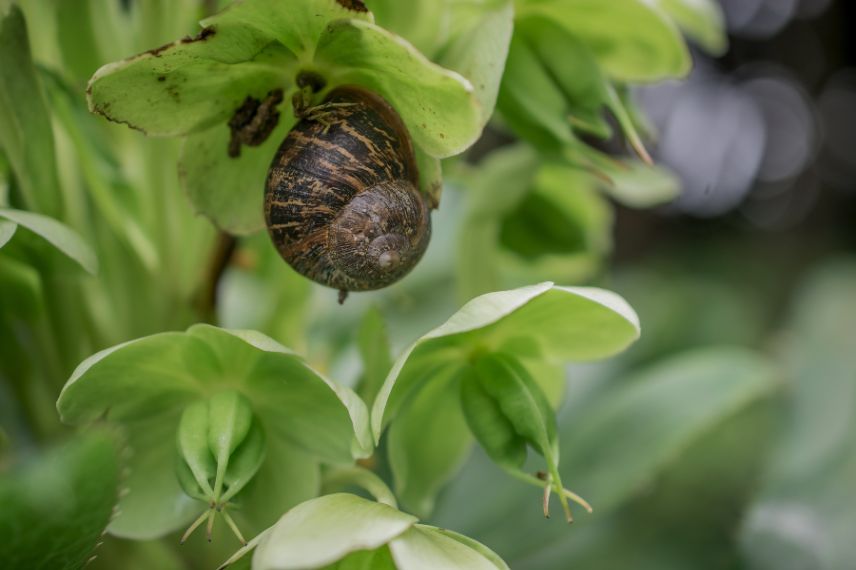
Gastropods are fond of hellebores
- Subscribe!
- Contents
Comments