





























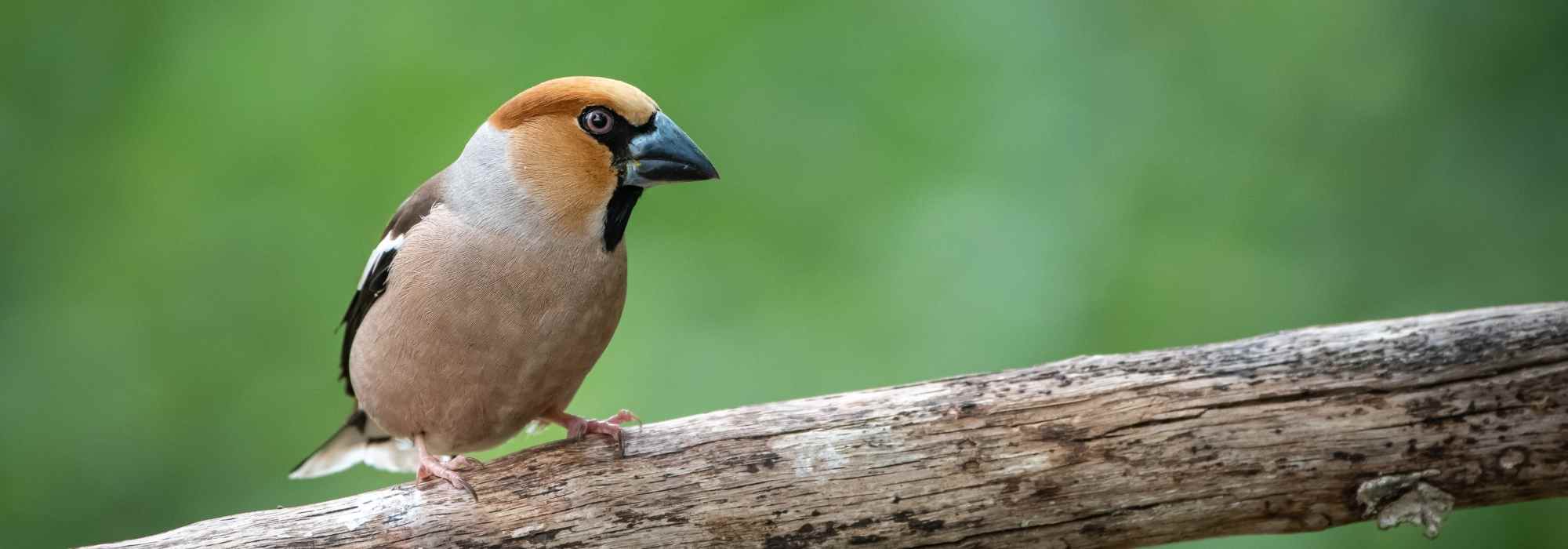
How to attract the hawfinch to your garden?
Recognise and attract this bird to your garden
Contents
For those who love birds in the sky, winter is a prime time for observation. The installation of bird feeders attracts species that are difficult to see outside the winter period. I belong to this category of enthusiasts who would spend hours watching, hidden behind the glass, the comings and goings of blue tits and other finches. And this winter, with frosts persisting for a long spell at my place, for the first time in my garden I was lucky enough to see two hawfinches come to perch at the feeder, stocked with sunflower seeds. Hard to miss them, given their chunky, sturdy bodies, their powerful beaks and their tawny plumage that catches the eye. A power and heft they do not use to chase away other small birds sharing their meal, as they display a certain placidity!
Discover the hawfinch, a magnificent garden bird, its diet, reproduction and lifestyle, to help you recognise it better.

Who is the hawfinch?
Let us begin by introducing the hauwfinch (Coccothraustes coccothraustes), a bird remarkable in many respects. This passerine is a member of the Fringillidae family, which includes the peony bullfinch, the European goldfinch, the tree sparrows of the north and the European greenfinch. But it is certainly the largest of them all. With a length of up to 18 cm and a weight around 60–70 g, the great-spotted nutcracker makes its presence felt. Not least because it has a particularly stocky and massive body. Its compact silhouette is, moreover, marked by a neck that seems almost absent, a short tail and a large, imposing head.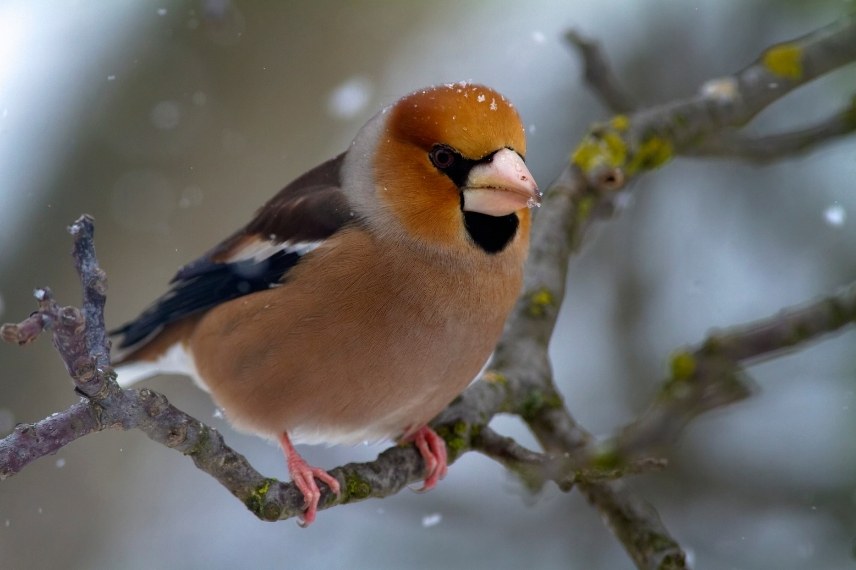
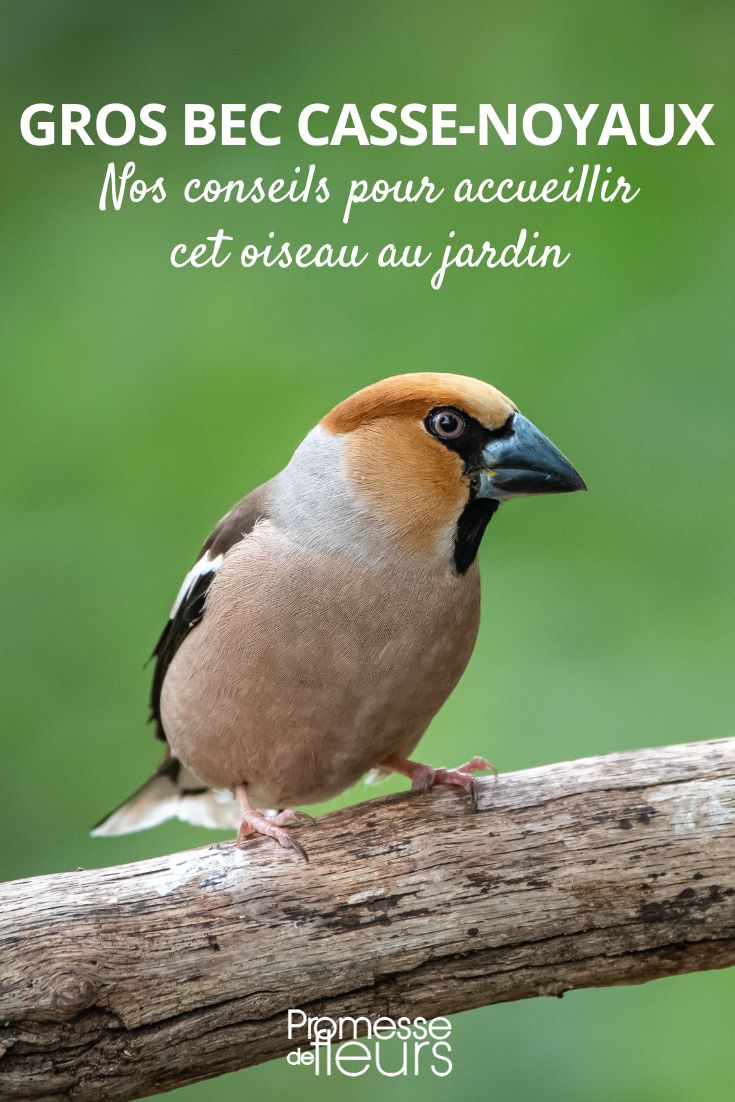
In terms of plumage, the hawfinch is distinctive. It is essentially coloured russet, orange-brown, tawny and light brown, and light grey. On the wings, the wing feathers are black, punctuated by a white band and bluish reflections. From throat to belly, the plumage is beige. Besides these fairly characteristic colours, it is mainly the beak that sets it apart from other birds. A beak so distinctive that it gives the bird its name. Indeed, this fringillid is endowed with a conical, robust and enormous beak. An appendix that allows it to crack nuts with impressive force for such a small bird! It can exert a crushing force of around 20 to 40 kg with a single beak strike! One might say that the hawfinch is a true force of nature. A force it uses only for feeding.
The female resembles the male greatly, and is duller.
Not at all quarrelsome, this bird is sometimes distinguished by a characteristic call equivalent to a “tick” and by its rather calm, fairly short song.
Life history, reproduction and habitat of the Eurasian hauwfinch
With a bit of luck (I’ve had some!), you can sometimes spot a hawfinch coming to the feeders in winter, in very cold weather. And, by its size, it really stands out among blue tits, goldfinches, sparrows and other elegant finches. But outside this winter period, hawfinch is relatively shy, more discreet.
Where is the hawfinch found?
Coccothraustes coccothraustes is essentially a forest bird that frequents closed-wooded habitats, deciduous or mixed forests, large parks and gardens, and occasionally orchards where it can find food. Often perched high in the trees, it sometimes comes to glean its food from the ground, but very quickly.
What is its lifestyle?
The hawfinch is resident in our country, a partial migrant in colder climates. Thus, populations in Northern Europe and Eastern Europe migrate south in winter to search for food. That is why, depending on the years and food reserves in the coldest countries, the population fluctuates considerably in France. And, in this winter 2024–2025, according to counts, it seems to be present.
Otherwise, this bird’s lifestyle is neither truly gregarious nor truly solitary. It can thus move in very loose groups. During the breeding season, it is territorial, but outside this period it is hardly quarrelsome. Yet its wrestler-like bulk and massive beak could lead one to think otherwise.
How does it reproduce?
The least one can say is that the hawfinch is very patient in wooing its mate. During the breeding period, it performs bowing, wing-beats, dances, songs, displays and offerings to win over the female it has chosen. Knowing that this ceremony which begins in April can last up to two months!
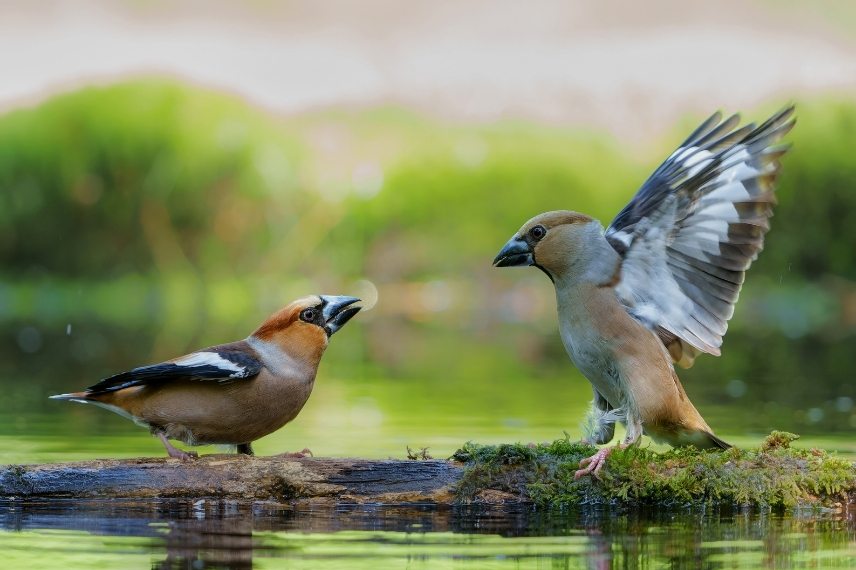
For hawfinches, courtship can last up to two months !
Where does the hawfinch nest?
Once mating is established, the female sets to building a cup-shaped nest on a branch of a woody plant more than 3 metres high. The nest is made of twigs, lichens and moss, with grasses. It may sometimes nest in the company of other pairs, located in the surrounding area. The female lays between 3 and 5 eggs; incubation, carried out by the female, lasts about 12 days. The nestlings then leave the nest, but continue to be fed by the parents for two weeks.
In general, there is one to two broods per year, with a fairly high success rate.
What do large-beaked hauwfinch feed on?
The great-spotted nutcracker has a predominantly granivorous diet. Indeed, it has a predilection for samaras, i.e., the winged seeds of many tree species such as beech (Fagus), ash (Fraxinus), hornbeam (Carpinus betulus), field maple (Acer campestre), elm (Ulmus)… which it harvests directly from the branches. When the samaras fall, it ventures to the ground to collect them. This tawny-coloured bird can also add to its menu buds in late winter, young tree shoots in spring and berries of native species such as holly (Ilex), blackthorn (Prunus spinosa), rowan (Sorbus), dogwood (Cornus), hawthorn (Crataegus)…
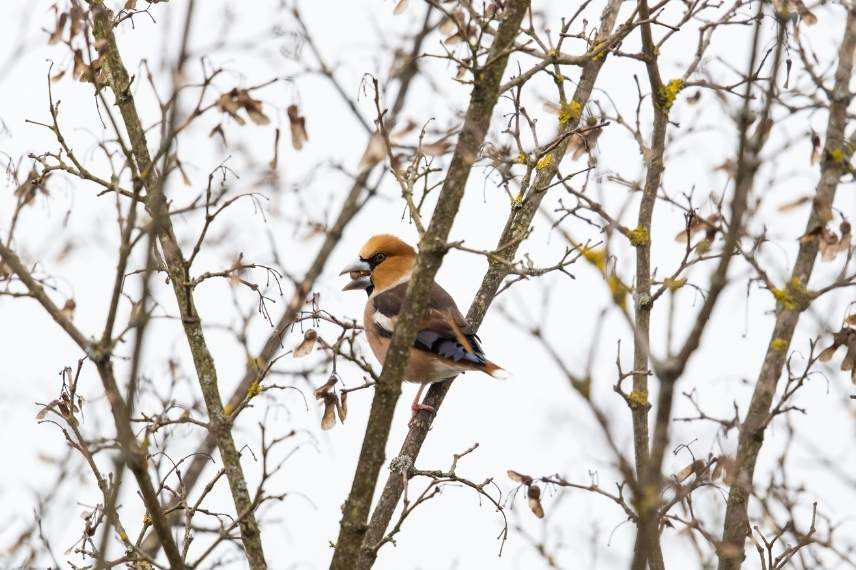
The great-spotted nutcracker has a predilection for samaras
But its powerful beak mainly allows it to satisfy its appetite. Indeed, it often ventures into orchards to savour almonds hidden inside the stones of cherries and olives. The flesh of the fruit itself does not interest it; it is the stone that it seeks.
During the breeding season, the great-spotted nutcracker goes in search of animal prey to provide enough protein for its offspring. All invertebrates will do, but our bird mainly seeks larvae and caterpillars.
And, in winter, in very cold weather, it does not turn up its nose at sunflower seeds from feeders.
Read also
What do the birds in our gardens eat?How to attract large beaks?
As we have seen previously, the great-spotted nutcracker is a rather discreet and somewhat wild bird that usually inhabits closed forest habitats. So, unless your garden comprises a stand of fruit-bearing species that it favours for their fruit, it’s difficult to attract it there. However, it may well visit there on its own to sample a few samaras and berries, peck at a few cherries in the orchard, and, during the breeding season, eat insects as well.
But, ultimately, it’s during winter that the chances of spotting a great-spotted nutcracker are greatest. Fill your feeders with sunflower seeds and keep your eyes peeled, as it may well drop by for a quick visit.
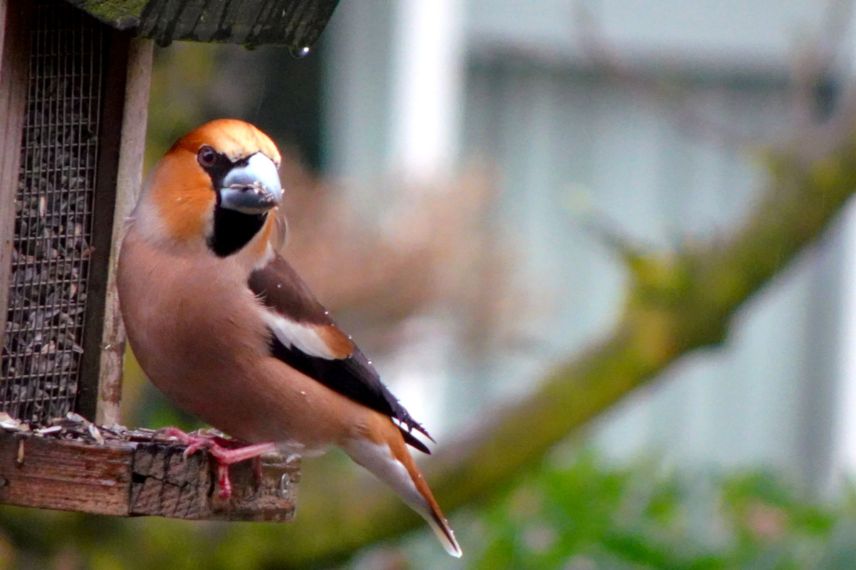
The great-spotted nutcracker may frequent feeders filled with sunflower seeds in freezing conditions
- Subscribe!
- Contents
Comments