





























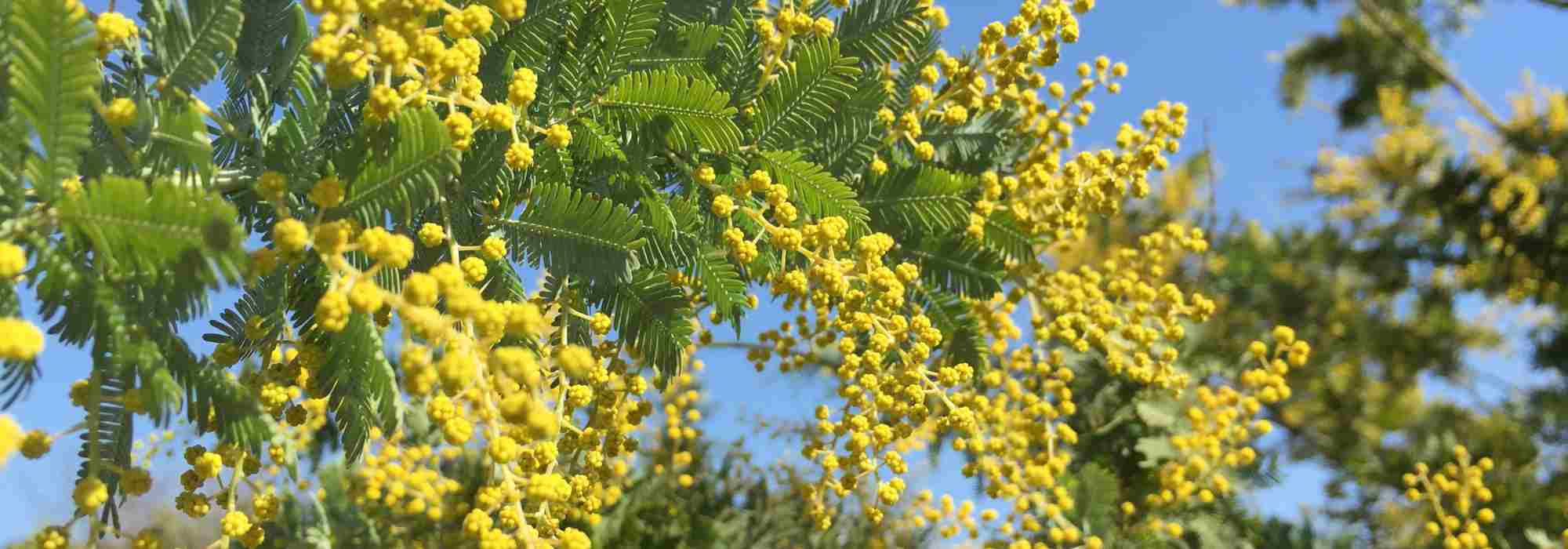
Why isn't my wattle flowering? 6 common causes and their solutions
Our tips for a beautiful flowering wattle
Contents
Wattle trees brighten up late winter with their often fragrant, sunny yellow pompon flowers. These are easy-going, undemanding bushes or trees that can even become invasive when thriving. But sometimes, under certain circumstances, the wattle may not flower, or only sparsely. Let’s explore the main causes of this issue and how to remedy it to restore a beautifully floriferous wattle.
To learn more about growing wattle trees, check out our guide Wattle: Planting, pruning and care.

No. 1: a wattle planted in poor conditions
Wattle is not known for being difficult to grow. Regardless of the species or variety (there are several hundred), these bushes or trees are generally simple to cultivate and quite tolerant.
For example, it could be:
- the typical species of Acacia dealbata, the famous florist’s wattle;
- the variety ‘Gaulois Astier’, which does not produce suckers, making it less invasive;
- the four-season wattle (Acacia retinodes), capable of flowering for long months;
- the striking Acacia baileyana ‘Purpurea’, with its beautiful purple foliage.
However, unsuitable growing conditions can still affect the wattle flowering.
First, if you buy a wattle in flower, wait until spring and the last risks of heavy frost before planting it in the ground. In the meantime, keep it in a lightly heated area of the house, watering it as soon as the soil surface is dry.
Regarding the soil, ensure it is well-drained and does not retain excess moisture. This will also increase its cold resistance. If you plant your wattle in heavy, wet, and compact soil, it will not develop properly and therefore will not flower. So, make sure to work the soil thoroughly and add gravel or clay balls to improve drainage.
When planting your wattle, be careful not to bury the graft point (a sort of swelling that separates the root stump from the aerial parts).
Some wattle can tolerate lime, such as Acacia retinodes and varieties that use it as a rootstock. For others, add heather soil at planting if needed. Excess lime will cause chlorosis (yellowing of the foliage), which will affect the overall health of the plant and, consequently, its flowering.
Finally, due to its origins, the wattle needs a sunny position to flower. If your shrub is not flowering, it may not be getting enough light. Similarly, avoid exposures facing prevailing winds, which can negatively impact flowering.
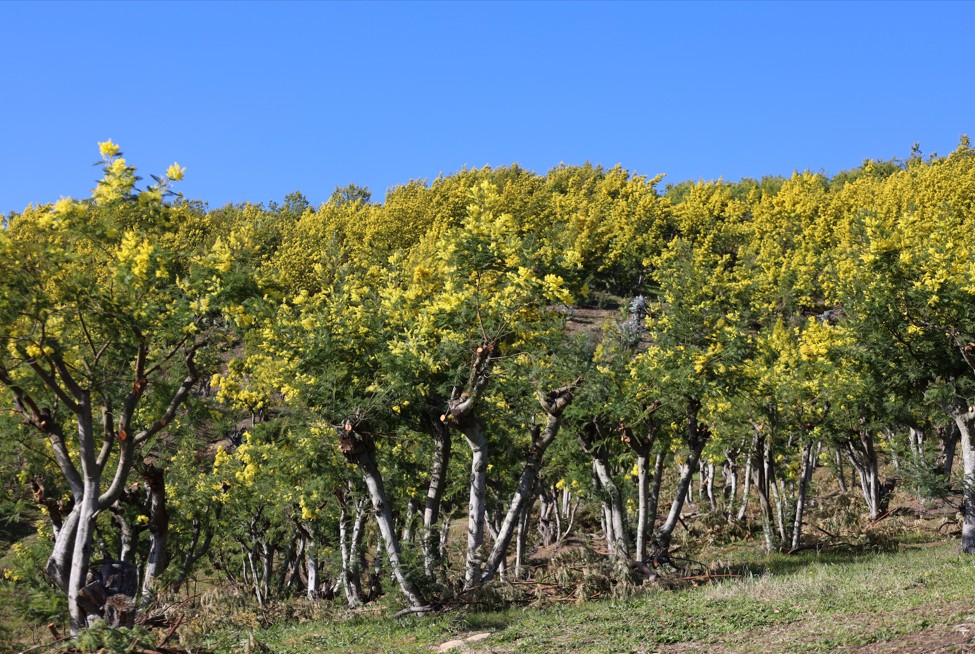
Wattle cultivated in Provence
No. 2: improper care of the wattle
Fertilisation
It is unnecessary to over-fertilise the wattle when planted in the ground: this bush thrives perfectly well in poor soil. Moreover, an excess of nitrogen in the soil would encourage foliage growth at the expense of flower production. In pots, you can add a flowering plant fertiliser or a Mediterranean plant fertiliser from mid-summer onwards. Opt for fertilisers rich in potash, which will promote flowering.
Watering
If you live in a dry climate region, such as around the Mediterranean, it may be essential to water your wattle during the first two years of cultivation, giving it time to develop its root system and become self-sufficient. A lack of water can indeed impact flowering.
In pots, the growing medium dries out more quickly. Remember to water as soon as the soil surface is dry. Rainwater is preferable, as it is less chalky than tap water.
Repotting
If growing a wattle in a pot, repot approximately every 2 years into a slightly larger container. A wattle that is too cramped may become less floriferous.
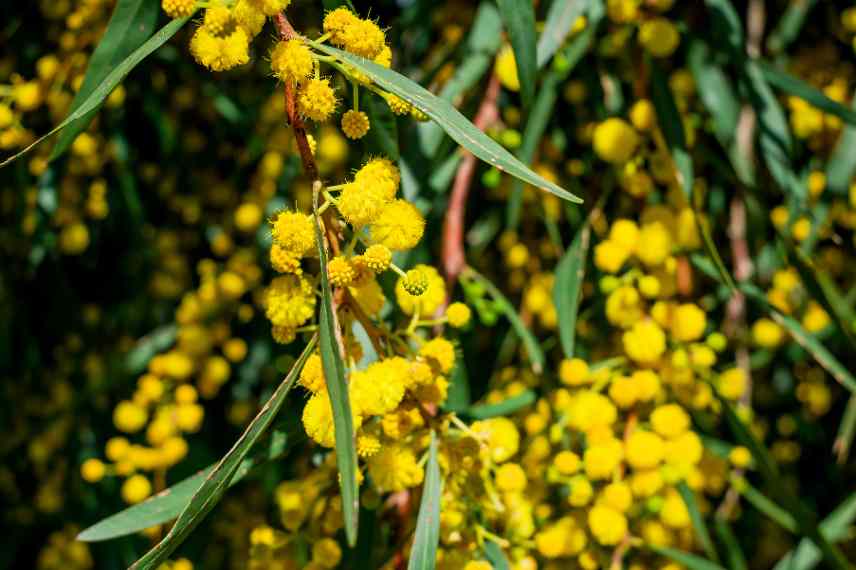
Acacia dealbata
No. 3: a frost spell affecting the wattle's flowering
Native to Australia, as well as tropical and subtropical regions of Africa, wattle thrive in mild climates. They will do particularly well in Mediterranean regions (Acacias have adapted perfectly to the French Riviera) or along the Atlantic coast.
Their hardiness generally limits them to -9°C, with an average tolerance of around -6°C. In regions with cold winters, it will therefore be essential to:
- either grow the wattle in a pot so it can be protected from frost by bringing it indoors;
- or apply effective cold protection, using winter fleeces and installing a thick mulch at the base of the plant.
If your wattle freezes in winter, it’s normal that it won’t flower.
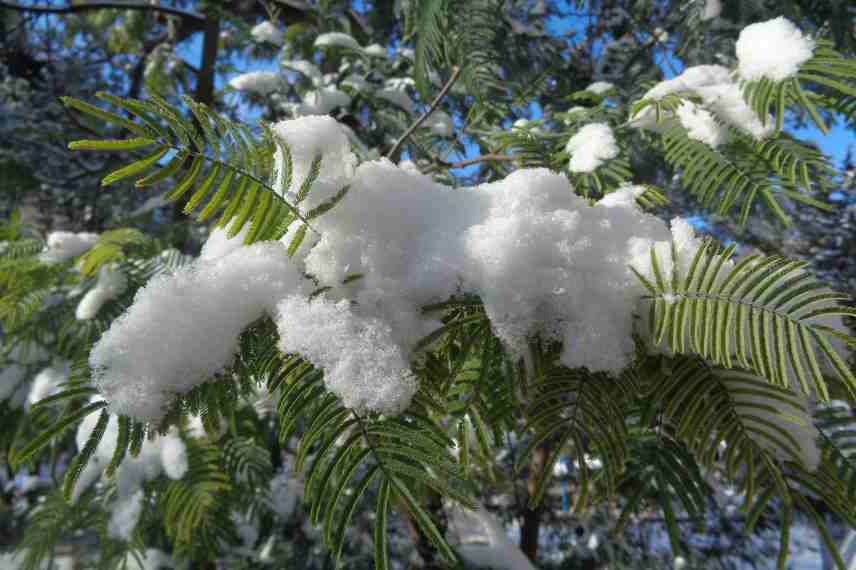
Intense frost spells and very cold winters often compromise the flowering of acacias
No. 4: Incorrect pruning of the wattle
To maintain a beautiful, harmonious shape, the wattle should be pruned just after flowering in early spring, around March or April. The four-season wattle can also be pruned during this period.
Pruning firstly helps to give the bush its dense, rounded habit while reducing wind resistance. It also encourages abundant flowering by increasing the number of floriferous shoots. For this, use pruning shears or shears and remove about 1/3 of the shoots. Cut just after a leaf to stimulate new shoot growth and always at an angle to promote healing.
However, if you prune too late in autumn, you’re very likely to miss out on the flowering, as you’ll also be removing the tiny flower buds.
Lastly, a more drastic pruning may sometimes be necessary to rejuvenate an ageing wattle. However, this will often compromise the following year’s flowering.
Remember to sharpen and disinfect your cutting tools beforehand to minimise the risk of spreading diseases between plants.
To learn more, check out our article « How to Prune wattle?».
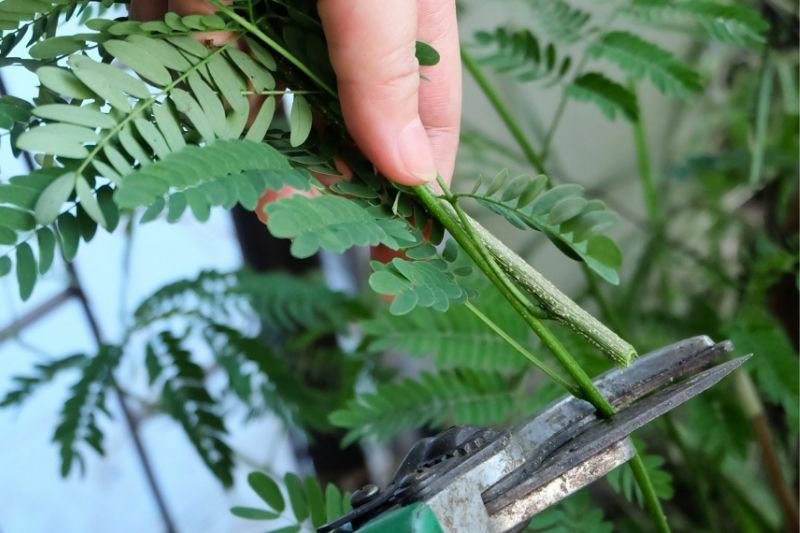
Remove about 1/3 of the shoots after flowering for maintenance pruning
No. 5: a wattle that is too young
Wattle does not necessarily produce flowers in its first year of cultivation. You may need to wait 2 to 3 years before enjoying its beautiful, fragrant yellow pompon flowers.
The shrub will first need to establish its root system and develop its foliage before it can produce flowers. In this case, all you can do is be patient…
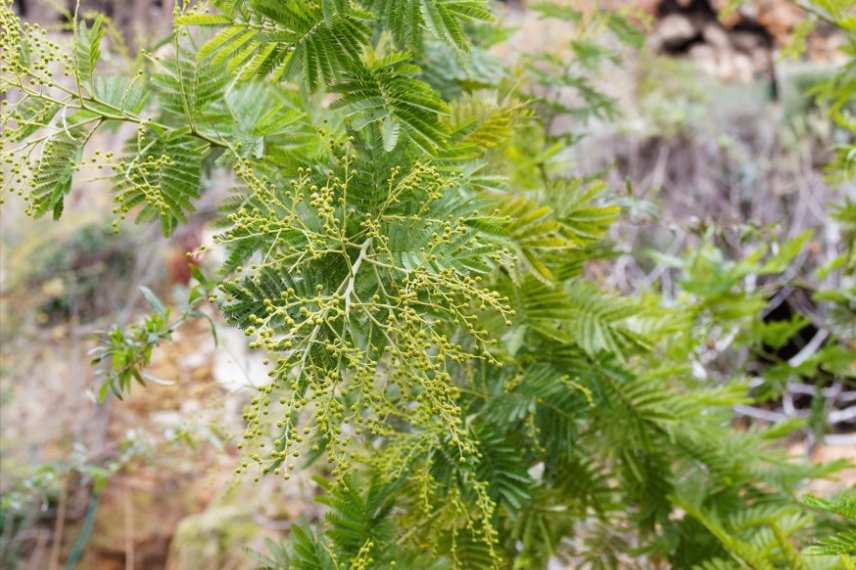
Only well-established wattle will flower abundantly
No. 6: parasitic pests and diseases that weaken the wattle and prevent it from flowering properly
When grown under good cultivation conditions, wattle is rarely susceptible to diseases and parasitic organisms. However, its health can still be affected.
Leafhoppers and scale insects can weaken the wattle by feeding on the sap, which will impact flowering. As a preventive measure, inspect your young plants regularly to take action at the first signs of infestation. For a natural curative treatment, you can use an insecticidal solution made from black soap (1 tablespoon diluted in 1 litre of warm water, sprayed onto affected areas in the evening).
- Subscribe!
- Contents
Comments