Cookies help us to offer you a personalised browsing experience and to measure our audience. You can configure them at any time and consult our privacy policy.
This website uses cookies to improve your experience when browsing the website. Of these, cookies classified as necessary are stored on your browser because they are essential for the basic functionality of the website to work. We also use third-party cookies to help us analyse and understand how you use this website. These cookies will only be stored on your browser with your consent. You also have the option of refusing these cookies. However, deactivating some of these cookies may have an effect on your browsing experience.
Would this plant suit my garden?
Set up your Plantfit profile →
Filter
Sort by:
Display
4results
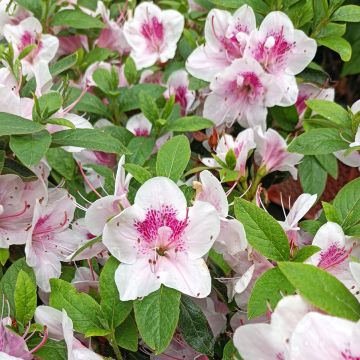
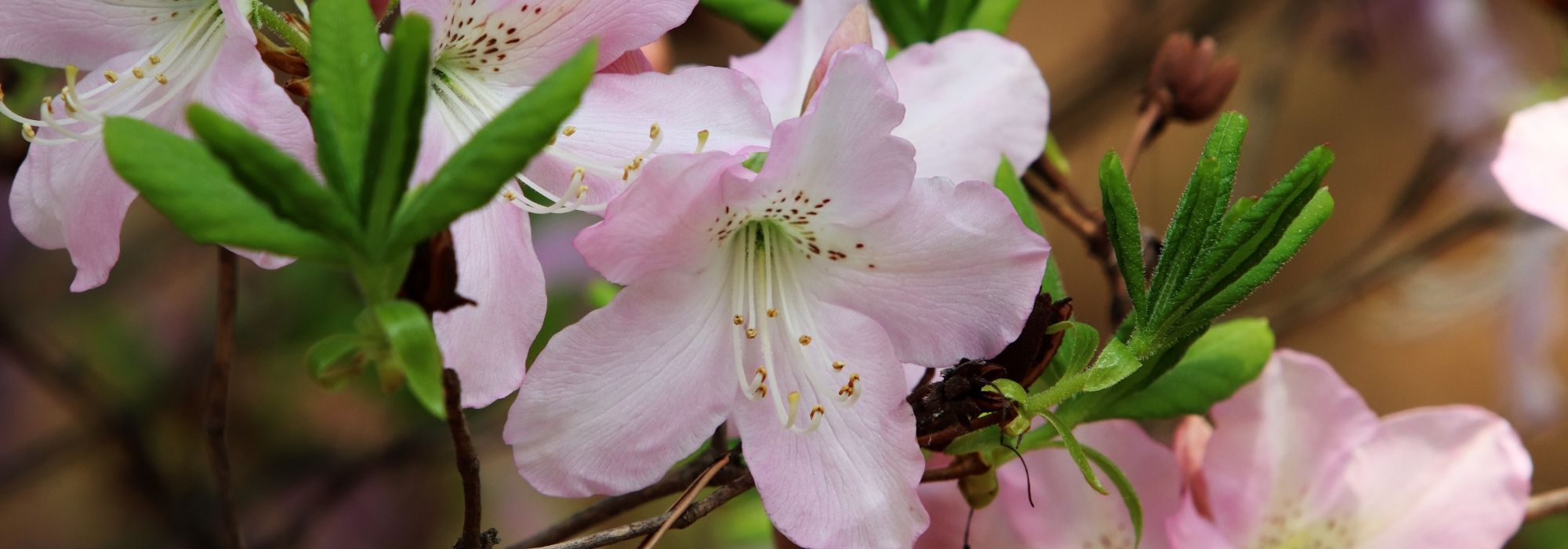
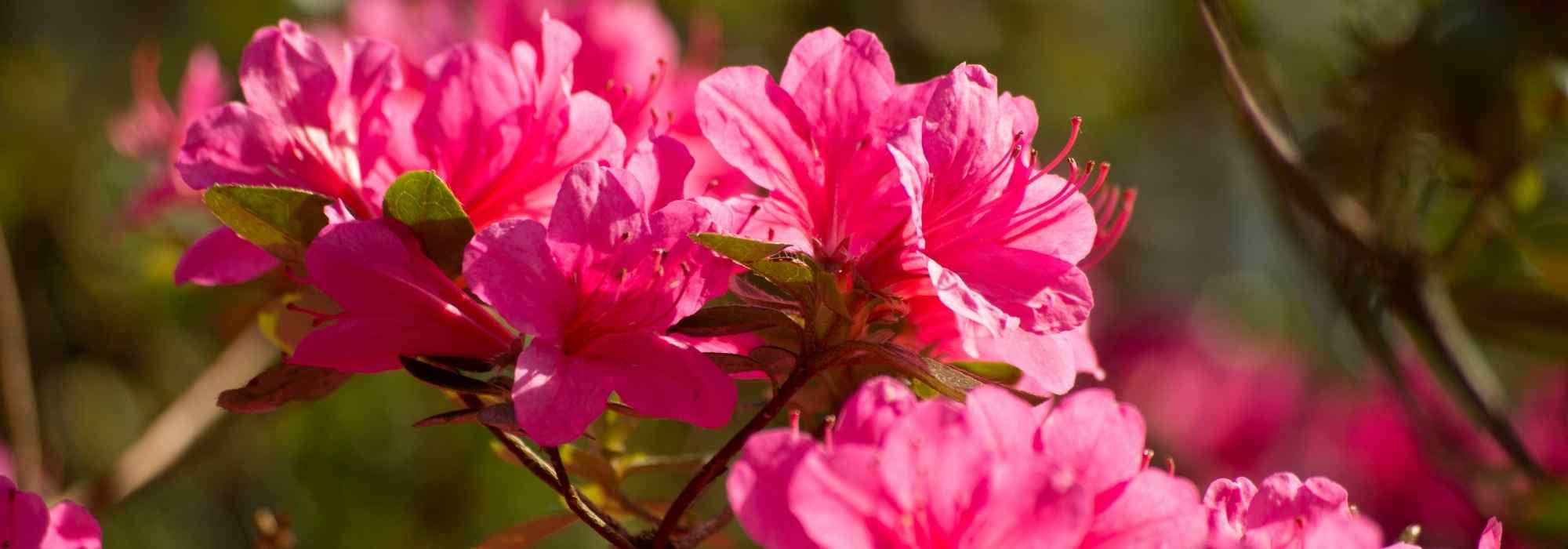
The Japanese Azalea, formerly known as Azalea japonica, is a slow-growing bush that over time forms a dense and bushy shrub with a wingspan of 1m (3ft) to 2m (7ft). Native to Japan, this ground-covering bush is characterised by its small evergreen leaves, glossy green colour, and its vibrant flowers, which come in various shades of pink, white, purple, or red depending on the variety. During the months of March-April, the bush is covered in a multitude of trumpet-shaped flowers, varying in width. Easy to cultivate, the Japanese azalea is a plant that thrives in acidic, humus-bearing, and light soil. It prefers partial shade and is ideally suited for ericaceous soil. Its root system is well-developed but not extensive, which makes it susceptible to heavy soils and prolonged periods of drought. To maintain soil moisture and acidity, a layer of shredded pine bark can be applied around the base of the bush every spring. Maintenance simply involves removing faded flowers in summer and pruning dead branches. Divided into two horticultural groups, the Rhododendron genus includes, on one hand, the Azaleas - Chinese and Japanese varieties - which have small, evergreen or deciduous leaves and five stamens per flower. On the other hand, there are the Rhododendrons, with their ample, glossy, evergreen foliage and flowers with more than ten stamens. Although highly debated from a botanical perspective, this classification is still widely used by horticulture professionals.
The flowering period indicated on our website applies to countries and regions located in USDA zone 8 (France, the United Kingdom, Ireland, the Netherlands, etc.)
It will vary according to where you live:
In zones 9 to 10 (Italy, Spain, Greece, etc.), flowering will occur about 2 to 4 weeks earlier.
In zones 6 to 7 (Germany, Poland, Slovenia, and lower mountainous regions), flowering will be delayed by 2 to 3 weeks.
In zone 5 (Central Europe, Scandinavia), blooming will be delayed by 3 to 5 weeks.
In temperate climates, pruning of spring-flowering shrubs (forsythia, spireas, etc.) should be done just after flowering.
Pruning of summer-flowering shrubs (Indian Lilac, Perovskia, etc.) can be done in winter or spring.
In cold regions as well as with frost-sensitive plants, avoid pruning too early when severe frosts may still occur.
The planting period indicated on our website applies to countries and regions located in USDA zone 8 (France, United Kingdom, Ireland, Netherlands).
It will vary according to where you live:
In Mediterranean zones (Marseille, Madrid, Milan, etc.), autumn and winter are the best planting periods.
In continental zones (Strasbourg, Munich, Vienna, etc.), delay planting by 2 to 3 weeks in spring and bring it forward by 2 to 4 weeks in autumn.
In mountainous regions (the Alps, Pyrenees, Carpathians, etc.), it is best to plant in late spring (May-June) or late summer (August-September).
The harvesting period indicated on our website applies to countries and regions in USDA zone 8 (France, England, Ireland, the Netherlands).
In colder areas (Scandinavia, Poland, Austria...) fruit and vegetable harvests are likely to be delayed by 3-4 weeks.
In warmer areas (Italy, Spain, Greece, etc.), harvesting will probably take place earlier, depending on weather conditions.
The sowing periods indicated on our website apply to countries and regions within USDA Zone 8 (France, UK, Ireland, Netherlands).
In colder areas (Scandinavia, Poland, Austria...), delay any outdoor sowing by 3-4 weeks, or sow under glass.
In warmer climes (Italy, Spain, Greece, etc.), bring outdoor sowing forward by a few weeks.