





























Hellebores: the reliable choices
Our selection for a poetic and colourful winter
Contents
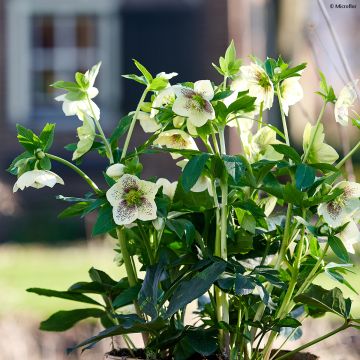
Elegant and delicate in the heart of winter, hellebores are perennials to invite without hesitation into pots to brighten up the balcony or terrace, and in shaded beds in the garden. They bloom for a long time, with some varieties flowering as early as December and sometimes until Easter, defying the cold, frost, and snow. With their single or double flowers, their palette of soft and pastel colours, even reaching black or green, hellebores are easy-going plants, very hardy, thriving in shaded areas. New hellebores in various colours, immaculate Christmas rose, generous Corsican hellebores, and many more… Let’s discover some of the most beautiful varieties, reliable choices that are sure not to disappoint!

Helleborus niger or Christmas rose
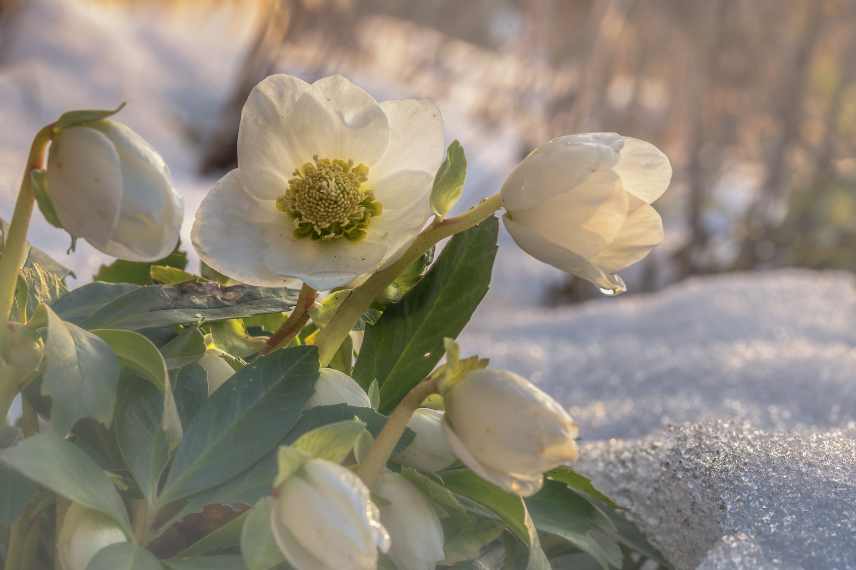
Let’s start with the most classic of hellebores, the famous Christmas rose or Helleborus niger. It is the first to bloom, from November until February-March. It is the perfect flower for the festive season, on the windowsill or on the terrace, but also in the garden alongside other hellebores and early bulbs.
If it takes two or three years to establish well, it will return to bloom in pots or semi-shaded areas under deciduous trees for many years. After that, it is advisable to divide it to maintain its flowering. It is said to be difficult to cultivate, but with cool, well-drained soil, sufficient depth when planted in pots, and a shaded location in non-acidic soil, it proves reliable for winter.
Its simple flowers are pure white – which blushes slightly as they fade – contrasted by the yellow of the stamens. Unlike oriental hellebores, Helleborus niger thrives in calcareous soil, in soil that remains cool and well-drained. Like all hellebores, it is among the plants that dislike being moved, so choose its location carefully. Growing to about 30 to 45 cm, it is smaller than the others and is one of the most perennial.
→ Its characteristics: its incomparable brilliance under snow, slow to establish, hardiness beyond compare, thrives in calcareous soils.
Read also
Hellebores: planting, growingHelleborus argutifolius or Corsican hellebore
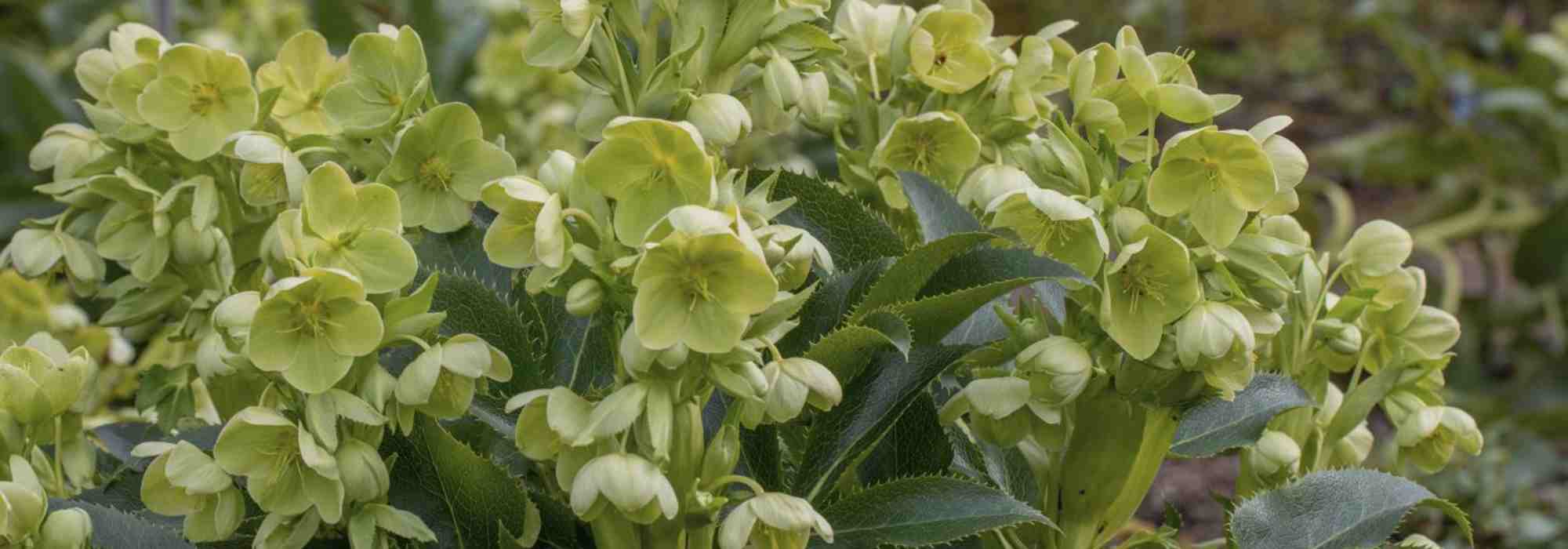
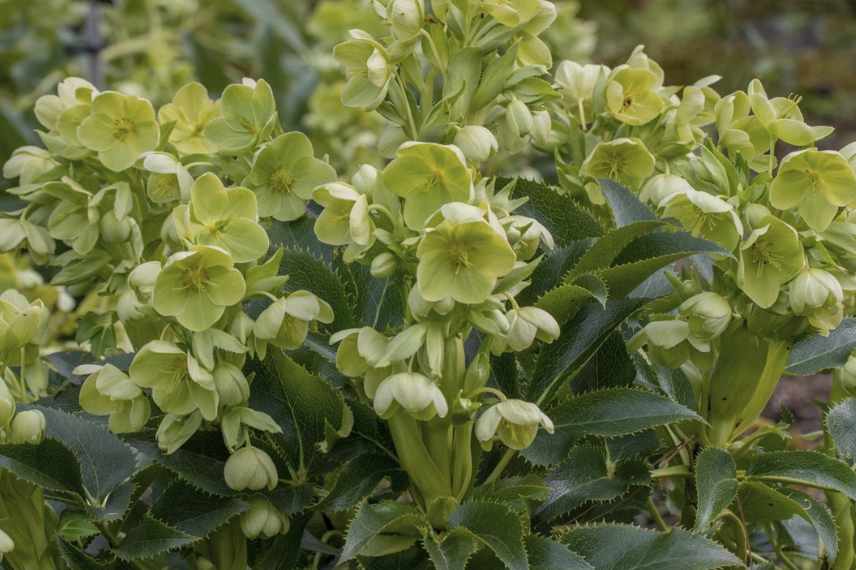
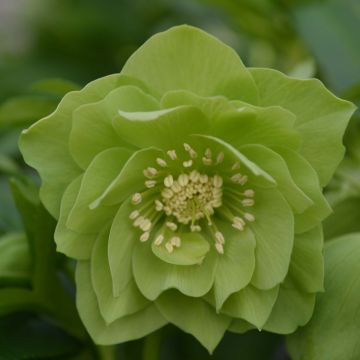
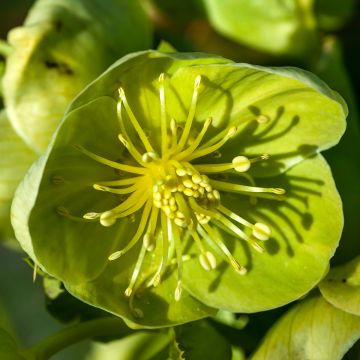
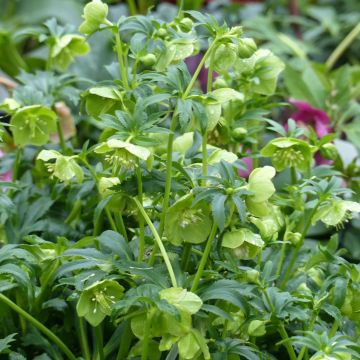
With the Corsican hellebore, we change style to a much more substantial plant in size and a green flowering! As its name suggests, this hellebore comes from Corsica, and its foliage and flowering are indeed quite different from other hellebores: the tough leaves, more or less marbled with white, are lobed, and the flowering occurs in terminal bouquets of a beautiful pistachio green. Growing up to 80 cm to 1 m tall when happy, it remains very ornamental even after flowering and ensures a lovely presence in a shady border all year round, with its superb evergreen foliage.
Due to its origins, the Corsican hellebore requires more sun than its cousins, and a dry soil to thrive well, but it also adapts to partial shade and cooler soil. It fits very well at the base of trees where the sun breaks through in winter. The Helleborus argutifolius takes two years after planting to flower generously. Despite its Mediterranean origins, the Helleborus argutifolius is hardy down to -10°C. Like its counterparts, it attracts bees on the prowl at a time when nectar is still scarce in the garden. You’ve understood, this hellebore is a must!
→ Its characteristics: the tallest, a green flowering, remarkable foliage, accepts a bit more sun
Discover other Helleborus - Hellebore
View all →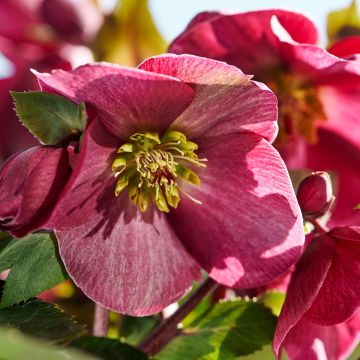
Available in 1 sizes

Available in 1 sizes
Available in 1 sizes
Available in 1 sizes
Available in 1 sizes
Available in 1 sizes
Available in 2 sizes
Available in 1 sizes
Available in 1 sizes
Available in 1 sizes
Helleborus foetidus
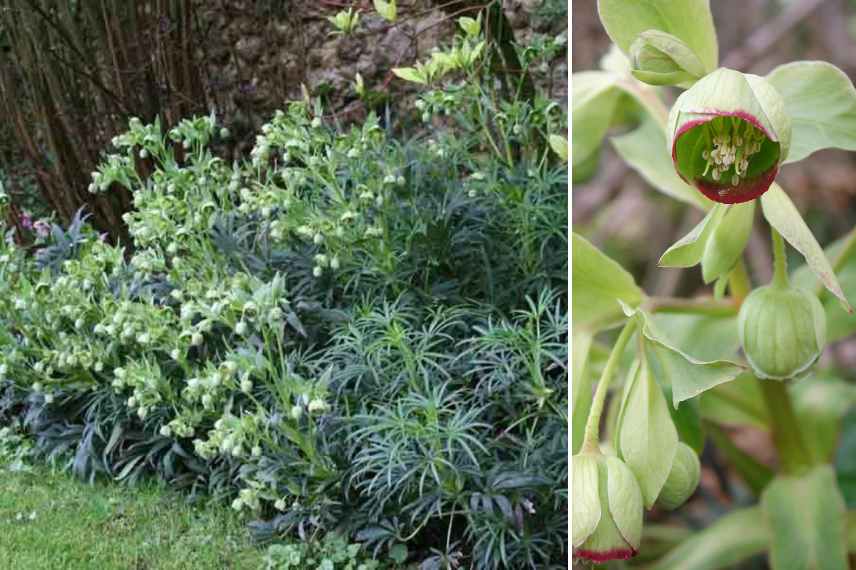
With a name like that, this hellebore might make us want to run away… and that would be a shame because while its crumpled leaves emit an unpleasant smell, the stinking hellebore flowers from November and is adorned with small greenish-white bells edged in purple, which are quite original, gathered in clusters well above the foliage. Among its many advantages that make it a top choice of hellebore, it has a rapid growth rate, is particularly hardy, flowers a bit later between February and May, and will remain in the garden for many years. It is often chosen for its very beautiful, unique foliage, which is very slender, a dark green with a hint of blue, glabrous at the base of the stems but quite dense just below the flowers. This hellebore grows between 45 and 80 cm in height.
The cultivar ‘Wester Flisk’ takes on a red hue on the stems and leaves in mid-winter.
→ Its characteristics: finely textured foliage, petals highlighted in purple, and a staggered flowering at the end of winter.
Read also
10 single-flowered helleboresThe 'Ice n' Roses' range of Hellebores
Specialist nurserymen, including the German Heuger, have succeeded after several years of intense selection in creating an impressive number of captivating varieties of Hellebores. Among them, the ‘HGC ® Ice N’ Roses®’ series is a remarkable hybridisation between Helleborus x ericsmithii or Helleborus niger and the Christmas rose (hybrid hellebore). They are more specifically known as Hellebores x glandorfensis.
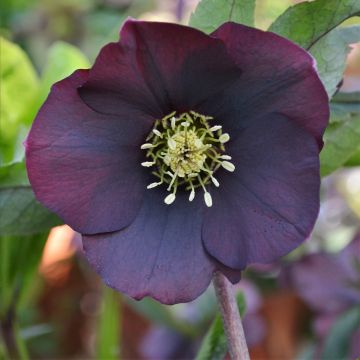
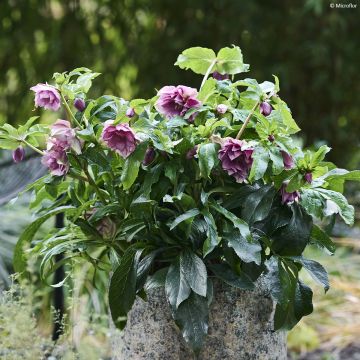
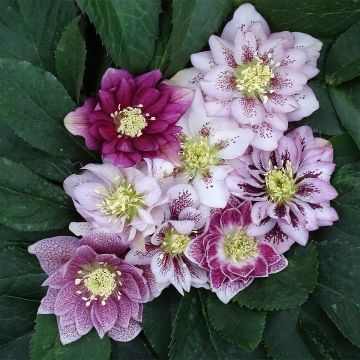
Chic and romantic with their soft tones of white, pink, speckled pink, or more vibrant red, they bloom early, often from November to January. This hybridisation is distinguished by its remarkable hardiness, particularly large flowers, and a spectacular flowering display that is both long-lasting and generous, continuously renewing itself, supported by a dozen sturdy stems. The foliage is dark green, glossy, and evergreen, borne on brownish petioles. This selection also shows a homogeneous colour range within each variety. The ‘Ice n’ Roses®’ hellebores can even thrive in full sun.
Among the beautiful cultivars: ‘Ice n’ Roses Early Rose’, ‘Picotee’: white edged with pink, ‘Red’ with purple-red flowers.
→ Their characteristics: abundant and large flowers, vigorous growth, hardiness in sun, cold, and dry conditions, colour fidelity from year to year, sterile cultivar to be multiplied by division.
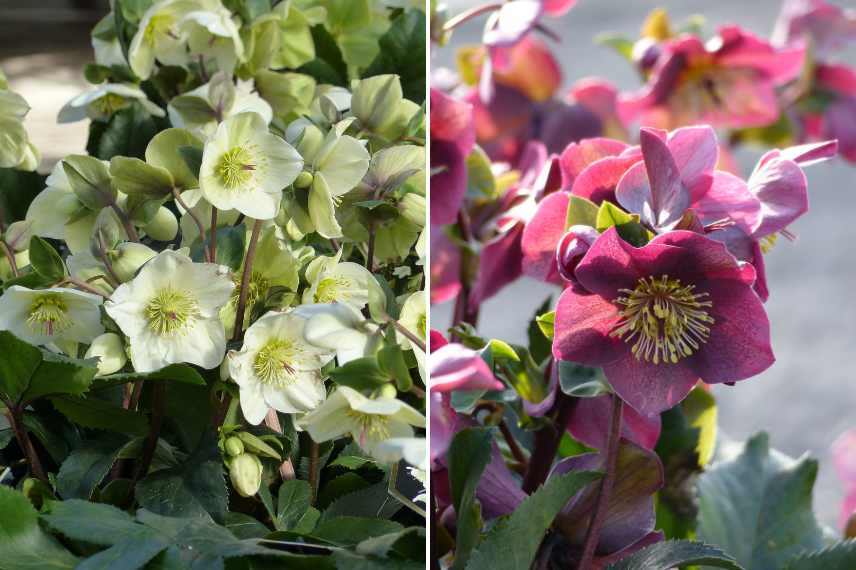
Helleborus Ice’n Roses ‘White’ and ‘Red’
Helleborus nigercors 'Candy Love'
Here is the Helleborus nigercors, a hybrid between Helleborus argutifolius and Helleborus niger (the “true” Christmas rose), notable for its grace and cultural qualities. Like the stinking hellebore, it is particularly robust, has a long lifespan, and boasts an abundant and prolonged flowering.
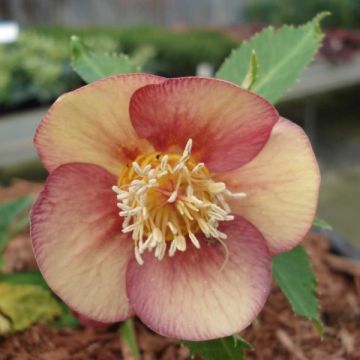
We particularly appreciate the cultivar ‘Candy Love’ for the evolution of its single flowers, which transition from a creamy white with a slight yellow tint to a greenish pink, then to a dark pink before fading to a chocolate-hued purple, on dark stems. The simultaneous presence of cream and pink flowers is charming. ‘Candy Love’ is early, often flowering from December through to March, and even into April. Its leathery foliage features beautiful marbling. It tolerates dry conditions well, making it suitable for shade or partial shade under trees. Its small size makes it the perfect hellebore for adorning balconies and terraces when planted in pots.
→ Its characteristics: small size (30 to 40 cm), perfect for elevated pots, faded colours, sterile cultivar.
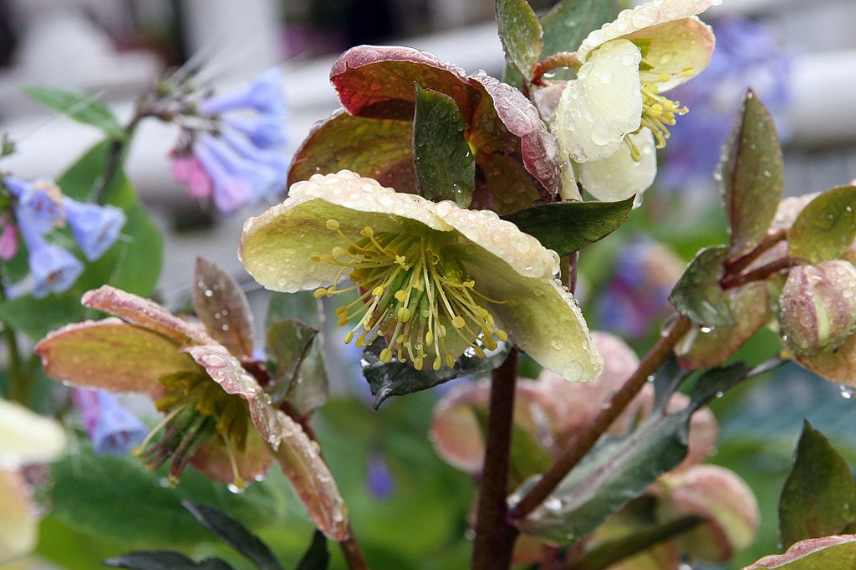
Helleborus ballardiae 'Maestro'
Hellebores ballardiae are the result of a cross-breeding between Helleborus lividus (Balearic hellebore) and the Christmas rose. Closely related to the hellbores nigercors, they inherit from their hybridization with a Mediterranean species a greater tolerance to sunlight than classic hellebores.
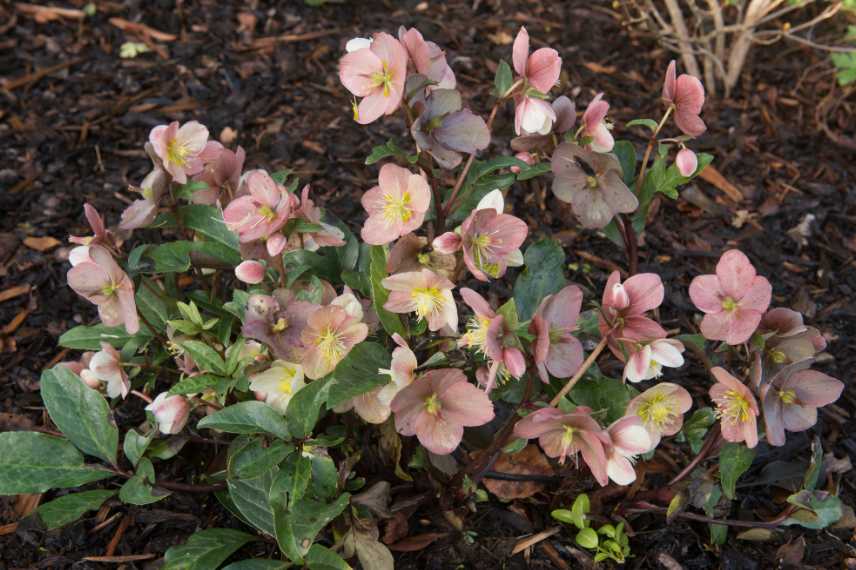
Thanks to its parentage with the Christmas rose, the Hellebore ballardiae ‘Maestro’ makes an appearance as early as December, and will bloom for a good part of the winter, often until April, when its cream flowers with a powdery pink reverse will evolve into an enchanting old rose. The large yellow stamens at the heart of the flower add to its beauty. ‘Maestro’ is a gem when planted in a beautiful container, either alone or accompanied. Ensure you have a pot deep enough, as it will form a lovely mass of dark green dentate leaves topped by the long flowering, growing to about 40 cm tall.
→ Its characteristics: its medium size, equally at home in pots or in the ground, and its evolving pastel shades.
- Subscribe!
- Contents
![[hellebores] essential reliable choices](https://en.promessedefleurs.eu/blogwp/wp-content/uploads/2022/12/hellebores-indispensables-valeurs-sures.jpg "[hellebores indispensable=\"safe bets\"]")
Comments