


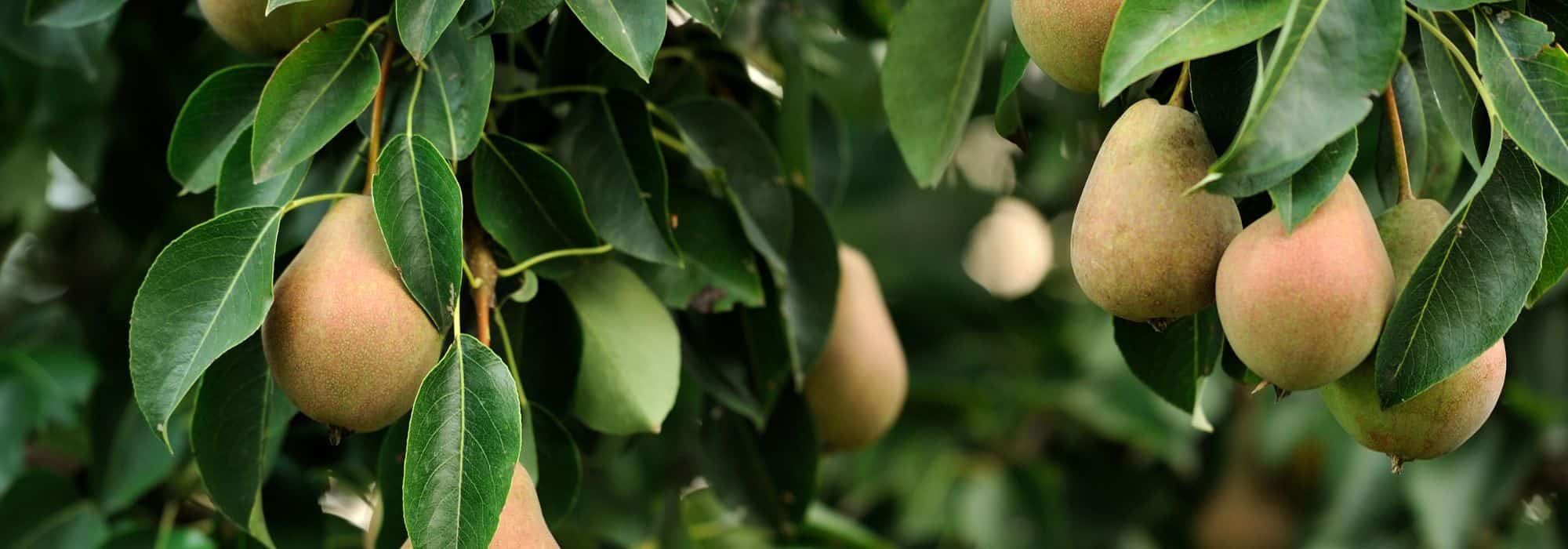
The easiest fruit trees to grow in the garden
to harvest your own fruit
Contents
Many gardeners dream of it: having an orchard in their garden to grow and harvest their own fruit! Who would say no to fresh, tasty fruit and the satisfaction of seeing your plants grow and bear fruit through the seasons? However, the success of this dream hinges on choosing the right fruit trees. To help you, we have selected a list of the easiest fruit trees to grow, which adapt quite readily to a variety of climates and soil types. Trees for a large orchard, small fruit trees for a small garden, including climbing fruiting plants to provide abundant harvests with minimal effort. Also discover some tips on how to choose, plant and look after your fruit trees.

Berries
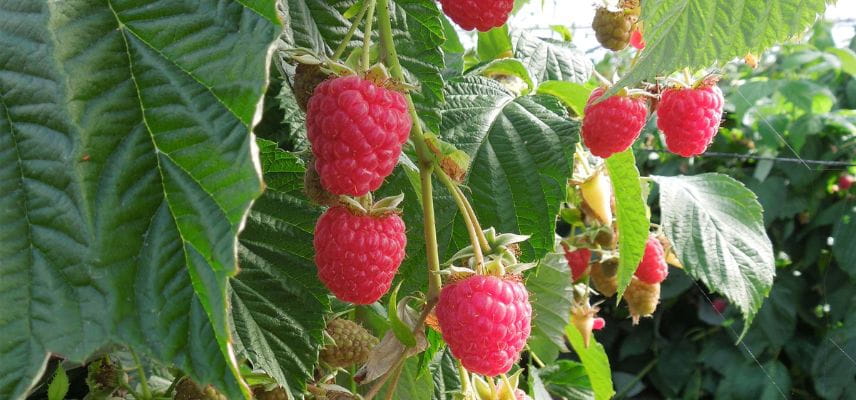
Raspberry
Raspberry bush is a very hardy fruiting shrub that adapts easily, making it one of the easiest small fruiting shrubs to grow. Raspberries are red, sweet and slightly tart berries, which can be eaten fresh, on their own, in pastries, in jam, etc. There are also varieties with golden berries, such as ‘Fall Gold’. There are also two main categories: everbearing raspberries (remontants), which fruit twice a year (the first in June–July and a second in August–September) and non‑everbearing raspberries which fruit only once.
Ideal for temperate to continental climates, it tolerates severe winters well. It prefers rich, cool, well-drained soils, neutral or slightly acidic, and a sunny or partially shaded exposure. Depending on the cultivar, it can reach up to nearly 2 metres in height, as with the variety ‘September’ or not exceed 1 metre with ‘Frambélise’. Planting is usually in autumn or winter, and the first harvest takes place in spring or the following autumn, which is relatively quick.
The raspberry bush requires little maintenance, but it is always worthwhile to prune the fruiting canes after harvest to encourage new shoots to grow and to improve air circulation, which ensures better yields.
→ For more information, also read: “Raspberries: planting, pruning and care” and “Choosing raspberries“.
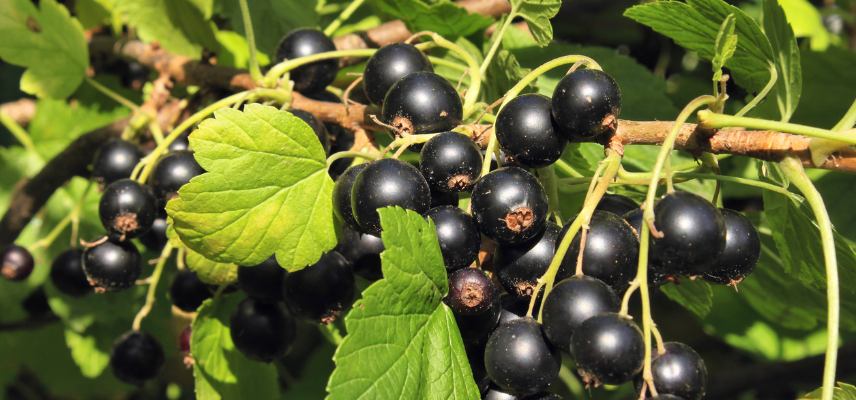
Blackcurrant
Blackcurrant is another very hardy fruiting shrub that adapts easily to a variety of conditions, making its cultivation very easy. Clusters of blackcurrants produce black, sweet and slightly tart berries, which are ideal for fresh consumption, in jam, in syrup or in pastry. In terms of varieties, ‘Noir de Bourgogne’ is a very productive and disease‑resistant variety, while ‘Titania’ is known for its large berry clusters and resistance to late frosts.
Ideal for temperate climates, the blackcurrant bush tolerates cold winters and cool summers well. It prefers soils that are slightly neutral to acidic, slightly moist and well‑drained. It also enjoys full sun or partial shade. Depending on the variety, the blackcurrant bush can reach up to 1.5 metres in height. Planting is usually in autumn or spring, and the first harvest takes place the following summer.
The blackcurrant bush requires little maintenance, but it is advisable to lightly prune the branches that have borne fruit to encourage new shoots to grow.
→ For more information, also read: “Blackcurrant bush: planting, pruning and care” and “Blackcurrant bush: choosing the ideal variety“.
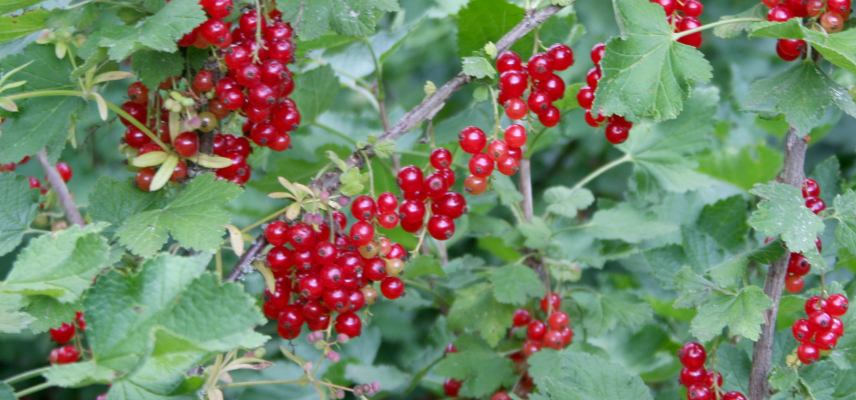
Redcurrant
Redcurrant bush is an easy-to-grow fruiting shrub. It is highly valued for its clusters of small berries, red, white or pink, sweet and tart, perfect for eating fresh, in jam, jelly or pastries. There are two main types of redcurrants: the currant bush with clusters (for example ‘Rovada’) and the gooseberry bush (for example ‘Invicta’). The currant bush with clusters bears clusters of small berries, while the gooseberry bush yields larger, solitary fruits. However, note that the gooseberry bush is thorny! For better pollination and production, plant several redcurrants together.
Adapted to temperate climates, the redcurrant bush tolerates moderate winters and mild summers well. It prefers well‑drained, slightly acidic to neutral soils and thrives in a sunny to partially shaded exposure. Depending on the varieties, the redcurrant bush can reach 1 to 1.5 metres in height. Planting is preferably in autumn or early spring, with the first harvest planned for the following summer.
In terms of maintenance, the redcurrant bush requires a light pruning once a year to remove old wood and congested shoots.
→ For more information, also read: “Redcurrant: planting, pruning and care” and “Choosing your redcurrant bush: buying guide“.
Strawberries
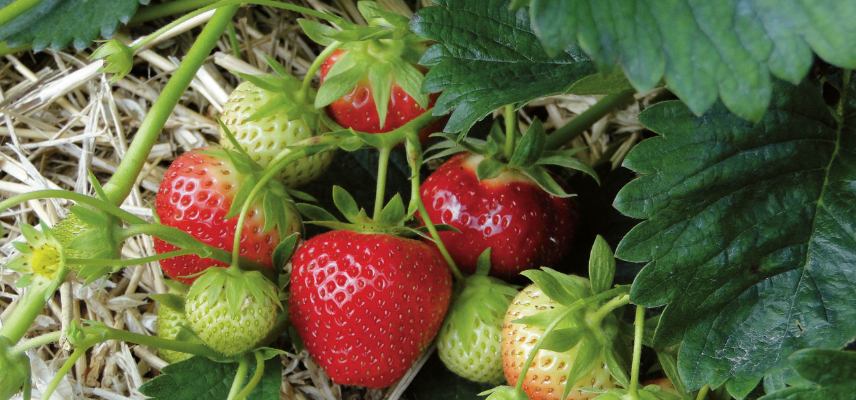
And we cannot finish this paragraph without mentioning strawberries, grown for their red, sweet fruits. Easy to grow, they are perfect for beginner gardeners or fruit lovers, but also for small gardens or balconies. Strawberries can be eaten fresh, in jam, in pastries or even in juice. There are two types of strawberries:
- Everbearing strawberries, such as the variety ‘Mara des Bois‘, bear fruit from June until the first frosts, providing a continuous harvest if it isn’t too dry.
- Non‑everbearing strawberries, such as ‘Gariguette‘, produce fruit only once, usually in June, but their harvest is often more abundant.
The strawberry thrives in temperate climates with cool winters, suitable for the majority of regions in France. It prefers well‑drained soils rich in organic matter, regardless of pH, and a sunny exposure, though it also tolerates partial shade, especially in warmer regions. Strawberries are planted in spring or autumn.
For maintenance, strawberries require regular watering, especially during dry periods, and ideally mulch around the plants. But beyond that, they are very easy to succeed with. Don’t hesitate to plant different varieties to vary flavours and find the most suitable one.
→ For more information, also read: “Strawberry plant: planting, growing and care” and “Choosing strawberries“.
Fruit trees
Cherry tree
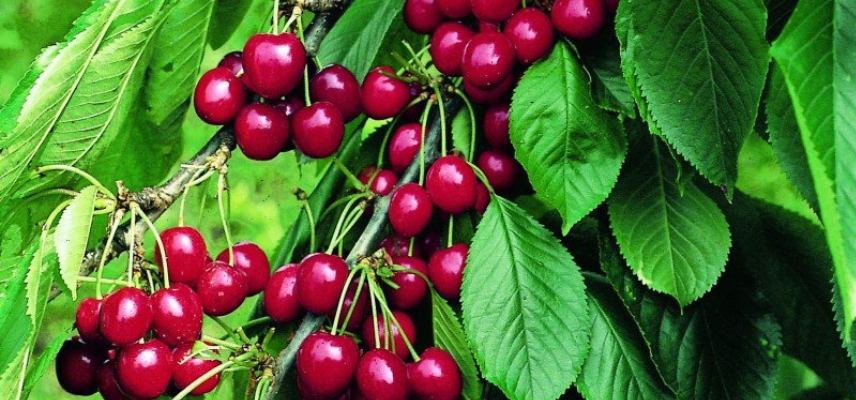
Cherry tree is one of the easiest fruit trees to grow, for several reasons. First, its adaptability to temperate climates: it tolerates cold winters and hot summers, which makes it adaptable to many regions. It prefers deep, well-drained soil and slightly acidic to neutral, and a sunny exposure, conditions readily available in many gardens. Cherry harvest takes place generally in June or July, two to four years after planting.
It is planted in the garden in autumn or early spring. Prefer self-fertile varieties, such as ‘Sunburst’, because they produce fruit without the need for cross-pollination (i.e. without the presence of a second cherry tree), thus simplifying cultivation.
Cherry tree care is minimal. Apart from regular watering during the first years, it will then require little water. A light pruning at the end of winter of dead or diseased branches is enough to encourage vigorous growth.
→ For more information, also read: “Cherry tree: planting, pruning and maintenance” and “How to choose a cherry tree?“.
Apple tree
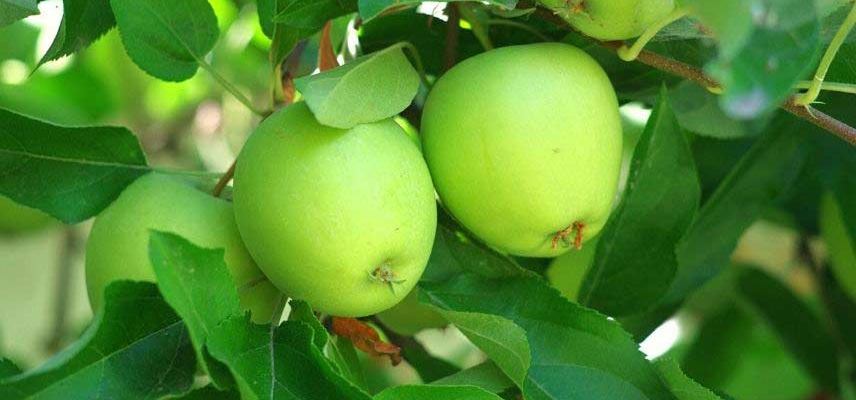
Apple tree is a fruit tree known for its ease of cultivation. Adapted to temperate climates, it tolerates harsh winters and moderate summers, which allows it to be planted almost anywhere in France. We thus find apple trees from the north of France (‘Jonagold’, ‘Belle de Boskoop‘, etc), down to the south (‘Granny Smith’, ‘Fuji‘, etc), via Brittany (‘Reine des Reinettes’, ‘Reinette d’Armorique‘, etc) and even in the mountains (‘Calville blanc d’hiver’, ‘Reinette grise du Canada‘, etc). Choose a variety suited to your region and also consider cross-pollination: some varieties require the proximity of another apple tree to bear fruit.
Apple trees are not too demanding, but they prefer rich, well-drained soil, even heavy and clayey for some, with a sunny exposure. Planting of the apple tree is done in autumn or early spring. Harvest often takes place between September and October, two to four years after planting.
Care amounts to formative pruning in the early years, followed by pruning for fruiting.
→ For more information, also read: “Apple tree: planting, pruning and care” and “Apple tree, how to choose the right variety?“.
Pear tree
Tout comme the apple tree, Pear tree is well suited to temperate to warm climates, tolerating cold winters and hot summers. It also appreciates rich and well-drained soils, as well as full sun to produce juicy and sweet fruits.
The varieties ‘Williams’ and ‘Conference’ are particularly recommended for their ease of cultivation and disease resistance. Pears also require cross-pollination, so planting different varieties together is advantageous.
Care consists of formative pruning to foster a solid framework and annual pruning to encourage fruiting. Pear trees typically start bearing fruit between the third and fifth year, with harvest from summer to autumn.
→ For more information, also read: “Pear tree: planting, pruning and care” and “Choosing the right pear tree? Our buying guide“.
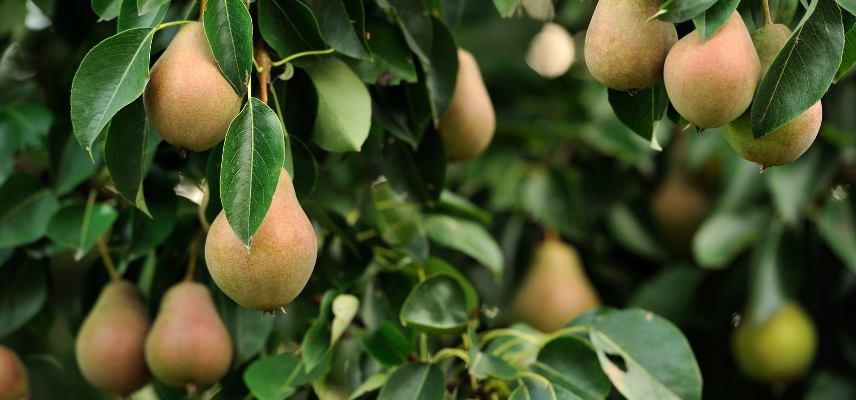
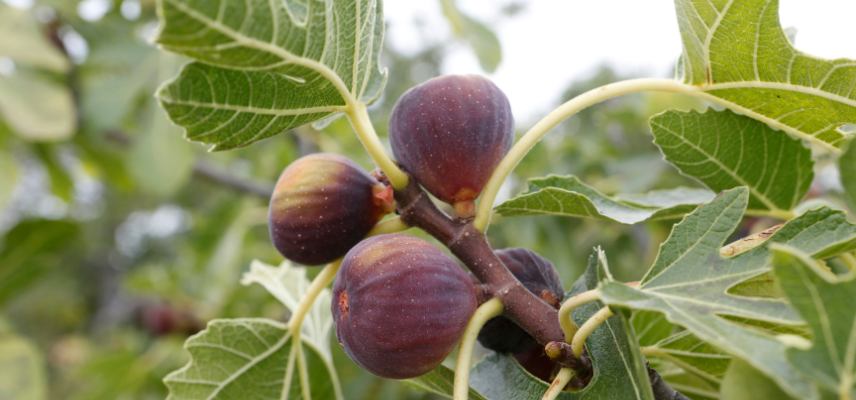
Fig tree
Fig tree is an easy-to-grow fruit tree, particularly in warm and sunny climates, but some varieties can tolerate moderately cold winters, even north of the Loire. It tolerates different soil types, even dry soils, provided they are well drained and not overly damp, and it thrives in full sun.
Les variétés comme ‘Rouge de Bordeaux’ et ‘Madeleine des Deux Saisons’ sont autofertiles, ce qui simplifie grandement leur culture. Le figuier peut être biferous, ce qui veut dire qu’il produit deux récoltes par an, ou uniferous, avec une seule récolte annuelle. Le figuier demande peu d’entretien, hormis une taille légère pour maintenir sa forme.
La récolte intervient dès la deuxième ou troisième année, et les figues mûrissent généralement en été et en automne, offrant des fruits sucrés et savoureux.
→ For more information, also read: “Fig tree, Ficus carica: planting, pruning and maintenance” and “Fig tree: how to choose the right variety?“.
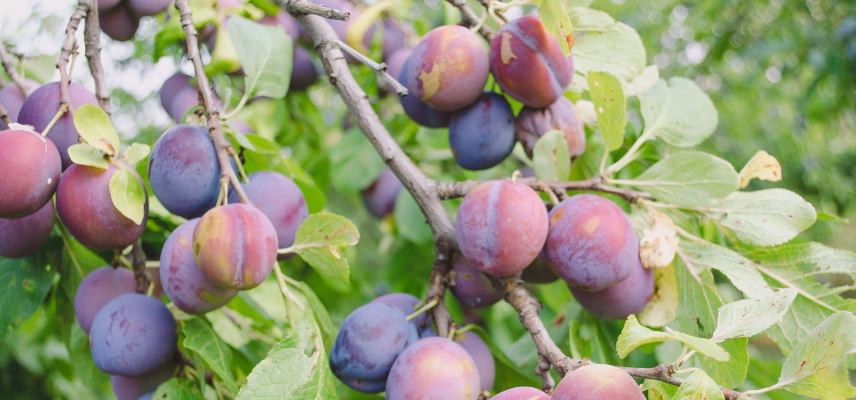
Plum tree
Adapted to temperate climates and easy to grow, the plum tree prefers cool, light soils, rather neutral and calcareous. For abundant fruiting, give it a sunny spot. The varieties ‘Quetsche Stanley‘ and ‘Mirabelle de Metz’ are highly appreciated for their ease of cultivation and the quality of their fruits.
of plum trees are self-fertile, but others require cross-pollination, i.e. the planting of a second plum tree. Care is limited to light pruning to promote air circulation in the canopy and prevent diseases. Plum harvest typically begins between the third and fifth year, with fruit available in summer.
→ For more information, also read: “Plum tree, Mirabelle plum tree: planting, pruning, harvest” and “Plum tree: how to choose the right variety?“.
Fruit-bearing climbing plants
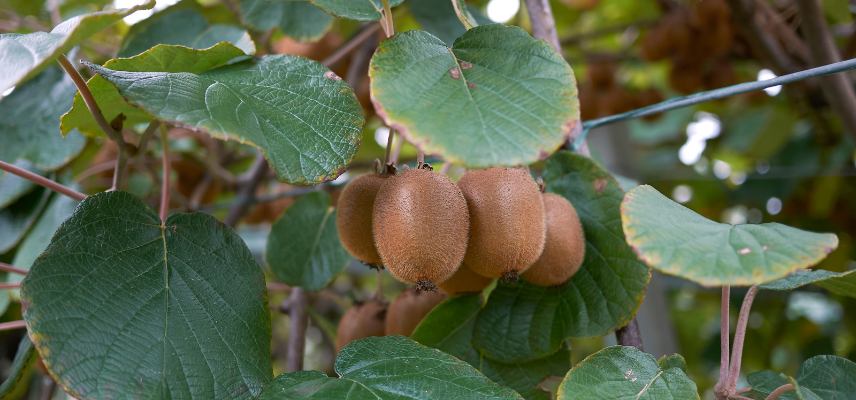
Kiwifruit
Kiwifruit is a vigorous climbing plant that adapts well to temperate climates and proves quite hardy. It can be grown in the south of France, but also along the entire Atlantic coast up to the north. It prefers rich, well-drained soils, neutral or acidic, and requires full sun exposure for good development. Among the easiest varieties to grow, there is ‘Hayward’, a female variety that requires cross-pollination with a compatible male variety, such as Atlas. For good fruiting, we recommend planting at least one male plant for five to six female plants. However, there are also self-fertile varieties, such as ‘Jenny’ and ‘Solissimo’.
L’entretien du kiwi comprend une taille annuelle pour contrôler sa croissance et encourager la production de fruits. The first kiwifruits can generally be harvested after three to five years, with harvest taking place in autumn.
→ For more information, also read: “Actinidia, Kiwi Tree: Planting, Pruning, Harvesting” and “How to choose the right kiwifruit variety?“.
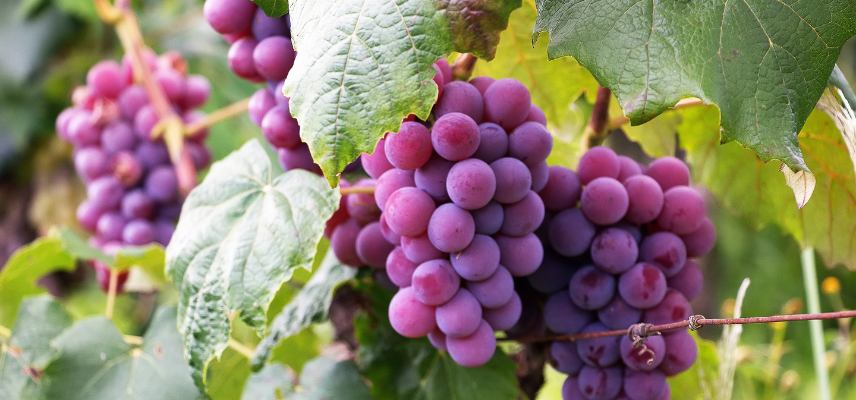
Grapevine
Grapevine is known for adapting well to hot and dry climates, such as ‘Muscat d’Alexandrie’, but there are also cold-hardy and early varieties that can be grown north of the Loire, such as ‘Roi des précoces’. It prefers light, well-drained soils and requires full sun exposure to produce sweet and juicy grapes. The grapevine is self-fertile, which simplifies pollination.
For maintenance, winter pruning helps encourage good fruiting and to control the plant’s vigour. The grapevine generally begins to produce grapes between the second and third year, with harvest taking place from summer to autumn.
→ For more information, also read: “Grape vine: planting, cultivation, pruning“, “Grape vine: choosing the right variety” and “Grape vine: 10 hardy varieties for the north of France“.
Blackberry
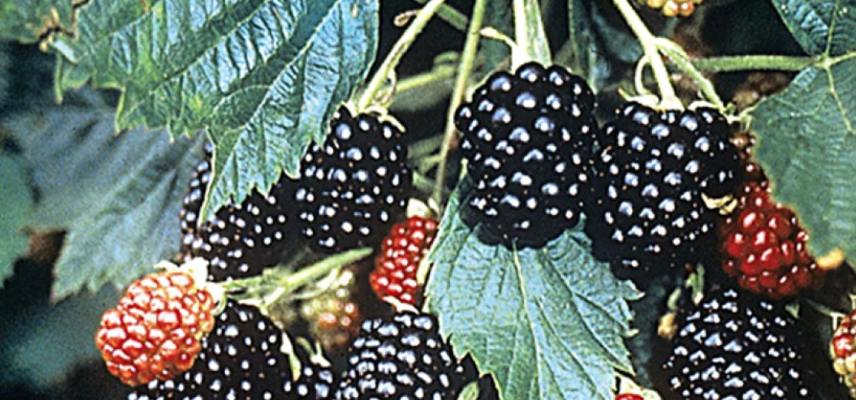
Blackberry plants are hardy, nearly foolproof climbers that thrive in temperate climates. They prefer rich, well-drained soil regardless of pH. For optimal fruiting, they enjoy full sun or partial shade. Thornless varieties like Thornfree’ and ‘Loch Ness’ are especially popular for their ease of cultivation and abundant fruit production. Blackberries are self-fertile, making them simple to grow.
Maintenance mainly involves pruning after fruiting to encourage the growth of new fruiting canes. Harvesting typically begins in the second or third year, with ripe berries available in summer.
→ For more information, also read: “Blackberry, Bramble: planting, pruning and care“.
Read also
10 dwarf fruit trees to grow in potsTips for choosing the right fruit trees
Choosing locally adapted varieties
The first step is to select fruit-tree varieties suited to the climate of your region or locality. For example, fig trees and vines are ideal for hot, dry climates, but there are still varieties for cooler climates. Conversely, apple trees and pear trees prefer temperate climates, but there are also varieties that tolerate heat. Take your regional climate into account. For more information, read: “The climate zones and USDA zones in France“.
Consider your soil
Each fruit tree has specific soil preferences. Some fruit trees prefer soils rich in humus, dry, well-drained, acidic or neutral, or calcareous. Make sure to choose varieties suited to the composition of your soil.
Consider pollination
Some fruit trees are self-fertile, which means they can produce fruit without the help of another variety. Others require a cross-pollination, which involves planting several compatible varieties nearby. Find out the pollination requirements of the fruit trees you are considering and plan accordingly.
Disease-resistant varieties
Prioritise disease-resistant fruit varieties to minimise health problems and ease orchard maintenance. Some varieties are selected for their natural resistance to common diseases.
Space available and mature size
Finally, take into account space available in your garden and the mature size of the fruit trees you plan to plant. Small fruiting plants such as strawberries and raspberries take up little space and can be grown in compact spaces or even in pots. Fruit trees, on the other hand, require more space to grow properly. Note that there are also dwarf or columnar varieties.
Tips for planting your fruit trees
Improve your soil
Most fruit trees prefer rich soil, which enables them to bear fruit more quickly and in greater quantities. If necessary, improve your soil by adding well-decomposed compost or manure or other natural amendments. And before planting, loosen the soil well to aid rooting.
Watering
Young plants require regular watering, especially during dry periods. It is recommended to be particularly vigilant during the first two summers after planting. After this period, water during extended dry spells or heatwaves.
Fertilisation
Apply an organic fertiliser (compost, manure, etc.) every spring to support growth and fruiting.
- Subscribe!
- Contents

Comments