





























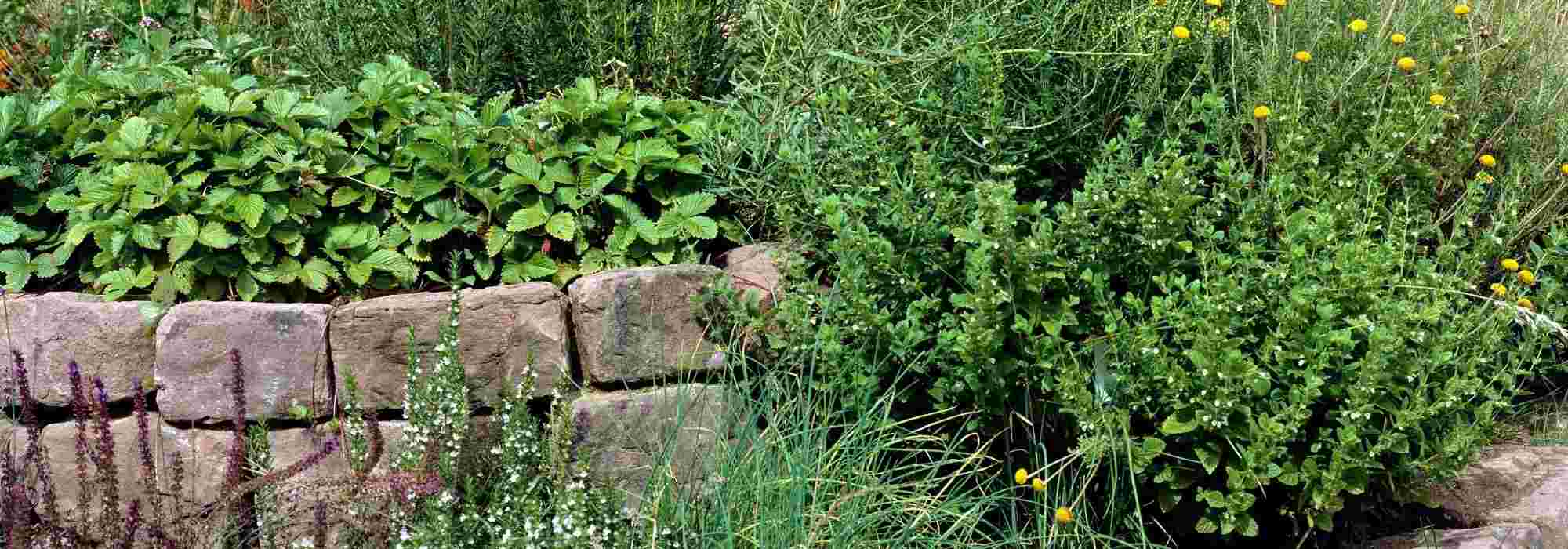
Create a spiralled herb garden.
a lovely way to grow culinary plants
Contents
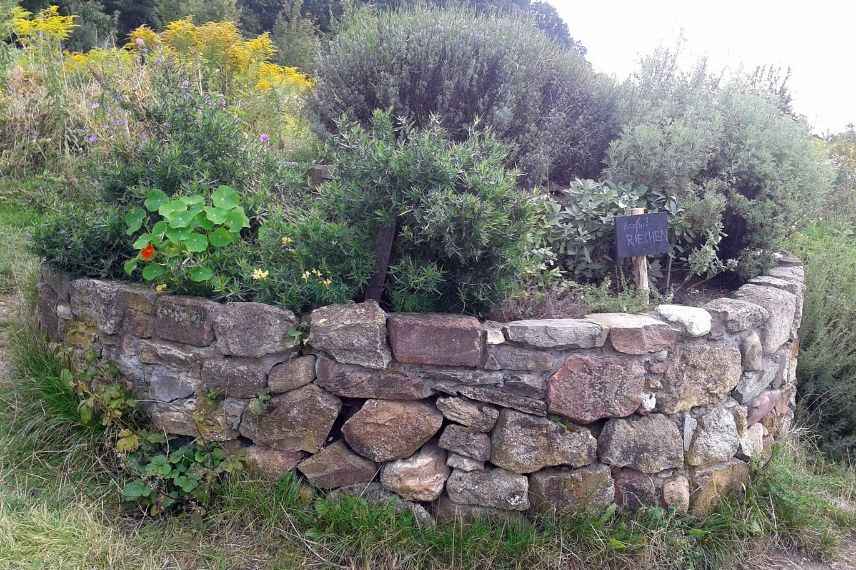
The herb spiral is a popular feature in permaculture.
It offers several advantages and allows for:
- creating a microclimate conducive to growing herbs,
- growing, in the same place, plants with different needs,
- … all within a small space.
Thus, you can plant chives, sage, thyme, parsley, coriander, lavender, rosemary, basil… in the same spot.
Discover our tips for easily creating your herb spiral!

Where to install a spiralled herb garden?
Ideally, your herb spiral should be placed close to the kitchen to facilitate the harvest and in a sunny location. The plants at the base of the spiral should be positioned to the south, in full sun.
The necessary materials
To create a spiralled herb garden, you will need:
- stones to form the structure of the spiral,
- gravel, small brick pieces for drainage,
- coarse sand,
- soil,
- herb plants.
Discover other Herb seeds
View all →
Available in 1 sizes
Available in 1 sizes
Available in 1 sizes
Available in 1 sizes

Available in 1 sizes
Available in 1 sizes
Available in 1 sizes

Available in 1 sizes
Available in 1 sizes
Available in 1 sizes
How to create an aromatic spiral?
Creating an aromatic spiral is not complicated! Here’s how to proceed:
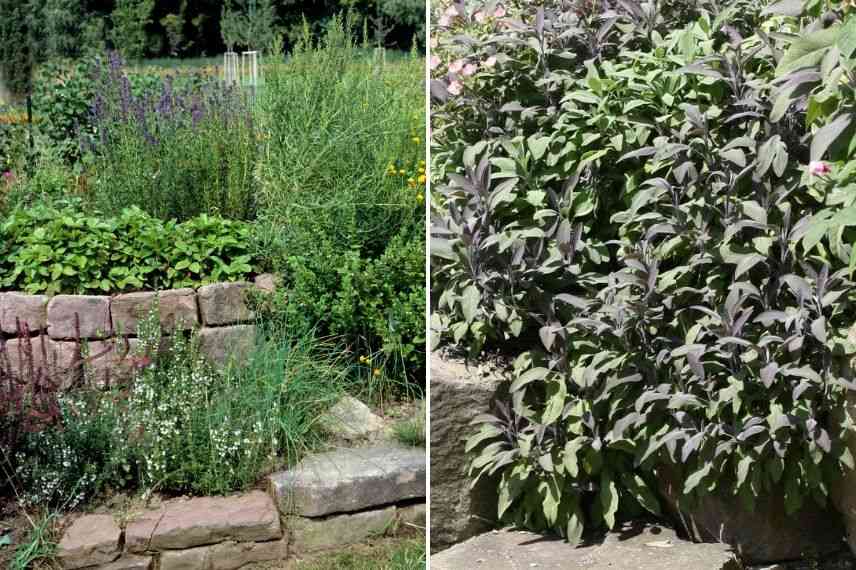
- The spiral can measure between 2 and 3.5 m in diameter, depending on the space you have available. You can “draw” the outlines using a trail of sand to help you. Place the first stones following the sand, starting from the centre of the spiral. The centre is the highest point, measuring between 80 cm and 1.2 m, then the height gradually decreases towards the periphery, to ground level.
- At the centre of the spiral, lay a drainage layer about half the height with pebbles and pieces of brick. On top, add a layer of a mixture of soil and coarse sand 20 to 30 cm deep. Finally, either continue with the sandy mixture or add a layer of soil, ideally low in organic matter, then continue filling the outer circumference with soil while maintaining the slope.
- In the lower part, the area should be cool, rich, and humus-bearing. If your soil is rather poor, add compost or well-decomposed manure.
- At the base of the spiral, you can bury a container, a basin, or dig a mini pond lined with a tarp. This is to create a moist area that is very much appreciated by garden wildlife. This moist area should be placed to the south!
→ My advice: preferably use dry stones that accumulate heat and release it to the plants. It is important that the stones are not cemented to allow wildlife to take refuge and plants to settle in the gaps. Optionally, you can bind them with clay soil.
Finally, with a few additional adjustments, you can also create a very favourable space for insects. To do this, ensure to leave spaces in places to insert hollow stems (bamboo, reed) or logs at least 20 cm long, drilled with holes 8 to 11 mm in diameter for osmia bees, or pithy stems of various sizes (such as elder) for micro-wasps. Ensure these shelters are located to the south or southeast, protected from cold winds.
Read also
Savory: sowing, growing, harvestWhich plants to grow, and where to place them?
The bottom of the spiral is the most humid part, suitable for plants that require a certain level of coolness and richer soil. The higher you go in the spiral, the drier, poorer, and more perfect the conditions are for plants that dislike humidity.
Your spiral will be divided into three different zones or biotopes:
- A Mediterranean zone (at the top) where the very sunny and dry conditions are perfect for rosemary, lavender, thyme, sage, hyssop, rue, summer savory… At the base of the plants, you can add gravel or leave it as is.
- An intermediate zone for less demanding aromatic plants. You can plant borage, oregano, chives, and burnet here…
- A cool zone (at the bottom) ideal for watercress, sorrel, basil, and chervil… You can mulch this area (with flax, for example) to retain coolness and limit the growth of adventive plants.
As you have taken care to orient your spiral correctly (with the bottom of the spiral facing south), you will notice that some areas receive better sunlight than others. Similarly, taller plants can provide a bit of shade for those that need it.
→ My advice: be cautious with mint and lemon balm as they can become invasive! I do not recommend planting them in an aromatic spiral, but if you really want to include them, plant them in buried pots. Also, remember to remove faded flowers to prevent self-seeding. Otherwise, reserve a corner of the garden for them where they can thrive freely while still being available for your herbal teas or culinary preparations.
You can grow any aromatic plants you wish. There are no real constraints; you just need to understand the principle and respect the needs of the plants. To help you, here is a planting diagram for an aromatic spiral:
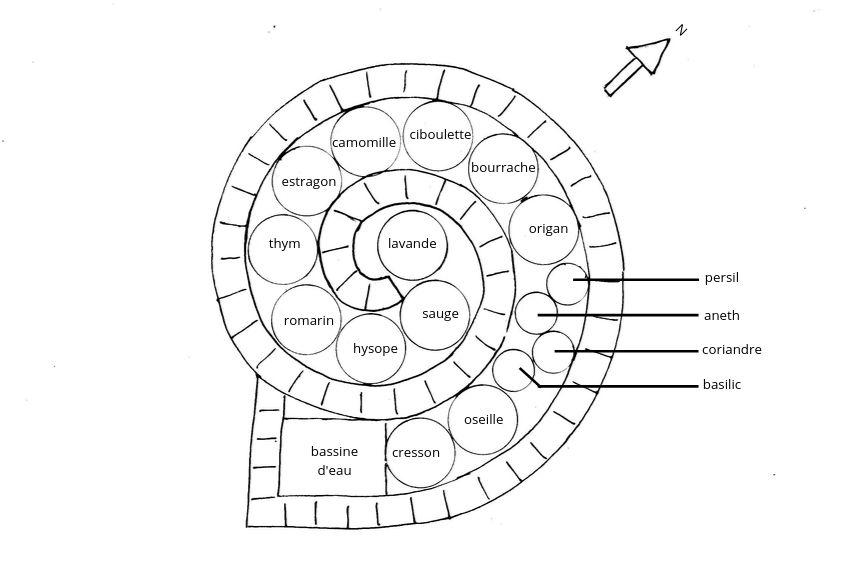
Example of planting an aromatic spiral
Some flowers like nasturtiums, marigolds, and pot marigolds are, of course, welcome.
Discover Virginie’s article: 7 unusual aromatic plants to grow in the garden.
Maintenance
Maintenance is simple and involves regularly weeding your spiralled bed.
Do not allow adventive plants to establish themselves as they can be difficult to remove once well-rooted, the dry stones may become dislodged.
- Subscribe!
- Contents
Comments