






























The most beautiful coppiced shrubs
A unique silhouette... a must-have in the garden!
Contents
Coppiced plants are trees or shrubs with multiple trunks, which start from the base with two, three, or even four trunks. We refer to bushes or trees in coppice when the branching occurs directly above the soil. This very elegant habit allows for varied silhouettes in a garden and offers a small tree that is generally more spreading, providing a very aesthetic covering. While this silhouette is natural for certain bushes or trees like birches, it can also develop over many years in some older specimens, or be a form achieved intentionally by the nurseryman who performs formative pruning from the tree’s growth.
In addition to the beauty of their silhouette, deciduous coppiced bushes make wonderful subjects once winter arrives, revealing their branches and exceptional bark, resembling a plant sculpture in the garden. They are particularly appreciated in small to medium gardens where large trees are difficult to consider. Coppiced bushes can be used as standalone specimens but also provide a lovely volume in a border.
Let’s explore the most beautiful coppiced shrubs, those that naturally adopt this silhouette!
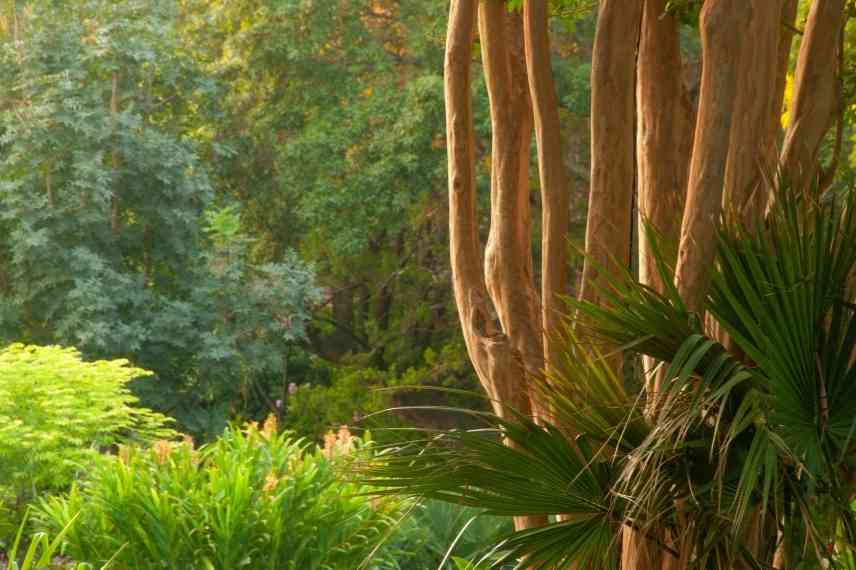
Multiple trunks, here of a crape myrtle, shape the garden in their own way…

Lagerstroemia
It is certainly the bush most commonly encountered in coppice form in private gardens, and it is widely used in public landscaping for its strong ornamental power. The crape myrtle is appreciated for its beauty of floral thyrses, in shades of pink, red, purple, or white. Often planted in coastal regions as it is considered a bush of mild climate, new hybrids have a hardiness of at least -15 °C, and most tolerate drought well. It is also frequently found in a classic form as a bush trained as a half-standard. Reaching a height of about 3 m in coppice form, it requires sunlight to bloom well and is satisfied with any soil.
→ Its advantages: a spectacular flowering from mid to late summer, a flamboyant autumn foliage, a range of cultivars with stunning flower colours, often pink in varying intensities and purplish, a superb bark that beautifully peels with age, and good adaptation to urban pollution.
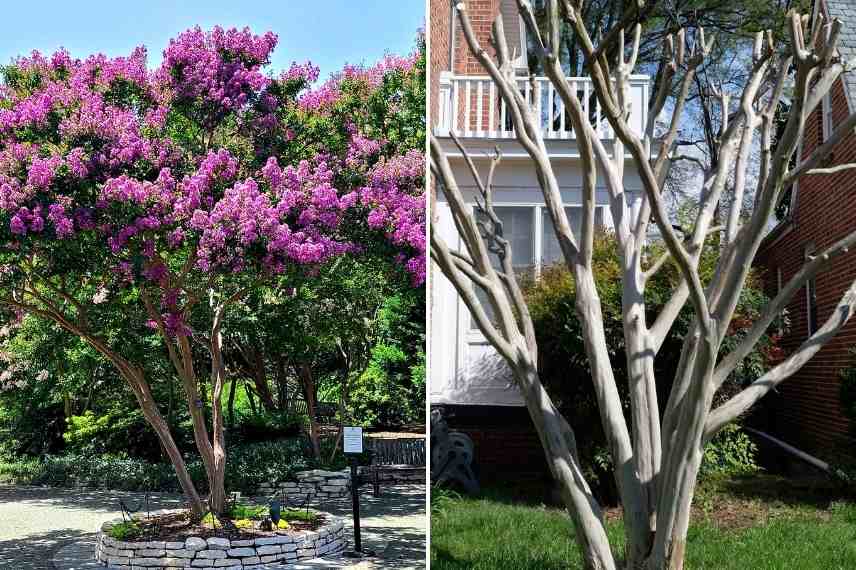
Lagerstroemia indica
Read also
How to train a tree as a coppice?Heptacodium miconioides
The Chinese Heptacodium is a deciduous bush that is becoming increasingly well-known and used in France, and rightly so, as it possesses many qualities and charms! It grows naturally on multiple stems, developing fairly slender trunks and bearing an open crown that beautifully reveals the coppice shoots. Growing up to 4 m tall and 3 m wide, it features a delightfully fragrant white flowering that turns to a nearly crimson pink in autumn, providing a fabulous display until October. It can be planted in any soil, in full sun.
→ Its advantages: a diverging habit, a very long flowering period that changes colour in autumn, a reddish-brown bark that superbly exfoliates with age, foliage that remains in place for a long time, good drought tolerance and adaptability to urban environments, and excellent hardiness.
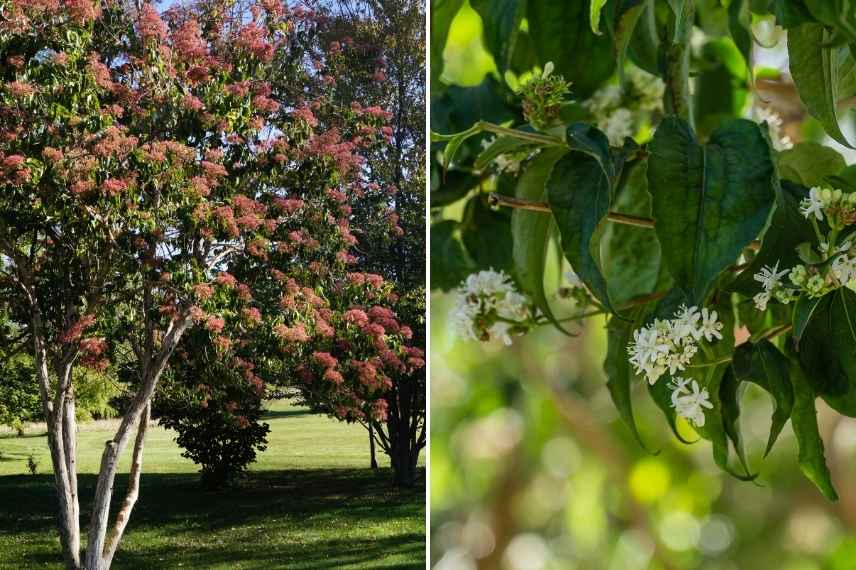
Chinese Heptacodium
Discover other Shrubs
View all →
Available in 1 sizes
Available in 1 sizes
Available in 1 sizes
Available in 1 sizes
Available in 1 sizes
Available in 1 sizes
Available in 1 sizes
Available in 1 sizes
Available in 1 sizes
Available in 1 sizes
Magnolias
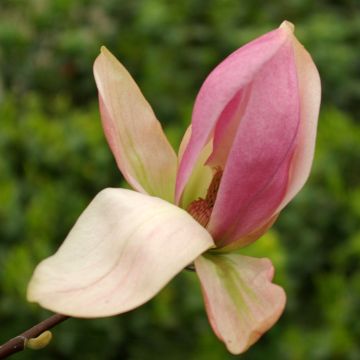
We are talking here about Magnolia soulangeana, as well as the smaller Magnolia stellata, Magnolia sieboldii, and even some Magnolia grandiflora, which are evergreen. The dense basal branching forms a remarkable natural coppice habit on these early-flowering shrubs in spring (except for Magnolia grandiflora, which flowers in summer). They produce multiple trunks above the ground and adopt a beautifully spreading rounded silhouette. Magnolias thrive in ideally acidic, light soil, in full sun or partial shade.
→ Their advantages: one of the most beautiful spring flowerings, exceptional upright cup-shaped flowers, strong hardiness, and an increasingly charming habit over the years in Magnolia soulangeana, whose branches gracefully droop close to the ground.
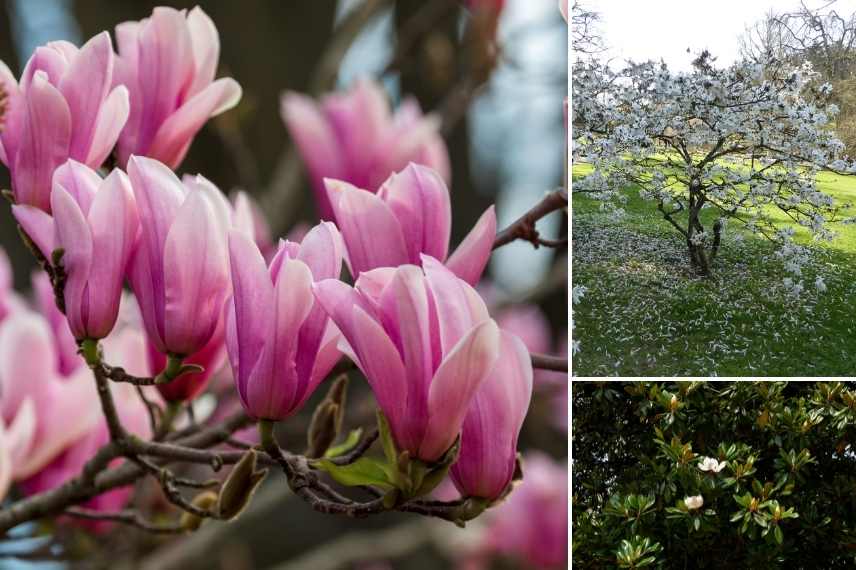
Magnolia soulangeana, Magnolia stellata (© Gwenaëlle David) and Magnolia grandiflora
Read also
Trees and bushes: different habitsAcer ginnala
Acer ginnala is one of the most beautiful maples in the autumn range. Also known as the Amur maple, Manchurian maple, and often referred to as Acer tataricum subsp. ginnala, this acer features a trunk with multiple branching starting from ground level. It forms an elegant tree, growing between 5 and 7 m tall with a spread almost as wide, as its branches arch significantly with age. It is a remarkable species for its trilobed foliage that turns a divine red in autumn.
→ Its advantages: a striking brilliance at the heart of autumn, a bush that requires no special care and withstands heat, winds, and urban pollution.
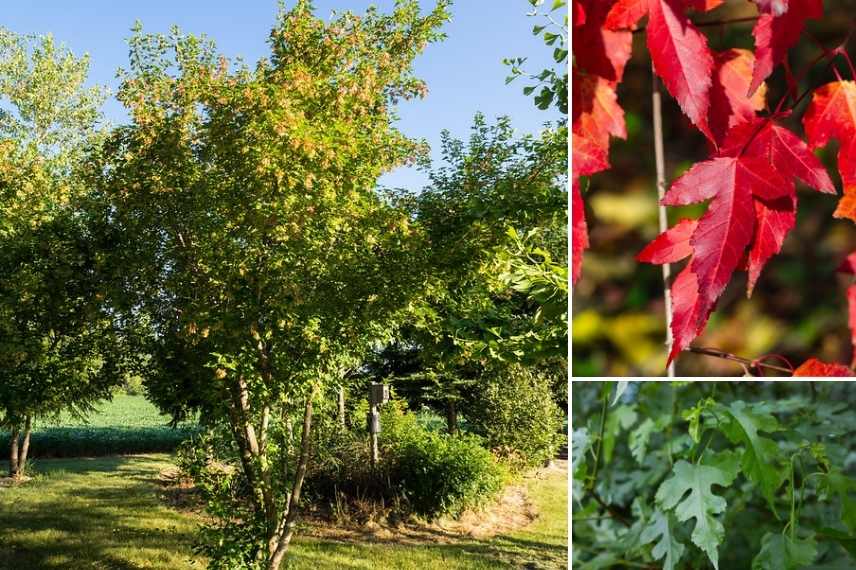
Acer ginnala (© FD Richards)
Cordyline and Yucca
Belonging to the family of Agavaceae, both Cordyline australis and Yucca gloriosa are not shrubs per se, but they often produce multiple branching stems, which adds to their exotic beauty. Typically, two, and sometimes three strong stems emerge simultaneously from the cordylines, giving these plants a proud appearance, supporting their dense, spiky, upright, evergreen foliage. With these slow-growing plants, patience is required to see the plant rise, particularly the Cordyline, which produces its branching after the first flowering. They are ideal for planting in exotic gardens, coastal gardens, dry or Mediterranean gardens.
→ Their advantages: a strong exotic presence, good hardiness for Yuccas, and good wind resistance.
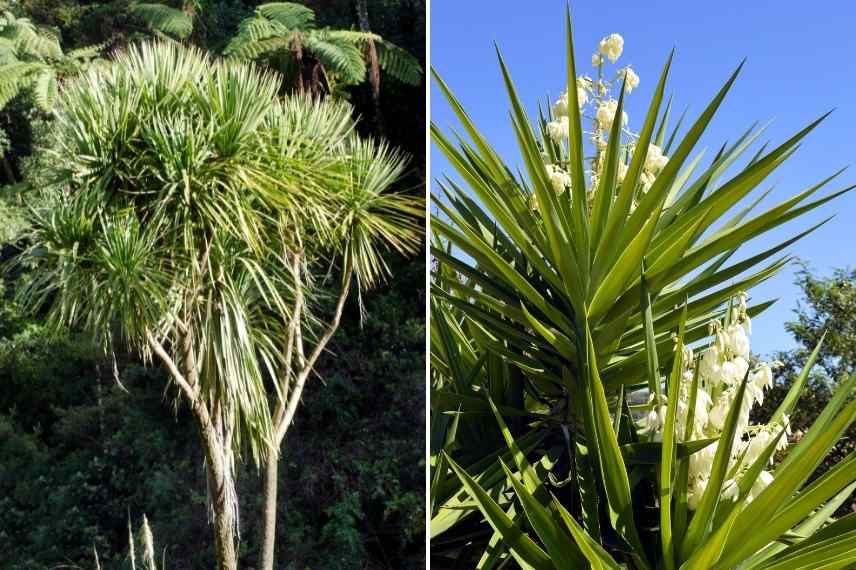
Cordyline australis and Yucca
Arbutus unedo
Arbutus unedo is more commonly known as the strawberry tree. This tree produces quirky, decorative globose red fruits in autumn, which is quite fitting given its name. The fruits remain on the tree alongside the new typical bell-shaped white flowering of the Ericaceae family (like heather or Pieris) during September or October. The very short trunk of the strawberry tree branches out in several directions, creating a bushy yet upright silhouette (it grows to a height of 2 to 4 m). It can be planted as a standalone feature to highlight its beauty or within a border when selecting lower varieties.
→ Its advantages: beautiful evergreen foliage, unique and colourful fruit adding to the charm of the flowering, reddish bark, good drought resistance, and remarkable longevity.
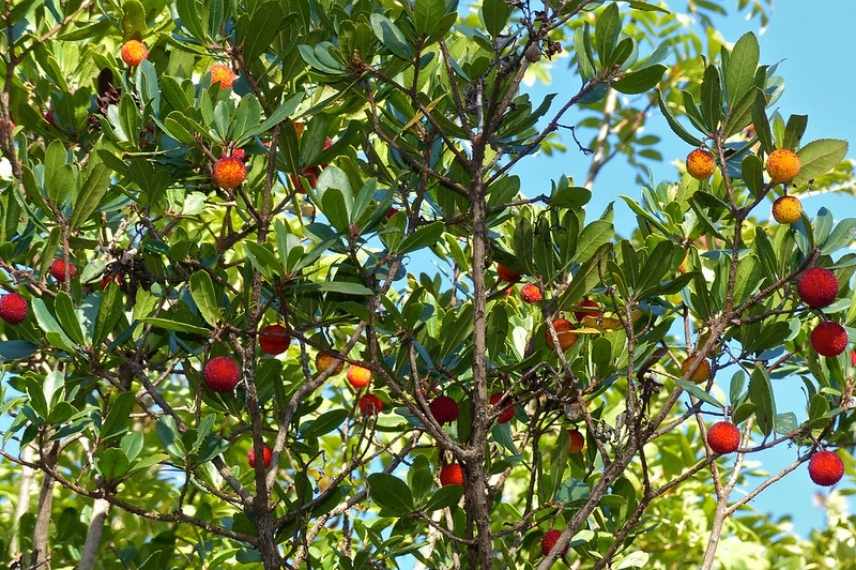
Arbutus unedo
Chamaerops humilis
Among the dwarf palms, the Chamaerops humilis features, much like coppiced bushes, a very characteristic multiple trunk -referred to here as a stipe-. Originating from shoots close to the base of the stipe, growing directly from the ground as the Chamaerops matures, the stipes give it a very bushy appearance and a particularly spreading habit, accentuated by the fan-shaped palmate leaves. Ideal for various types of gardens, it offers a tropical escape. The Chamaerops humilis will reach heights of 3 to 5 m at maturity. It can be planted as a solitary specimen or in a grove of palms.
→ Its advantages: its bluish colour, especially during the bud burst period of the fronds, its slow growth making it suitable for pot cultivation, and its good hardiness for a palm (-12 °C).
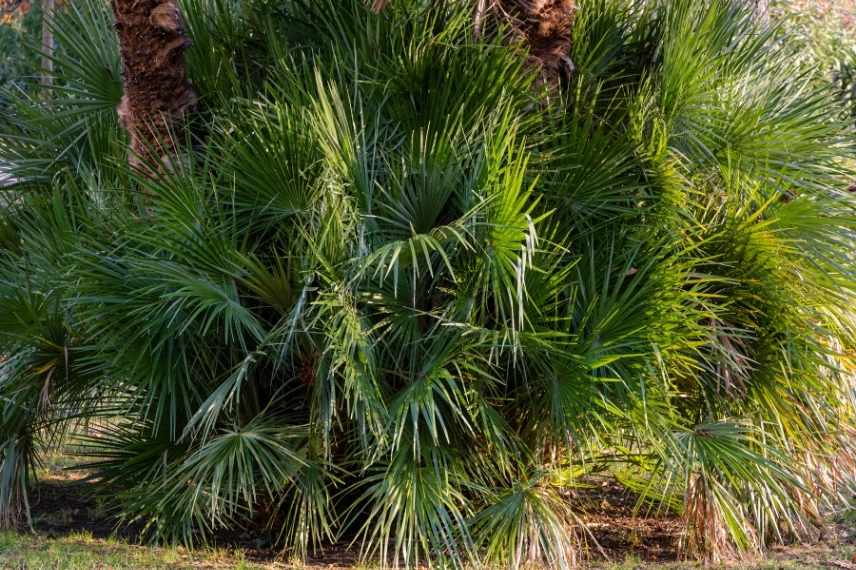
Chamaerops humilis
Edgeworthia chrysantha
The paper bush is a charming shrub, smaller in size compared to others in this selection (1 to 2 m tall). A bit unique when it comes to coppicing, its very short trunk actually divides just a few centimetres from the ground to give rise to an ultra-ramified branching structure. Edgeworthia chrysantha is of unique delicacy when its small pendulous flowers, cream and yellow, emerge in late winter. It enjoys full sun or bright partial shade, and well-drained neutral to acidic soils. It easily withstands temperatures down to -10 °C.
→ Its advantages: its original and bright flowering in mid-winter, its habit, and its grey bark making it a little gem once bare.
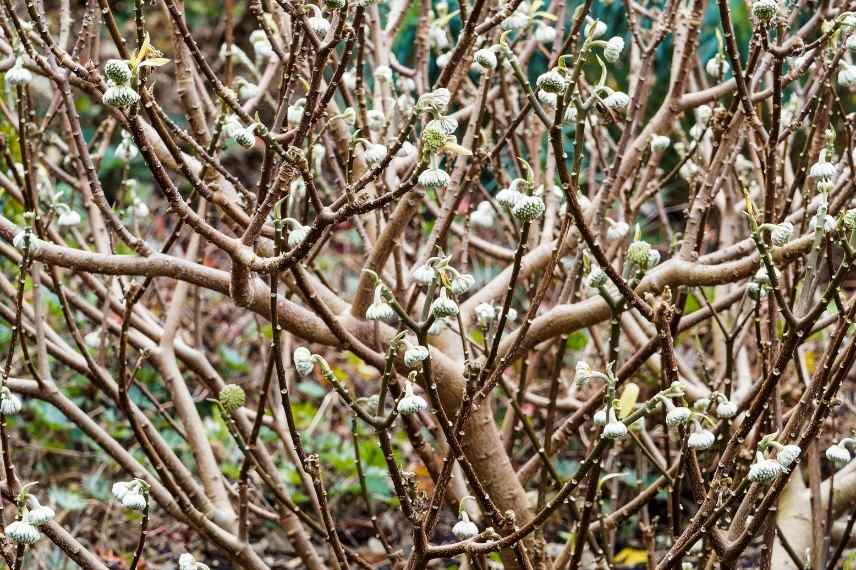
Edgeworthia chrysantha
The Judas tree or Cercis
Here is another deciduous bush whose highly ramified habit from the base offers a very picturesque appearance, often twisted. The Judas tree is a wonderful bush, with its natural coppiced habit being a must-have for country gardens. Its violet-pink flowering along the still naked branches is a delightful sight in spring, typically in April or May. Then, its unique, bluish-green, rounded leaves add to its charm. With an upright stature, Cercis siliquastrum will gradually become more irregular and spreading. It should be planted in full sun and sheltered from strong winds.
→ Its advantages: its essential spring flowering, drought resistance, hardiness, and adaptability to calcareous soils.
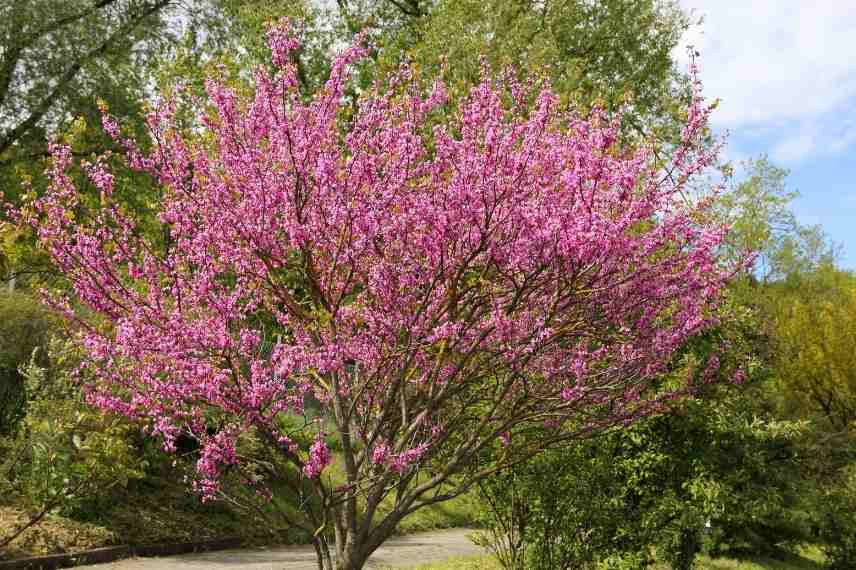
Cercis siliquastrum
Luma apiculata
To conclude this selection beautifully, here is a bush that is still relatively unknown, which grows naturally as coppiced shoots. The Luma apiculata hails from Chile (it is also known as Chilean myrtle) and retains a slight frost sensitivity that we can forgive (hardy down to about -8 °C). It slowly forms, in partial shade or full sun, a stunning bush that can reach up to 5 m in height. Its exfoliating orange bark is particularly remarkable and offers a beautiful play of colours and structure in a grove. We also appreciate its lovely and long summer flowering, with small white flowers. As for its foliage, it is evergreen, leathery, and a dark green with a nearly glossy finish. It should be planted in well-drained soil.
→ Its advantages: a sublime bush, with a superb habit and bark, delicate and slightly fragrant flowering, melliferous, and berries that attract birds in winter.

Luma apiculata
But also...
Parrotia persica, Prunus serrula, the Acer davidii and many maples, Cercidiphyllum, amelanchier, the Japanese medlar…
- Subscribe!
- Contents
![[bushes in coppice shoots to plant in the garden cercis]](https://en.promessedefleurs.eu/blogwp/wp-content/uploads/2022/08/Les-plus-beaux-arbustes-en-cepee.jpg "The most beautiful bushes in coppice shoots")
Comments