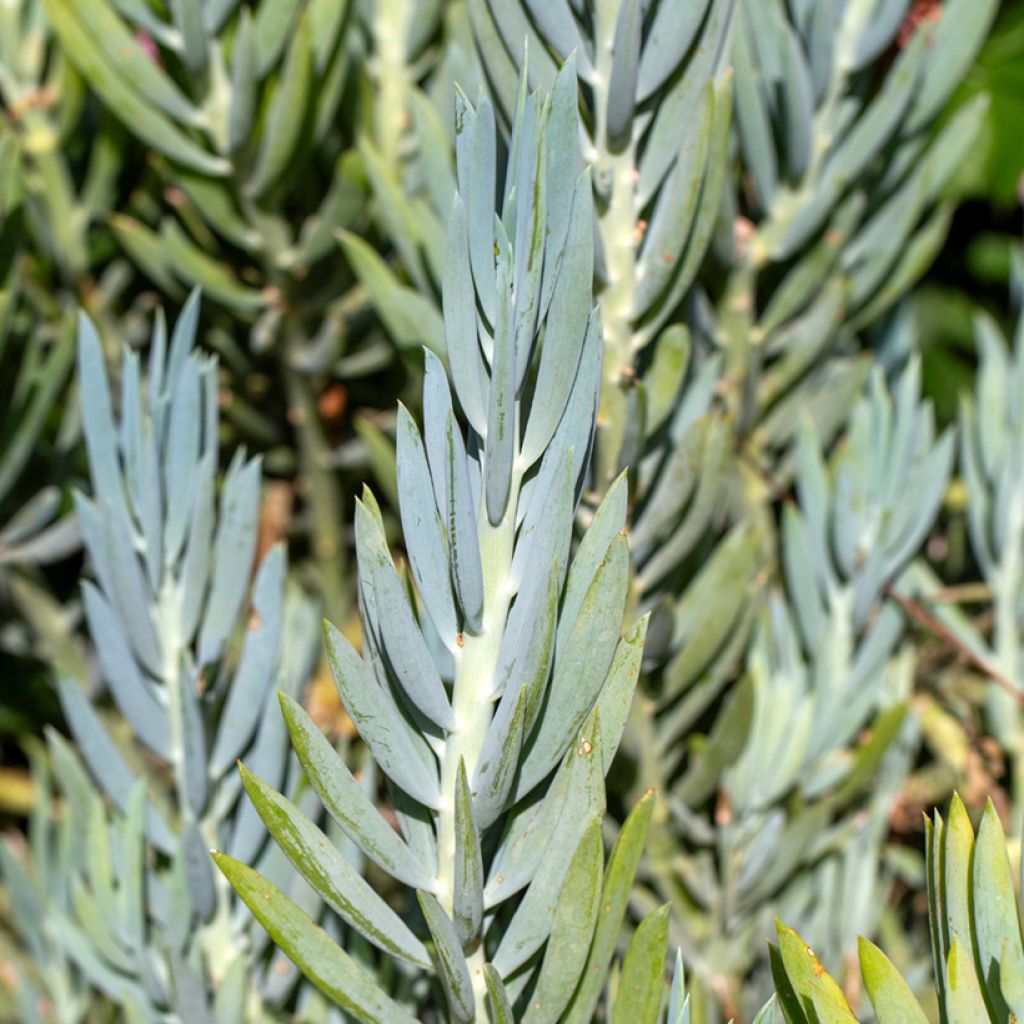
Senecio ficoides - Curio ficoides
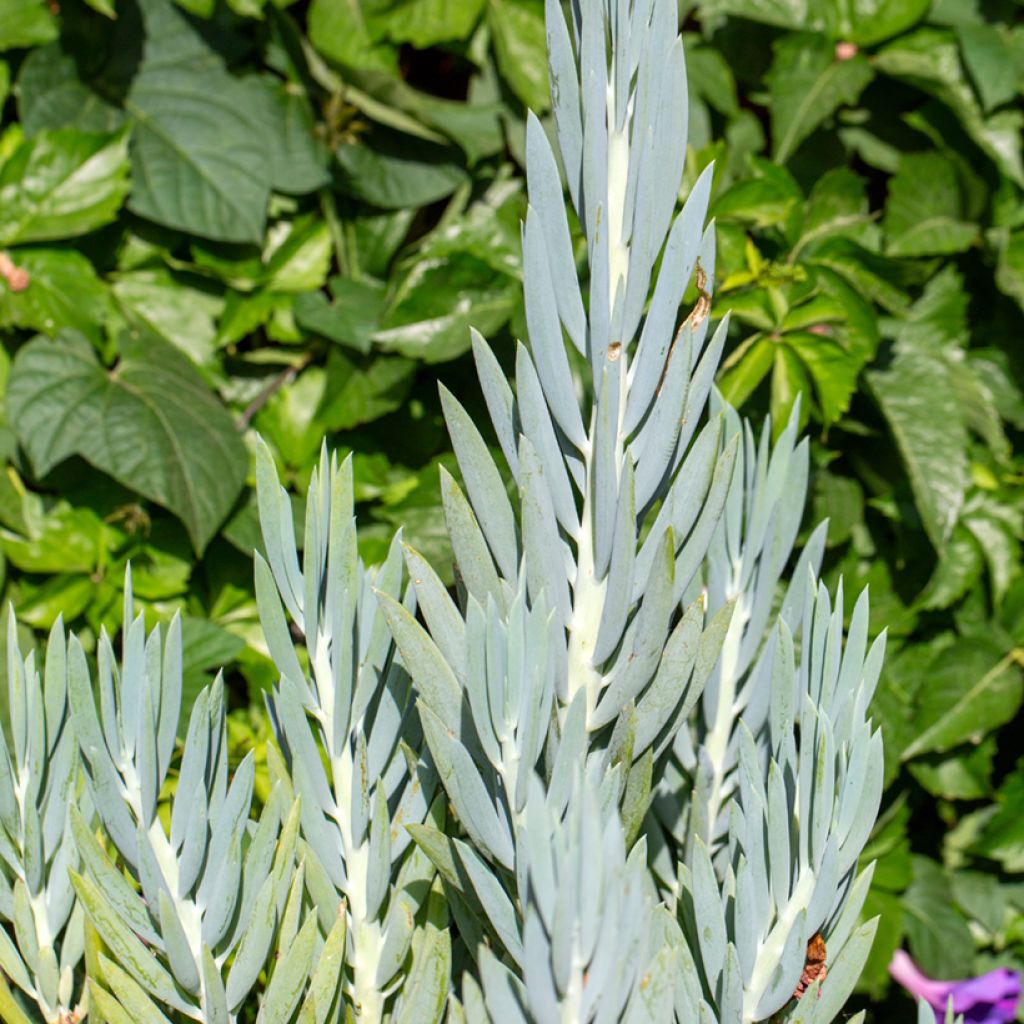
Senecio ficoides - Curio ficoides
Senecio ficoides - Curio ficoides
Senecio ficoides
Skyscraper senecio, Mount Everest senecio, flat-leaved senecio
Back-to-school special offer!
Get €10 off for every €50 you spend! And get up to €40 off on a single order.
How does it work?
1. Shop your favourites
Add your favourite plants to your basket. For every €50 you spend (excluding delivery charges, store credit and the plastic-free option), you’ll receive a €10 voucher.
€50 spent = €10 voucher
€100 spent = €20 voucher
€150 spent = €30 voucher
€200 spent = €40 voucher
2. Place your order
Once your basket reaches one of the spending thresholds, place your order. You can even choose your delivery date!
3. Receive your voucher
As soon as your order has been shipped, you’ll receive an email containing your personal voucher code and its value.
4. Use it on your next order
Your voucher is valid for 90 days from the date you receive it. It can be used once only, on a new order worth at least the value of the voucher, excluding delivery charges.
Please note: Vouchers can be combined with other offers, but cannot be split or refunded.
Home or relay delivery (depending on size and destination)
Important: You may be charged customs duties by your country’s customs authorities upon delivery.
Schedule delivery date,
and select date in basket
This plant carries a 24 months recovery warranty
More information
We guarantee the quality of our plants for a full growing cycle, and will replace at our expense any plant that fails to recover under normal climatic and planting conditions.
Would this plant suit my garden?
Set up your Plantfit profile →
Description
Senecio ficoides is a succulent bush native to South Africa. Valued for its distinctive blue-green foliage and slender silhouette, this frost-sensitive yet drought-resistant species adds a contemporary and exotic touch to Mediterranean gardens. It thrives in rockeries but also in large pots, allowing gardeners in colder climates to overwinter it indoors.
Senecio ficoides, also known as Curio ficoides, belongs to the Asteraceae family. Native to the coastal regions of South Africa, particularly the Eastern and Western Cape, this species grows mainly on rocky slopes and exposed cliffs, where it forms dense colonies. It is also found in the Klein Karoo region and extends eastwards to the area around East London. Curio ficoides is an upright succulent bush, reaching a height of 0.5 to 1 m with a spread of 2 to 3 m (when planted in the ground). Its succulent, greyish stems are fragile and emit a resinous scent when damaged. The alternate leaves, spaced about 5 to 20 mm apart, are linear, sickle-shaped, laterally flattened, and measure 8 to 15 cm in length with a thickness of 6 to 12 mm. They feature translucent striations along their length and end in a rigid tip. The leaf surface is covered with a powdery bloom, giving them their characteristic blue-green to grey-blue hue.
Flowering, though subtle, occurs between June and October, depending on the climate. Terminal inflorescences, measuring 10 to 18 cm in length, bear cylindrical heads 12 to 15 mm long and 4 to 5 mm in diameter. The flower heads consist of 9 to 12 white tubular florets, with prominent brownish-purple styles and stigmas.
Senecio ficoides has a shallow root system adapted to the rocky, well-drained soils of its natural habitat. Its growth is relatively fast for a succulent, especially under optimal conditions. In cultivation, it is important to avoid overwatering, as excess moisture can lead to root rot.
Highly frost-sensitive Senecio ficoides can only be grown outdoors in the narrow coastal strip of the Mediterranean, known as the orange-growing zone. In this region, it is used as ground cover or in large rockeries. It pairs well with Calocephalus brownii, Centaurea pulcherrima, and Delosperma, for example. It is easy to grow in a large pot elsewhere. The key is to ensure good drainage at the bottom of the pot and provide very light, well-draining soil. In this case, summer watering will be particularly appreciated by the plant. Remember to store it frost-free in winter, in a bright, airy, cool space, while significantly reducing watering.
Report an error about the product description
Senecio ficoides - Curio ficoides in pictures
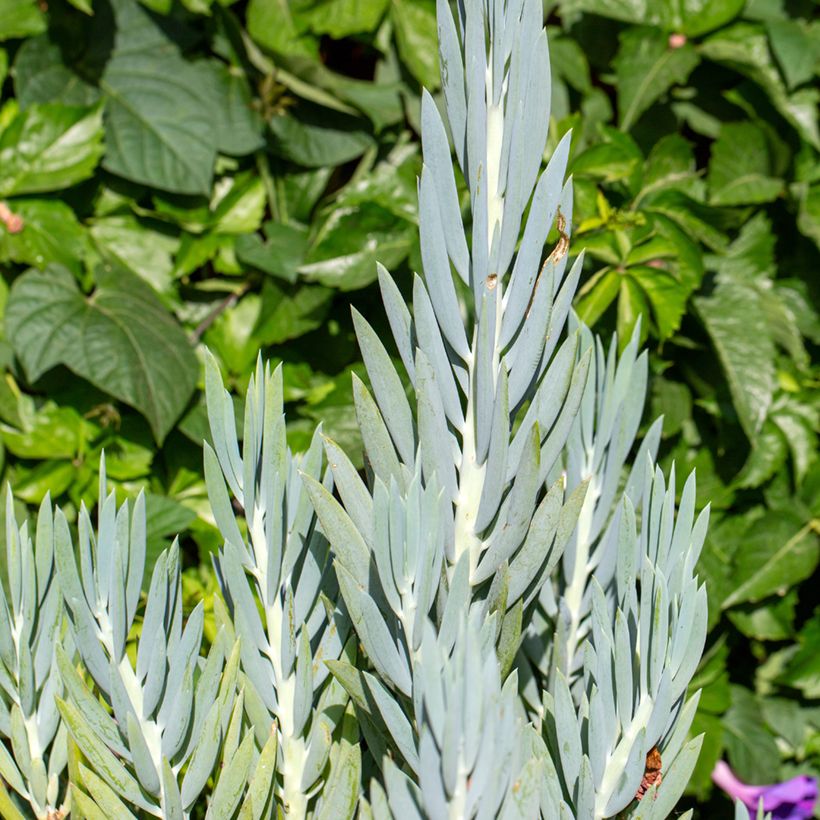
Plant habit
Flowering
Foliage
Botanical data
Senecio
ficoides
Asteraceae
Skyscraper senecio, Mount Everest senecio, flat-leaved senecio
Curio ficoides, Kleinia ficoides, Cacalia ficoides, Senecio ficoides
South Africa
Planting and care
Plant Senecio ficoides in spring, after the last frosts, directly in the ground in very mild climates or in a large pot elsewhere. Place it in very well-draining soil, possibly mixing coarse sand, gravel, or pumice into your garden soil. Choose a sheltered, warm, very sunny to partially shaded spot. Generous watering in summer, in dry and hot climates, will stimulate its growth. Native to South Africa, it tolerates drought periods quite well, especially in winter.
Senecio ficoides is well-suited to pot cultivation, allowing it to be protected from cold in winter and better control its water needs. Choose a pot with drainage holes to ensure good drainage and use a well-draining substrate, composed of a mix of light potting soil with sand or perlite. Place the plant in a very bright location, ideally in full sun or near a well-exposed window if grown indoors. Water moderately, allowing the substrate to dry out completely between waterings to avoid any risk of root rot. In winter, reduce watering to the bare minimum, especially if the plant is placed in a cool room. Feeding with succulent fertiliser in spring and summer will promote balanced growth. When the plant becomes too large, repotting every two to three years is recommended to refresh the substrate and provide more space for the roots. Finally, in cold climates, bring the pot indoors to a sheltered spot as soon as temperatures approach 0°C, as this species cannot tolerate prolonged frost.
Planting period
Intended location
Care
Planting & care advice
-
-
-
-
-

-
-
-
This item has not been reviewed yet - be the first to leave a review about it.
Recently viewed products
Haven't found what you were looking for?
Hardiness is the lowest winter temperature a plant can endure without suffering serious damage or even dying. However, hardiness is affected by location (a sheltered area, such as a patio), protection (winter cover) and soil type (hardiness is improved by well-drained soil).

The flowering period indicated on our website applies to countries and regions located in USDA zone 8 (France, the United Kingdom, Ireland, the Netherlands, etc.)
It will vary according to where you live:- In zones 9 to 10 (Italy, Spain, Greece, etc.), flowering will occur about 2 to 4 weeks earlier.
- In zones 6 to 7 (Germany, Poland, Slovenia, and lower mountainous regions), flowering will be delayed by 2 to 3 weeks.
- In zone 5 (Central Europe, Scandinavia), blooming will be delayed by 3 to 5 weeks.
In temperate climates, pruning of spring-flowering shrubs (forsythia, spireas, etc.) should be done just after flowering.
Pruning of summer-flowering shrubs (Indian Lilac, Perovskia, etc.) can be done in winter or spring.
In cold regions as well as with frost-sensitive plants, avoid pruning too early when severe frosts may still occur.
The planting period indicated on our website applies to countries and regions located in USDA zone 8 (France, United Kingdom, Ireland, Netherlands).
It will vary according to where you live:
- In Mediterranean zones (Marseille, Madrid, Milan, etc.), autumn and winter are the best planting periods.
- In continental zones (Strasbourg, Munich, Vienna, etc.), delay planting by 2 to 3 weeks in spring and bring it forward by 2 to 4 weeks in autumn.
- In mountainous regions (the Alps, Pyrenees, Carpathians, etc.), it is best to plant in late spring (May-June) or late summer (August-September).
The harvesting period indicated on our website applies to countries and regions in USDA zone 8 (France, England, Ireland, the Netherlands).
In colder areas (Scandinavia, Poland, Austria...) fruit and vegetable harvests are likely to be delayed by 3-4 weeks.
In warmer areas (Italy, Spain, Greece, etc.), harvesting will probably take place earlier, depending on weather conditions.
The sowing periods indicated on our website apply to countries and regions within USDA Zone 8 (France, UK, Ireland, Netherlands).
In colder areas (Scandinavia, Poland, Austria...), delay any outdoor sowing by 3-4 weeks, or sow under glass.
In warmer climes (Italy, Spain, Greece, etc.), bring outdoor sowing forward by a few weeks.
Shipping country and language
Your country of residence may be:
Your country of residence is:
For a better user experience on our website, you can select:
Your shipping country:
-
 Austria
-
 Belgium
-
 Bosnia & Herzegovina
-
 Bulgaria
-
 Croatia
-
 Cyprus
-
 Czechia
-
 Denmark
-
 Estonia
-
 Finland
-
 France
-
 Germany
-
 Greece
-
 Hungary
-
 Iceland
-
 Ireland
-
 Italy
Italy
-
 Latvia
-
 Liechtenstein
-
 Lithuania
-
 Luxembourg
-
 Malta
Malta
-
 Netherlands
-
 Poland
-
 Portugal
-
 Romania
-
 Serbia
-
 Slovakia
-
 Slovenia
-
 Spain
Spain
-
 Sweden
-
 Switzerland
Language:
-
French
-
 English
-
Spanish
-
Italian
-
German
-
Portuguese
-
Dutch
-
Finnish
My Account
Hello
My wish lists
My cart
Log in / Register
Existing customer?
This form is protected by reCAPTCHA - the Google Privacy Policy and Terms of Service apply.
New customer?
Create an account to track your orders, access our customer service and, if you wish, make the most of our upcoming offers.