





























Associating Arums
6 ideas for garden or terrace combinations
Contents
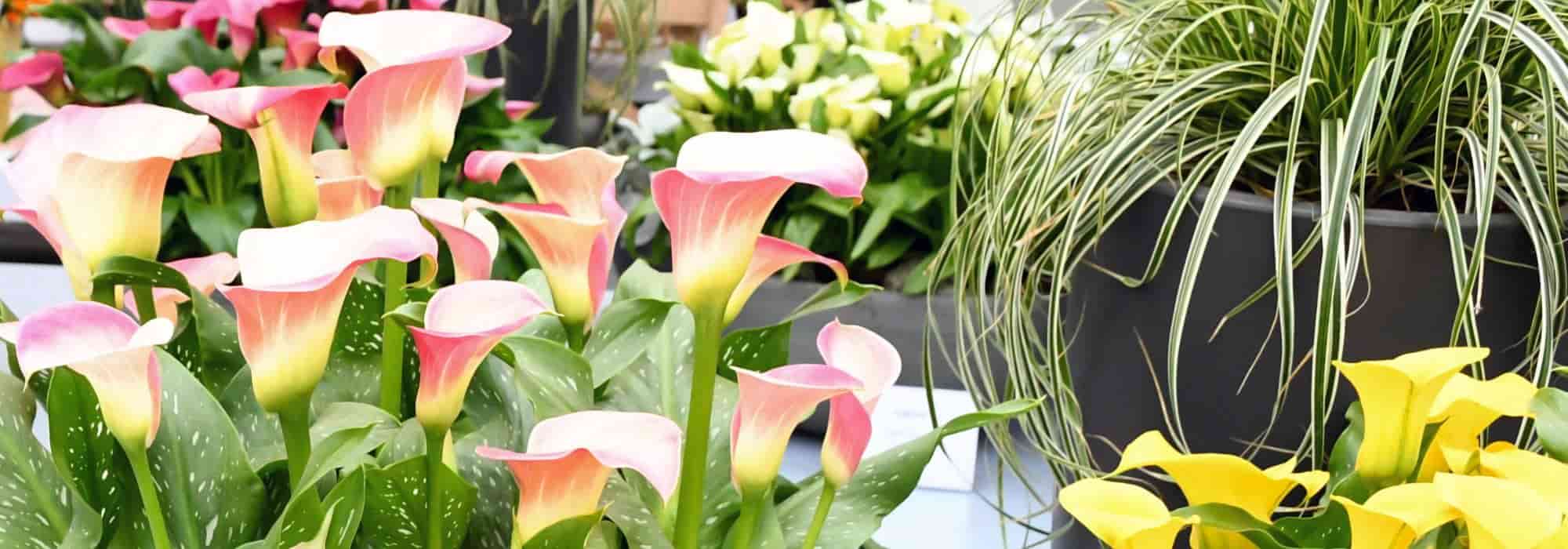
The Arums, also known as “Calla”, are highly valued for their long summer flowering, featuring admirable funnel-shaped flowers in white, yellow, pink, orange, or purple, almost black depending on the variety. Ranging from 30 cm to 1.50 m in height depending on the cultivar, they add a touch of exoticism with their lush green foliage, sometimes speckled with white. Not very hardy, arums require a bit of care, but they reward the gardener with their beauty. Discover our ideas for pairing Arums in the garden or in pots on the terrace.

By the water
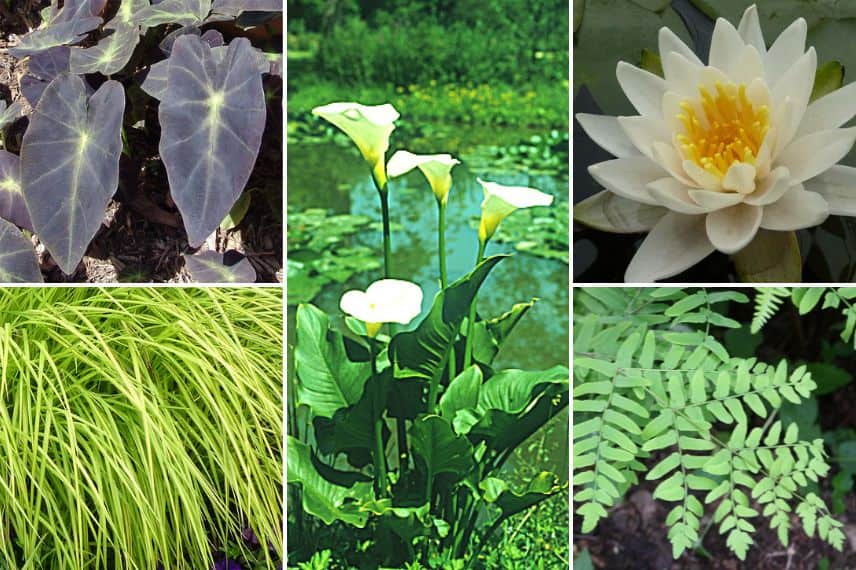
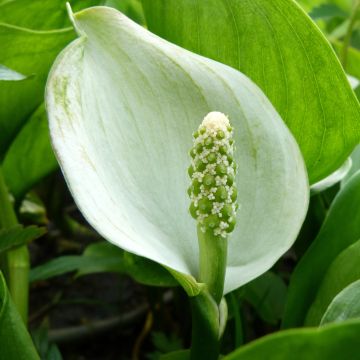
One thing is certain: arums love moisture, especially in summer! So much so that they thrive at the edge of a pond, with their feet (or rather their roots) in water. With its beautiful foliage and exotic flowers, the arum will enhance a marshy area or a pond.
On the banks of a shore, we will plant alongside it a Colocasia ‘Black magic’ for its large, lush leaves, which are a very dark, almost black, plum-blue colour, to create a lovely contrast. We will also vary the shapes of the foliage by planting a fern, a gunnera, a Carex elata ‘Aurea’, or a variegated Japanese sweet flag. For flowers, we will install bulbs of Iris pseudacorus or ‘versicolor’, candelabra primroses, Sisyrinchium striatum, and an Astilbe. For an exotic atmosphere, we will plant cannas, a Papyrus, and a bamboo nearby. In the water, we will place lovely aquatic plants, such as beautiful water lilies, Acorus calamus ‘Variegatus’ with upright, variegated foliage, a flowering Butomus, and a water clover.
Read also
Choosing an ArumOn a a terrace or a balcony
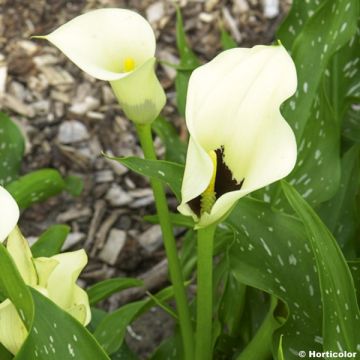
With their sophisticated flowers and lush leaves, arums are unmatched for decorating a terrace or balcony. Moreover, pot cultivation allows this tender perennial to be sheltered during the long winter months, waiting for the return of spring. For small containers, dwarf varieties are preferred, with white flowering in the White Arum or colourful options like the Zantedeschia ‘Rehmanii’, a bright pink-flowered arum.
They can be paired with the blue of nepetas, a hardy geranium ‘Rozanne’, a Agapanthus ‘Navy Blue’, as well as a lavender or a Veronica ‘Silbersee’ for their silver foliage. Among annuals, consider Violas, Myosotis, Ageratums for their lavender-blue tufted flowers, and climbing sweet peas. Then, add a few perennials or annuals with white, yellow, or pink flowers to echo the arum’s blooms, such as a bush sage, white Agapanthus, a Roman chamomile for its golden heart, or a Arabis caucasica ‘Variegata’.
To enhance the overall effect, incorporate some brightness with an Ipomoea ‘Sweet Caroline Light Green’ or a Lysimachia nummularia ‘aurea’ for their golden foliage. In a large container, you can install flowering shrubs, such as a Rhododendron ‘Blue Silver’ or a Hydrangea ‘Hovaria Hopcorn’ for its blue or pink panicles in the ‘Avelroz’ variety.
→ Discover our tips for growing an arum in a pot.
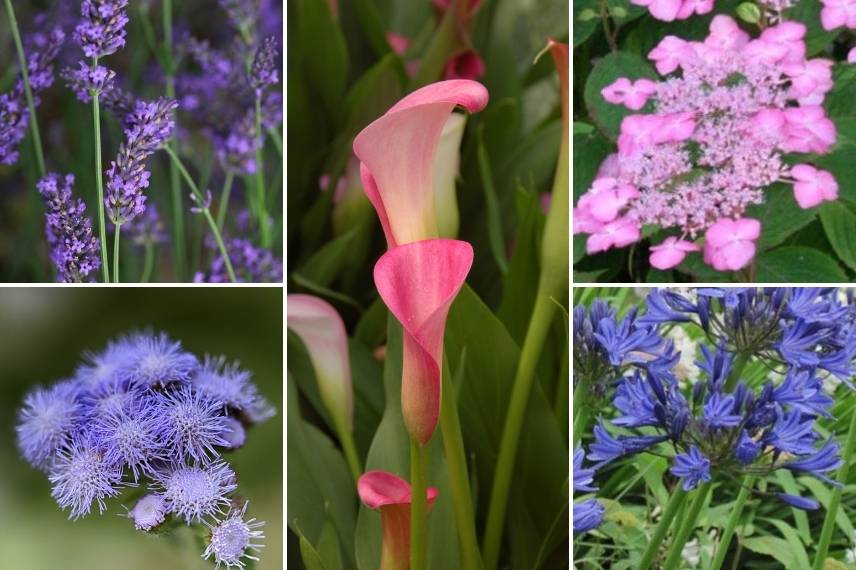
lavender, Ageratum, Pink Calla ( Zantedeschia ‘Rehmanii’), hydrangea ‘Avelroz’ and Agapanthus ‘Navy Blue’
Discover other Arums
View all →
Available in 0 sizes
Available in 0 sizes
Available in 0 sizes
Available in 3 sizes
Available in 1 sizes
Available in 1 sizes
Available in 1 sizes
Available in 1 sizes
Available in 1 sizes
Available in 1 sizes
In an exotic garden
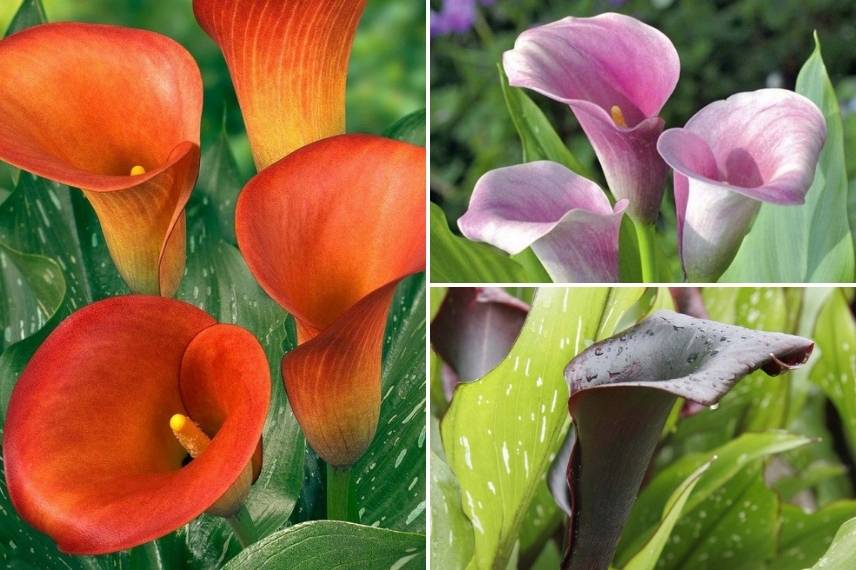
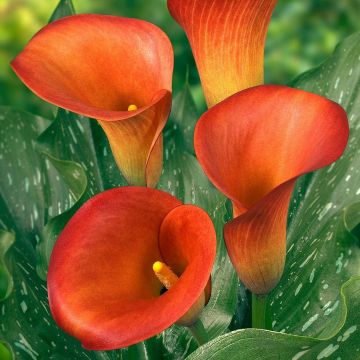
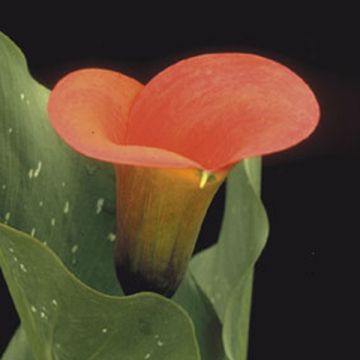
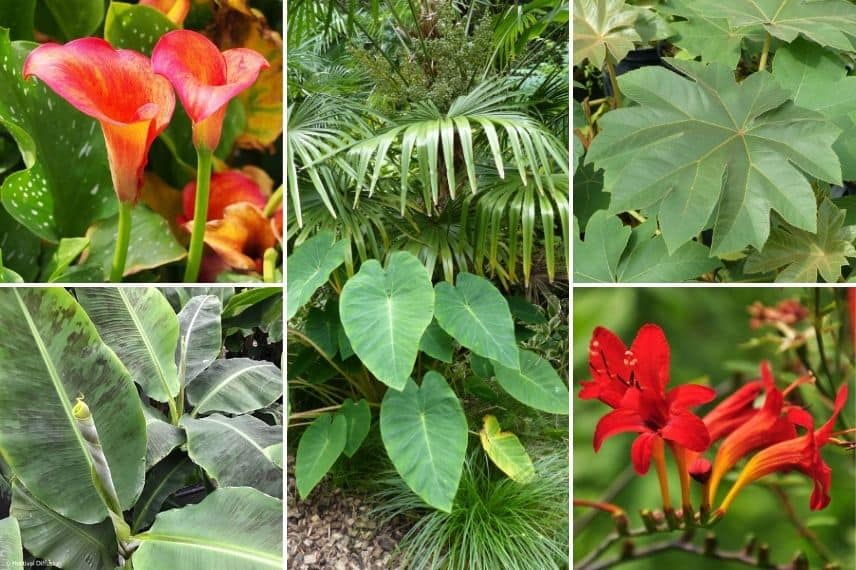
With its lush foliage and cone-shaped flowers, the arum will naturally find its place in an exotic garden. In a pot or a colourful border, one might dare to choose a variety with warm colours like orange in Calla ‘Mango’ or Arum ‘Captain Trinity’. They will pair wonderfully with Iris, the stunning Chocolate Cosmos with its surprising cocoa scent, and the purple pom-poms of Knautia macedonica. To keep it company, one can install other exotic-looking plants, such as a Japanese Aralia, a colocasia, a banana plant, a Tetrapanax papyrifera ‘Rex’, a palm tree, a tree fern, and a Gunnera for their spectacular foliage. We will add colour with the original blooms of an Crocosmia masoniorum, a few Kniphofias, Hedychiums, a Canna ‘Angelique’, and a Watsonia. To add verticality, a Dracaena or a New Zealand flax will provide a lovely contrast with their narrow, colourful, upright leaves.
Read also
Growing arums in potsIn a white and pink garden
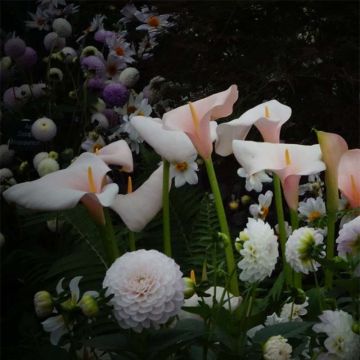
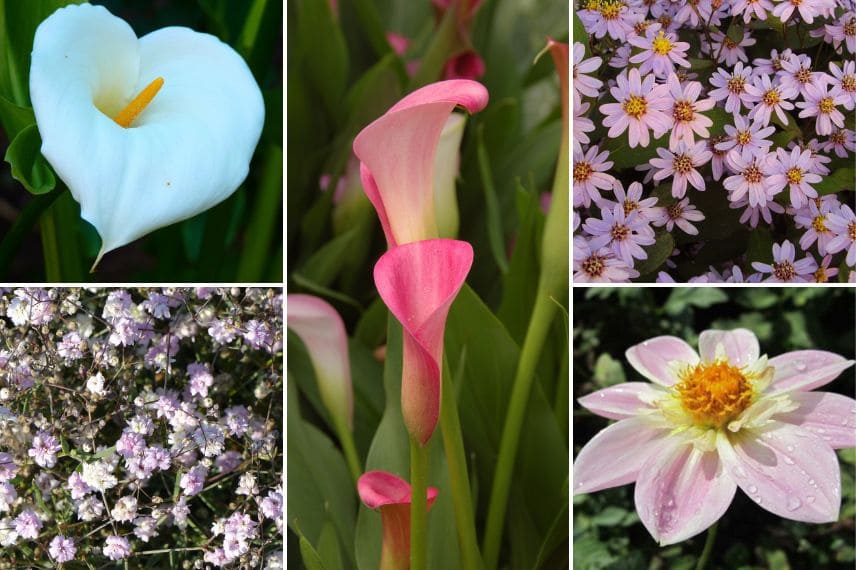
With its conical, graceful, and graphic flower, the White Arum will naturally find its place in a palette of pink and white, creating a romantic atmosphere in the garden. It can, of course, be paired with its pink counterpart: the sumptuous Zantedeschia Rehmanii. To accompany them, consider the Collarette Dahlia ‘Impression Famoso’ for its long pale pink flowering or the graceful Astrantias. A hardy geranium ‘Chantilly’ will blend into this setting with its porcelain-like pale pink flowers. In the same powdery pink shades, an Aster ‘Harry Schmidt’ will extend the flowering into autumn. In this enchanting decor, don’t forget the traditional climbing rose and the Gypsophila ‘Rosenschleier’ to add lightness.
In a contemporary garden
With its graphic silhouette, the white arum is the symbol of elegance in contemporary gardens. This unique charm is also found in its version with purple, almost black flowers: the ‘Schwartzwalder’ Arum. Its clean lines will be enhanced alongside trimmed boxwoods shaped into balls or low hedges. We will add some roundness with a few bulbs of ornamental garlic ‘Mount Everest’, an Agapanthus africanus ‘Albus’, and a Hydrangea arborescens ‘Annabelle’. For a perfect scene, we will slightly soften these strict lines by introducing a bit of lightness with one or more grasses, such as the opulent Hakonechloa macra, a Stipa tenuifolia, or a Calamagrostis ‘Karl Foerster’. In the background of the bed or as a standalone, a Cornus controversa ‘Variegata’ will attract attention with its original habit and lovely variegated foliage. We will punctuate the scene with light touches of colour thanks to the purple blooms of an Oriental hellebore ‘Slaty Blue’, a Digitalis ‘Pam’s Split’, and a Heuchera ‘Black Beauty’.
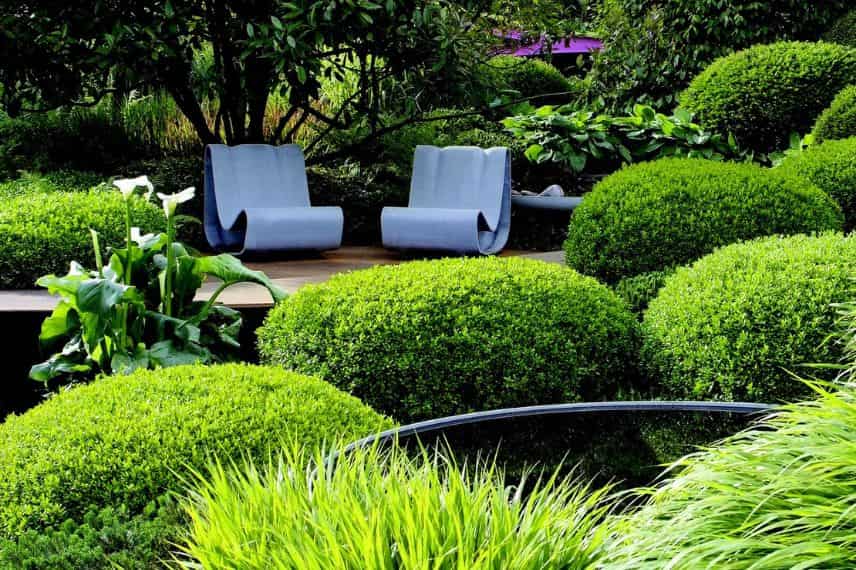
A contemporary garden: White arum, balls of boxwood, and Hakonechloa macra in the foreground
In a Japanese garden
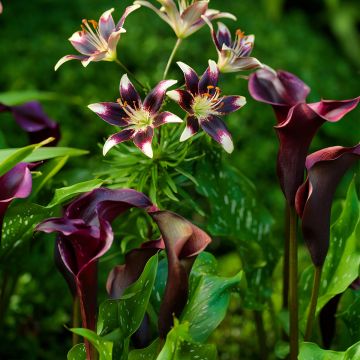
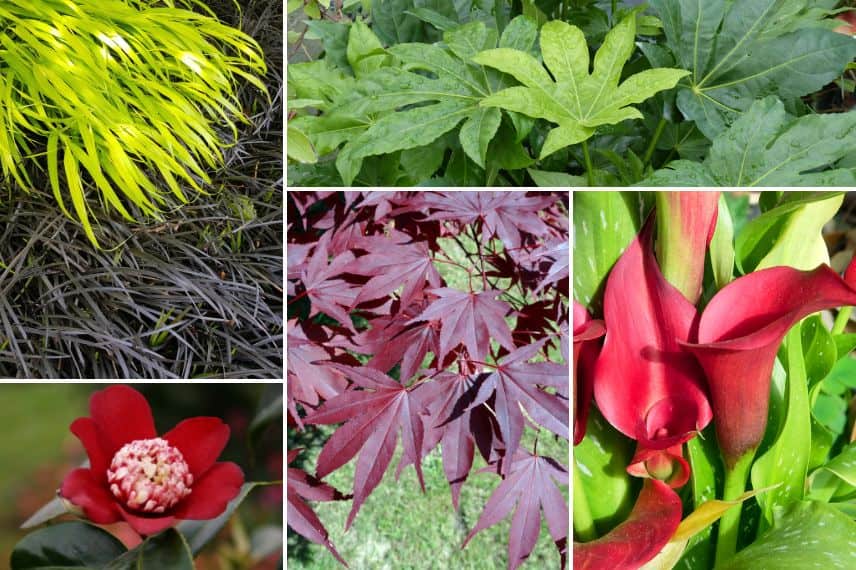
Callas will naturally find their place in a Japanese garden or semi-shaded area, particularly the Black Calla for its dark purple flowering or the variety ‘Red alert’ with its raspberry hue. These vibrant notes are reminiscent of the iconic foliage of Japanese Maples. To create harmony, pair shades of purple, black, and soft green. Alternate grasses in both green tones from Hakonechloa and black in certain varieties of Ophiopogon. A Fatsia Japonica will provide stunning exotic foliage, highly dissected. A fern will also be a must-have in this Asian-inspired decor. The Astilbe ‘Chocolate Shogun’ will stand out in this setting, with its white inflorescences above its magnificent chocolate foliage. If your soil is rather acidic or humus-bearing, you can also plant a stunning Japanese Azalea for its abundant spring flowering or a Camellia in neutral to acidic soil.
For further reading
Note: Pay particular attention if you have children or pets, as all parts of the arum are toxic.
- Find all our varieties of Arums
- To learn everything, browse our sheet on arum: planting, growing and maintaining.
- Subscribe!
- Contents
Comments