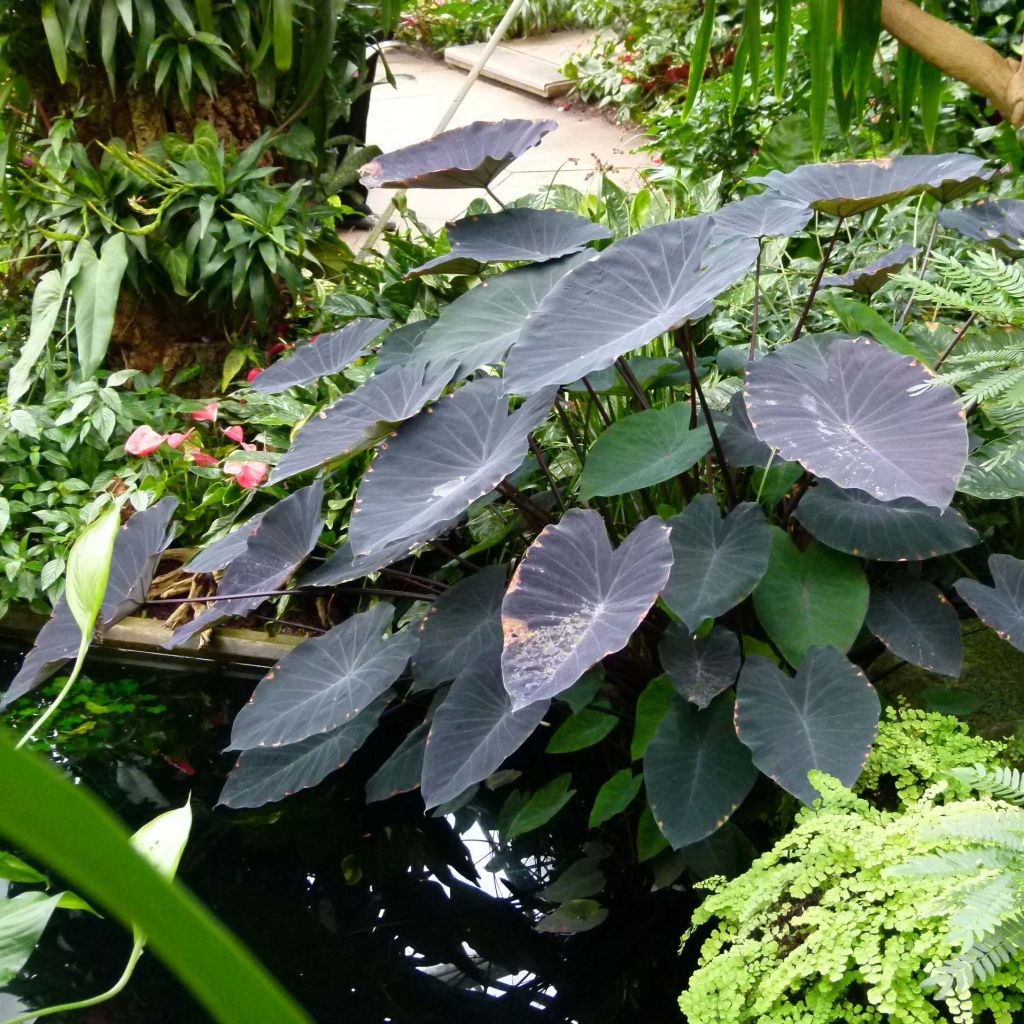
Colocasia esculenta Black magic
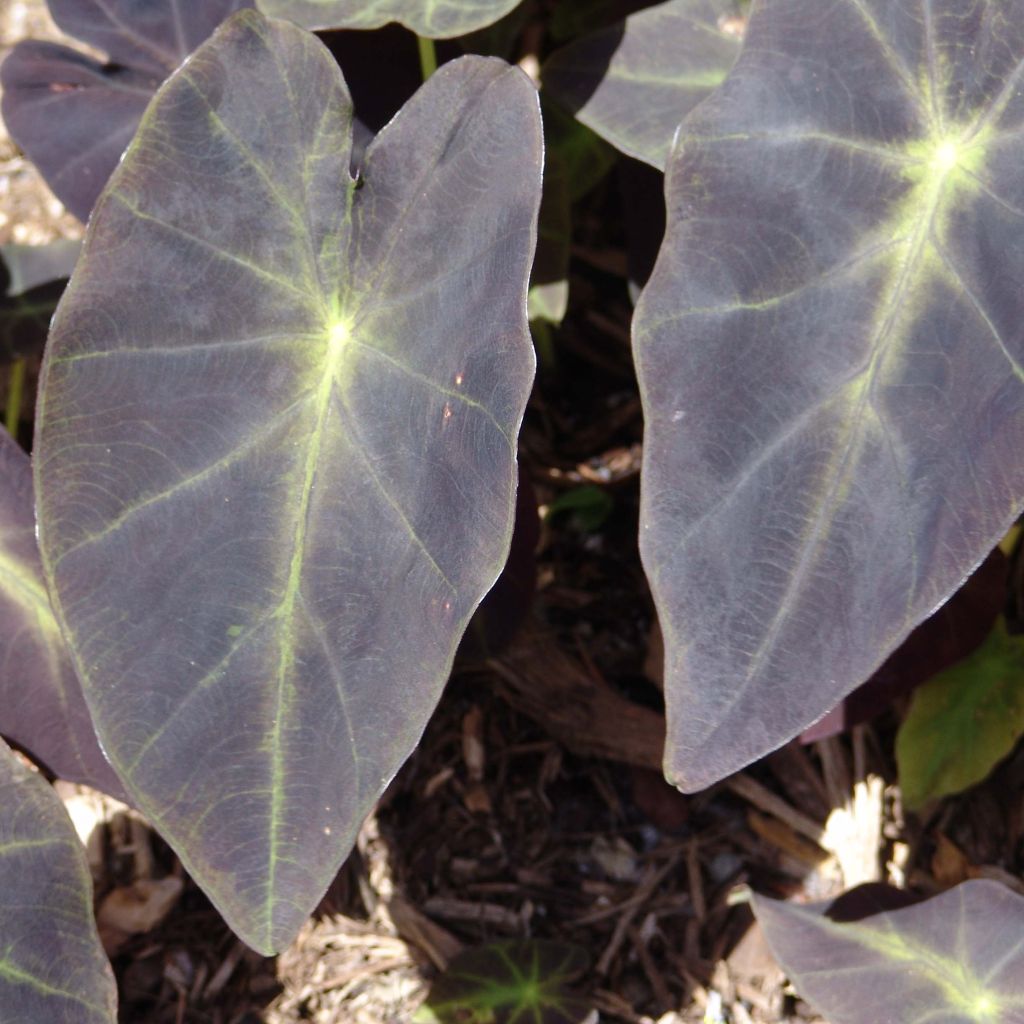
Colocasia esculenta Black magic
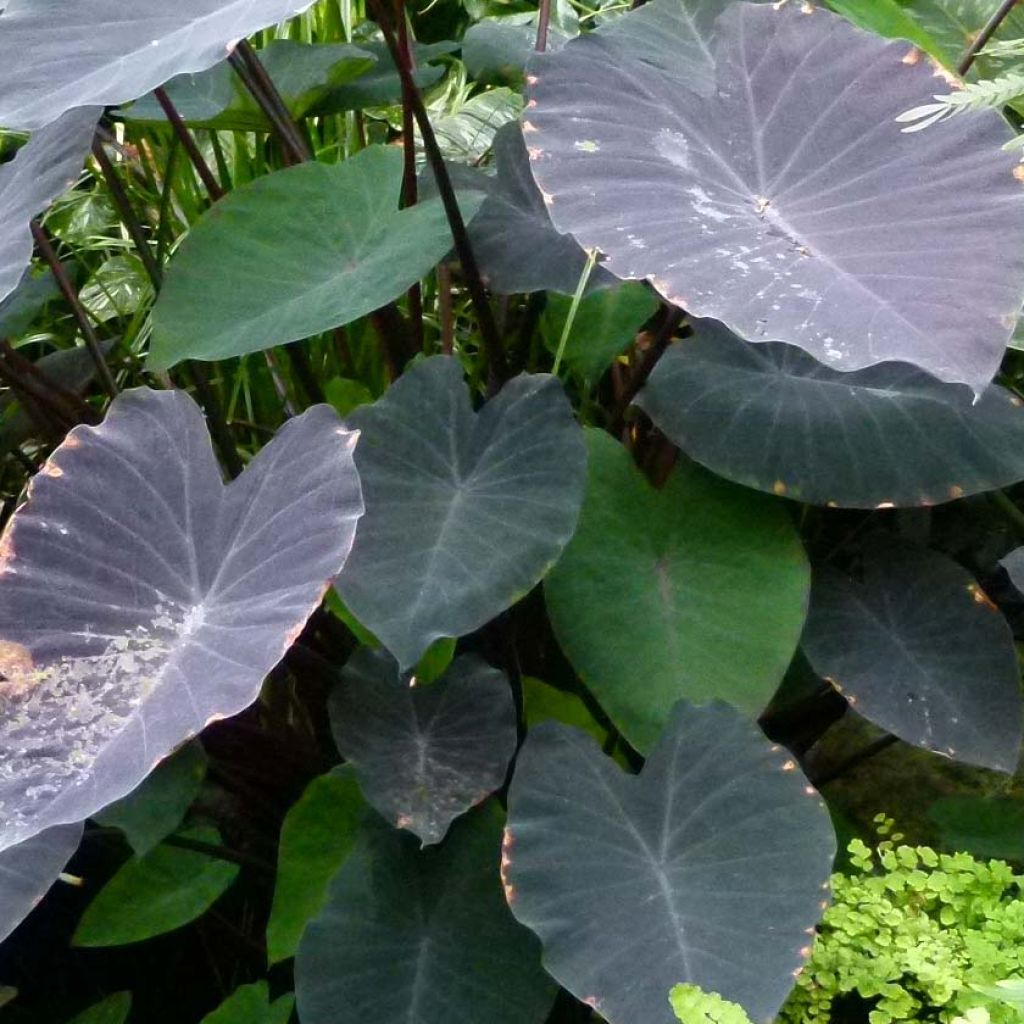
Colocasia esculenta Black magic
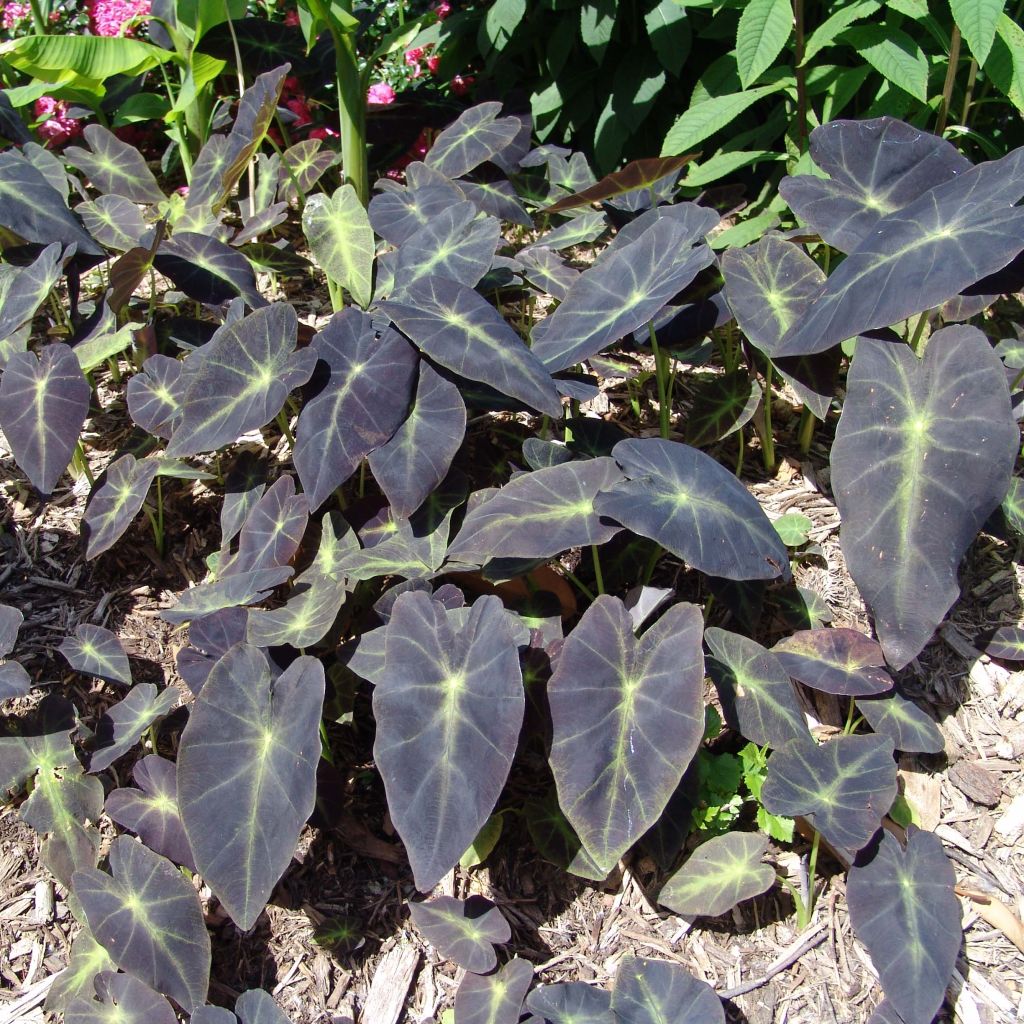
Colocasia esculenta Black magic
Colocasia esculenta Black magic
Colocasia x esculenta Black magic
Taro, Elephant Ear, Cocoyam, Eddo, Dasheen
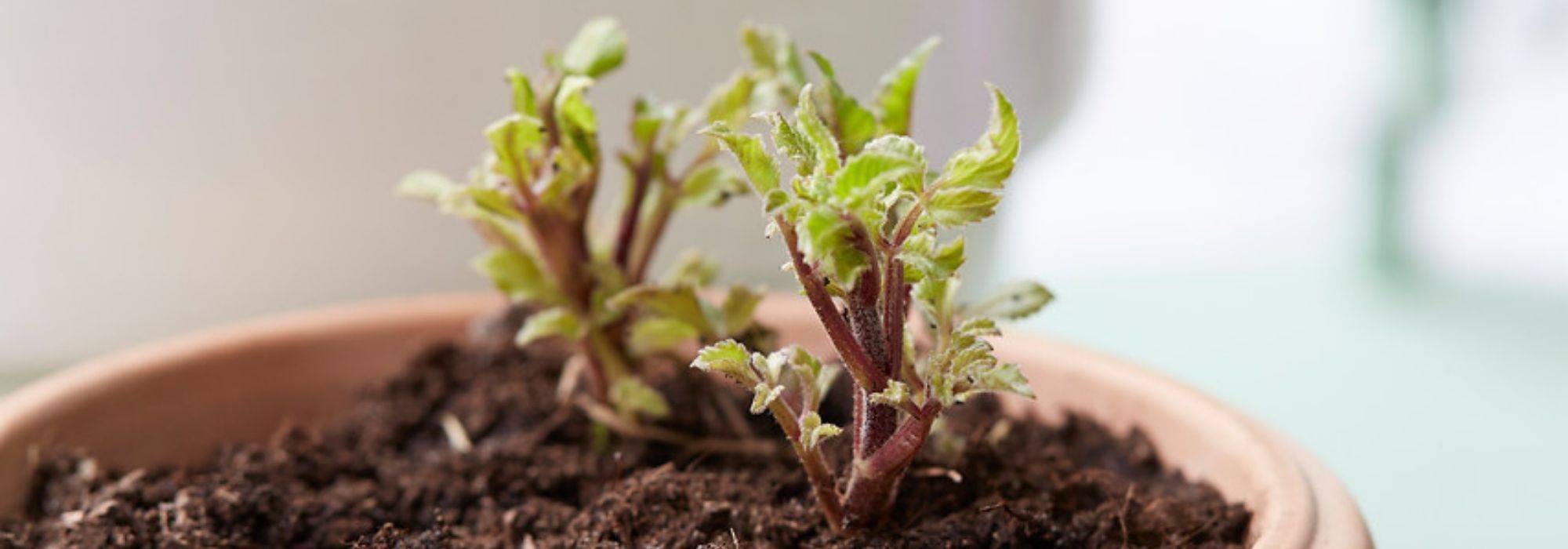
With the colocasia, you need to be very, very patient and to grow it with extreme care, especially when it comes to watering. Monitor the temperature. After 3 attempts and 3 years, the young plant is developing well in a pot while waiting to be planted in the ground.
GUY, 11/08/2025
Back-to-school special offer!
Get €10 off for every €50 you spend! And get up to €40 off on a single order.
How does it work?
1. Shop your favourites
Add your favourite plants to your basket. For every €50 you spend (excluding delivery charges, store credit and the plastic-free option), you’ll receive a €10 voucher.
€50 spent = €10 voucher
€100 spent = €20 voucher
€150 spent = €30 voucher
€200 spent = €40 voucher
2. Place your order
Once your basket reaches one of the spending thresholds, place your order. You can even choose your delivery date!
3. Receive your voucher
As soon as your order has been shipped, you’ll receive an email containing your personal voucher code and its value.
4. Use it on your next order
Your voucher is valid for 90 days from the date you receive it. It can be used once only, on a new order worth at least the value of the voucher, excluding delivery charges.
Please note: Vouchers can be combined with other offers, but cannot be split or refunded.
Home or relay delivery (depending on size and destination)
Important: You may be charged customs duties by your country’s customs authorities upon delivery.
Schedule delivery date,
and select date in basket
This plant carries a 12 months recovery warranty
More information
We guarantee the quality of our plants for a full growing cycle, and will replace at our expense any plant that fails to recover under normal climatic and planting conditions.

Would this plant suit my garden?
Set up your Plantfit profile →
Description
Colocasia esculenta 'Black Magic', also known as Elephant's Ear or Taro, is a spectacular variety. Forming a lush clump with the appearance of a tropical plant, it is simply stunning, draped in ample pleated foliage in a very dark, almost black, plum colour. This amazingly hardy perennial can be grown as an indoor plant or in the garden with winter protection, in fertile, moist to damp soil, in full sun or partial shade.
Originating from India, the Colocasia esculenta, also known as Edible Taro, has long since spread to tropical regions of South America and Oceania, and later to tropical Africa. This rhizomatous perennial plant is a cousin of Arums and Ipomoeas, and belongs to the Araceae family. The 'Black Magic' cultivar is an imposing herbaceous perennial plant, developing from a tuberous rhizome, forming a scaly corm covered with thick skin. The mature plant will reach an average height of 1.6m (5ft) and a diameter of 1.2m (4ft) and consists of magnificent, elongated heart-shaped, violet to dark purple leaves, covered with a bluish bloom. The leaf blade can reach 70cm (28in) in length and 50cm (20in) in width, carried by a long black to violet petiole, sheathing at the base. The leaf surface allows water to slide off with its good water-repellent properties. During its growth, the plant branches out from the base, which allows it to remain compact. If you remove an old leaf, two new ones take its place.
In the garden or indoors, Colocasia 'Black Magic' is easy to grow. It enjoys a sunny or partially shaded exposure and proves hardy down to -8/-10°C (17.6/14°F) under a thick protective mulch, quite an achievement for a tropical plant! It stands out as a focal point in a contemporary or exotic setting, whether planted on a terrace in a large container or on the edge of a pond. This voracious plant gets along well with Arums, banana plants, or tree ferns, whose magnificence recalls ancient forests.
Taro is consumed in Africa, China, Polynesia, and several other parts of the world. Its tubers are rich in starch, and its young leaves are eaten like spinach.
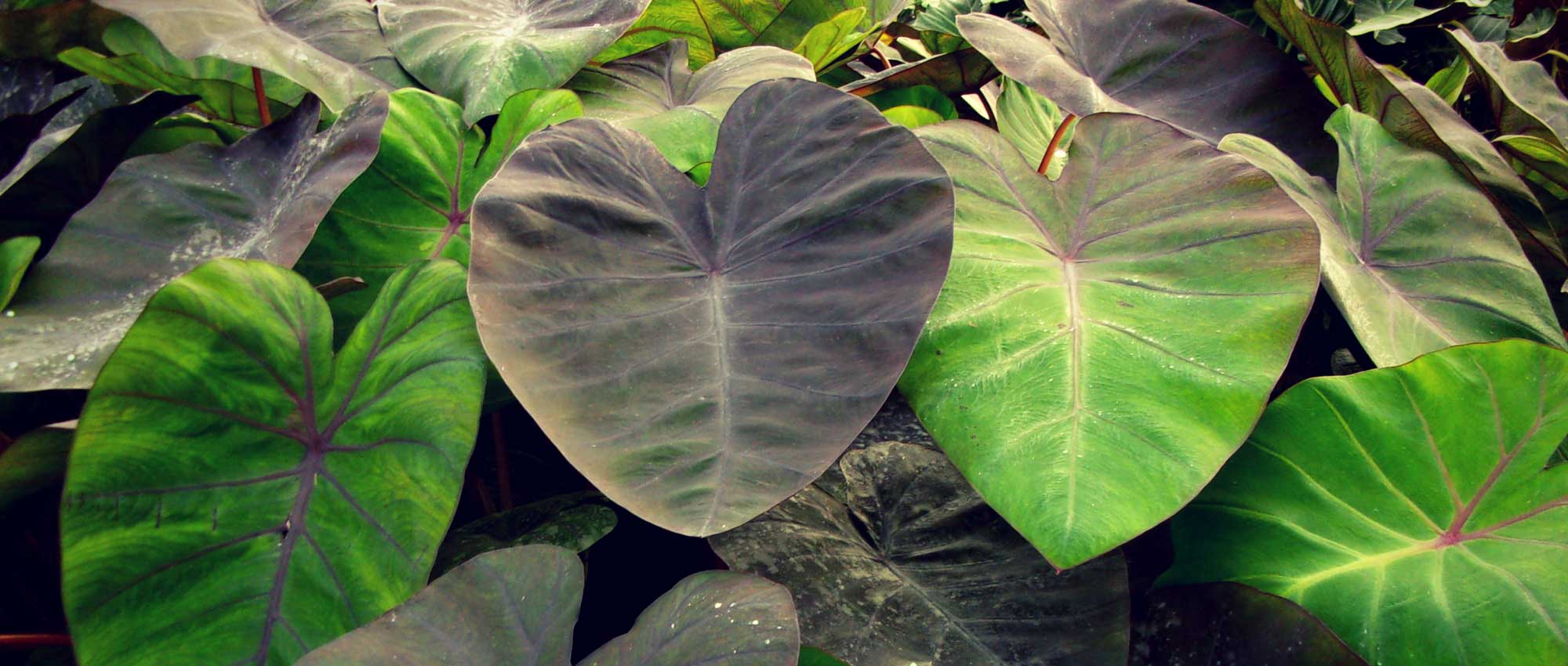
Colocasia esculenta Black magic in pictures
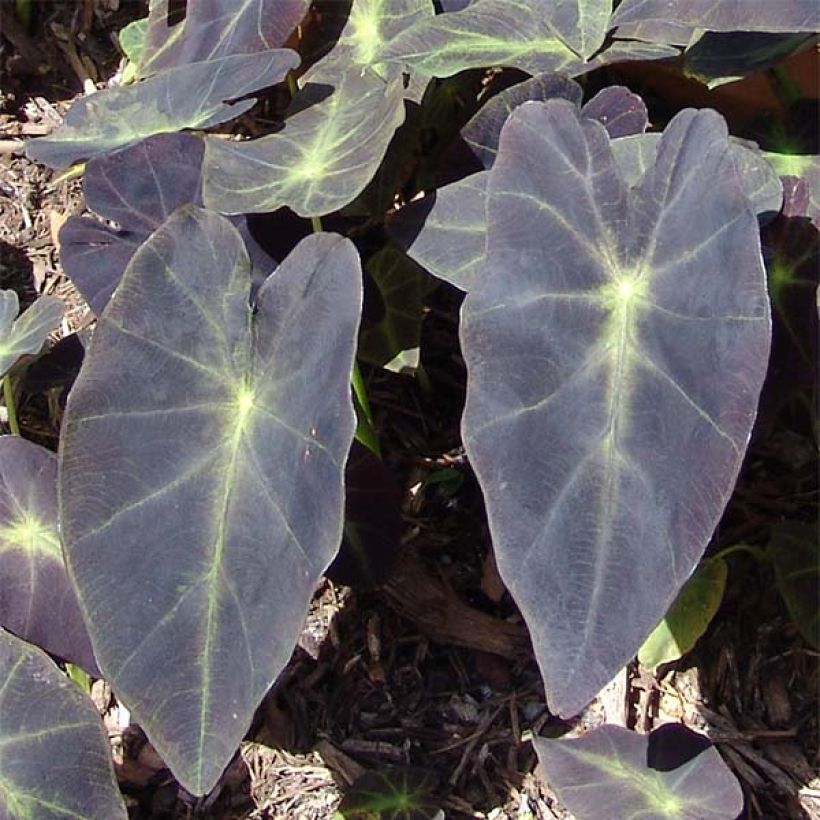
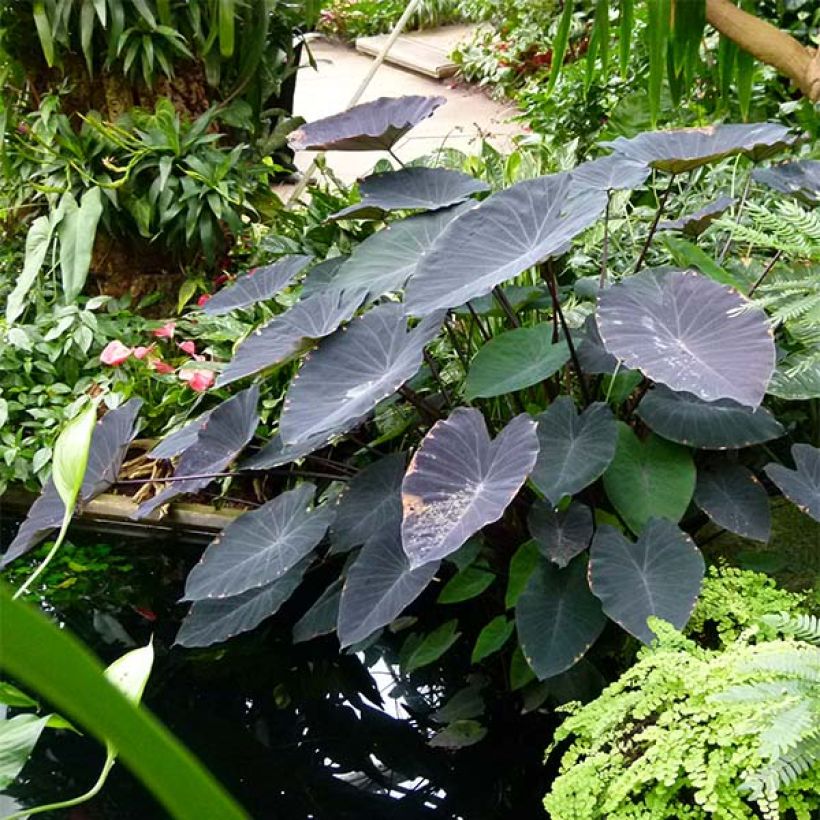
Flowering
Foliage
Plant habit
Safety measures
Botanical data
Colocasia
x esculenta
Black magic
Araceae
Taro, Elephant Ear, Cocoyam, Eddo, Dasheen
Cultivar or hybrid
atteintescutaneomuqueuses
Cette plante peut provoquer l'apparition de réactions cutanées indésirables, une atteinte des yeux, ou des difficultés respiratoires si elle est ingérée.
Ne la plantez pas là où de jeunes enfants peuvent évoluer. Evitez tout contact avec la peau: privilégiez l'emploi de gants pour la manipuler. En cas de contact, lavez-vous soigneusement les mains et rincez abondamment à l'eau la zone concernée. Lavez les vêtements entrés en contact. En cas de réaction cutanée, contactez votre médecin ou le centre antipoison le plus proche de chez vous. En cas d'atteinte étendue ou de difficultés respiratoires, appelez immédiatement le 15 ou le 112.Pensez à conserver l'étiquette de la plante, à la photographier ou à noter son nom, afin de faciliter le travail des professionnels de santé.
Davantage d'informations sur https://plantes-risque.info
Planting and care
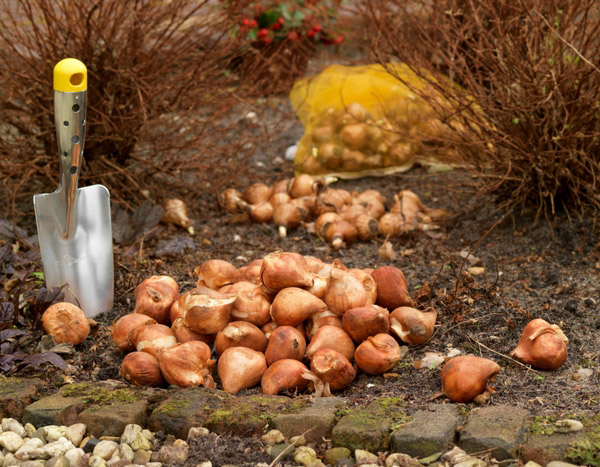
Plant your Colocasia in a sunny position or partial shade. They require moist, fertile and humus-rich soil, and appreciate a nitrogen-rich fertilizer. You can plant your Colocasia in large containers, with regular and abundant watering during the growing season, reduced in winter. If the atmosphere is too dry in winter, the plants may be attacked by red spider mites. Usually grown as greenhouse or conservatory plants, they are actually quite hardy perennials (down to -10°C (14°F)). You can grow them in the garden, by mulching the crown well in winter. If the soil is waterlogged in winter, the rootstock may rot, so the soil will need to be well-drained. Beware of attacks from slugs and snails, which feast on the young leaves.
Planting period
Intended location
Care
Planting & care advice
-

-

-
-
-
-
-
-
-
, onOrder confirmed
Reply from on Promesse de fleurs
Recently viewed products
Haven't found what you were looking for?
Hardiness is the lowest winter temperature a plant can endure without suffering serious damage or even dying. However, hardiness is affected by location (a sheltered area, such as a patio), protection (winter cover) and soil type (hardiness is improved by well-drained soil).

The flowering period indicated on our website applies to countries and regions located in USDA zone 8 (France, the United Kingdom, Ireland, the Netherlands, etc.)
It will vary according to where you live:- In zones 9 to 10 (Italy, Spain, Greece, etc.), flowering will occur about 2 to 4 weeks earlier.
- In zones 6 to 7 (Germany, Poland, Slovenia, and lower mountainous regions), flowering will be delayed by 2 to 3 weeks.
- In zone 5 (Central Europe, Scandinavia), blooming will be delayed by 3 to 5 weeks.
In temperate climates, pruning of spring-flowering shrubs (forsythia, spireas, etc.) should be done just after flowering.
Pruning of summer-flowering shrubs (Indian Lilac, Perovskia, etc.) can be done in winter or spring.
In cold regions as well as with frost-sensitive plants, avoid pruning too early when severe frosts may still occur.
The planting period indicated on our website applies to countries and regions located in USDA zone 8 (France, United Kingdom, Ireland, Netherlands).
It will vary according to where you live:
- In Mediterranean zones (Marseille, Madrid, Milan, etc.), autumn and winter are the best planting periods.
- In continental zones (Strasbourg, Munich, Vienna, etc.), delay planting by 2 to 3 weeks in spring and bring it forward by 2 to 4 weeks in autumn.
- In mountainous regions (the Alps, Pyrenees, Carpathians, etc.), it is best to plant in late spring (May-June) or late summer (August-September).
The harvesting period indicated on our website applies to countries and regions in USDA zone 8 (France, England, Ireland, the Netherlands).
In colder areas (Scandinavia, Poland, Austria...) fruit and vegetable harvests are likely to be delayed by 3-4 weeks.
In warmer areas (Italy, Spain, Greece, etc.), harvesting will probably take place earlier, depending on weather conditions.
The sowing periods indicated on our website apply to countries and regions within USDA Zone 8 (France, UK, Ireland, Netherlands).
In colder areas (Scandinavia, Poland, Austria...), delay any outdoor sowing by 3-4 weeks, or sow under glass.
In warmer climes (Italy, Spain, Greece, etc.), bring outdoor sowing forward by a few weeks.
Shipping country and language
Your country of residence may be:
Your country of residence is:
For a better user experience on our website, you can select:
Your shipping country:
-
 Austria
-
 Belgium
-
 Bosnia & Herzegovina
-
 Bulgaria
-
 Croatia
-
 Cyprus
-
 Czechia
-
 Denmark
-
 Estonia
-
 Finland
-
 France
-
 Germany
-
 Greece
-
 Hungary
-
 Iceland
-
 Ireland
-
 Italy
Italy
-
 Latvia
-
 Liechtenstein
-
 Lithuania
-
 Luxembourg
-
 Malta
Malta
-
 Netherlands
-
 Poland
-
 Portugal
-
 Romania
-
 Serbia
-
 Slovakia
-
 Slovenia
-
 Spain
Spain
-
 Sweden
-
 Switzerland
Language:
-
French
-
 English
-
Spanish
-
Italian
-
German
-
Portuguese
-
Dutch
-
Finnish
My Account
Hello
My wish lists
My cart
Log in / Register
Existing customer?
This form is protected by reCAPTCHA - the Google Privacy Policy and Terms of Service apply.
New customer?
Create an account to track your orders, access our customer service and, if you wish, make the most of our upcoming offers.