





























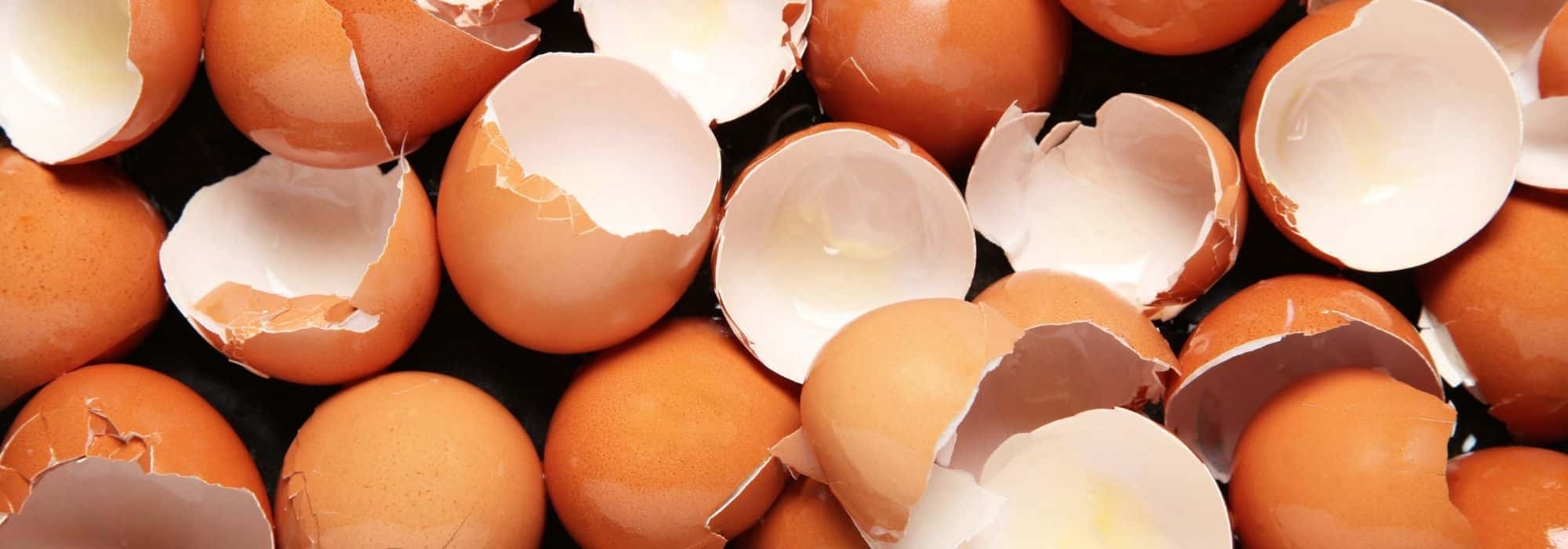
Can you really use eggshells in the garden?
Let's take an objective look at the use of eggshells in the garden.
Contents
You have a few hens that, in exchange for the good care you provide, lay eggs galore. It’s difficult to estimate the number of eggs laid per year, as it varies with the season, breed, and age of your hens, as well as the comfort and hygiene conditions you offer them. That said, a good layer like a red hen, a Harco, or a Sussex lays an average of 250 to 300 eggs per year. Another significant figure: a French person consumes about 200 eggs per year. This means that the quantity of eggshells can quickly become impressive. If you are a fan of recycling and composting, you have undoubtedly wondered about the use of these eggshells in the garden. A quick search online seems to confirm that it is a miracle product that solves all problems related to slugs and other diseases. What do you think?

What can be found inside an egg shell?
An eggshell is a mineralised envelope, a sort of shield that limits shocks and protects a potential embryo. It forms in about twenty hours at a temperature of 40 to 41 °C (which corresponds to a hen’s body temperature!) and can withstand a pressure of 4 kg. A true marvel of nature, in short!
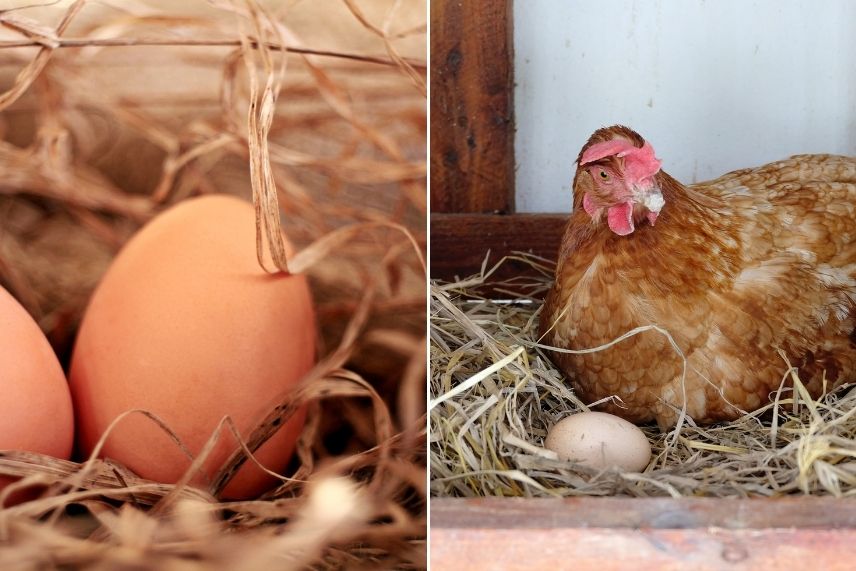
An egg forms in 24 hours in the hen’s body, drawing on its calcium reserves. Its shell can withstand a pressure of 4 kg
Weighing about 6 grams, an eggshell is composed of 96% minerals (calcium, calcium carbonate, magnesium, and phosphorus), 2.4% proteins, and 1.6% water. It is this significant calcium content that can raise questions. For a somewhat knowledgeable gardener knows that calcium in soil (although less primary than nitrogen, phosphorus, or potassium) is important for retaining nutrients beneficial for plant growth while also helping to raise pH. Likewise, a simple search on an internet search engine seems to confirm that eggshells are useful as fertiliser for soil but can also help get rid of slugs and snails, or even prevent the spread of diseases like peach leaf curl or apical necrosis… Far from questioning our grandmother and her miracle recipes, we have some doubts about the veracity of these solutions. Especially since no scientific study supports these claims.
At the same time, eggshells cannot be harmful. So it’s up to you to form your own opinion by putting it into practice and testing it out.
Eggshells as fertiliser for the garden?
Certainly, it is a well-known fact that egg shells are rich in calcium and minerals. Therefore, potentially, they can be considered a fantastic fertiliser for the vegetable garden or ornamental garden, or even for houseplants. You can spread them around your vegetable or perennial plants, place them on the surface of your houseplants, or even incorporate them into the soil using a cultivator. However, do not expect a miracle, as the amount of calcium released is minimal compared to your plot… So allow me to doubt the benefits of egg shells on plant growth. Or at least, perhaps for your green plants that are growing in a limited amount of substrate.
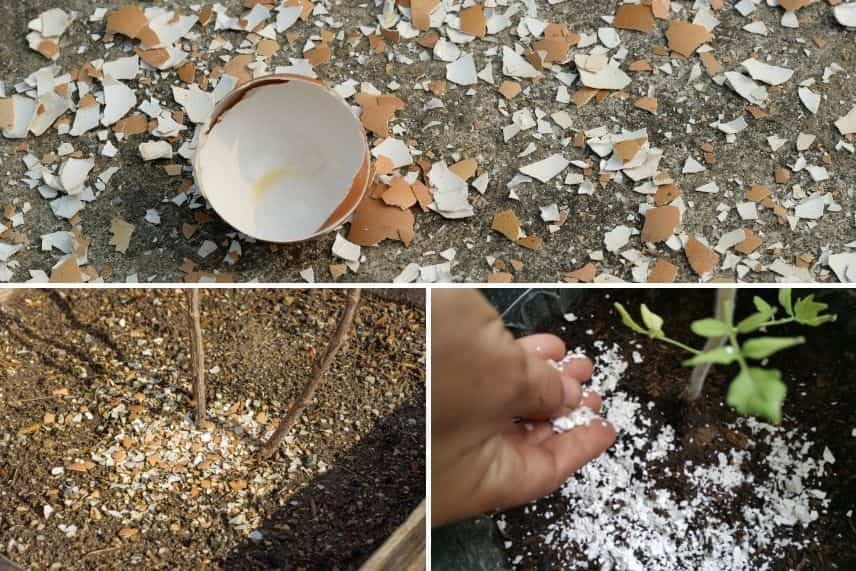
Egg shells are reputed to be a good fertiliser, as they are rich in calcium.
That said, you can still add these shells to the compost, as they will provide a significant contribution of organic matter while correcting the acidity of this medium. Be sure to crush them finely with a pestle or rolling pin, as they take a long time to decompose. But you will still need a bit of patience, as egg shells decompose slowly, very slowly…
In the same vein, you can also spread crushed shells on acidic soil to help the earth become more alkaline. But again, the result is not guaranteed!
Do slugs fear eggshells?
Let’s slip into the skin of a slug or a snail for a few seconds, irresistibly drawn to a tender lettuce plant. However, a careful gardener, eager for advice gleaned from the internet, has surrounded the said lettuces with a barrier of finely crushed eggshells. Ouch, that hurts! This all seems very logical from our human perspective. However, a slug or a snail secretes mucus that allows it to glide over any surface, including eggshells, which would only partially stop it.
Pascale’s little note: a small anecdote comes to mind: when I was just a young and rather naïve gardener, I had potted a magnificent hosta with variegated green and cream foliage that I had carefully placed in the shade. Beautiful foliage but delightfully tender in the eyes of a slug! Without hesitation, I surrounded my lovely hosta with a good layer of eggshells, full of hope in this gardening trick that was suggested to me by a confident grandfather. In vain. The slugs devoured my beautiful hosta down to the stem, completely undeterred by my eggshells.
But, once again, conduct your own experiments. Or more reliably, use Ferramol pellets, wood ash, or copper tape to get rid of slugs.
Are our hens' eggs useful in the orchard or vegetable garden?
Often propagated by webmasters who have never set foot in a garden or by influencer bloggers believing they have a green thumb, the idea that eggshells are effective against peach leaf curl or blossom end rot (also known as black bottom) in tomatoes is quite common. At least on the web! Some explain that you should crush raw eggshells, place them in a mesh bag, and hang them from the branches of trees. However, no scientific study supports this, and these diseases often resolve on their own if climatic or cultural conditions improve. Less rain and humidity for peach leaf curl, a less dry soil, more regular watering, and richer soil to compensate for calcium deficiency for blossom end rot. Moreover, some preventive treatments have proven effective, such as copper hydroxide or horsetail decoction for peach leaf curl, and the addition of organic matter and proper watering against blossom end rot.
That said, if you have time to spare, nothing stops you from trying eggshells…
Another eggshell-based tip against leek moth leaves me equally sceptical: planting eggshells (emptied, rinsed, and with a small hole made in them) on wooden sticks and scattering them in your freshly transplanted leek patch. The moth or leek borer would supposedly lay its eggs in the shells, leaving your leeks alone. Beyond the fact that I can’t understand why our butterfly would prefer an eggshell over a leek, I find it hard to imagine emptying eggs and then fixing them onto a stake without breaking them! If you have any feedback on this, I would be interested… and rather trust the pheromone capsules against leek moth.
Should we give our hens their shells back?
Every day (or almost), a hen lays an egg, which means its calcium needs are phenomenal. With a well-balanced diet consisting of a mix of wheat, maize, oats, peas, soya, linseed, sunflower or rapeseed, and table scraps, a hen can meet its calcium requirements. You can also add homemade mash or soups made from rice, pasta, lentils, or cooked potatoes, mixed with cooked vegetable peelings.
Sometimes, a calcium deficiency, visible in the laying of eggs with soft shells, can occur. Some recommend giving hens their own egg shells to compensate for their lack of calcium. Opinions on this matter vary.
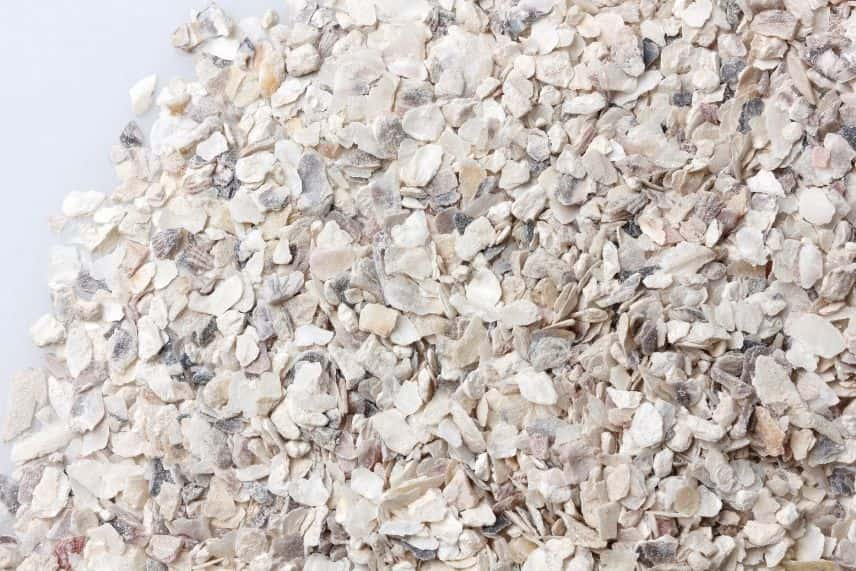
Some hen owners do not hesitate to give their hens their own egg shells, while others prefer oyster shells
Personally, as a happy owner of five equally content hens, I do not give them their own egg shells. Simply because a hen that has tasted a broken egg quickly takes pleasure in it, the yolk being full of fats. I thus avoid tempting them to eat their own eggs. Therefore, I prefer to provide them with crushed oyster shells which they devour in the evening before going to bed. They indeed find the calcium they need at night to “build” their egg.
Fun activities for children
With your hens’ eggs, you can:
- make small pots for your sowing. Simply collect the shells from soft-boiled eggs, wash them, and pierce a tiny hole in the bottom. Fill them with seed compost and place them in an egg box. You can plant a small seed of your choice in each. For a more playful touch, your children (or grandchildren) will enjoy decorating these improvised pots.
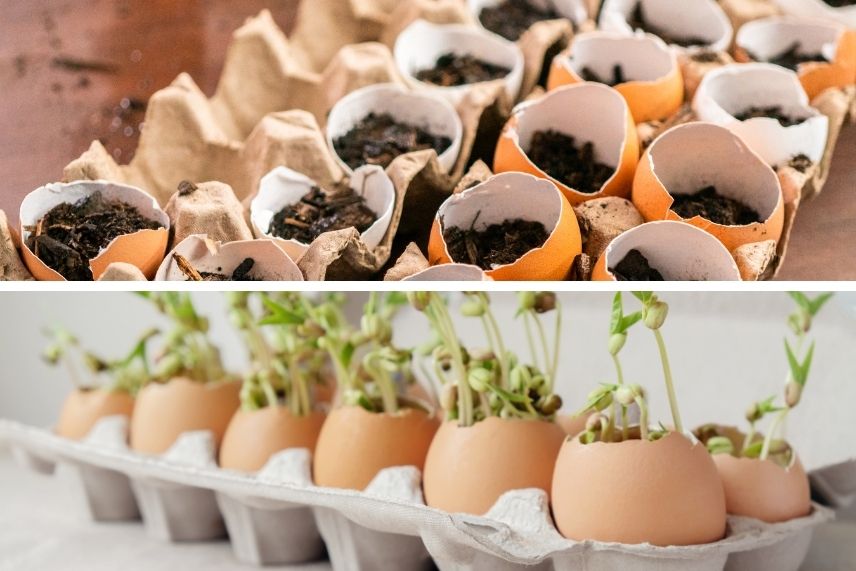 Sowing in egg shells is very fun
- create a mosaic with crushed egg shells, painted or coloured, then glued onto sheets of paper.
- boil eggs in water mixed with plants to colour them. To dye them yellow, add leaves of lady’s mantle, dead nettle or yarrow, chamomile flowers, or onion skins. To achieve red, use skins from beetroot, red cabbage, elderberry or blackcurrant. And for green, spinach leaves are perfect.
- Subscribe!
- Contents
Comments