





























Diseases and pests of heather: symptoms, natural treatments, and prevention tips
How to recognise, treat, and prevent them?
Contents
Hardy and robust for most varieties, heathers rarely develop diseases, and they are also appreciated for this solid temperament. While they are not known to have pests, depending on the growing conditions, some may experience weakened or deteriorating foliage, affected by fungal diseases.
Here are the main diseases that can affect heathers, whether they are summer or winter heathers.
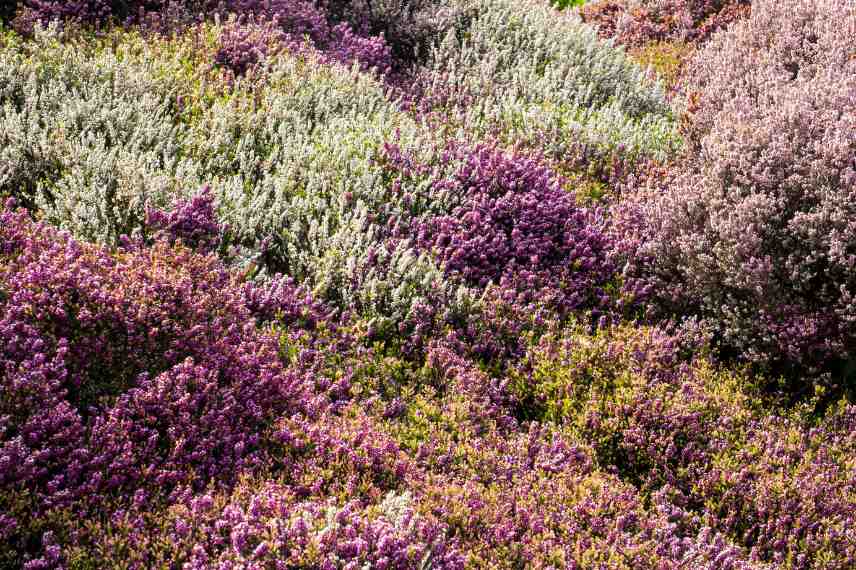 Very robust and resilient, heathers are rarely ill, sometimes affected by fungi when not grown in suitable soils.

Phytophthora: the most common disease
The phytophthora cinnamomi is a formidable fungal disease that affects many plants known as heather plants, which thrive in acidic soil, such as heathers. This fungus (a soil oomycete, often mistakenly confused with a true fungus) lives in the soil, attacking the roots and collars, especially during warm periods. It thrives in humid and warm conditions, penetrating the roots and moving up the plant, thereby blocking the transport of water and nutrients. It primarily targets the very hardy heathers of the Erica and Calluna types.
- Symptoms: phytophthora often manifests as a sudden wilting of the leaves, particularly in summer when temperatures are high. The leaves may yellow, then turn brown to grey and dry out quickly, leading to the rapid death of entire shoots. This can result in the death of all or part of the plant if not treated in time.
- Treatment: uproot and take severely affected plants to the waste disposal site. To treat phytophthora, it is recommended to use an appropriate fungicidal product that can be applied directly to the plant. It is also crucial to improve soil drainage to prevent water from pooling around the roots. For lightly affected heathers, regularly spray foliar fertilisers (which ones?).
- Prevention: avoid excess water by watering moderately and ensuring that the soil is well-drained. Plant heathers in airy soil and avoid areas where water can accumulate. Using quality heather soil and avoiding heavy or poorly drained soils can also help reduce the risk of phytophthora infection. Foliar fertilisers rich in trace elements (Mg, Mn, Zn) can enhance the plant’s resistance, but do not cure the infection. Finally, among natural solutions, garlic has a mild fungicidal action, and nettle stimulates the plant’s defences, but they cannot stop an active infection.
Read also
Heathers: planting, pruning and careRhizoctonia solani: a discreet scourge of heathers in moist soil
The brown root rot (rhizoctonia solani) is a disease caused by a soil fungus that affects heathers, particularly in humid and poorly aerated environments. It often develops when plants are too close together or when the foliage is dense, creating ideal conditions for the fungus to thrive. Generally, all heathers are susceptible, but Erica carnea and Daboecia may be slightly more sensitive due to their denser foliage.
- Symptoms: rhizoctonia causes wilting of stems and browning of leaves, often accompanied by the formation of brown mycelium on the affected parts. Leaves may dry out and fall, leaving the plant looking stunted. The mycelium is sometimes white to pale brown and visible at the collar or base of the stems.
- Treatment: to combat rhizoctonia, it is important to ensure good air circulation between plants to reduce humidity. Avoid excessive watering and ensure that the soil is well-drained to prevent the proliferation of the fungus.
- Prevention: space plants sufficiently to prevent leaves from touching and thus promote better air circulation. Use a well-draining substrate to avoid moisture accumulation around the roots.
Pythium: a feared root rot of young heathers
Pythium ultimum is a soil oomycete responsible for root rot, especially in young Calluna heather plants in waterlogged soil. It compromises growth by attacking the roots, which blacken and become spongy. It is an opportunistic parasite that primarily establishes itself when soil oxygenation is insufficient, in damp and poorly drained soils. It hinders the plant’s ability to absorb the water and nutrients necessary for its growth.
- Symptoms: rapid wilting, softened leaves, followed by yellowing indicating that the plant is no longer receiving sufficient nutrients. The roots gradually turn brown and then disintegrate.
- Treatment: apply a specific oomycete fungicide (fosetyl-aluminium or propamocarb) to treat infected plants. Quickly improve drainage and reduce soil moisture by adjusting watering practices to prevent the roots from being constantly wet.
- Prevention: avoid planting heathers in areas where the soil remains constantly wet, ensure good soil drainage to prevent water accumulation around the roots. For potted plants, avoid overly fine substrates that retain water. Cinnamon infusion, garlic decoction, and bracken manure can help prevent issues in healthy substrates.
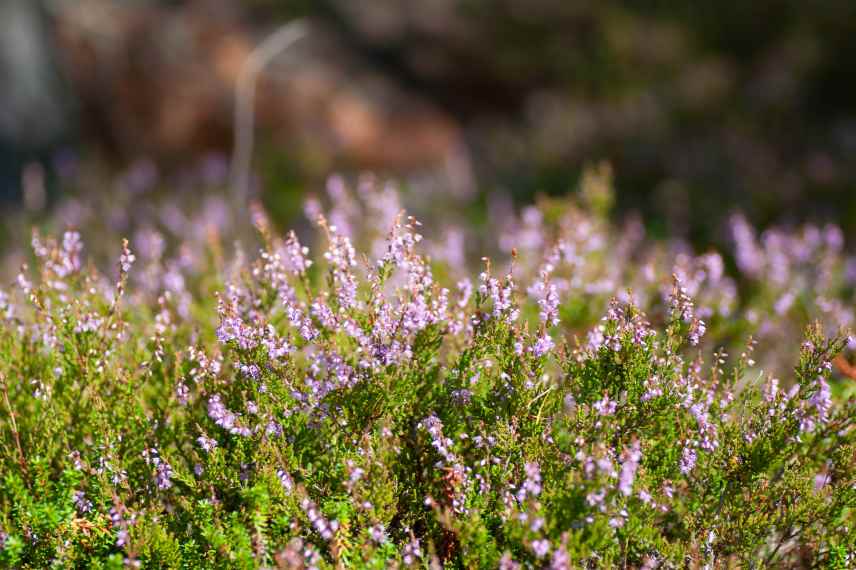
Pythium can affect young Calluna plantings
Read also
How to choose a heather?Honey fungus: rare but deadly
The honey fungus, or Armillaria mellea, is a wood-decaying fungus that primarily attacks the roots of woody plants, including heathers, although this is rare. It often occurs in soils already colonised by this fungus, particularly in wooded soils and gardens established on former forest land or after the felling of trees. All heathers are susceptible, but this fungus is uncommon in outdoor ornamental cultivation.
The fungus infects the roots deeply, causing necrosis of the conductive tissues and thus interrupting the absorption of water and nutrients. It can survive for many years in dead roots or the stumps of old trees.
- Symptoms: signs include progressive wilting, yellowing of foliage, and sometimes total wilting. A white felt-like growth may also be observed under the bark of the roots, along with blackening of the tissues. The plant can be easily uprooted, as the roots become brittle or rotten.
- Treatment: no effective curative method exists once the plant is affected. It is necessary to uproot and destroy the plants, then remove the contaminated roots. Avoid replanting in the same spot without disinfection or fallow periods. No natural remedy has been proven. Contaminated soil remains problematic.
- Prevention: plant in well-drained soil, avoid buried wood debris or stumps. Encourage sunlight and do not plant heathers near old hedges or forested areas if the soil is suspected to be contaminated.
To remember for treating diseased heathers
The Phytophthora, Pythium, and Rhizoctonia are resilient soil oomycetes or fungi! Natural treatments such as nettle, horsetail, or garlic manures can strengthen the plant and slow the spread, but none eliminate the infection once established. They remain preventive and only bolster the plant’s defences.
In severe cases (Phytophthora and Pythium), occasional use of an approved fungicidal may sometimes be necessary to save the plant.
The best natural strategy is the planting method and prevention.
As a reminder, heathers will thrive in:
– very well-drained soil
– sunny exposure
– acidic to neutral soils, except for Erica carnea and Erica vagans, which tolerate lime
Finally, always carry out your heather maintenance prunings with disinfected tools!
- Subscribe!
- Contents
Comments