





























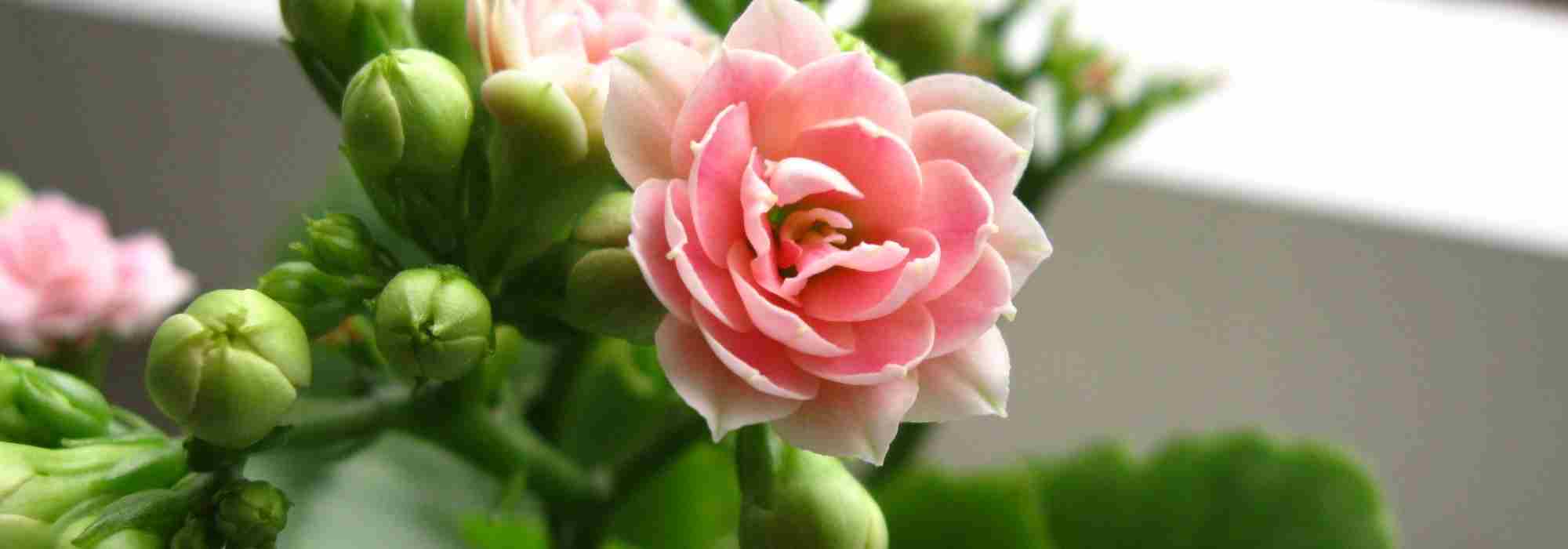
Kalanchoe as a houseplant: our care tips
Watering, light exposure, fertilisation... all you need to know about Kalanchoe care
Contents
kalanchoe is a succulent plant native to Africa and Madagascar, renowned for its generous and long-lasting flowering, vibrant colours and fleshy foliage. A prominent member of the Crassulaceae family, the kalanchoe is a familiar inhabitant of arid environments. That said, growing it in a pot indoors is ideal. Easy to care for, it is perfect for beginner gardeners, while offering enough interest to appeal to plant enthusiasts.
In this article, discover how best to look after a kalanchoe, from the light it needs to the watering, including repotting, the renewal of flowering, and diseases…

Light exposure, the secret to a beautiful flowering for Kalanchoe
The kalanchoe is a real sun-loving plant. To thrive—and especially to bloom—it needs plenty of light. Especially the Blossfeld kalanchoe (Kalanchoe blossfeldiana), the most common species in garden centres, which bears inflorescences in panicles or cymes in a variety of colours. By contrast, the Kalanchoe thyrsiflora graces us with tall floral panicles, consisting of yellowish urn-shaped flowers.
Where to place it?
A kalanchoe needs ample light. That’s why it can be placed near a well-lit window, ideally facing south or west. It loves direct sun, especially in winter when the rays are weaker. In summer, if the sun is scorching, a light veil or stepping back a few centimetres is enough to prevent leaf burn. In particular with velvety-leaved kalanchoes such as the kalanchoe tomentose (Kalanchoe tomentosa). It can also thrive in a light-filled conservatory.
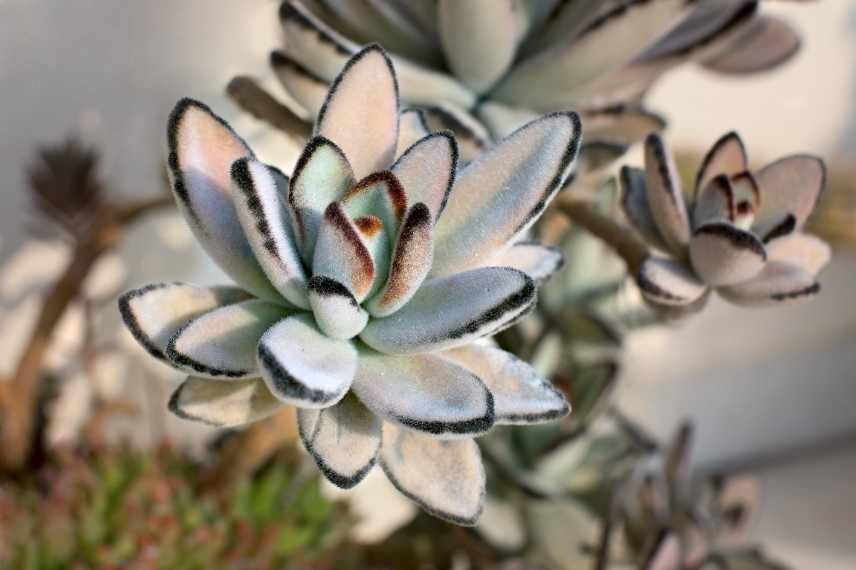
The kalanchoe needs plenty of light, but not direct sun (here a Kalanchoe tomentosa).
To keep the kalanchoe healthy and encourage flowering, you must absolutely avoid dark corners. Without light, it will etiolate—that is, grow lanky and lose its compact shape—and it will not flower.
Read also
Kalanchoe : cultivation and careModerate watering of Kalanchoe
The kalanchoe is a succulent plant, so it stores water in its fleshy leaves, because in its natural environment it is subjected to harsh conditions. It also benefits from a shallow root system, suited to poor and well-draining soils. Indoors, the kalanchoe tolerates missed watering quite well, but far less tolerant of overwatering!
How to water and how often?
- During the growth period, in spring and summer, water about once every 10 to 15 days. It is recommended to always wait until the potting mix is thoroughly dry in depth before watering. Simply scratch the substrate with your finger. If it is dry, it’s time to water.
- In autumn and winter, watering becomes less frequent, at a rate of once every 3 to 4 weeks, or less if the atmosphere is cool.
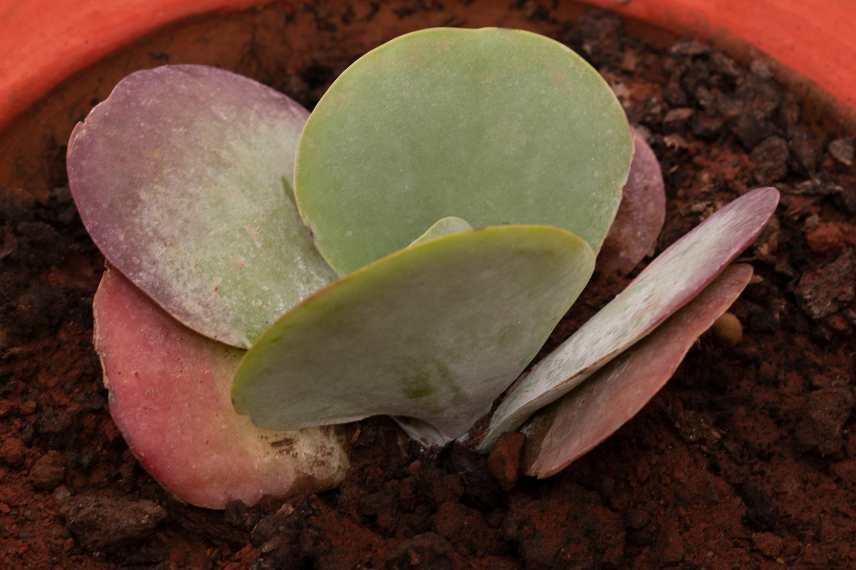
A kalanchoe should never be watered on the fleshy foliage (our photo Kalanchoe thyrsiflora)
Most importantly, remember that the kalanhoe hates having its roots in water, which would cause root rot. So never leave any water in the saucer or the cachepot.
Watering is always better with soft water at room temperature. Likewise, it should always be done at the base of the plant, never wetting the fleshy foliage.
Regular repotting for a well-rooted Kalanchoe!
The Kalanchoe does not need to be repotted often. Two to three years is more than enough. That said, this repotting is important to renew the substrate that quickly becomes exhausted. The best time to do it is in spring, just before growth resumes.
How to repot?
Kalanchoe is planted or repotted in a light, very well-draining substrate. Thus, a succulent potting mix is perfect, but you can make your own mix with two-thirds high-quality universal potting compost and one-third sand or perlite to improve drainage.
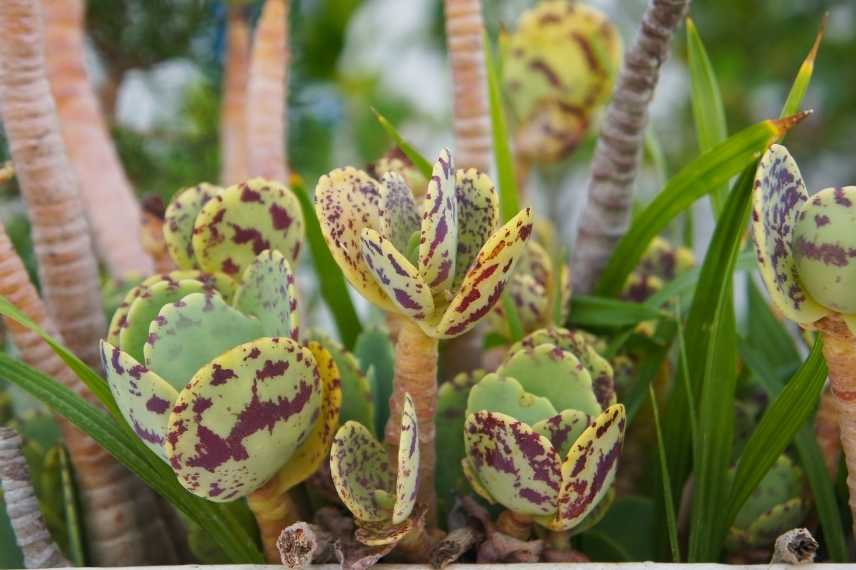
A Kalanchoe (here the species marmorata) should be repotted every two to three years
Obviously, you should choose a perforated pot, slightly larger in diameter than the previous one, preferably in terracotta which has the advantage of being porous. Water evaporates more quickly, thus reducing the risk of root rot. Drainage will be greatly improved with a layer of clay balls at the bottom of the pot.
Read also
Propagating cacti and succulentsFertilising Kalanchoe in moderation
Although Kalanchoe isn’t particularly hungry, occasional light fertilisation helps boost its growth. Indeed, a Kalanchoe grown in a pot will draw nutrients from the substrate. And, with each watering, the substrate becomes exhausted and markedly poorer. Fertilisation will therefore stimulate growth, promote abundant flowering and strengthen the plant’s natural defences. But beware, this fertilisation must not be excessive to protect its roots. Once again, as with watering, it’s better to under-dose than over-dose.
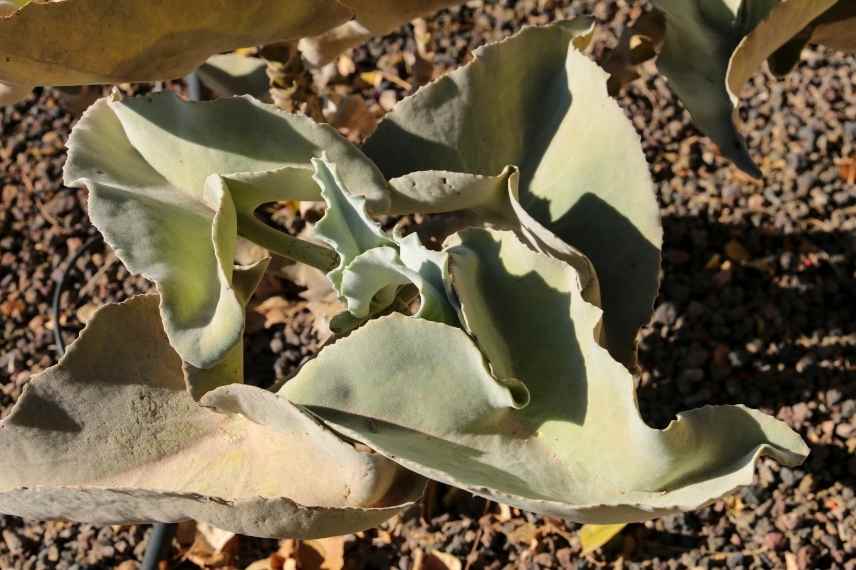
The kalanchoe (here Kalanchoe beharensis) isn’t very greedy, but light fertilisation is possible
How and when to fertilise?
Fertilisation takes place from spring to the end of summer, i.e. from March to September. An application of fertiliser every 4 to 6 weeks is more than enough. And, during autumn and winter, fertilisation is stopped to allow the plant to enter its winter rest.
Fertilisation is carried out with a liquid fertiliser, to be diluted with watering. One can choose a special fertiliser for flowering plants or a special fertiliser for succulents and cacti. It is essential to follow the indicated dose, or even to reduce it slightly. Obviously, applying fertiliser is unnecessary for a plant that has just been repotted. Wait at least six weeks.
Kalanchoe pruning: optional but useful
Even if the Kalanchoe doesn’t grow very quickly, a small regular pruning can really help it stay attractive, compact and full of vitality. This pruning will help it maintain an attractive, compact and harmonious shape, remove spent or bare stems, stimulate branching, and refresh the young plant after flowering.
When and how to prune?
The best time to prune is just after flowering. Once the flowers have faded and have been cut off, simply shorten the stems slightly if they are too long or unbalanced, with a clean and disinfected pruning shear, just above a pair of leaves. And don’t hesitate to pinch back the new shoots to encourage branching.
Diseases and pests of Kalanchoe
Kalanchoe is fairly hardy, but it may have a few enemies among common indoor pests or diseases. Among the pests, mealybugs often settle on the underside of the leaves, leaving a white cottony mass to feed on the sap. They weaken the plant. The same goes for aphids, rarer, which cluster on new growth and flower buds. A natural treatment with black soap diluted in water may suffice. But mealybugs, more tenacious, can also be removed with a cotton bud dipped in 70% alcohol.
Overwatering and humidity are the primary causes of diseases that can affect Kalanchoe. Soft leaves, blackening at the base or root rot are the main symptoms. In these cases, stop watering, check the root system and repot.
A flowering that is always renewed
The Bloosfeld kalanchoe is famous for its clusters of small flowers in red, orange, pink, yellow or white… It naturally flowers in winter or early spring, but with a few tricks, we can coax kalanchoes that are a bit reluctant to bloom.
From mid-October, the kalanchoe needs short days to initiate flowering. This is what we call a short-day plant. It is possible to ‘force’ a new flowering by placing the plant in total darkness for 14 to 16 hours per day, either under a box or in a cupboard, for about 6 weeks. The rest of the time, it should have bright light. This treatment mimics the approach of tropical winter, and after these 6 weeks, the plant will start producing its small flower buds.
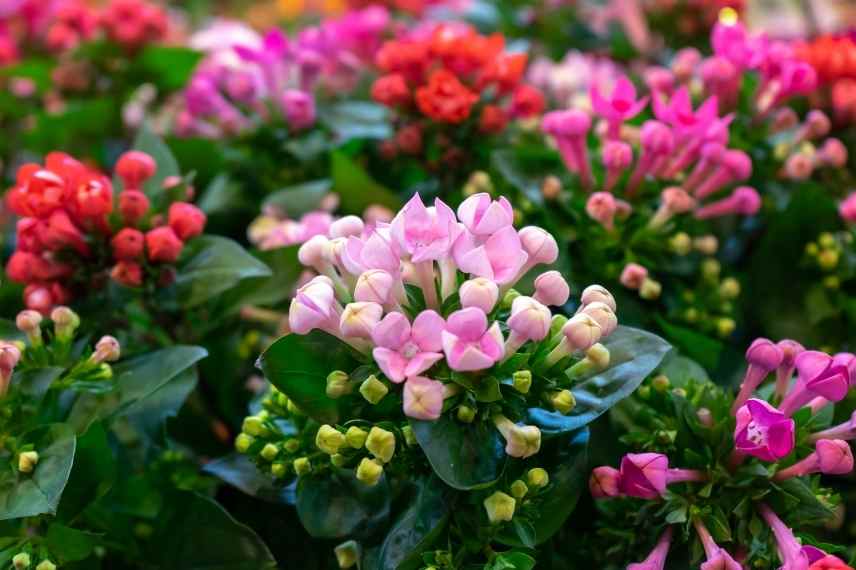
The Bloosfeld kalanchoe is easy to force for a vibrant flowering
But as soon as the first flower buds appear, the kalanchoe should resume a normal light cycle. This is also the ideal moment to apply a light fertiliser, with a little liquid fertiliser for flowering plants, reducing the doses by half. Then, a feed every fortnight during flowering is sufficient.
- Subscribe!
- Contents
Comments