





























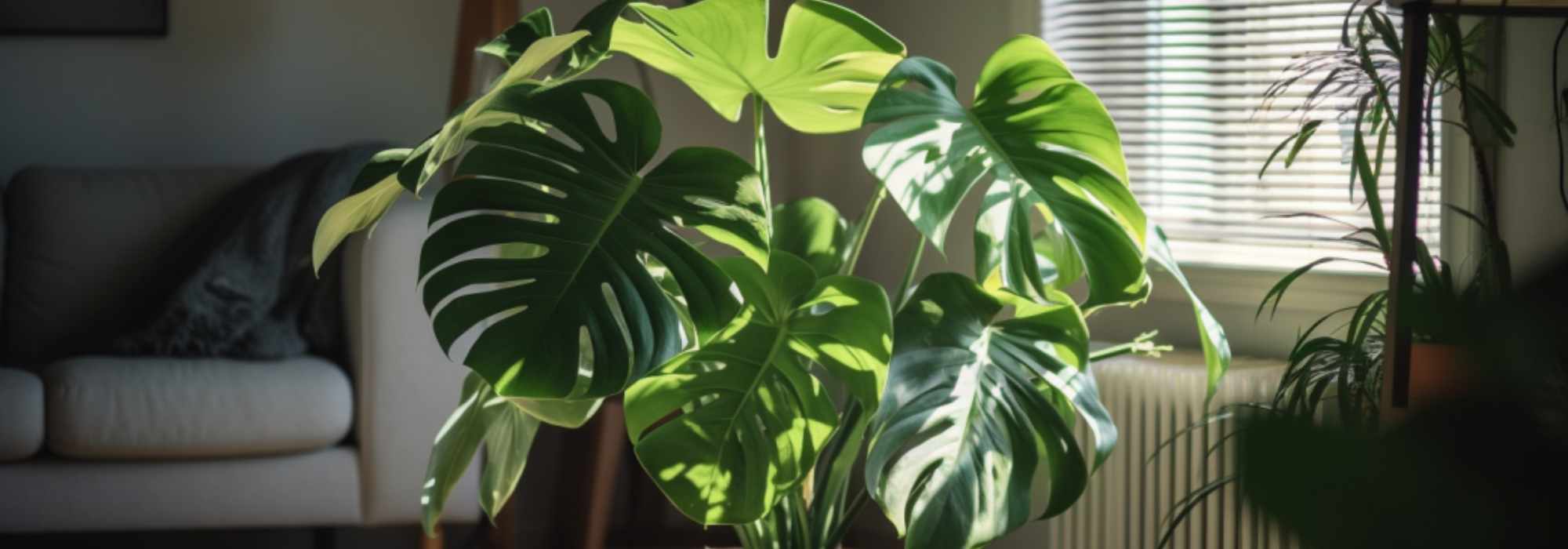
Monstera: Care through the seasons
Watering, light, pruning and year-round care
Contents
Monsteras or false philodendrons are houseplants very popular. With their striking, architectural foliage, they quickly add a touch of the exotic. Among the different species, our Monstera deliciosa is certainly the best known, with its large, glossy, split leaves. But there are also smaller varieties, ideal for compact spaces.
Monstera is a fairly easy plant to keep, suitable for beginners. But to keep it looking its best all year round, a few care practices will be worth implementing. And even indoors, growing conditions can change, and it is important to ensure they continue to meet our plants’ needs. So, let’s look at how to care for a Monstera season after season.
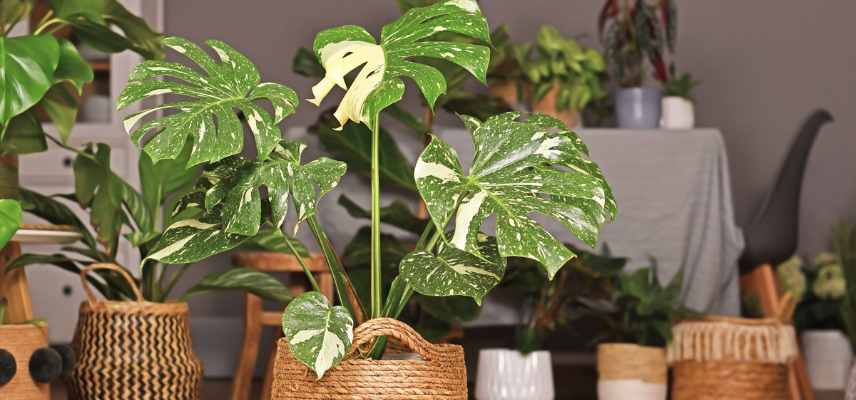
Keep a Monstera in top shape for many years by giving it the right care, season after season
Different seasons: an impact even indoors
It’s important to take account of the different seasons, even for a plant grown indoors, because growing conditions and the environment will still evolve. Of course, temperature swings won’t be as great as outdoors, and the plant isn’t exposed to the elements (wind, rain, frost, etc.). But the conditions of its environment will still vary, particularly with regard to light levels and ambient humidity.
In addition, it is important to take account of the plant’s vegetative growth cycle: Monstera goes through a growth phase, followed by a rest period, which are not managed in the same way.
By adjusting the various care measures according to the seasons (watering, fertilising, pruning, light…), you can keep a Monstera in peak health. And a plant whose needs are met is more resistant to potential parasitic attacks or the development of diseases.
Read also
Monstera: growing and caringSpring: the season for renewed Monstera growth
It’s the season of renewal for most plants: in spring, Monstera also comes out of its vegetative rest and resumes growth. Light gradually becomes more intense and available for longer, temperatures rise, which allows you to progressively switch off indoor heating. At this time, the plant will welcome tailored care to encourage its growth.
First of all, it’s time to resume a more regular watering routine. Monstera is a tropical plant native to the forests of Central America, which needs warmth and humidity to thrive. It appreciates a fresh substrate, i.e. one that never dries out completely. At this time, a weekly watering or every ten days is generally sufficient. Before watering, simply ensure that the soil is dry to the first couple of centimetres by feeling it with your fingers. This is the assurance of avoiding waterlogging that can promote cryptogamic or fungal diseases (caused by fungi), notably root rot which can be fatal. Remember that if you have placed a saucer or a cachepot under your Monstera, it’s important to empty them about 20 minutes after watering. Another solution: perform bottom watering, by placing the plant in a container of water, in a sink or in the shower, so that it hydrates from below.
In terms of exposure, plant pots will benefit from regularly turning in spring, to ensure a more balanced growth and to maintain a harmonious silhouette. Even if temperatures ease, those outside can still be cool: therefore keep the plant out of draughts, especially when you air your home, to avoid cold spells and too great temperature fluctuations.
Next, it’s pruning time: remove yellowed or damaged leaves, then shorten mislocated or too long stems. For this, use a clean, previously alcohol-disinfected pruning shear to limit the risk of spreading diseases between plants. However, do not prune aerial roots entirely; they are indispensable for the plant to feed and stabilise. Pinch back the young shoots to encourage branching and to obtain a generally denser plant. Take cuttings during this period if you wish to multiply your Monstera. C’est aussi le moment de vous assurer que le stake placed in the pot is still large enough for future shoots to cling to thanks to their aerial roots. After all, Monstera is a climbing plant, which likes to grow vertically. Do not hesitate also to tie the older stems together with soft ties to help them climb better.
If your plant is starting to feel too cramped in its container (roots are coming out of the drainage holes under the pot), this is also the right time to deal with repotting. Choose a larger container, always with drainage holes. Add a layer of draining elements (clay balls, gravels…) at the bottom of the new pot, then top up with fresh substrate. Always choose a well-draining potting mix. You can opt for an all-purpose potting compost or for an indoor-plant potting compost. Repotting takes place every 2 to 3 years, depending on the plant’s growth. In years without repotting, perform a top-dressing: this action involves replacing the first centimetres of substrate with fresh potting compost to provide the plant with new nutrients.
→ Ingrid explains in detail the repotting of Monstera in this tutorial.
Finally, to help your Monstera grow well, apply nitrogen-rich liquid or solid fertilisers. This will support the growth of the foliage. However, be sure to follow the manufacturers’ instructions: an excess of nitrogen can indeed weaken the plant and make it more susceptible to pests and diseases. You can also opt for well-decomposed household compost.

As with other plants, repotting is carried out in spring
Summer: don't neglect Monstera watering
The most demanding period of care for your Monstera is behind it. In summer, two things will be crucial to keep it healthy: shielding it from heat stress and ensuring more regular watering.
In general, summer watering takes place weekly, or even twice a week if the ambient temperature is high. As soon as the surface of the potting mix is dry, you can water. To help you find the right balance, note that too much water is often indicated by yellowing of the leaves, while a lack of water causes the leaves to curl on themselves. Remember that ideally you should use non-calcareous water (rainwater) or mix tap water with an anti-limescale product. The water should also be at room temperature to avoid thermal shocks.
The Monstera appreciates humid conditions and can therefore suffer from ambient dryness in summer. As a precaution, do not hesitate to mist the foliage regularly. Also remember to wipe the leaves with a damp cloth, to remove dust that could affect the plant’s photosynthesis. It’s also the time to check for the absence of pests (aphids, scale insects, thrips, red spider mites…) or signs of diseases (notably leaf spots).
As the plant’s growth is well underway, fertiliser applications can be reduced or replaced with slow-release fertilisers.
Finally, keep your plant away from windows if it is exposed to direct sun: it could burn the foliage. If that isn’t possible, the ideal is to install a light shade veil. Avoid south-facing exposures.
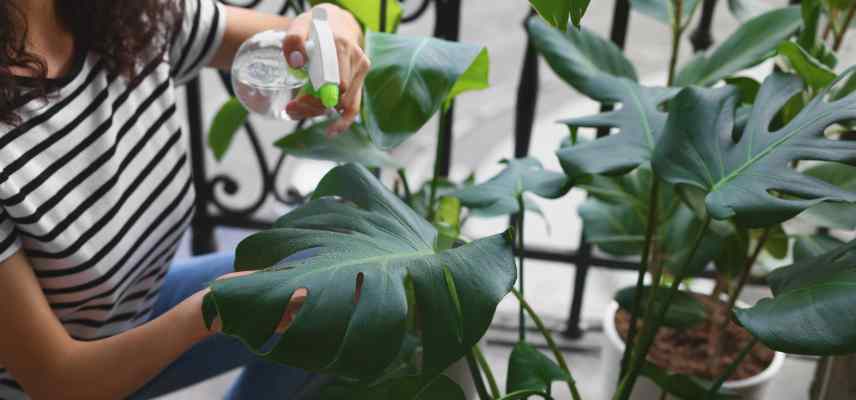
Don’t hesitate to mist your Monstera during the hottest periods
Read also
How to grow Monstera deliciosa?Autumn: a transitional season for Monstera
Autumn will gradually prepare the Monstera for its winter dormancy. It’s a season for moderation. Watering will gradually be reduced, ensuring the substrate dries out between waterings.
If the light becomes too low, do not hesitate to move your Monstera to a brighter location.
In autumn, also stop fertiliser applications, as the plant’s metabolism slows naturally.
If required, repotting can also be carried out during this period.
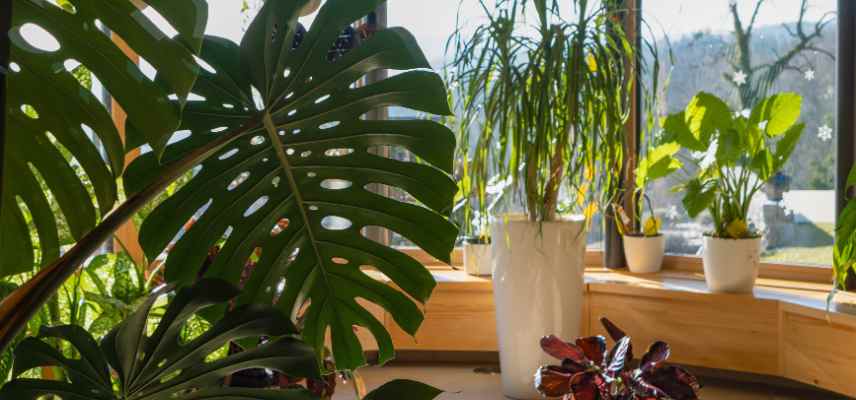
In autumn, move your Monstera closer to a light source
Winter: Monstera's vegetative rest period
In winter, the Monstera rests. It stops its growth and enters dormancy. The main issue during this period? Our heated interiors, which create a very dry ambience. It is therefore imperative to keep the plant away from any heat source: radiators, ovens, fireplaces, stoves, etc. Be mindful of draughts, which can cause drastic temperature fluctuations in winter. Exposure to temperatures below 10°C can also induce the development of black spots on the leaves. If possible, maintain a constant temperature. At this time, do not hesitate to move the plant closer to a south-facing window, so that it can still benefit from as much light as possible.
Watering should be kept to a minimum (about every 15 days on average) and fertiliser applications banned.
For the rest, you can leave your plant alone until spring and, you too, take the opportunity to slow down during the cold season.

When winter comes, move the Monstera away from heat sources
- Subscribe!
- Contents
Comments