





























My Strelitzia isn't flowering: causes and solutions
Understanding why the Bird of Paradise isn’t flowering and how to remedy it
Contents
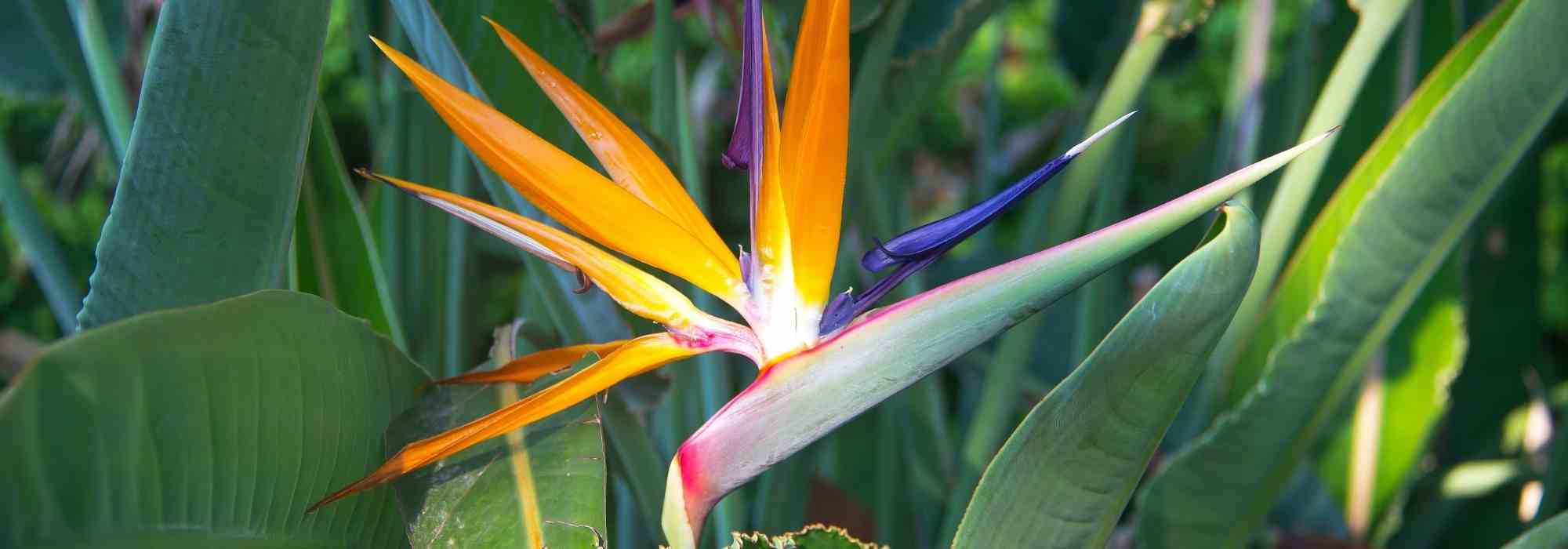
One can certainly choose to grow Strelitzia for its lush, exotic foliage. Its long, lanceolate leaves fan out in a palm-like arrangement, close to banana leaves, in a deep green that lends lushness to the garden. But many grow Strelitzia for its astonishing flowers, which earn it the vernacular name bird of paradise. What a challenge! The flowers indeed take the form of a tropical bird with iridescent colours, with a beak that juts out. Yet waiting for the first flower is often a source of frustration and disappointment. If your Strelitzia refuses to flower, there is a reason—perhaps several—as this tropical plant is quite demanding in terms of cultivation conditions.
Discover the most common causes of lack of flowering in your Strelitzia and practical solutions to see the first flowers bloom.
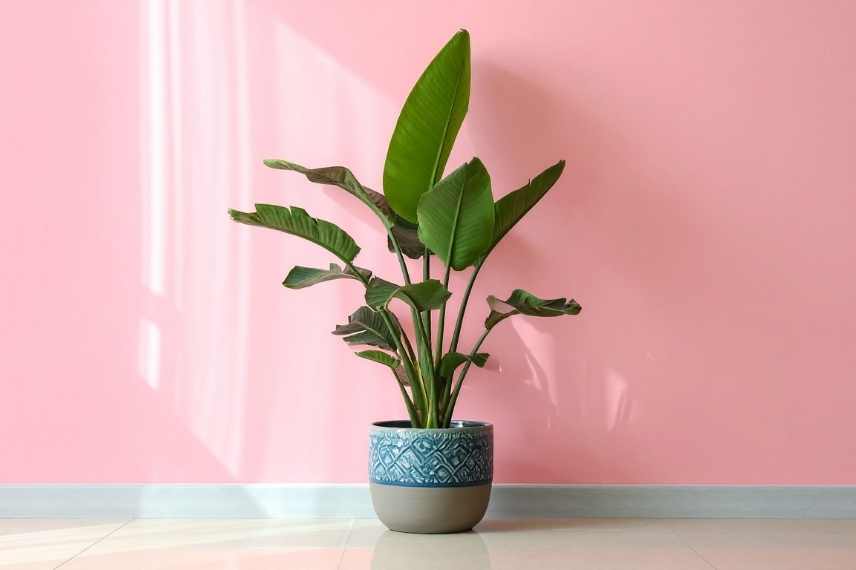
Even without flowers, Strelitzia is decorative thanks to its lush foliage

Your Strelitzia is too young
Age is certainly the most common and simplest reason for a Strelitzia not to flower. And many professionals forget to mention it!
In fact, the bird of paradise is not a plant in a hurry to produce its first flowers. To accumulate enough energy and develop the internal structures necessary for producing a flowering spike, the plant must reach a significant ripeness. Overall, a Strelitzia grown from sowing takes between 3 and 5 years before it is able to flower for the first time. And it is not uncommon for this period to extend to 6 to 7 years. That said, gardeners can quickly lose patience. But patience is the first virtue, especially for a gardener!
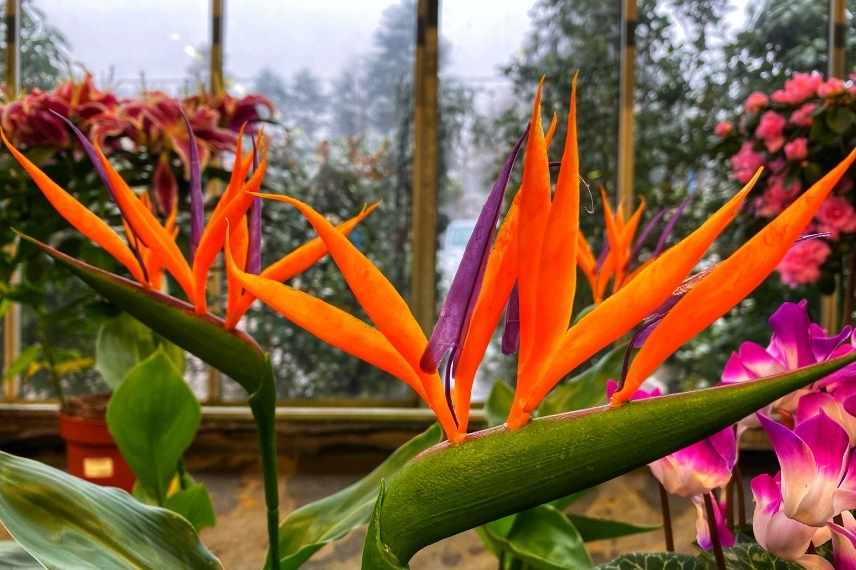
The bird of paradise isn’t in a rush to flower. You’ll have to wait between 3 and 6 years before seeing its first flower
Bird of paradise plants, propagated by clump division, generally flower earlier because they inherit the ripeness of the mother plant. That said, you will still need to wait until the root system is sufficiently dense and well established. This can take 2 to 3 years, depending on growing conditions, pot size…
Some species prove even slower to flower, as with Strelitzia nicolai which reaches its ripeness later than Strelitzia reginae.
What is the solution? Wait and be patient! And above all, provide it with ideal growing conditions so that your Strelitzia reaches its ripeness a little earlier.
The growing conditions are not being met
Your Strelitzia has reached a certain ripeness, but still no flowering on the horizon. Perhaps because its cultural needs are not being met. For the bird of paradise is a tropical plant, native to South Africa, relatively demanding. By contrast, if it lacks neither light, nor warmth, nor water and nor fertiliser, it becomes easy to live with. So, for it to flower, you simply need to provide it with everything it needs, regularly and consistently.
The vital need for light
Indoors, those who own a potted Strelitzia make a recurring mistake. It does not get enough light. Strelitzia is a full-sun plant in its natural habitat. To flower, it requires a maximum of bright, direct light, roughly 4 to 6 hours per day. Placed too far from a window or in a north-facing room, it will produce leaves, but not flowers.
What solution?
It is necessary to place the bird of paradise right in front of a south- or west-facing window. If natural light is insufficient, especially in winter, using a powerful horticultural LED supplementary lighting can make a huge difference and stimulate flowering. And, in summer, the potted Strelitzia can join the garden, balcony or terrace, preferably in partial shade.
In the Mediterranean region, Strelitzia can be planted in open ground. Plant it in full sun to give it maximum light.
Regular watering
Inappropriate watering can stress the plant, forcing it to set flowering aside to focus on survival. Excess water as well as water shortage are detrimental to flowering. Soil that is constantly waterlogged leads to root rot, which blocks nutrient uptake and, consequently, flowering. Prolonged drought also stresses the plant.
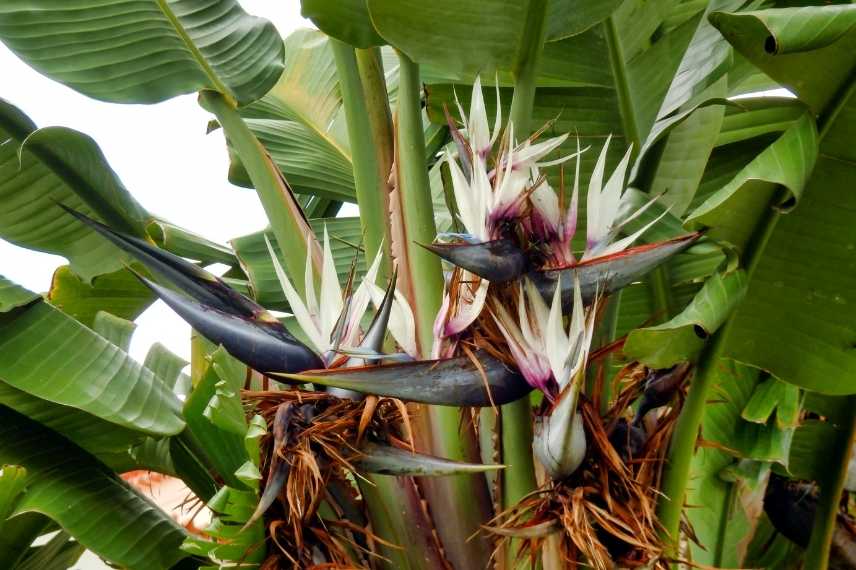
The pretty flowers of the Strelitzia nicolai
What solution?
Let the upper one-third or half of the substrate dry out completely between two waterings. Water thoroughly until water runs out at the bottom, then empty the saucer or cachepot. The substrate must be well-draining.
For Strelitzia grown in open ground, water regularly and copiously in summer, for the two years following planting.
A targeted fertiliser application
Flowering is an energy- and nutrient-intensive process. So fertiliser is essential. But not just any fertiliser! A fertiliser too rich in nitrogen (the first figure of the N-P-K) favours leaf production at the expense of flowers. A lack of phosphorus and potassium can also prevent flowering.
What solution?
- In spring and summer: use a liquid fertiliser for flowering plants or a balanced fertiliser (N-P-K similar or with higher P and K) every 2 to 4 weeks.
- In autumn and winter: stop or drastically reduce fertilisation during the rest period.
A Bird of Paradise that's been pampered too much
This title may surprise you. Yet, it is indeed the case. Unlike many plants that require comfort, Strelitzia often needs a touch of stress to trigger its flowering. This stress shows itself through two crucial factors: tight rooting and the winter dormancy period. A bit like succulents and cacti.
Pot choice
Strelitzia is a rhizomatous plant that likes its roots crowded. This signal tells the plant that it must reproduce, i.e. flower, before dying or running out of space. A pot that is too large encourages it to make only roots and leaves.
What solution?
- Avoid repotting every year. Repot the Strelitzia when the roots visibly protrude from the pot or lift the potting mix
- During repotting, choose a pot only very slightly larger, by just 2 to 4 cm. The root ball should feel snug
- Divide the plant if it has become too imposing and no longer flowers. Dividing the clump will encourage flowering in Strelitzia, but the divided sections must wait until they are mature to flower.
A winter dormancy under proper conditions
Strelitzia needs a marked winter dormancy to flower well the following spring. It is during this period that floral induction occurs. If you keep your Strelitzia at a constant temperature of 20 to 25 °C all year round, it flowers only very rarely.
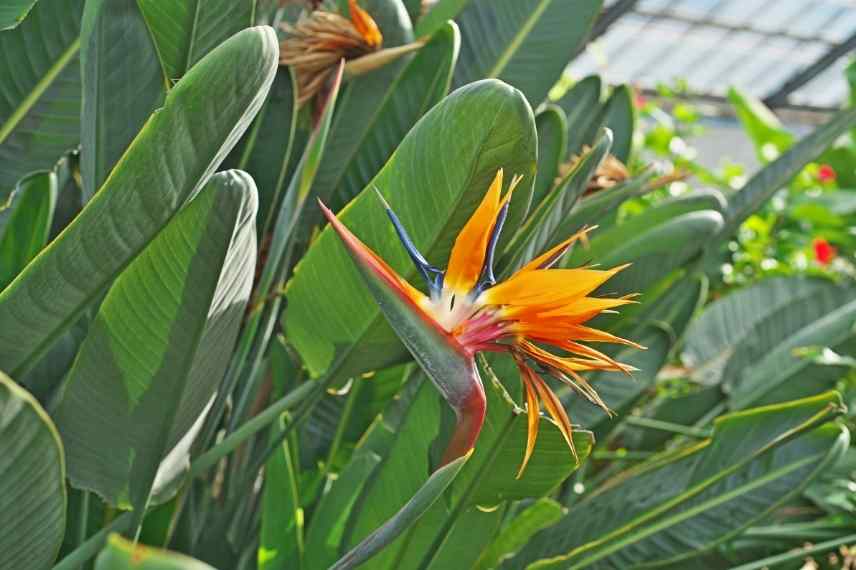
In winter, the Strelitzia needs to be overwintered at a temperature between 10 and 15 °C
What solution?
You must overwinter your Strelitzia in winter. The return to warmth and regular watering in spring will trigger flowering.
- Place your plant in a non-heated veranda, a winter garden or a bright garage from November to February. Ideally, the temperature should oscillate between 10 and 15 °C, especially at night
- Reduce watering during this rest period and allow the potting mix to dry out completely between two waterings.
When grown outdoors, this Strelitzia naturally experiences this temperature drop. However, it is best to mulch around the base and cover it with a winter protection fleece.
Read also
Growing Strelitzia in a potOther, rarer problems that prevent flowering
If your mature Strelitzia is grown according to best practice, you should look elsewhere for the causes of the lack of flowering:
- Substrate quality: a substrate that is too compact or clayey retains too much water, causing root asphyxia. You should therefore use a light, highly draining mix: a blend of standard potting compost, of perlite and of pine bark in almost equal proportions (1/3, 1/3, 1/3) is excellent. Make sure the pot’s drainage holes are clear
- Pest infestations: an infestation of pests such as mealybugs, red spider mites or whiteflies can sap the energy from the bird of paradise and prevent flowering. That’s why it’s essential to regularly inspect the undersides of the leaves and the sheaths. If a problem arises, treat immediately with a mild insecticidal soap
- Removing damaged leaves: contrary to popular belief, cutting leaves that are too damaged or split isn’t always a good idea. Strelitzia leaves are large and can split naturally with wind or time, but each leaf contributes a great deal of energy through photosynthesis. That’s why leaves should only be removed when they are yellow-brown, and completely dead.
- Subscribe!
- Contents
Comments