






























Vriesea Diseases and Parasitic Pests
Identification, prevention and natural solutions
Contents
The Vriesea is a houseplant that we value for its foliage, which forms pretty rosettes, sometimes quite colourful. Its flowering is also ornamental. This epiphytic plant is fairly easy to grow, provided its basic needs for humidity and indirect light are met. But it can, however, fall prey to diseases and parasitic pests, the most common among houseplants. Discover how to identify the symptoms, prevent problems and treat a Vriesea naturally.

Parasitic pests of Vriesea
Like other houseplants, the Vriesea can be attacked by various pests. Very common, these piercing-sucking insects and mites feed on its sap. If they are few in number, damage is limited. But they have a high capacity for proliferation, and an infestation can jeopardise the plant’s health.
Thrips
Thrips are dreaded because their presence is very difficult to notice at first. Very small and black or translucent in colour, they hide from light by staying discreetly on the underside of the rosette leaves. It is only once early symptoms have developed that their presence becomes noticeable. Leaves discolour, revealing brown or silvery spots, which could resemble sunburn. Small black specks, corresponding to these pests’ excrement, are also visible on the foliage. In the long term, the plant’s growth is affected, since thrips puncture new leaves, altering their development.
To learn more, discover our article: Thrips: identification and natural treatment.
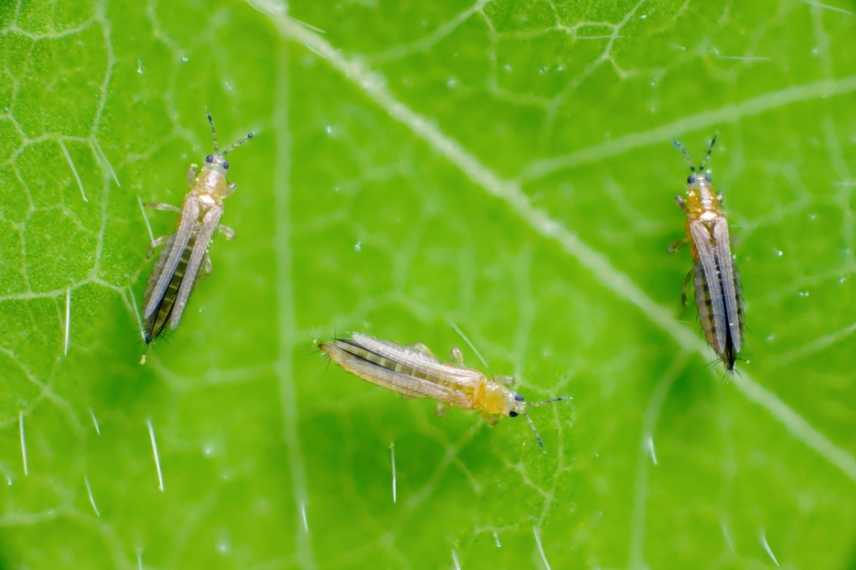
Thrips are almost invisible to the naked eye
Mealybugs
Their name gives a helpful clue to their main physical characteristic: they are white insects coated with a cottony texture. They form clusters at the base of the rosette leaves in the Vriesea. By piercing the plant, they contribute to weakening it but can also create entry points for viruses, fungi or bacteria. Notably, they produce honeydew. This sticky substance promotes sooty mould, a fungal disease that affects photosynthesis. It is the sticky black patches on the foliage, resembling soot, that betray their development.
To learn more, discover our article: Mealybug: identification and treatment.
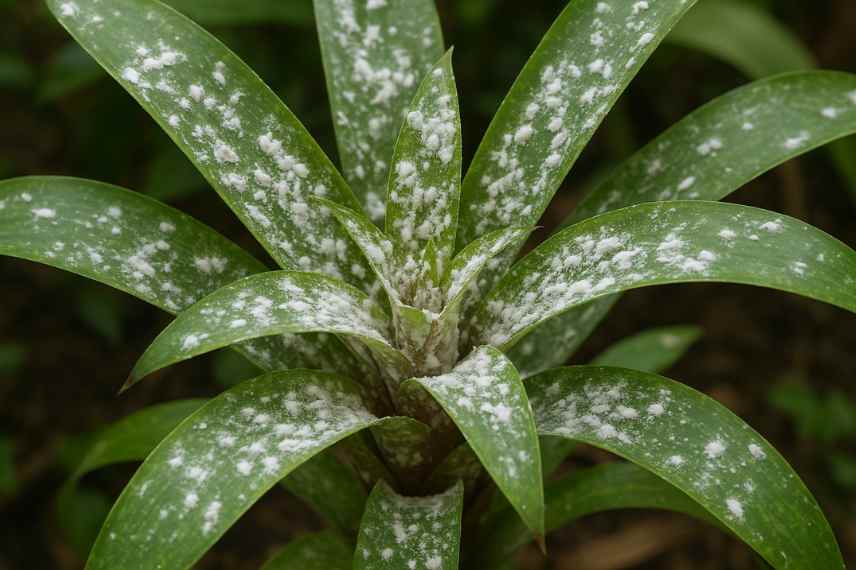
Severe mealybug infestation on a Guzmania, an indoor plant in the same family as Vriesea (AI-generated image)
Spider mites
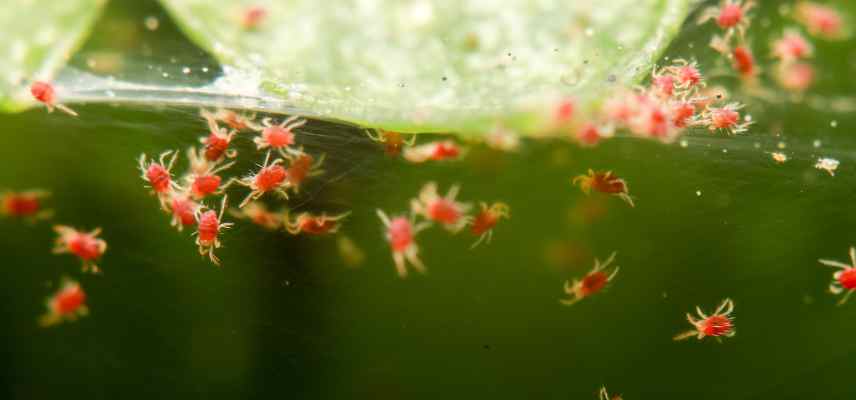
Here, these are not insects, but mites. Red spider mites are very difficult to see with the naked eye. Their fine webs, like spider silk, from which their name derives, allow them to be detected. In parallel, Vriesea leaves will develop yellow or brown spots.
To learn more, discover our article: Red spider mite: identification and treatment.
Prevention of Vriesea pests
Prevention involves acting before an infestation is confirmed. To begin with, regular monitoring is essential. Take advantage of the watering or leaf-dusting routine to ensure that no symptoms have appeared.
Next, meet the Vriesea’s needs. This is the best way to obtain a plant resilient to potential attacks. As a reminder, this epiphytic plant requires:
- a well-drained substrate, in which water does not stagnate;
- regular watering at the centre of its rosette;
- indirect light, i.e. not exposed to the harsh rays of the sun (preferably East or West);
- a humid environment;
- a temperature between 18 and 24 °C year-round.
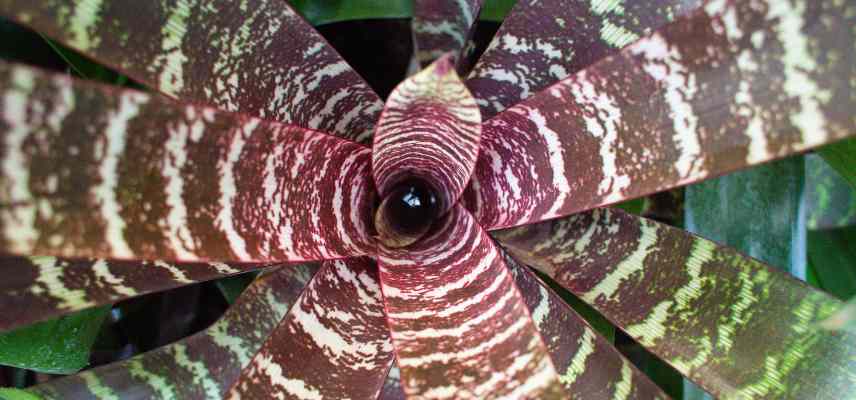
Water at the centre of the rosette, with no excess.
Natural solutions in case of pest attacks
Is it too late and pests have already colonised your Vriesea? Start by rinsing the foliage to dislodge as many unwanted visitors as possible. Let the plant drain well and do not leave excess water in the rosette.
If the unwanted visitors are still present, switch to a natural insecticidal treatment based on pure black soap. The recipe is very simple: mix 1 to 2 tablespoons of black soap in 1 litre of warm water. Pour into a spray bottle and spray onto the Vriesea’s foliage. A second application after seven days can be planned.
Against mealybugs, the foliage can be gently cleaned with a cloth dampened with 70% alcohol.
Cryptogamic diseases of Vriesea
Vriesea is sensitive to overwatering, which can promote fungal diseases.
Heart rot
Vriesea is typically watered mainly by its rosette of leaves. In the wild, this is indeed how it captures rainwater or dew and stores it in this natural cup. But with excess water, this can cause heart rot, leading to the plant’s decline. The foliage will then rot, become soft and emit a bad odour.
Leaf spots
Another sign of excess moisture: the appearance of black spots on the foliage. If the disease spreads, it causes the foliage to drop and, of course, affects the plant’s health.
Prevention of fungal diseases
There is not always a treatment once the fungal disease has become established, which is why prevention is essential.
Avoid overfilling the rosette, so that water can be absorbed between waterings. Use room-temperature water and never leave the plant at a temperature below 18°C. Also beware of draughts.
The substrate’s nature is also important, even though soil watering is more limited: it must be well drained, to prevent moisture from stagnating. Ideally, place the Vriesea in a terracotta pot, which will allow the soil to breathe better.
Natural remedies for diseases
If the Vriesea’s rosette starts to rot and emit a bad odour, remove it and cut away the affected leaves with clean tools. Space out the waterings.
In case of spots on the foliage, remove the affected areas and relocate your plant to a warmer, better-ventilated spot.
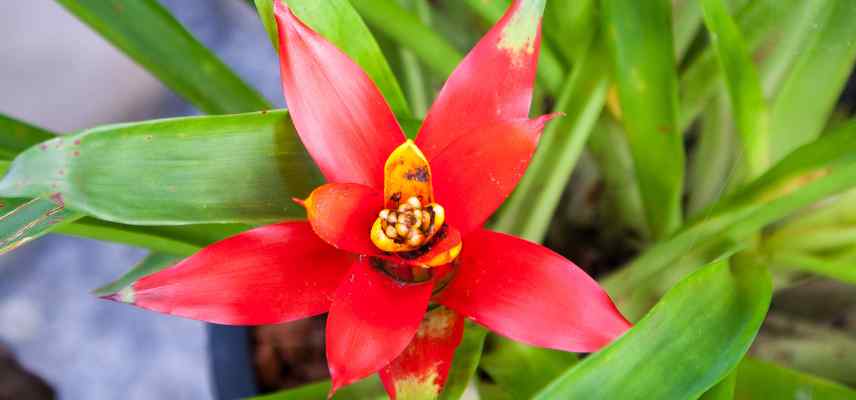
With proper care, a Vriesea will reward you with a beautiful flowering
- Subscribe!
- Contents
Comments