





























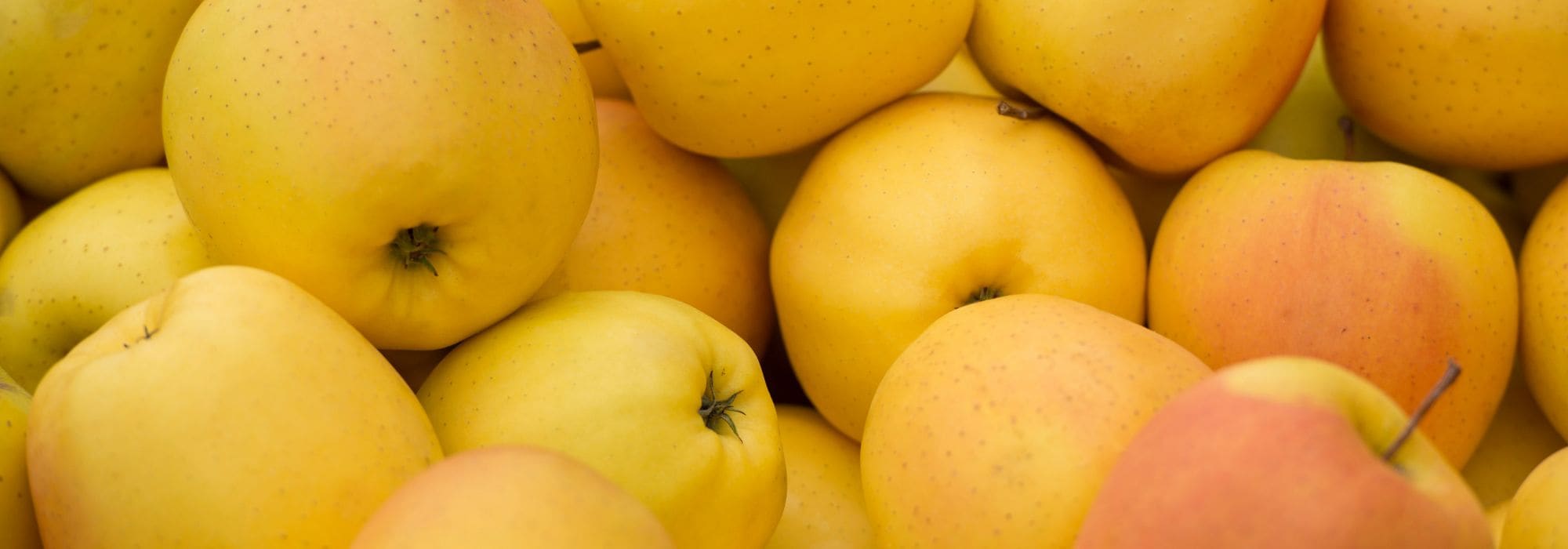
Yellow apple: the 5 best varieties to plant in the orchard
Selection of apple trees that produce the best yellow apples
Contents
There are thousands of apple varieties around the world, with hundreds in France, both old and more recent, resulting from cross-breeding and hybridization. Choosing an apple tree can therefore be quite a puzzle. However, several criteria can be considered to refine your choice and plant lesser-known apple trees. You can choose apples based on their sweetness or acidity, their early ripening or storage potential, their intended use, or the firmness or crunchiness of their flesh…
A simpler choice can also be made based on the colour of their skin. In this article, I will present a selection of the best apple tree varieties that produce beautiful and delicious yellow apples.

'Golden Delicious', the essential yellow apple
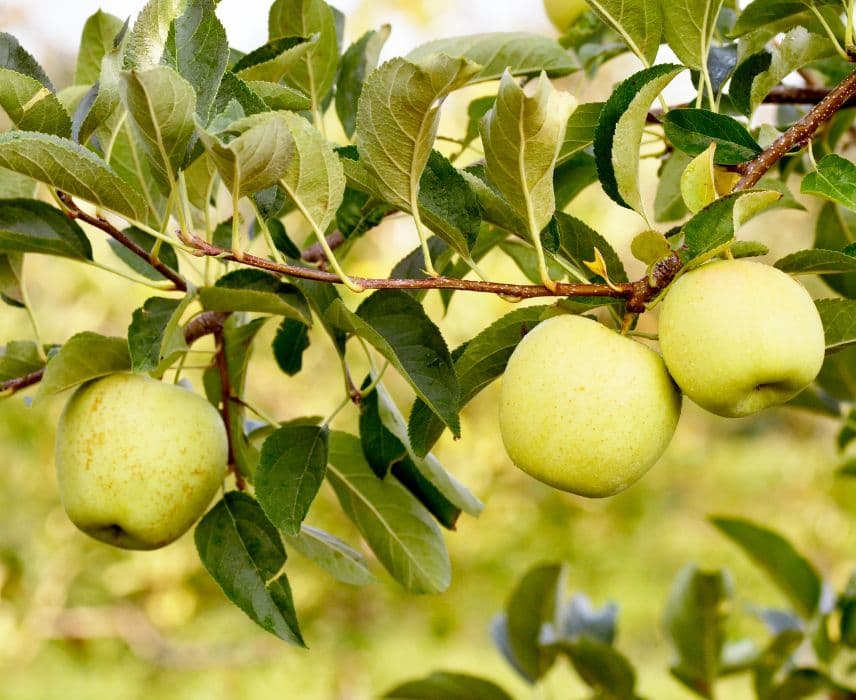
Difficult to overlook the Golden (Delicious) when discussing yellow apples, as it is so popular. In fact, it is the most consumed apple in France! Perhaps because it is a highly productive variety, very easy to grow, and adapts to all regions of the territory thanks to its good hardiness. Moreover, it benefits from a quick and regular fruiting.
This variety produces fairly large, triconical fruits, with a uniform golden yellow. Its flesh, fine and crunchy, often very juicy, is perfectly balanced in sugar with a very slightly tangy flavour. While it is widely consumed as a dessert apple, it can also be cooked and prepared in desserts or savoury dishes.
Planting, growing and harvesting
- ‘Golden Delicious’ flowers in April and the apples are harvested from the end of September to October. They can be stored for six months
- This apple tree reaches 4 to 5 m in height and has a semi-upright habit
- It is a good pollinator variety, but it should be planted alongside Reine des Reinettes, Melrose, or Granny Smith to ensure good fruiting.
Read also
Apple tree: planting, pruning and care'Chanteclerc', the queen of tarts!
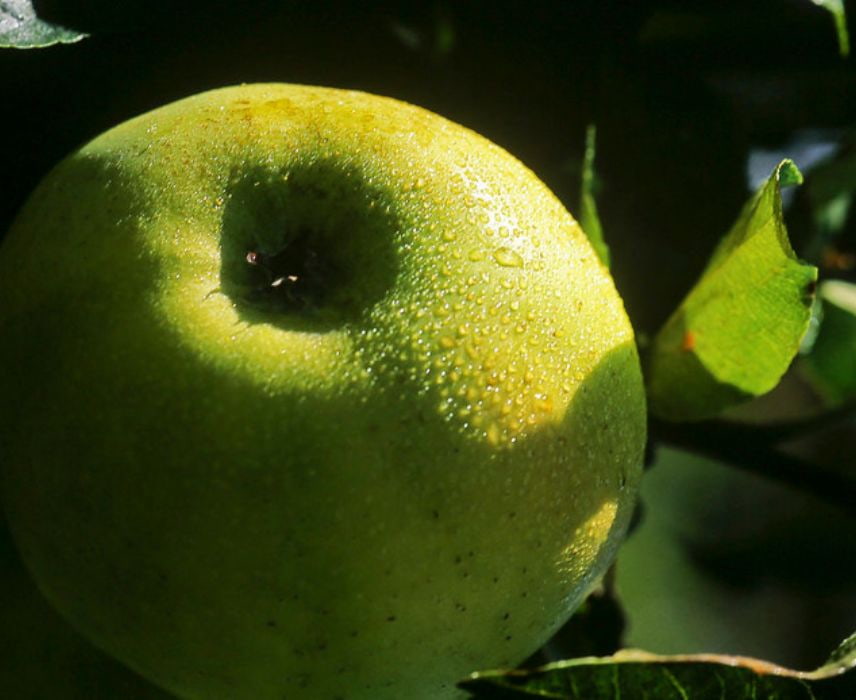
Also known as Belchard® apple, the variety ‘Chanteclerc’ is a highly regarded eating apple, as it offers a well-balanced mix of sweetness and acidity. It is also an ideal apple for making pies. It is the result of a cross-breeding between ‘Golden Delicious’ and ‘Reinette Clochard’, parents that provide it with good vigour, high productivity, and excellent flavour quality.
Beneath its golden-yellow skin, speckled with brown lenticels, lies a fine, melting, highly fragrant, and juicy flesh. It is an excellent apple for eating fresh and can also be used in compotes, sautéed dishes, or juice. Not to mention the savoury dishes it enhances with its sweet and tangy flavour.
The fruits are of medium to large size, slightly flattened, and have a skin marked by roughness.
©Jean Weber
Planting, growing, and harvesting
- ‘Belchard® Chanteclerc’ blooms in April with pinkish-white flowers, and the harvest occurs about three weeks after that of ‘Golden Delicious’, in early October. They can be stored until May.
- This apple tree reaches a height of 4 m and has a semi-upright habit.
- It begins to bear fruit as early as 4 years.
- It is moderately susceptible to the main apple diseases, namely apple scab, powdery mildew, canker, and fire blight.
- It should be planted alongside ‘Golden Delicious’, ‘Granny Smith’, or ‘Reine des Reinettes’ to ensure good fruiting.
Discover other Apple trees
View all →
Available in 1 sizes
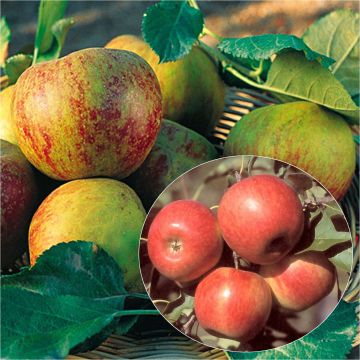
Available in 0 sizes
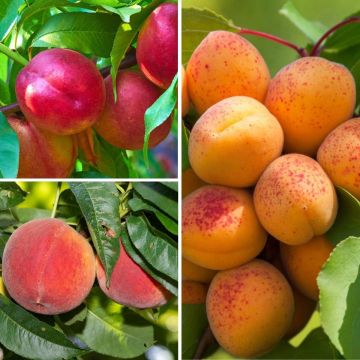
Available in 0 sizes
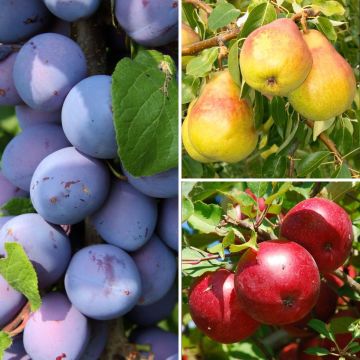
Available in 0 sizes
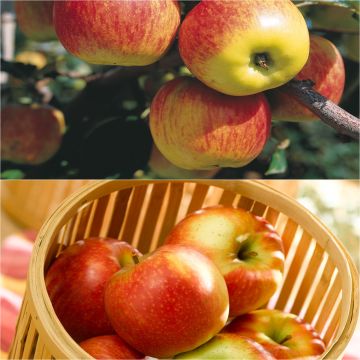
Available in 0 sizes
Available in 4 sizes
Available in 1 sizes
Available in 2 sizes
Available in 2 sizes
Available in 3 sizes
The 'Reinette de Caux', with large yellow and gold fruits
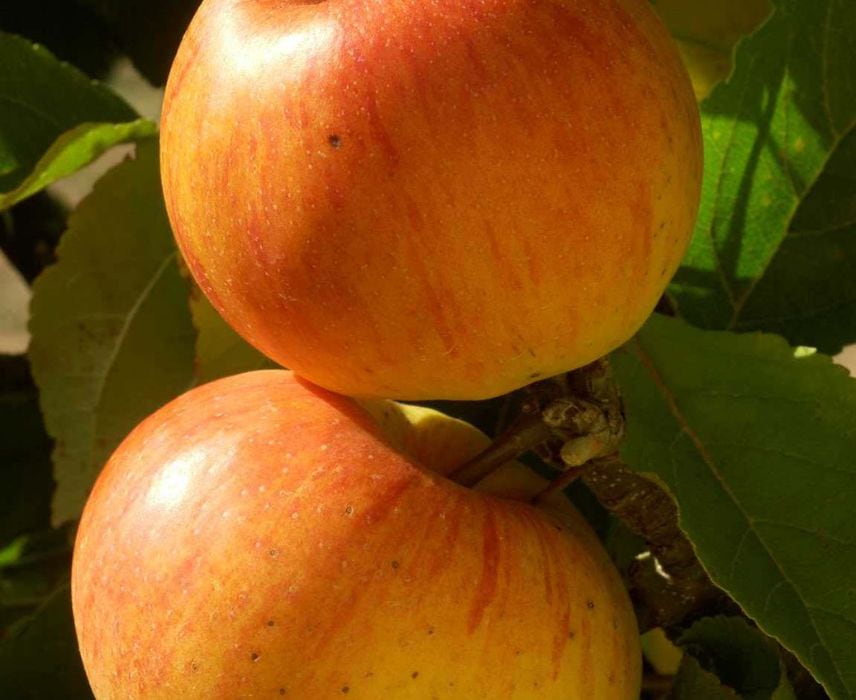
‘Reinette de Caux’ is a particularly vigorous and productive apple variety, hardy down to -20 °C, and resistant to branch canker. It thrives in temperate regions, especially Normandy. Moreover, its apples are used for cider production. They are also delicious when enjoyed raw or cooked, incorporated into pastries.
This variety produces golden-yellow apples, streaked with crimson red, with a pale yellowish-white, fine and firm, juicy flesh, with a sweeter than tart flavour, and above all, very fragrant. Its fruits are quite large.
©Hortival Diffusion
Planting, grpwo,g and harvest
- ‘Reinette de Caux’ blooms in the second half of April with white flowers. The fruits reach ripeness from mid-October to early November, and can be consumed from January until April
- The tree has a spreading habit, reaching 5 m in height and 3 m in spread
- Not self-fertile, it must be pollinated by ‘Reine des Reinettes’.
The 'Winter Banana', fruits that are sulphur yellow and blush in the sun
‘Winter Banana’ is a variety originating from the state of Indiana in the USA, where it was developed in 1876. It is known for its extreme vigour and rapid fruiting. It is particularly remarkable for its musky banana flavour, which gives it its name.
Winter Banana apples are of large size. They are rather spherical and flattened, irregular, and have a crease running from top to bottom. Their creamy yellow flesh is very sweet, fine and tender, rather firm and not very juicy. It is a knife apple, suitable for juicing and cider. Their skin is sulphur yellow but turns pink in the sun.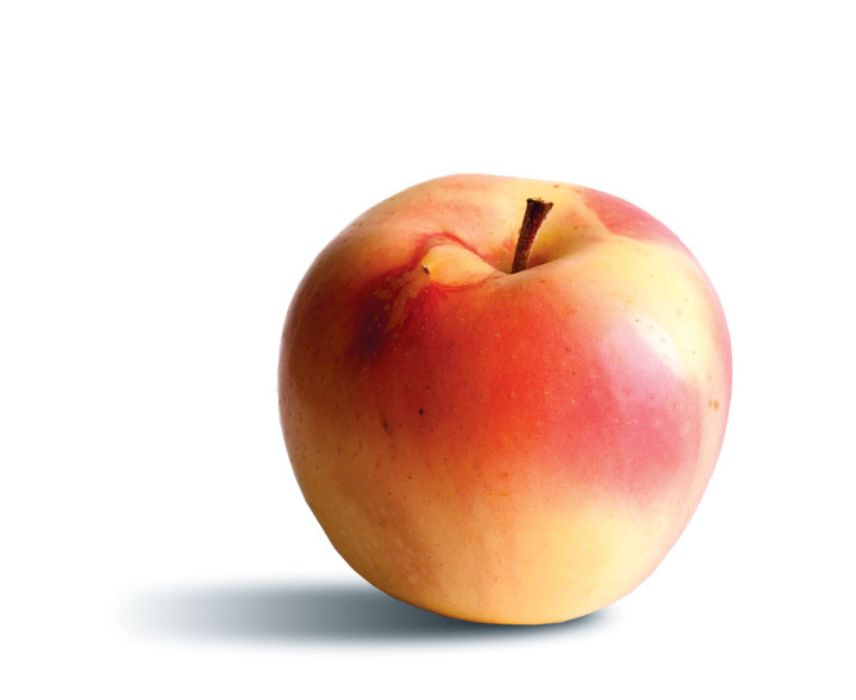
Planting, grpwo,g and harvest
- ‘Winter Banana’ flowers in March, with apple harvest occurring in October. They can be stored in a cool place until February, but they tend to become mealy.
- The tree has a spreading habit and reaches 5 m in height and 4 m in spread.
- It is an apple tree resistant to diseases and makes an excellent pollinator. However, it is not self-fertile.
The 'Transparente de Croncels', an ancient variety that is very vigorous
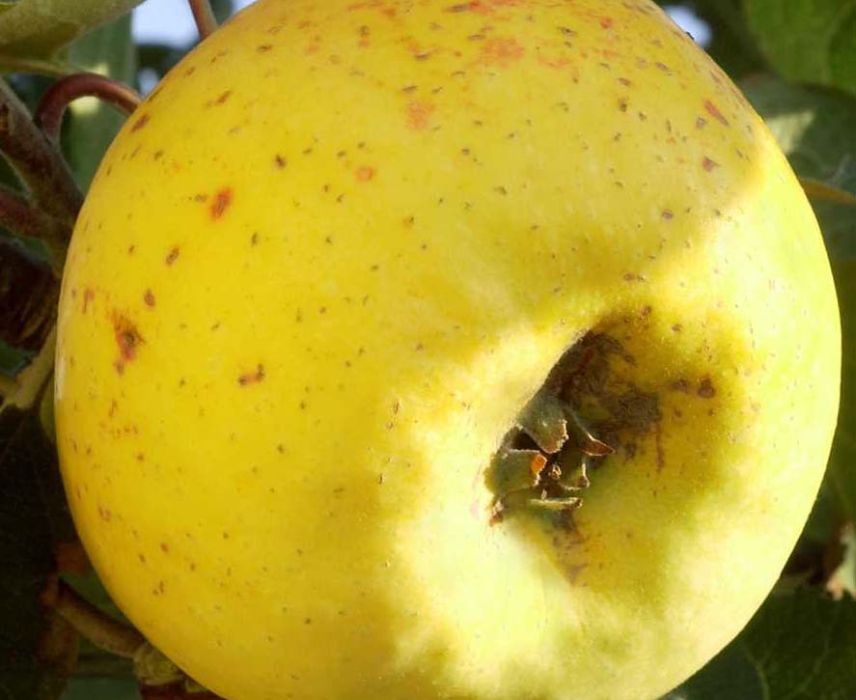
‘Transparente de Croncels’ is a variety that produces light yellow apples of excellent taste quality. It is an early variety that is highly resistant to diseases and winter cold. It is very productive.
The flesh of its apples, with a smooth pale yellow skin marked with small grey dots, is tender and juicy, sweet and slightly tangy. Highly fragrant, this apple contains aromas of almond or fresh hazelnut. It can be used for baking, jelly, or compote. It is excellent when cooked in the oven or as a dessert apple. Its only drawback is its short shelf life.
©Hortival Diffusion
Planting, growing, and harvest
- ‘Transparente de Croncels’ blooms in April with pinkish white flowers. Its apples are harvested from late August to early October
- The tree reaches 4 m in all directions
- It is a pollinator variety, but ‘Reine des Reinettes’ or ‘Cox’s Orange’, another apple tree with yellow-orange fruit striped with red, will ensure its pollination.
- Subscribe!
- Contents
Comments