





























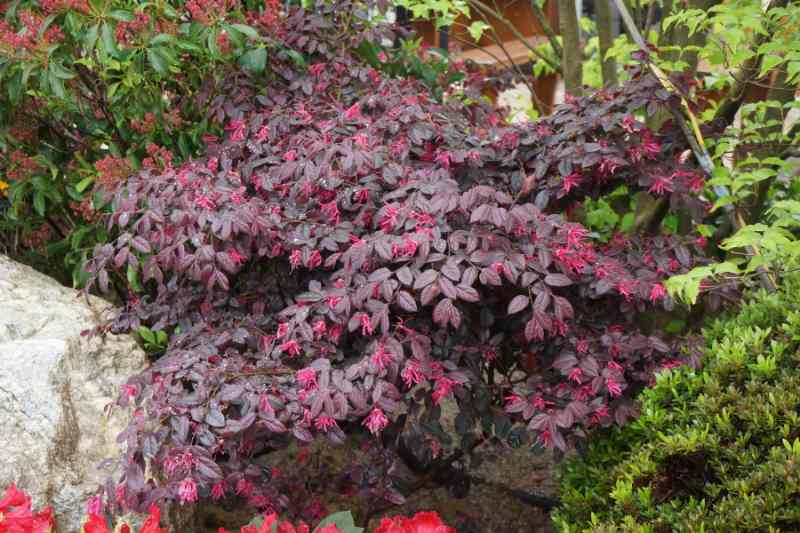
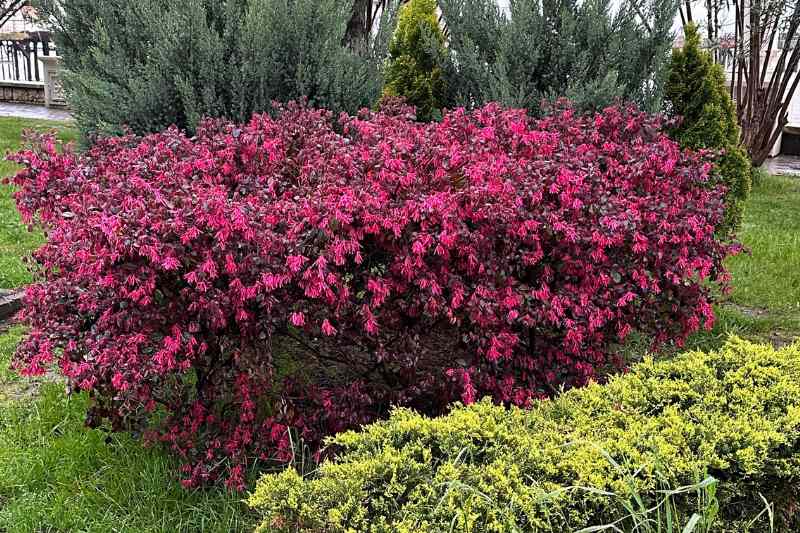
The Chinese Loropetalum is an evergreen bush appreciated for its purple foliage and spring flowering in pink, red or white pom-poms. The Loropetalum's growth is moderate, and depending on the variety, such as the Loropetalum 'Black Pearl', its height can reach 1 to 2 metres. A light pruning of Loropetalum is enough to maintain its compact habit. Discover the right pruning practices for trimming this bush!
When to prune Loropetalum?
The pruning is carried out just after flowering, usually in spring (April–May depending on the region). This helps avoid compromising the following year’s flowering, as Loropetalum flowers on wood produced the previous year.
Why prune Loropetalum?
- Balance the bush’s form, especially if it becomes too wide or unruly, by modulating the Loropetalum's height.
- Remove dead or damaged branches.
- Encourage good air circulation through the centre of the plant, thereby reducing disease.

How to prune Loropetalum?
Tools required
- Pruning shear well sharpened and disinfected
- Gardening gloves
A severe pruning of Loropetalum is not necessary, as this shrub grows slowly. Loropetalum does not also need to be pruned to flower. It flowers naturally on the wood of the previous year without the need for specific pruning, but a too severe cut, especially on old wood, can block flowering. Therefore, prune lightly, just after flowering, keeping the new shoots.
- Identify flowering branches, weak shoots or inward-facing growth.
- Remove faded flowers just above healthy foliage.
- Slightly shorten overly long shoots.
- Remove dead or damaged branches at the base.
- Make a cut 5 to 10 cm above a bud, to encourage branching.
- Clear the base of the plant to promote air circulation.
After pruning Loropetalum
Water moderately if spring is dry. Mulch the base to retain moisture and protect the roots. Watch for new shoots, a sign of good recovery.
Want to know more about this shrub? Discover our complete guide: "Loropetalum: planting, pruning and maintenance"


Comments