


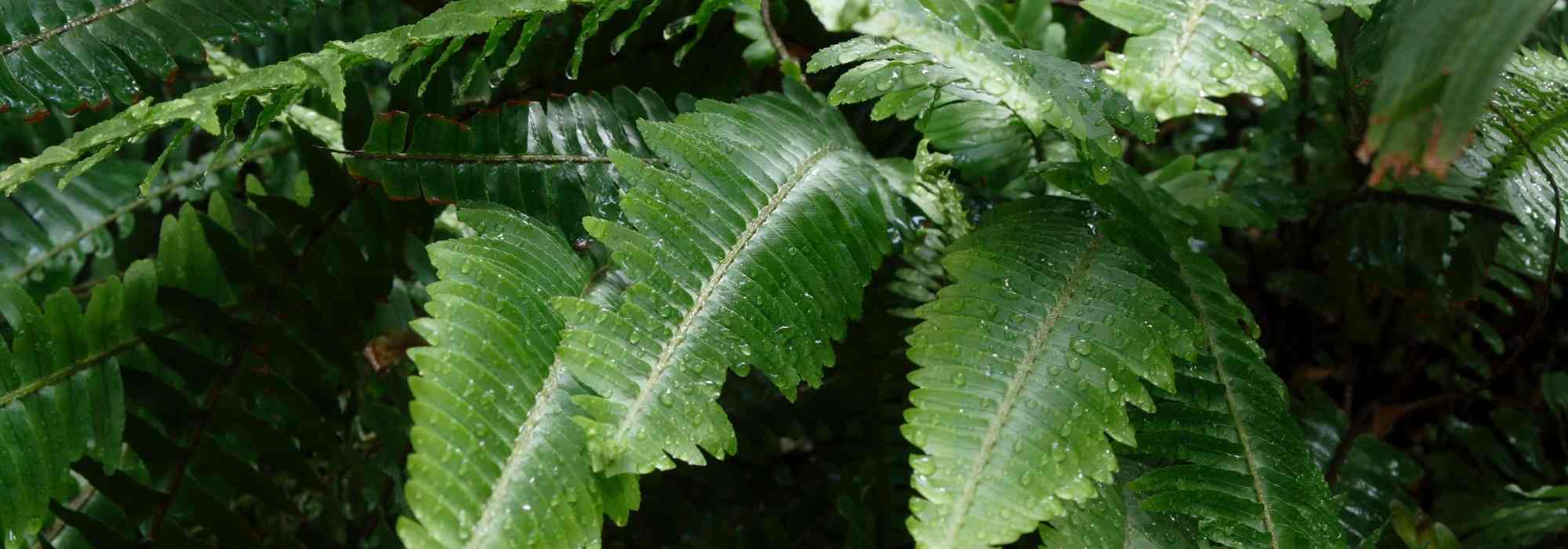
Boston fern indoors: Common diseases and parasitic problems
Identify, treat and prevent Nephrolepis diseases
Contents
The Boston fern (Nephrolepis) is the star indoor plant, topping the list of air-purifying plants. Full of benefits, the Boston fern absorbs moisture in your home and filters formaldehyde and xylene very effectively. In addition to its air-purifying ability, it is also prized for its luxuriant foliage. Although relatively hardy, it is not immune to diseases and parasitic pests. Much like all houseplants. Most problems encountered are usually due to poor growing conditions, notably a watering imbalance.
Brown spot disease in a Boston fern, yellow leaves or wilting, discover how to avoid having a diseased Boston fern.

Boston fern pests
Pests are one of the main threats to the Nephrolepis. Too dry air, typical of heated interiors, is the environmental factor that most promotes their appearance. Native to humid tropical regions, the Boston fern requires air humidity of at least 60%. That is why it is essential to mist the plant every day year-round. You can also place the Boston fern on a saucer filled with water-soaked clay balls.
Mealybugs
The mealybugs are arguably the pests most problematic for the Boston fern. These piercing-sucking insects feed on the plant’s sap, significantly weakening it. Powdery mealybugs can be found, forming small white cottony masses, often at the base of the fronds, on the stems or under the leaves. As for shield scale, they are identifiable by small brownish or yellowish bumps, motionless, resembling tiny shells.
Symptoms
- They produce a sticky honeydew that can subsequently promote the growth of a black mould, the sooty mould
- The fronds weaken, yellow, deform and the Boston fern dries out.
What to do?
- In light infestations, remove them gently with a cotton bud dipped in methylated spirits or diluted 90% alcohol.
- Spray a solution of water and black soap, together with a little vegetable oil (for better adhesion) and 70°C alcohol on all parts of the plant, including the undersides of the fronds. Repeat the treatment several times at intervals of a few days.
Red spider mites
The red spider mites are tiny mites that proliferate rapidly in warm, dry air. Despite their name, they are often yellowish or greenish and are difficult to see with the naked eye.
Symptoms
The first signs are the appearance of yellow or discoloured spots on the fronds, which take on a dull, speckled appearance. In cases of heavy infestation, they spin fine, tiny spider webs between the fronds and the stems. The fronds eventually turn brown and drop.
What to do?
- Isolate the plant and shower it to remove as many mites as possible
- Mist the foliage regularly to increase humidity, as they dislike water.
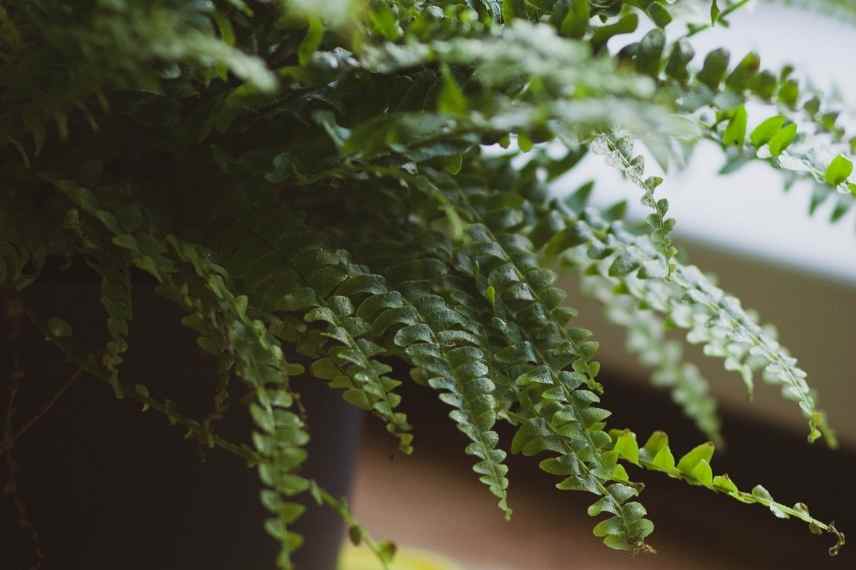
To prevent pests, the Boston fern should have humidity of at least 60%
Fungus gnats
Fungus gnats (sciarids) are small black flying insects attracted by an overly damp potting mix. They lay their eggs there, and the larvae feed on the roots. To eliminate them, repot!
To prevent their appearance, the surface of the substrate must be allowed to dry between waterings. The use of yellow sticky traps (yellow sticky traps, 25 x 10 cm, pack of 10) helps to prevent proliferation.
Thrips
Thrips are small slender insects that leave small silvery speckles and tiny black excrement on the leaves. To eliminate them, isolate the plant and use an insecticidal soap (black soap).
Fungal diseases of Nephrolepis
Cryptogamic diseases are often the result of excess moisture in Boston ferns, at the roots or from poor air circulation.
Root rot and brown fronds
This is the most common disease, usually linked to excess water. This disease caused by the fungus Phytophthora may have other causes, such as poor drainage or a substrate that is too compact.
Symptoms
Wilting of the Boston fern is observed, and the fronds brown as if, paradoxically, they lacked water. The roots are soft, brown and smell bad. The base of the plant may become soft and black.
What to do?
-
- Stop watering immediately
- If rot is advanced, repot the plant into a new, well-drained substrate after removing all rotten roots and the most severely affected fronds
- As a precaution, ensure the pot has adequate drainage holes. Allow the substrate to dry slightly on the surface between waterings. Avoid leaving standing water in the saucer.
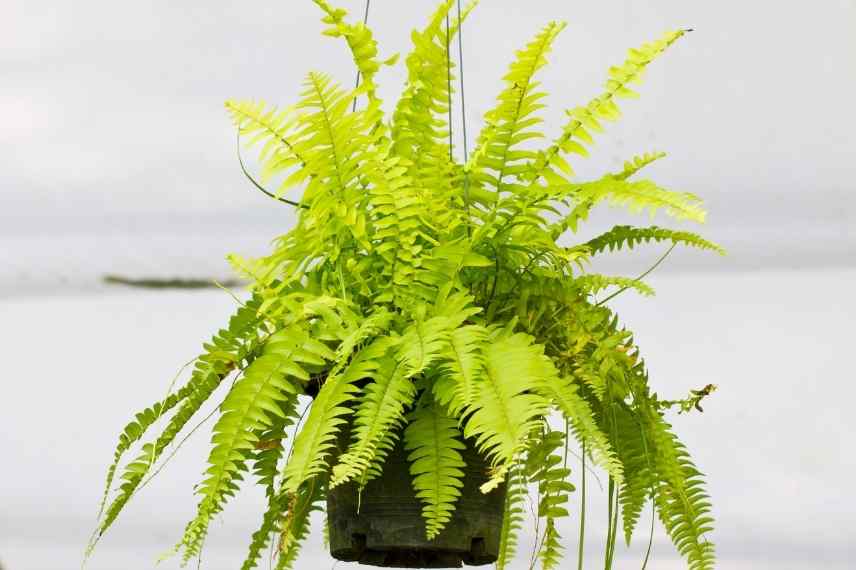
Root rot is the most common fungal disease among Boston ferns
Brown spot diseases of the Boston fern
Several fungi (Colletotrichum, Alternaria) can cause leaf spots, due to excessive humidity or poor air circulation.
Symptoms
Brown or black spots, often circular, appear. They can spread and join, resulting in thebrowning of fern fronds and the death of entire sections of fronds.
What to do?
- Remove and destroy immediately the affected fronds
- Ensure good ventilation and avoid wetting the foliage during watering.
Environment-related diseases of the Boston fern
The Boston fern reacts strongly to environmental stress.
- The fronds are yellow or pale : this symptom may be due to an excess of direct light or a lack of nutrients. In the first case, move the plant to bright indirect light. And, in the second, fertilise with a special houseplant fertiliser, following the recommended half-dose
- The edges of the leaves are brown and dry : the air is too dry because of central heating. Mist the fern or place it on a bed of damp clay pebbles. This problem can also be caused by irregular watering or a cold draught.
- Subscribe!
- Contents
Comments