


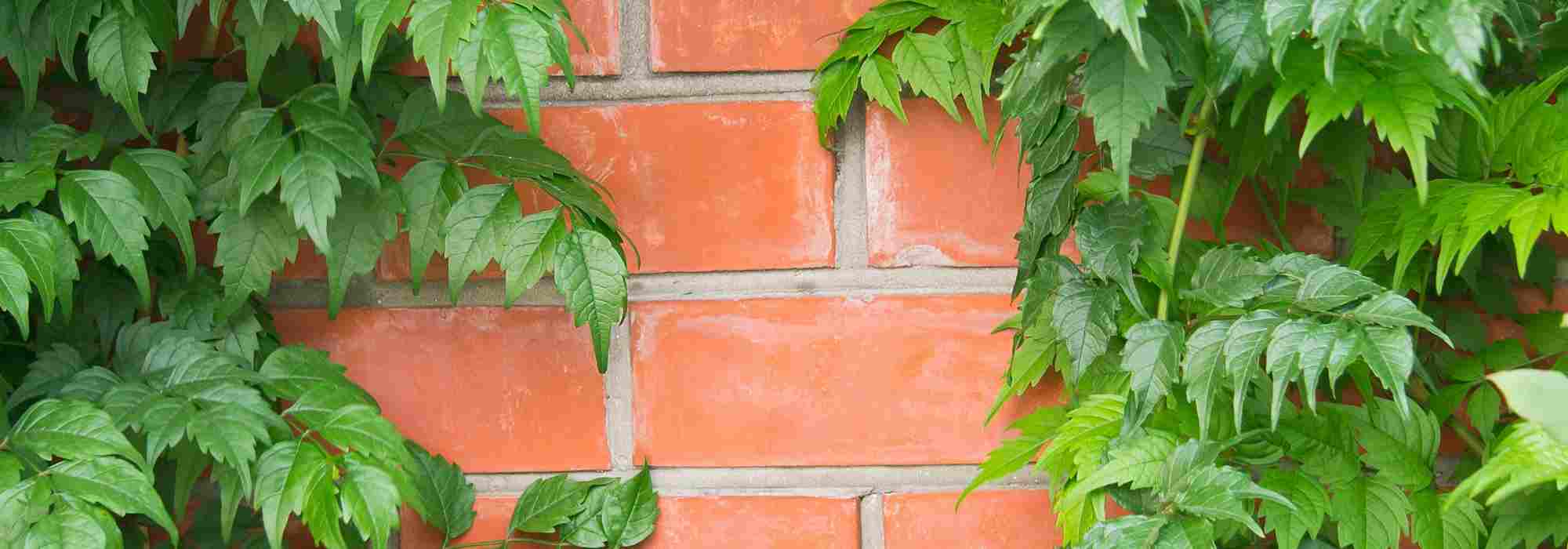
Climbing plants to avoid, so as not to damage walls
Varieties to avoid and ways to prevent damage to walls
Contents
Climbing plants are among the garden’s must-haves. There are climbing plants to suit every taste, offering foliage, flowering or even decorative fruiting.
Versatile, climbing plants can dress a pergola, an arch or a gloriette, as well as cover a bank or provide privacy from prying eyes. But they are also particularly interesting for concealing unsightly structures, by integrating them more harmoniously into the landscape. Sheds, walls, facades… so many elements that can clash and will benefit from being dressed with a climbing plant. However, to avoid making mistakes, it is important to take a few precautions. Some climbing plants are indeed reputed to cause damage to structures, due to their strong attachment system.
So, here we see which climbing plants to avoid on a house wall and which alternatives are possible.

A quick recap of the different attachment methods used by climbing plants
To scale the supports at their disposal, climbing plants will use different attachment systems.
- Climbing roots or adhesive roots. They can then climb on even smooth supports on their own, without the need to be staked or trellised. They development, in fact, aerial roots that can adhere firmly to surfaces.
- Suction cups or adhesive pads. As with some marine animals, these climbing plants have small adhesive discs that allow them to grip supports spontaneously, even smooth ones.
- Twining stems or tendrils. These are flexible stems that coil around nearby supports, like mini lassos or corkscrews. However, these plants cannot attach themselves to a smooth surface.
- Thorns. Some plants use them as makeshift grapnels to cling to supports. Again, they cannot colonise space without horizontal trellising.
For more information, read our article: Climbing plant: the different attachment systems.
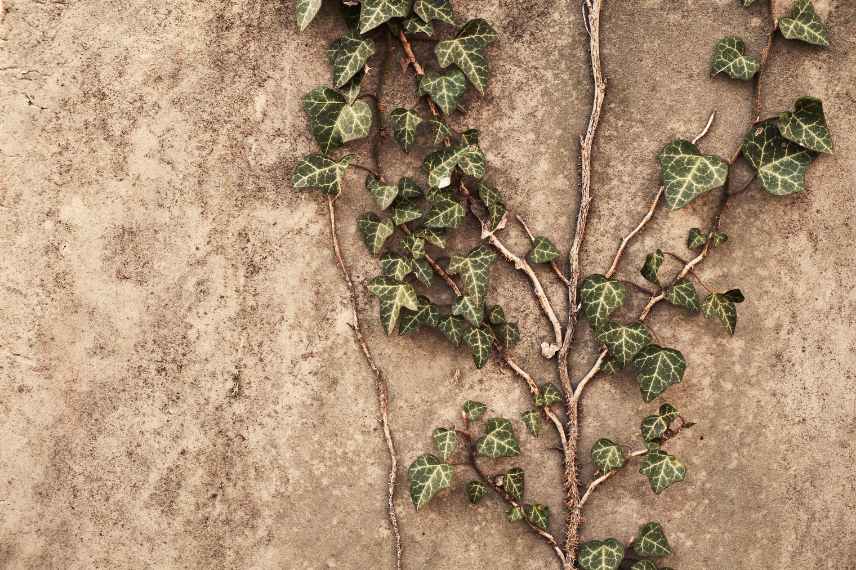
Ivy has highly effective climbing roots for attaching to a vertical surface
Damage to a wall caused by climbing plants
It is mainly climbing plants with climbing roots or adhesive roots that can cause damage to a wall or other structures, as they attach directly to the surface, with no intermediate support.
They can then contribute to:
- causing the render to peel away;
- widening cracks;
- causing the crumbling of some soft stones;
- staining coatings when they are removed or pruned;
- damaging the paintwork;
- retaining moisture and promoting water ingress;
- lifting roof tiles.
All of which contribute to the weakening and deterioration of the walls.
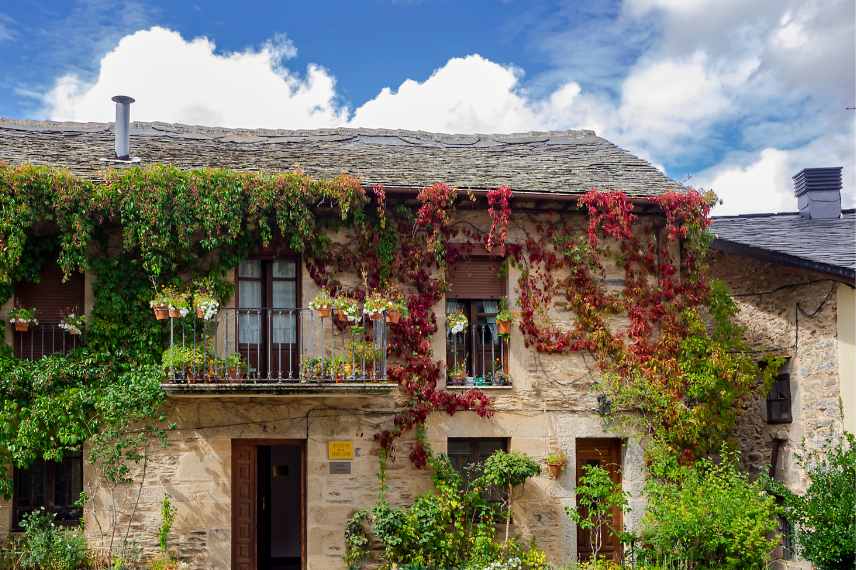
If left unchecked, climbing plants can damage gutters or even roofs
Which climbing plants are most likely to damage the walls of our house?
Among climbing plants to avoid on a wall or façade, the following are worth noting:
- Ivy (Hedera helix);
- the Virginia trumpet creeper (Campsis radicans);
- the climbing hydrangea (Hydrangea petiolaris or Hydrangea anomala).
They should be strictly avoided if the wall is already weakened. It is also recommended never to train a plant directly against a wooden house wall, as this material requires regular maintenance to age well and will not tolerate constant damp.
On the other hand, on a healthy support, that is, on a wall in good repair, which is neither cracked nor damaged and which provides good watertightness, these climbing plants with climbing roots will not cause any particular damage.
Other plants at risk for house walls: those that become very heavy and sprawling. Indeed, it is important not to neglect the weight a climbing plant can reach after a few years. This is what allows proper management of staking or trellising if necessary. If poorly supported, it can be dragged down by the weight of the vegetation and therefore damage the house walls. The plants particularly vigorous, such as the wisteria, whose lignified branches are capable of breaking or bending iron wires and cables, should therefore have a well-secured system. The same applies to rambling roses, which can reach several metres in height and weigh a great deal. Also note honeysuckle, whose some particularly vigorous varieties can become invasive and difficult to control if they climb along a house wall.

Rambling roses and overly exuberant wisterias, Virginia creeper: some climbing plants should be treated with caution
How can you grow them safely against a wall or facade?
If you still wish to cultivate these climbing plants on the wall of your house, start by checking that it is in good condition: it must not crumble, have cracks or delamination.
Then, remember to regularly control the growth of these climbing plants, so that they do not appear too exuberant. Most of them indeed have rapid growth and are quite vigorous. A pruning at the end of winter will help manage their expansion.
Also ensure that the climbing plant does not reach the level of the tiles, so that it cannot lift or dislodge them.
Remember to clean your gutters regularly, to remove plant debris that can cause blockages, and thus overflows and water ingress when it rains.
Finally, avoid letting the climbing plants run over door frames, windows, cornices or friezes.
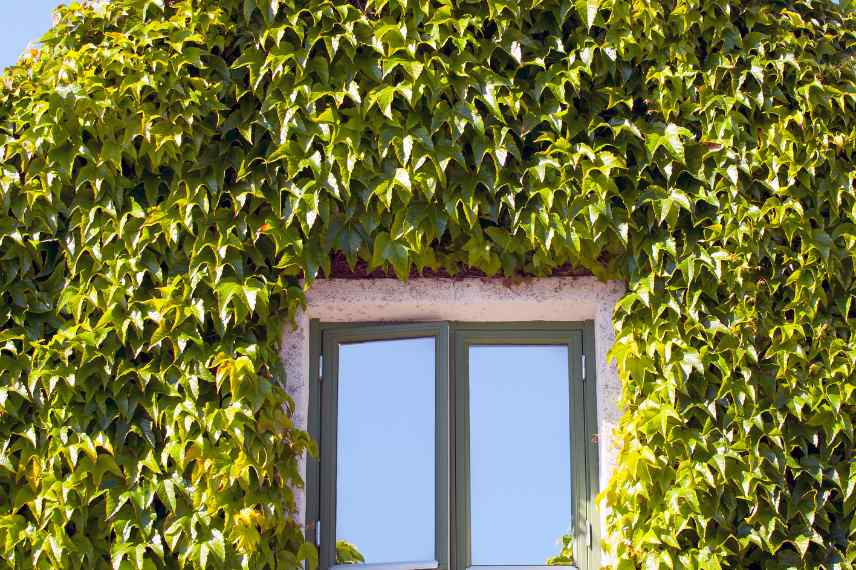
The Virginia creeper vines, very vigorous, should be well managed, particularly around the openings of the house
Choose other climbing plants to dress up your wall
To dress a wall safely, you can turn to other climbing plants.
If you don’t want to add extra trellising, opt for the Virginia creeper or the ornamental vine. With its adhesive pads, it clings on its own without human intervention, but proves less destructive to supports than root-clinging climbers. In autumn, it will delight you with a truly flamboyant display thanks to its foliage.
If installing trellis poses no problem, you’ll be spoilt for choice with climbing plants that have a flexible attachment system. This is notably the case for:
- hops, a fast-growing climber with natural charm;
- the climbing rose, for a romantic and/or English-style ambience;
- grapevines, for a wall that yields fruit;
- clematis, for a long flowering display;
- the morning glory, an annual with rapid growth that produces pretty trumpet-shaped flowers in bright colours;
- akebia, with its clusters of unusual flowers;
- the passionflower, for its long colourful and architectural flowering as well as its exotically cut foliage;
- bougainvillea in milder regions (which rarely experience winter frosts), for its striking coloured bracts.

Clockwise: climbing rose, morning glory, bougainvillea, passionflower and hops
Also consider another interesting possibility: espalier fruit trees (peaches, pears, apricots, cherries…) or those with a columnar habit. They are not climbing plants, but they also allow you to green a house wall, making it as attractive as it is productive.
Also read Gwenaëlle’s tips in What to plant against a west-facing wall? and What to plant at the foot of a south-facing wall?
As always when it comes to plant choices, ensure you turn to those that suit your growing conditions: soil type, exposure, climate, etc. To help you, you can download our Plantfit app and create your garden profile, so you are advised on the most suitable plants.
- Subscribe!
- Contents

Comments