


Diseases and pests of Neoregelia
Identification, prevention and natural solutions
Contents
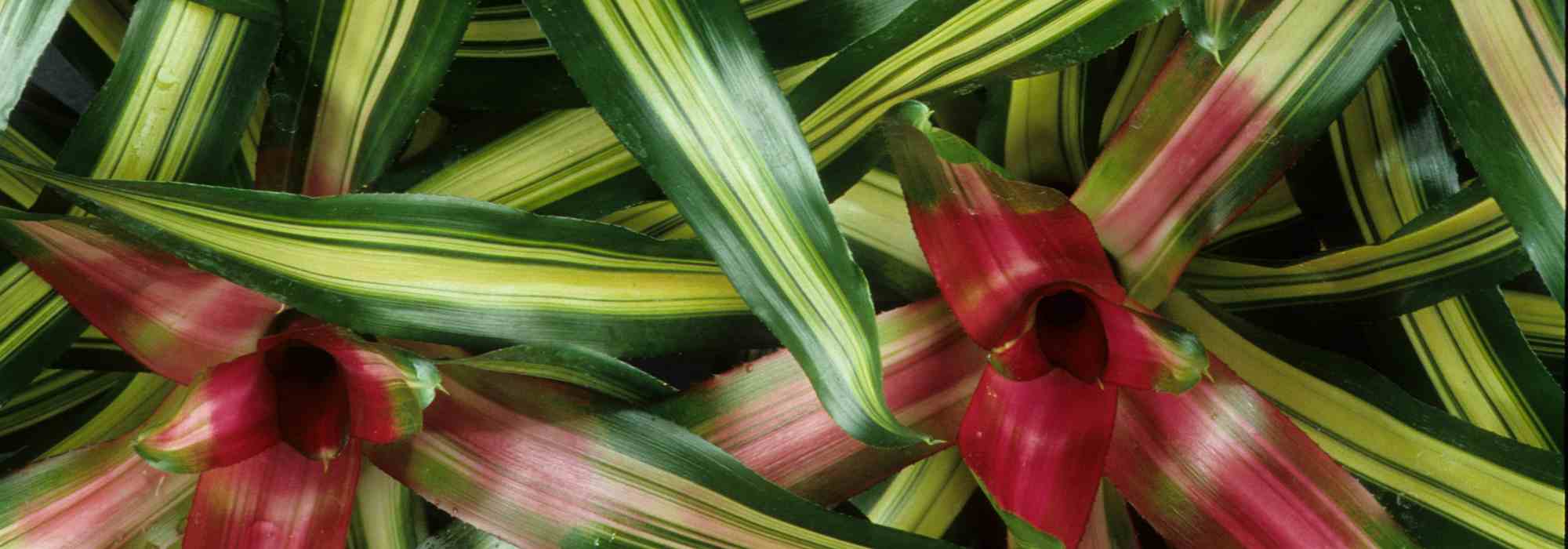
The Neoregelia is a houseplant prized for its vibrantly coloured rosette, which acts as a water reservoir. This tropical plant native to Brazil is easy to care for and adds a lovely touch of aesthetic appeal. However, it can be the target of parasitic pests or diseases. Let’s see how to identify the symptoms, prevent the risks and treat Neoregelia naturally to keep it in good health.
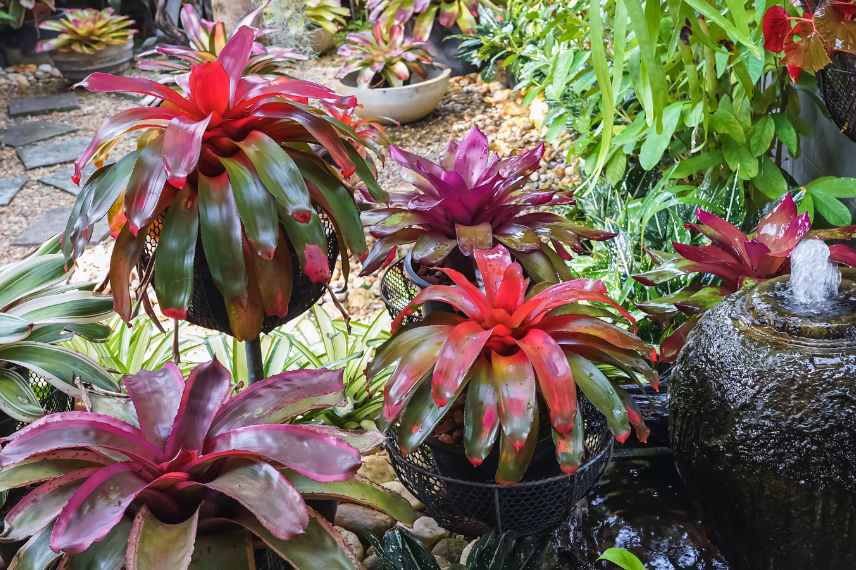 Neoregelia in a greenhouse[/caption>

Parasitic pests of Neoregelia
Neoregelia can be targeted by different pests. These are mites or piercing-sucking insects, which feed on the plant sap. If a few individuals won’t cause major problems, an infestation will weaken Neoregelia and affect its growth. In time, the plant may therefore perish. These parasites typically settle in the folds of the rosette, which makes detection more difficult.
Thrips
They are the most dreaded pests on houseplants. The main difficulty lies in the fact that they are rarely noticed at first. They are, in fact, tiny black or translucent insects, which hide from light, quietly under the tightly packed leaves of the rosette. In terms of symptoms, you will notice leaf discolouration, with brown or silvering spots. These symptoms are sometimes mistaken for sunburn caused by excessive sun exposure.
For more information: Thrips: identification and natural treatment
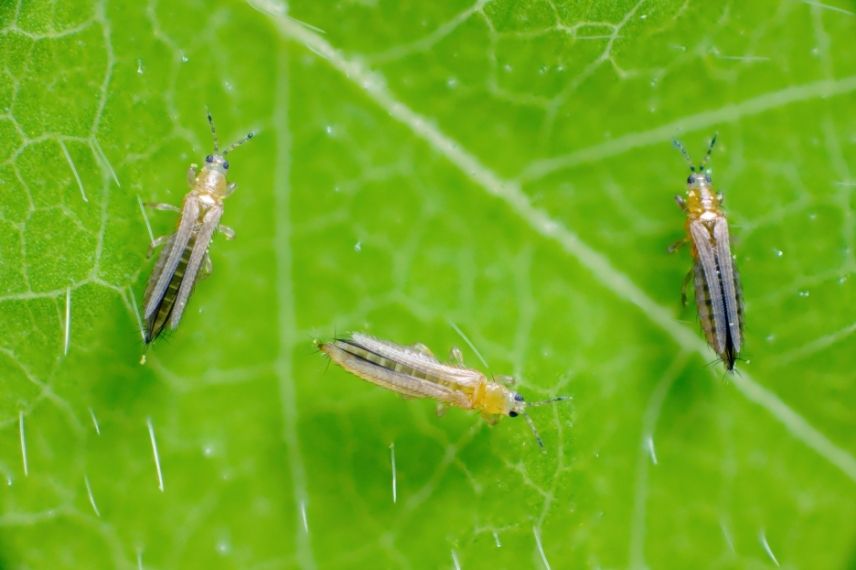
Thrips are tiny, and not always easy to spot when they hide in the leaves
Mealybugs
They are somewhat easier to identify, thanks to their white, cottony texture. Mealybugs are visible on and under the leaves of Neoregelia. They cause the leaves to yellow. Most notably, they produce honeydew. This sticky substance provides a fertile growing medium for the development of a fungal (cryptogamic) disease: sooty mould. It is visible as black deposits resembling soot that colonise the foliage, impacting photosynthesis.
For more information, discover our article: Mealybug: identification and treatment
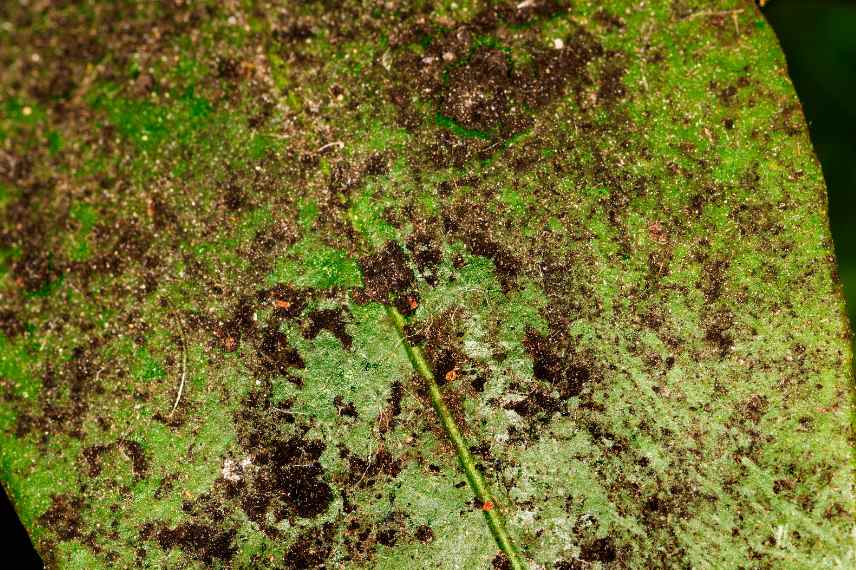
Mealybugs gradually produce a black substance: sooty mould
Red spider mites
Red spider mites are tiny mites. They are usually confirmed by the fine webs resembling spider silk. As for other symptoms, you will notice leaf discolouration, which yellows and browns.
For more information: Red spider mite: identification and treatment
Prevention against Neoregelia parasites
Each of these parasitic insects rapidly colonises a plant and can even spread to neighbouring plants. As a precaution, regular monitoring, especially of the foliage, allows intervention before an infestation.
Also ensure the growing conditions for your Neoregelia are well managed. A plant whose needs are met will be less susceptible to pests and diseases. To do this, grow Neoregelia in a light, well-drained potting mix (orchid or bromeliad mix) that does not retain watering. Place it in bright, but not scorching, light, for example on the east- or west-facing side. Pruning and fertilising are not necessary. The plant will appreciate an ambient temperature oscillating between 18 and 24 °C year-round.
Natural solutions in case of pest attacks
If the pests are already well established on your Neoregelia, you can still act.
Start by rinsing the plant (ideally with rainwater) to flush out the pests. Then gently remove the rosette.
If the pests resist, you can use a natural insecticidal treatment based on black soap (to be used undiluted). The recipe is simply to mix 1–2 tablespoons of black soap in 1 litre of warm water. Stir and let cool. Pour into a spray bottle and spray onto the foliage, taking care to lift the leaves of the rosette gently. Wait seven days before repeating the operation.
For mealybugs, you can clean the foliage with a cloth moistened with 70% alcohol.
Cryptogamic diseases of Neoregelia
Neoregelia can also be susceptible to cryptogamic or fungal diseases, i.e., caused by fungi. It is generally excess moisture that promotes their development.
Heart rot
It is one of the most common diseases, owing to the structure of Neoregelia. The heart of the rosette must, in fact, be regularly moistened. But if water stagnates for too long, it will promote rot. You will notice then that the base of the leaves darkens and softens. An unpleasant musty smell may also alert you.
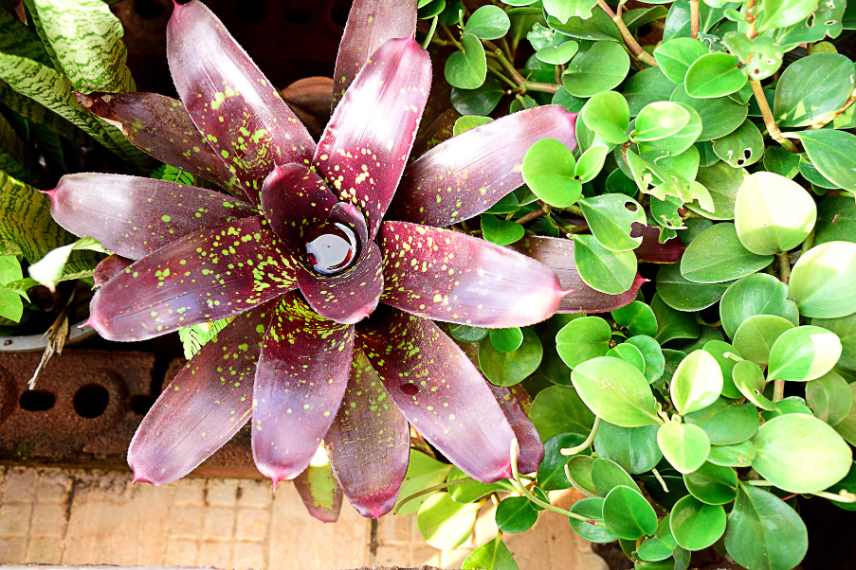
The Neoregelia rosette should be watered… but beware of causing rot
Foliar spots
These are brown or black spots that appear on the foliage. Over time, the leaves may become completely affected and drop. The growth of Neoregelia is also slowed.
Prevention of fungal diseases
Fungal diseases are difficult to treat, which is why prevention will play a key role.
Here again, care given to cultivation conditions will be paramount in limiting the risk of disease development. Use a well-drained substrate and install a drainage layer (clay pellets, gravel, pieces of terracotta…) at the bottom of the container. Proceed with appropriate watering, without excess. The rosette should be moistened, but not allow water to stagnate at the heart and take care to let it dry between two waterings. If a saucer or a cache-pot has been placed under the container, remember to empty it after 20 to 30 minutes. If you tend to be heavy-handed, favour basin irrigation, which limits excess. It involves dipping the plant’s container into a shallow pool of water, then waiting for the soil to absorb it by capillary action. Then drain and return the plant to its place. Terracotta pots are also preferable, to allow the substrate to breathe more easily.
Natural solutions for diseases
In the event of heart rot, it is essential to remove the rosette and cut away the affected parts using a clean pruning shear, pre-disinfected with 70% alcohol. If the plant is too damaged, it is preferable to replant the offsets produced after flowering to ensure a healthy specimen.
In the event of foliar spots, also promptly cut away the affected parts, to limit the spread of the disease. Ensure good air circulation around your Neoregelia.
- Subscribe!
- Contents
Comments