


Diseases and parasitic pests of Pachira.
Identification, prevention and natural solutions
Contents
Pachira, also known as “money tree” or “Guyana chestnut,” is an indoor plant with handsome hand-shaped leaves that add an exotic touch. But this mini tree is also a symbol of luck and prosperity. It is the Pachira aquatica, often sold with an elegant braided trunk, which is the most common.
This robust plant is low-maintenance. It will therefore be well suited to beginner gardeners. Improper cultural conditions can, however, affect its health and longevity, by promoting the development of parasitic pests or diseases. Let’s see how to identify the main symptoms, prevent risks and treat Pachira naturally.

Parasites of Pachira
These are very common pests, visible on most of our indoor and outdoor plants. These small insects or mites pierce the plant to feed on its sap, weakening it over time. A few individuals do not necessarily pose major problems, but their proliferation may eventually cause the plant to decline. Note that the feeding punctures of these pests also facilitate the development of viruses and bacteria. Finally, these pests can easily contaminate surrounding plants.
Thrips
Thrips are among the most insidious pests, because they are difficult to spot. They are often hidden under leaves or on stems, very small, with a colouration of black or translucent. Their tiny droppings in the form of black specks and the presence of brown or silvery spots on the foliage betray their presence. The Pachira’s youngest leaves, the most tender, are the most susceptible. In case of infestation, the plant will also generally take on a droopy appearance.
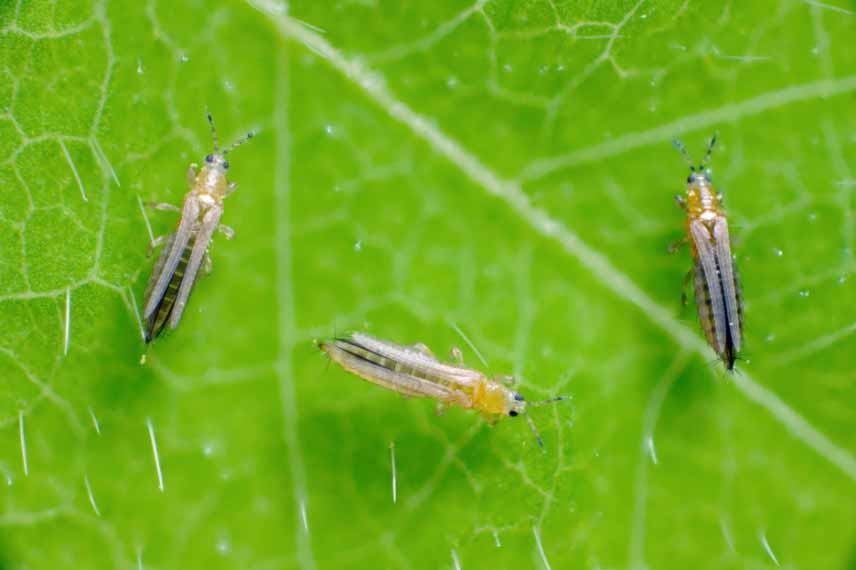
For more information: Thrips: identification and natural treatment.
Mealybugs
These insects look as if they are coated with a white cottony or farinose mass, which gives them their name. In fact, the white filaments that are clumped together are the first sign of their presence. Leaves will also yellow, then drop.
Moreover, mealybugs promote the development of a fungus. The honeydew they produce indeed acts as a growing medium for a disease called sooty mould, which forms black deposits resembling soot on the leaves and stems. The process of photosynthesis is then slowed, which harms the plant’s health.
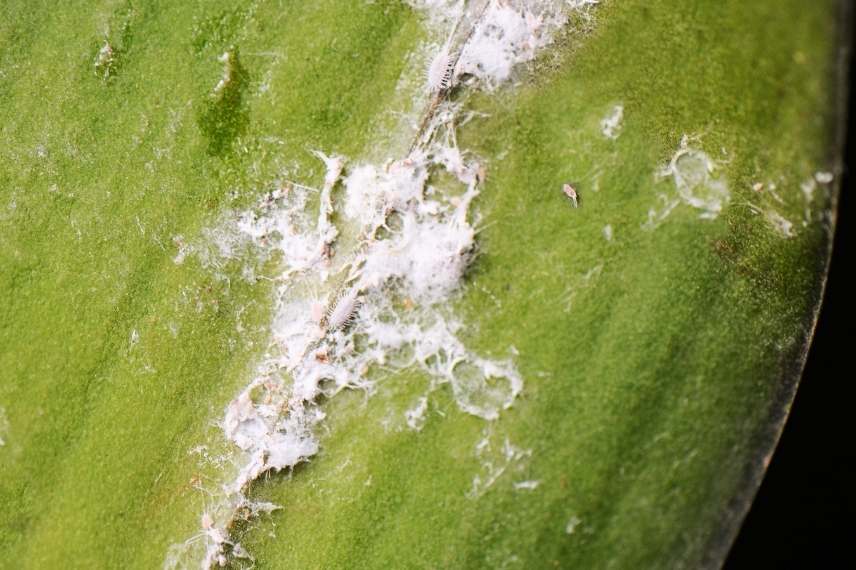
For more information: Mealybug: identification and treatment
Red spider mites
Another pest that isn’t easy to spot: the red spider mite. It is a tiny mite almost invisible to the naked eye, which produces silk-like filaments resembling spider webs. They surround the leaves and stems of Pachira. You will also notice discolouration on the foliage.
[img class=”wp-image-269922 size-full” src=”https://www.promessedefleurs.com/blogwp/wp-content/uploads/2024/08/araignees-rouges.jpg” alt=”Red spider mites” width=”856″ height=”570″ /> red spider mitesFor more information: Red spider mite: identification and treatment.
Aphids
A small, well-known pest, aphids come in several species: black, green, yellow, winged or not… These insects cluster at the base of leaves and feed on young shoots, with growth being stunted.
Like mealybugs, they produce honeydew which promotes the development of sooty mould.
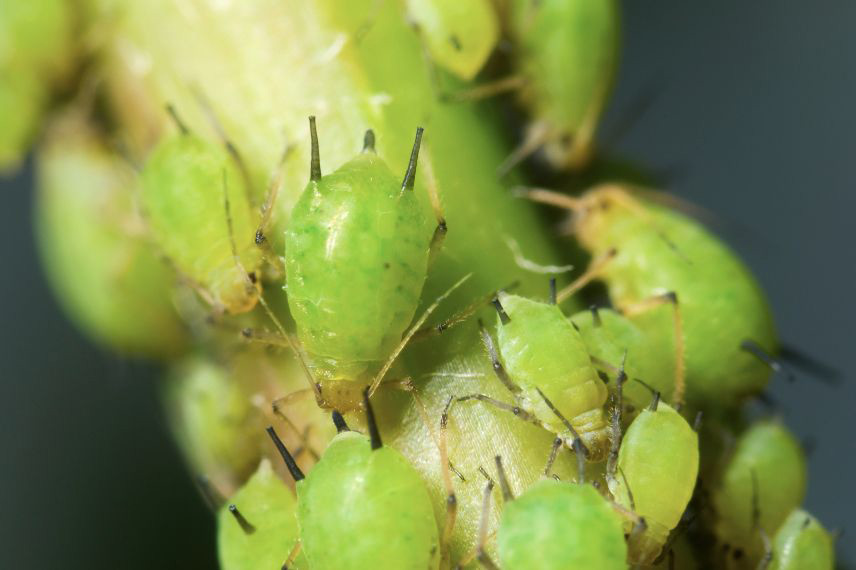
For more information: Aphid: identification and treatment.
Preventing Pachira pests
Good observation is the first step in preventing an infestation. It helps you spot the first pests from the outset. Take advantage of watering or the leaf-dusting to take a look at the plant and ensure it is healthy.
Pachira is a plant native to tropical areas of Central and South America. It naturally enjoys warm and humid environments, even though it can adapt to drier interiors. But pests actually favour dry and confined atmospheres. As a preventive measure, place the Pachira on a bed of clay pebbles and mist its foliage with rainwater or filtered water.
[img class=”wp-image-320739 size-full” src=”https://www.promessedefleurs.com/blogwp/wp-content/uploads/2025/12/traiter-parasites-sur-pachira.jpg” alt=”” width=”856″ height=”570″ /> Place a saucer filled with clay pebbles under the potFinally, avoid fertiliser applications too frequently: an excess of nitrogen makes the plant softer, and therefore more appetising to pests.
Natural solutions in case of pest attacks
Have you identified the first pests? There is still time to act. Start by moving your Pachira to a sink or shower, to run its foliage under a jet of room-temperature water. If colonisation is light, this may be enough to dislodge the unwelcome guests.
If needed, spray natural insecticidal soap on the infested parts. It’s a product that’s very easy to prepare, by mixing 1 to 2 tablespoons of pure black soap into 1 litre of warm water. Shake, then spray in the late afternoon. Repeat the application after seven days.
Read also
Pachira : planting, growing, and careFungal diseases of Pachira
Cryptogamic or fungal diseases are the most common, which can affect most plants. They are caused by fungi and typically develop in a humid environment.
Root rot
If the Pachira is overwatered, its roots can rot. You will notice then that the plant stops growing, that it appears soft and weak. A musty smell may also emanate from the soil. When repotting, you will see that the roots are black and soft, affected by rot.
Leaf spots
This cryptogamic disease causes brown, black or yellow spots on the Pachira’s foliage. They will then fall off. The plant’s growth is also affected.
Prevention of cryptogamic diseases
Regular observation will again enable you to intervene before any spread of disease.
The care given to watering is essential to limit the risk of these conditions developing. The Pachira has the capacity to store water in its trunk. It can therefore more easily tolerate an occasional drought than an excess of water. To find the right watering frequency, test the plant’s substrate with your fingers. It should be dry for the first few centimetres. If it is still damp and sticks to your finger, wait before watering. If you know you tend to overwater, favour bottom watering, by standing the plant in a shallow dish of water and letting it drink by capillary action.
Pachiras are often placed in attractive pots that showcase them perfectly. If it is a cachepot or if you have added a saucer, empty them after about thirty minutes following watering.
If you prune the plant to remove damaged leaves or to maintain a harmonious shape, remember to thoroughly disinfect your pruning tools beforehand with alcohol. It’s a simple gesture that helps limit the spread of diseases between plants.
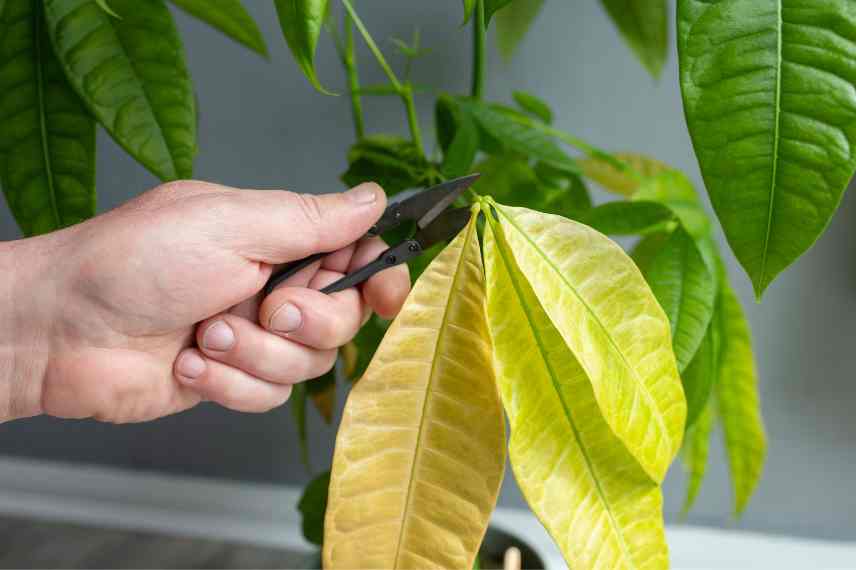
Always use clean, properly disinfected tools
Finally, provide your Pachira with cultivation conditions suited to its needs. It’s the best way to support its health and thus make it more resistant to pests and diseases.
- Grow it in a light, well-drained substrate that allows excess water to drain away.
- Install a drainage layer at the bottom of the container, consisting of gravel or clay balls.
- Place the Pachira in a bright, sunny position, but not scorching hot (ideally East or West). Protect it from draughts and from sources of intense heat (fireplace, oven, radiators…).
Natural solutions for cryptogamic diseases
Cryptogamic diseases are difficult to treat once they are well established, which is why prevention is essential.
As soon as the first symptoms appear, cut away the affected leaves immediately, in order to limit the spread of the disease. Stop foliar misting and avoid splashing during watering.
In case of root rot, repot the plant into a clean new pot with fresh potting soil, taking care to cut away all rotten roots back to healthy tissue.
- Subscribe!
- Contents
Comments