


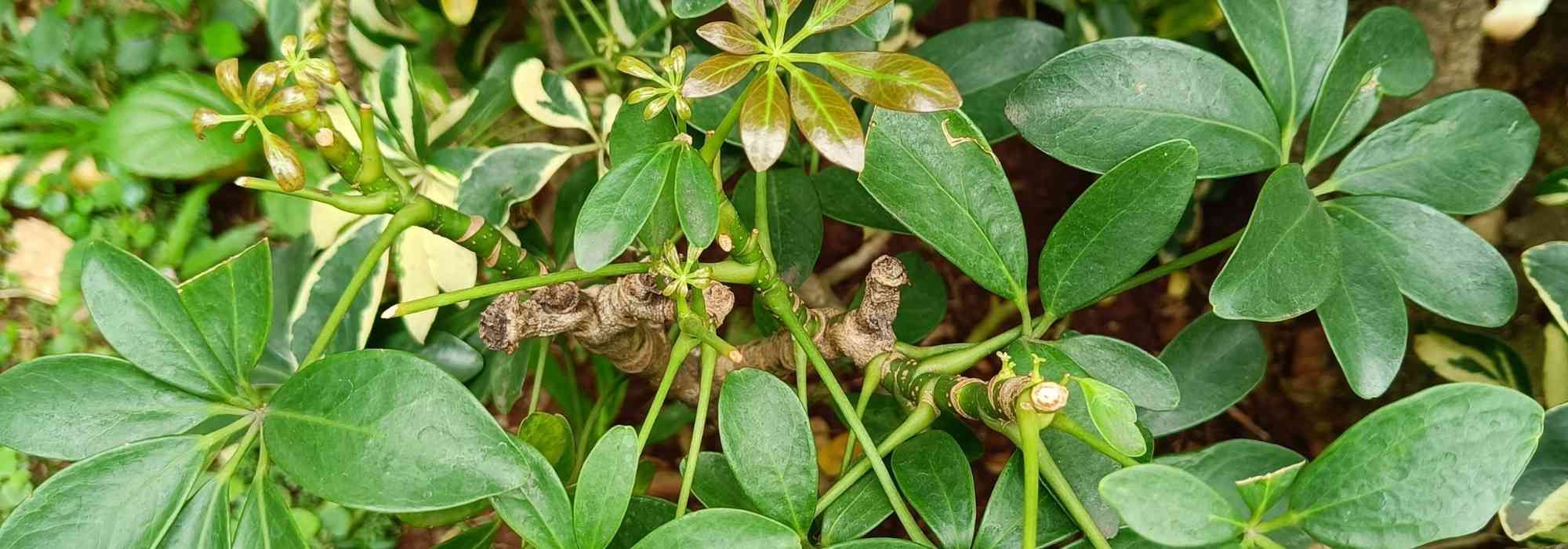
Diseases and pests of Schefflera
All our tips for identifying, treating and preventing
Contents
Also known as the umbrella tree, umbrella plant or parasol tree, Schefflera is an indoor plant prized for its decorative foliage and moderate growth. It is also a relatively hardy plant, provided its needs are met. When cultural conditions are unfavourable, it can suffer external stresses that significantly weaken it, or even kill it. That is why it is essential to know the pests, diseases or parasites, so you can act quickly.
Discover the main pests and diseases of the Schefflera, their symptoms, the causes favouring their appearance, as well as control and prevention strategies.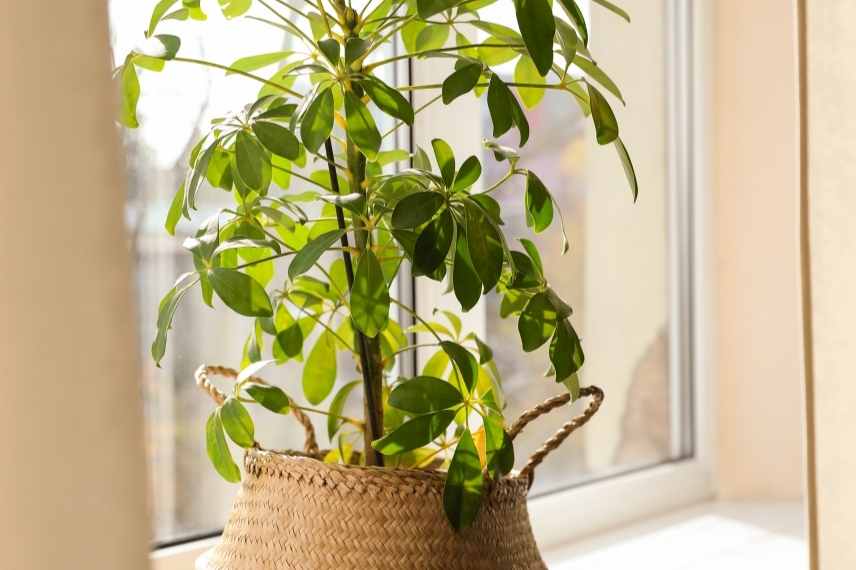

The most common parasitic pests on Schefflera
Insects and mites are common on indoor plants, especially when Schefflera is stressed, poorly watered or receives insufficient light.
Mealybugs
Mealybugs are piercing-sucking insects that attach to the stems or leaf veins. They can be hard or soft, often brownish, sometimes covered with a waxy or white cottony coating. They thrive in poorly ventilated, dry environments, often on an ailing Schefflera.
Symptoms
- Presence of small round, brownish or chalky clusters, very adherent, on the stems or undersides of the leaves
- Sticky leaves: mealybugs secrete honeydew, on which sooty mould can develop
- Yellowing, progressive weakening of the foliage
What to do?
- For a light infestation, use a cotton bud dipped in 70% alcohol to remove the mealybugs locally. You should repeat the operation because eggs may hatch after application
- Mist a solution made of one litre of water with a teaspoon of liquid black soap, vegetable oil and 70% alcohol
- Isolate the Schefflera to prevent it from contaminating other indoor plants
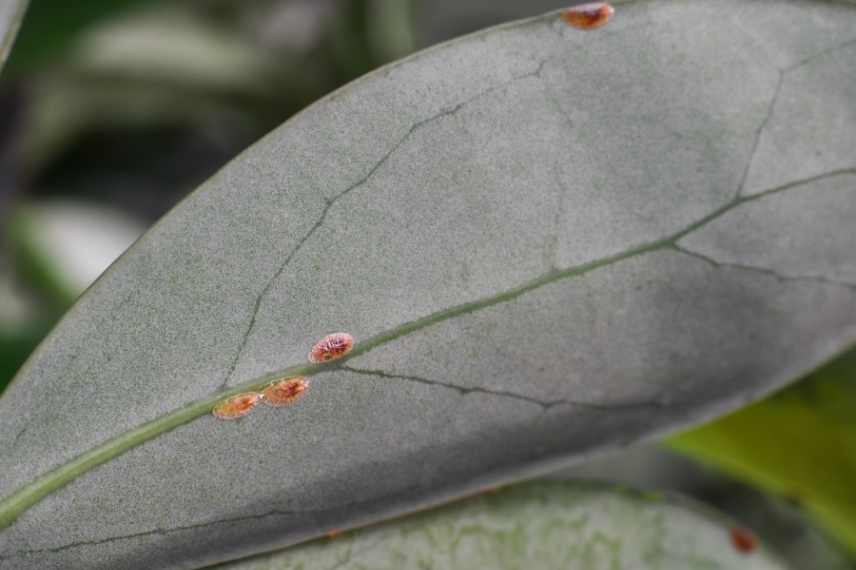
Mealybugs are common on Schefflera
Red spider mites
Red spider mites or tetranychids are mites, very difficult to see with the naked eye. They proliferate in dry atmospheres, with low humidity, and a lack of ventilation. A Schefflera with unbalanced nutrition will also be susceptible to these pests.
Symptoms
- Small yellow spots or pale mottling on the leaves, gradually spreading
- Fine silky filaments on the undersides of the leaves or between the stems
- Leaves discoloured, desiccated or drooping
What to do?
- Spray the plant with clear water to wash off the mites
- Improve ambient humidity with misting, a tray filled with water-saturated clay pebbles or a humidifier to make the environment less favourable to mites and less dry
Other potential pests
-
Aphids : like other plants, Schefflera may occasionally be attacked by aphids, often on new growth, causing deformities. They can be treated with soapy water
-
Thrips : these tiny insects can cause silver specks on the leaves or translucent areas. To eliminate them, isolate the plant and use a biological insecticide (black soap). The blue chromatic traps help capture the adults
-
Fungus gnats : adults do not cause significant damage, but their larvae can damage roots in a substrate that is too wet or poorly drained. To prevent their appearance, ensure the surface of the substrate dries between waterings. The yellow chromatic traps sticky traps help prevent proliferation.
Most common diseases affecting Schefflera
Pathogenous fungal and bacterial pathogens are less common than parasites, especially in well-maintained indoor cultivation. Yet, some conditions favour their development and can cause serious damage.
Root rot
Undoubtedly the most dreaded pathology for indoor plants, and a recurring problem for Schefflera. It is often caused by a substrate that is too damp or poorly drained, and by overwatering.
Symptoms
- Yellowing leaves, sometimes drooping
- Musty odour in the pot
- Roots becoming soft, black or brownish, not firm
- In the advanced stage, root necrosis, followed by progressive death of the plant.
What to do?
- Remove the plant from the pot and trim away the black, soft parts of the roots
- Repot into a well-draining substrate, formed of special potting mix for houseplants and of perlite, in a clean pot with drainage holes
- Reduce watering, especially during cooler periods or the dormancy period
- As a precaution, never leave standing water in the saucer or cachepot, and allow the top layer of the substrate to dry between two waterings.
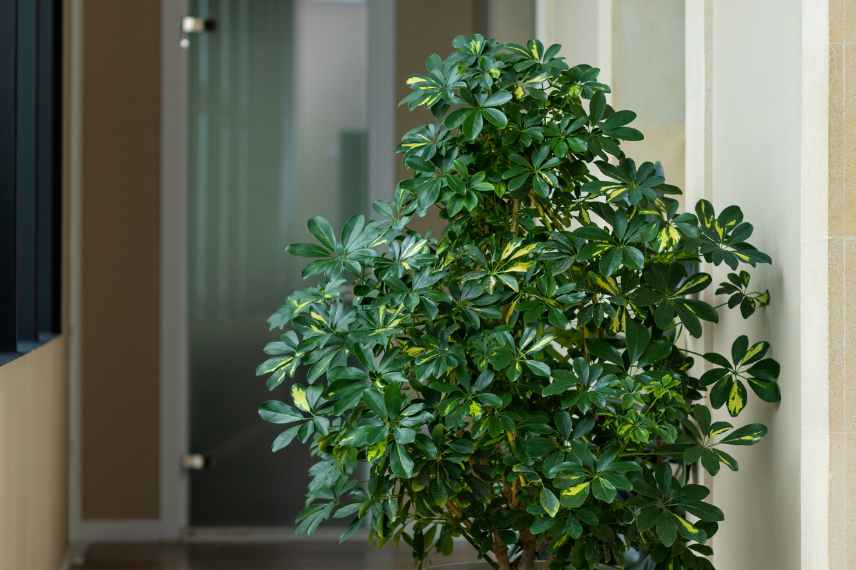
Schefflera needs good light
Fungal leaf spots
These disorders are characterised by the appearance of spots, necrosis or discoloured areas on the leaves, often due to fungi (Alternaria, Phytophthora) or sometimes bacteria (Pseudomonas). These diseases develop in humid environments with poor air circulation.
Symptoms
- Round spots, brown to black, often surrounded by a yellow halo
- Expansion of the spots, leaves wilt or fall
- For Pseudomonas, lesions that appear moist becoming necrotic subsequently.
What to do?
- Remove the affected leaves with clean, disinfected scissors to limit spread
- Avoid overhead watering and apply water at the base, early in the day, so the foliage dries quickly
- Improve ventilation around the plant and avoid confined or humid areas
Prevention comes first!
Prevention is often more effective and straightforward than curative treatments. Here are principles to adopt to reduce risks.
Substrate and fertilisation of the Schefflera
- Use a light, well-draining mix (peat-based potting compost combined with perlite)
- Choose a pot with drainage holes, and avoid standing water in the saucer
- Repot every two to three years
- Apply a special fertiliser for houseplants from March to October.
A suitable watering regime for your Schefflera
- Let the top layer of the substrate dry out before watering again
- Adjust watering with the seasons: less in winter, more during active growth
- Avoid excess moisture on the foliage.
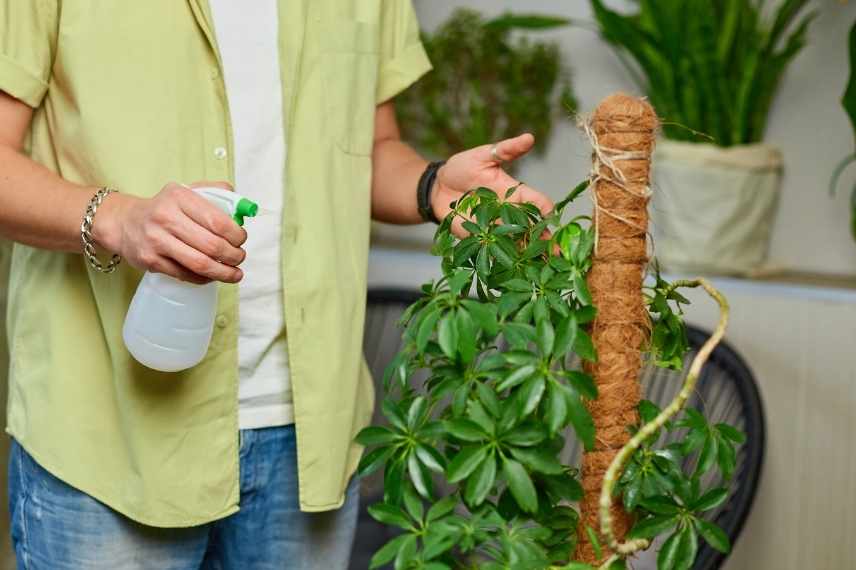
The Schefflera does not tolerate excess moisture on the foliage
Good light
- Provide your Schefflera with bright indirect light
- Avoid cold or hot drafts, near poorly insulated windows, and temperatures below 10°C.
Good ventilation and moderate humidity
- Ensure good air circulation around the plant to limit humidity stagnation
- Maintain an atmosphere neither too dry nor with humidity too high.
- Subscribe!
- Contents
Comments