





























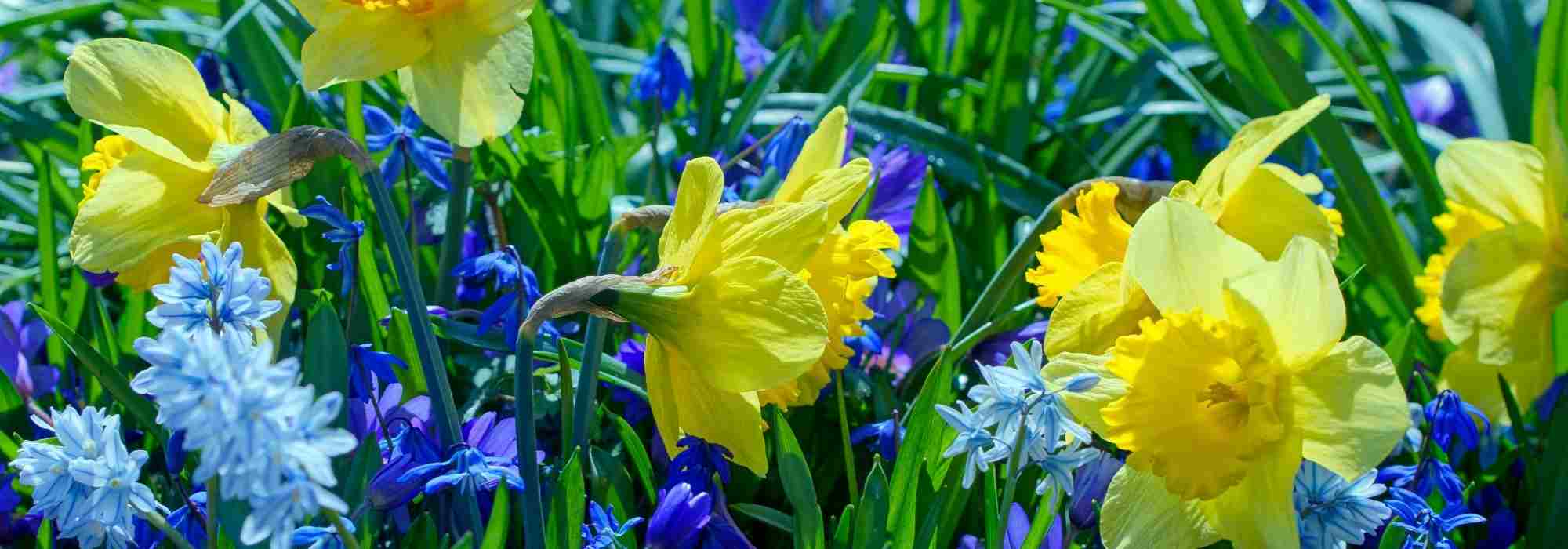
Go for these long-flowering bulbs!
Our selection of bulbous plants that bloom in the garden for a long time
Contents
Bulbs are hard to resist in a garden; they’re packed with advantages. Easy to plant, maintenance-free, they offer staggered flowering virtually year-round, from February to the first frosts. Year after year, they multiply, grow larger, and flower more beautifully than the previous year. Sometimes we forget them from one year to the next, and seeing them come back can feel magical. Not to mention that there is a bulb suited to every situation, every location, every desire. Some bulbs can even take up residence in our homes, forced to bloom in the heart of winter, or simply cut to form cut flower arrangements.
With all these advantages, it’s only natural that we aim to plant bulbs that bloom for as long as possible to adorn beds, rockeries, edging and containers.
Discover our selection of nine spring- or summer-blooming bulbs that offer the longest-lasting flowering.

Our selection of five floriferous spring bulbs
Spring is undoubtedly a flowering season for bulbs, with so many species and varieties able to enliven the garden, terraces and balconies from February to May–June. These bulbs, heralds and ambassadors of spring, brighten every corner of borders and rockeries with their shapes, colours, exuberance or subtlety… Some enjoy the shy rays of spring sunshine, others prefer to grow in the bright shade of tall trees, while others still diffuse soft or more intense fragrances.
Finally, some spring bulbs, to be planted in autumn, between September and November, offer continuous flowering for several weeks. We have found the most floriferous species among our large range of spring bulbs.
Ornamental allium (Allium): flowers all in rounded heads
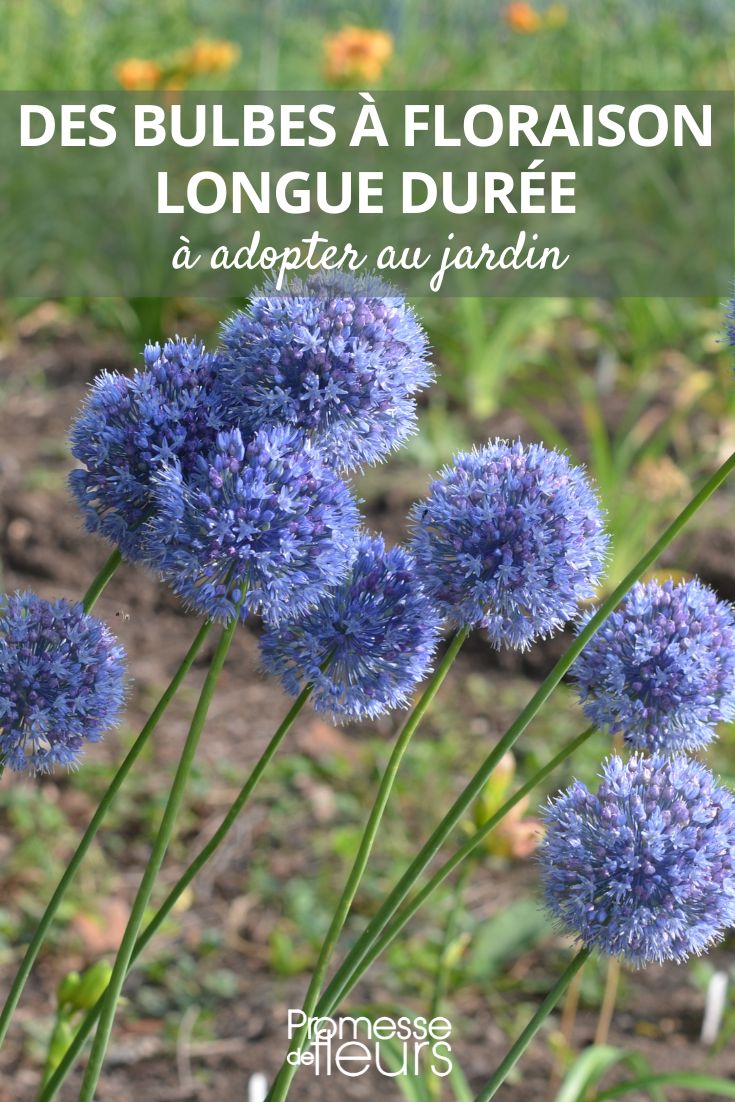
Related to leek, onion and shallot, ornamental allium (Allium) has the charm of wild plants. Certainly, its foliage, linear and strap-like, releases the characteristic odour of its cousins when crushed, but the beauty of its flowering more than compensates for this small nuisance. The species cultivated as ornamental plants offer umbels, more or less globose, each consisting of a profusion of small star-shaped flowers, particularly nectariferous and melliferous. Needless to say, pollinators will appreciate these flowers in a variety of colours, perched on sturdy stems, which can bloom for 4 to 6 weeks, from April to July depending on the varieties.
Ornamental alliums (also called “aulx”) offer a multitude of species. Among the most spectacular, one notes Allium ‘Mont Blanc’ with its large white flowers 15 to 20 cm in diameter, or Allium karataviense, recognisable by its broad grey-green leaves and its large pale flower globes emerging from the centre of the clump.
Among the safe bets, the species Allium senescens that flowers continuously from July to September. ‘Avatar’ offers pink-lilac flowers with silvery reflections, ‘Lisa Green’ with pink-lavender flowers, and ‘Lisa Blue’ with pink-tinged blue flowers.
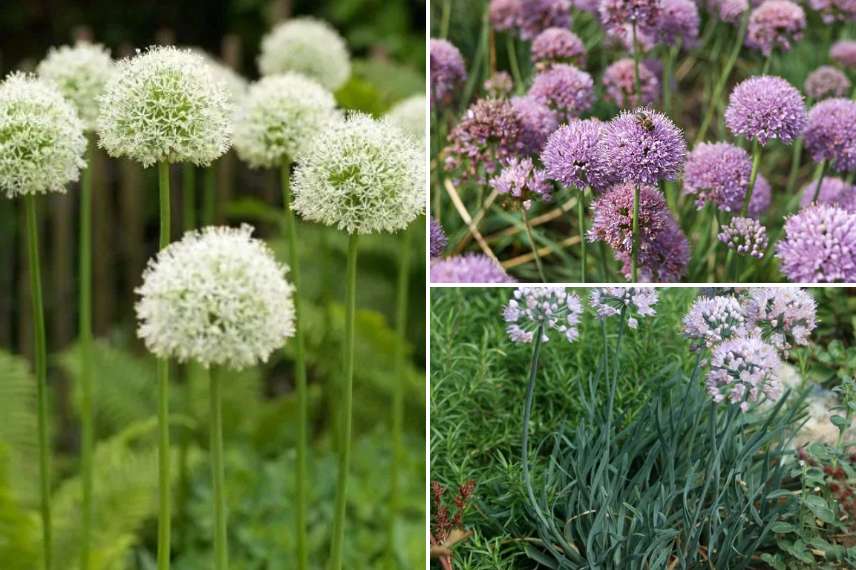
The Allium Montblanc, Avatar and Lisa Blue
Planting and growing: light, well-drained soil, even dry or calcareous, without manuring. Bright, warm exposure.
To go further : Allium, ornamental garlic: planting, growing and care
The narcissus, all dressed in yellow or white
With flowers composed of a central trumpet emerging from a six-petalled corolla (the perianth), the narcissus (Narcissus) is essentially yellow and white, but also pink and orange. These colour blends give rise to numerous colour combinations that differentiate the many species and varieties, whether with single or double flowering. These flowers can last 2 to 4 weeks, perched on stems that bend at their tips, amid linear, glaucous-green foliage.
There are many narcissi with long flowering. The choice is a matter of taste and sensibility: those who love yellow narcissi will surely be charmed by the variety ‘Tahiti’, with its double, ruffled petals in golden yellow and a red-orange crown. To stay with yellow, the variety ‘Tête à tête’ offers miniature flowers that are very long-lasting.
Among white narcissi, Barrett Browning is a must for borders and beds, but also for pots. As for the narcissus tazetta (Narcissus tazetta) ‘Erlicheer’, it recalls gardenia with its double white flowers at the yellow heart that smell wonderfully good. These few varieties are only a modest sample of our narcissus collection, rich in a multitude of varieties, all of which enjoy long-lasting flowering.
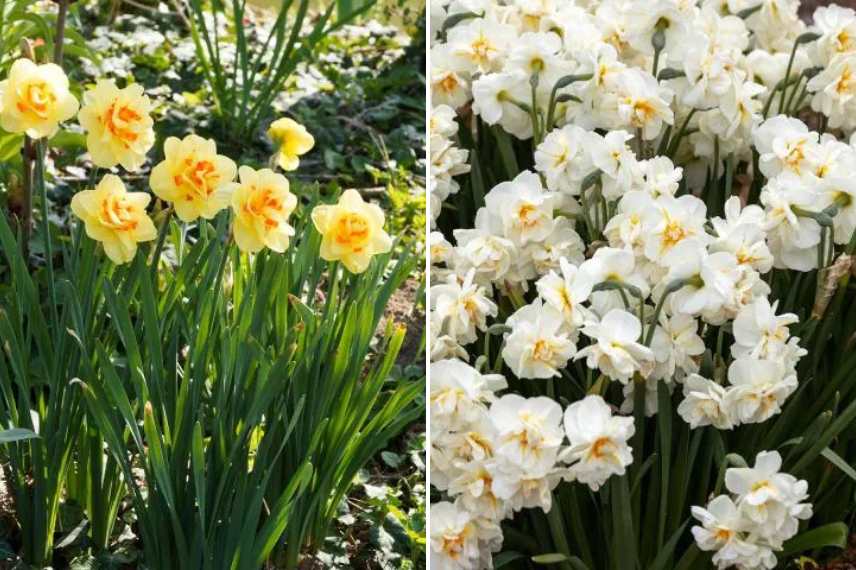
The narcissi ‘Tahiti’ and ‘Erlicheer’
Planting and growing: deep and cool, firm soil. Exposure to sun or partial shade.
To go further : Narcissi or daffodils: planting, growing and care
The Darwin tulip, recognisable above all
In appearance simple, Darwin tulips are hybrids, originally bred to become bouquet flowers. That said, they offer a certain durability. We can add to this quality their exceptional vigor, since some varieties can produce enormous flowers, borne on a sturdy stem that can reach up to 70 cm in height. The flowers of these tulips are composed of rounded tepals at the tip, rather square at the base.
The sterile flowers of Darwin tulips offer a wide palette of colours, mainly in shades of red, orange and yellow, complemented by pink and pure white. Very hardy and wind-resistant, these tulips are perfect for brightening borders and beds. They also make excellent cut flowers. Their large bulbs ensure year-after-year growth.
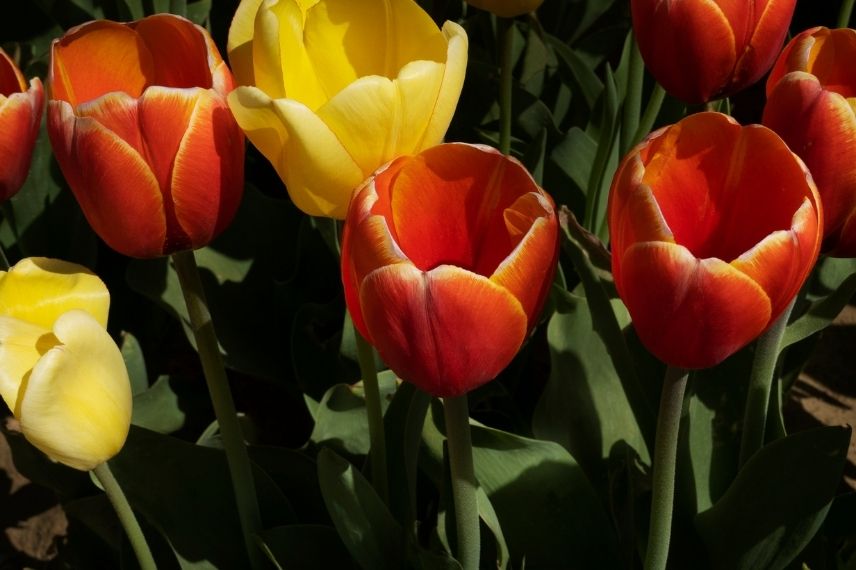
The Darwin tulips offer a very long flowering
Planting and growing: ordinary, rich and well-drained soil, well worked. Full sun or partial shade
To go further : Tulips: planting, growing and care
The hyacinth, the beautiful fragrant one
With the hyacinths (Hyacinthus), you can expect three weeks of continuous flowering. With a little extra, the fragrance it exudes. Hyacinths produce long spikes, composed of small waxy-looking flowers, shaped like stars. Hyacinths are relatively early, as they bloom from March. They are also easy to force for winter flowering in pots indoors.
The hyacinth flowers come in white, blue and pink, with rarer colours such as the purple of the variety Woodstock, the coral-pink slightly orange of ‘Gipsy Queen’ or the pale yellow of ‘Gipsy Princess’.
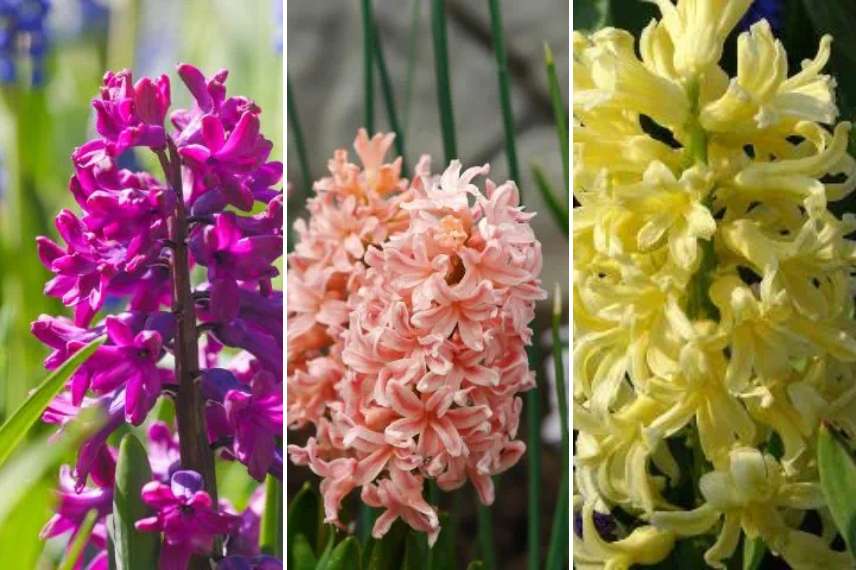
The hyacinths ‘Woodstock’, ‘Gipsy Queen’ and ‘Gipsy Princess’
Planting and growing: well-drained soil, rather cool and fertile, and deep. Full sun or partial shade.
To go further : Hyacinth: planting, growing and care.
The Peruvian squill, splendid with its single spike
Peruvian squill (Scilla peruviana) is a bulbous plant of great originality with its flowering in a single large cone-shaped spike. This spike is made up of a multitude of small star-shaped flowers that open in mid-June. As for the foliage, it forms a rosette and creates a beautiful tuft of dark green. Peruvian squill, a bulbous plant native to the Mediterranean basin, comes in a variety of an intense blue-violet and in a pure white variety, ‘White Moon’. This bulbous plant is moderately hardy, down to only -10 °C.
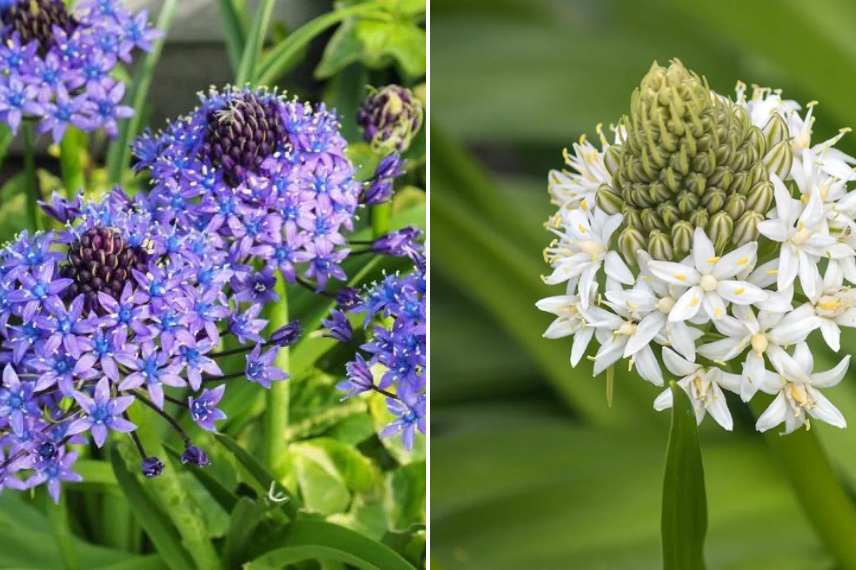
The Peruvian squill in blue-violet and white
Planting and growing: perfectly drained soil, rather cool, humus-rich and light. Sunny exposure with winter mulching recommended.
Read also
When should we plant summer bulbs?Our selection of four long-lasting summer-flowering bulbs
As winter ends, in the garden you should already be thinking about summer flowering. And to achieve beautiful, long-lasting, colourful and abundant flowering throughout the summer, bulbs are perfect. Provided you plant them in spring, as soon as the slightest risk of frost is completely removed, i.e. between March and May depending on the region.
Some summer-flowering bulbs boast long-lasting blooms for many weeks. We offer you a small selection of four bulbous plants, notable for the durability of their flowering.
The Crocosmia, for a touch of the exotic
Sometimes called montbretia, the crocosmia is a bulbous plant with flowering in horizontal, slightly pendulous racemes, composed of funnel-shaped flowers. These flowering spikes can reach up to 1 m tall for some varieties. The flowering occurs from July to September, and is particularly long-lasting. It is especially distinctive because the inflorescences are arranged in a fishbone pattern, on two rows. The deciduous foliage is linear, thick and rigid. Native to South Africa, crocosmias can be a touch frost-tender, hardy down to about -10 to -12 °C. The crocosmia blooms come in bright red, orange and yellow.
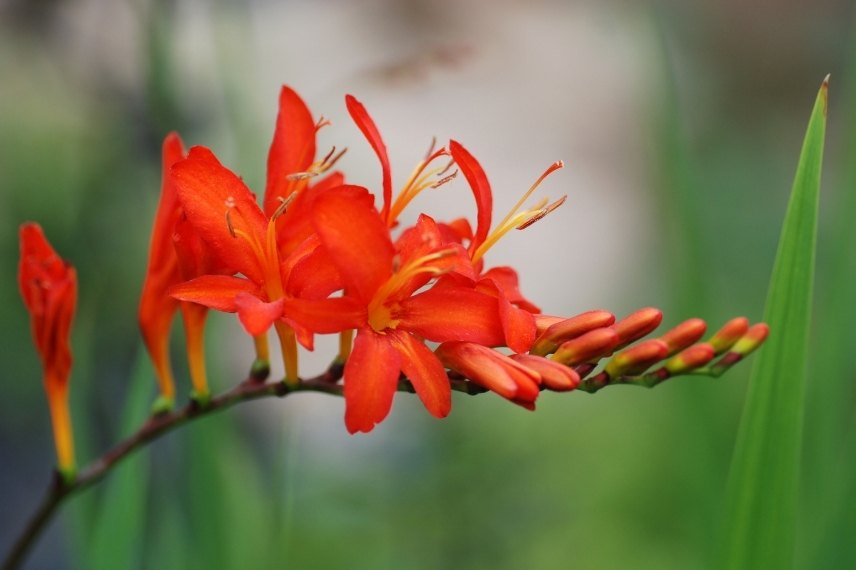
The crocosmia flower
Planting and growing: light, well-drained, rich and fairly cool soil. Very sunny exposure and winter mulching recommended.
To learn more: Crocosmias: planting, growing and care
The collarette dahlia, with a Japanese anemone-like appearance
The collarette dahlia strangely resembles the Japanese anemone with its capitules in a crown surrounding a collar of tiny petals around the central, golden and domed heart. These dahlias, which do not exceed 60 cm in height, are easy to incorporate into a border or a flowerbed. Their flowering, very long-lasting, extends from July to the first frosts. Needless to say, collarette dahlias fall into the category of bulbous plants (more precisely tuberous) with long-lasting flowering. Especially if you take the trouble to remove spent blooms.
The flowers come in a wide palette of colours and are melliferous.
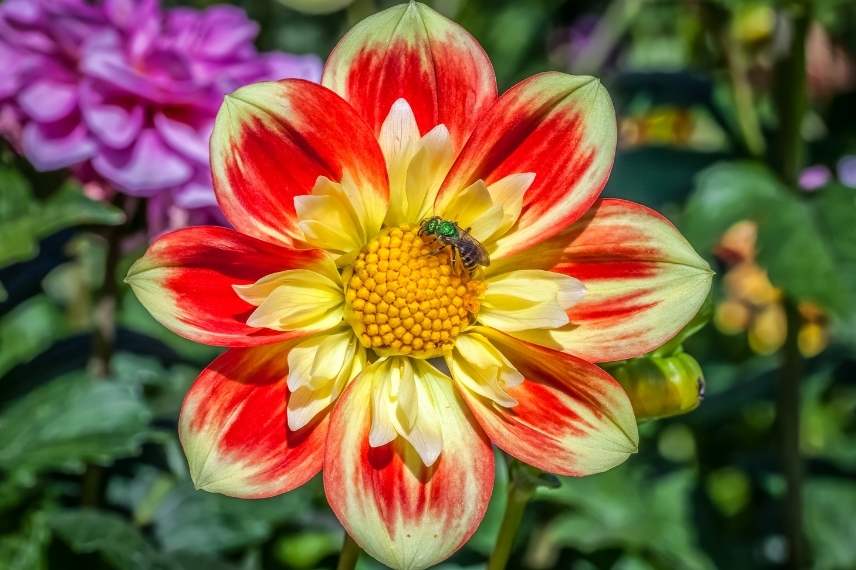
The collarette dahlia
Planting and growing: well-drained, fertile and cool soil, sunny exposure
For more information: Dahlia: planting, care and growing tips
The Abyssinian gladiolus, elegance in its purest form
The Abyssinian gladiolus (Gladiolus callianthus) is a bulbous plant with a wild-looking appearance, yet of great elegance. It offers flower stems, nearly 80 cm tall, bearing about ten flowers with long tubular calyces. White in colour, the tepals carry purple spots at the base. Beyond their beauty, these inflorescences emit a very pleasant fragrance, especially in the late afternoon. They are also melliferous and nectariferous. Their drawback lies in their lower hardiness, around -5 °C only, which obliges lifting for winter. The Abyssinian gladiolus also grows very well in pots. Note that the ‘hybrid ‘Lucky Star’ with white flowers and a lavender-pink heart shows greater hardiness, around -10 °C.
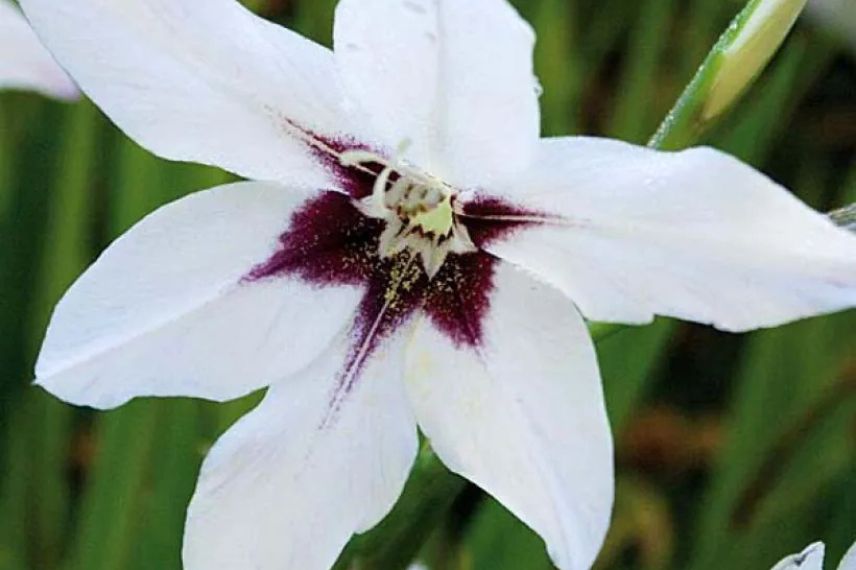
The Abyssinian gladiolus
Planting and growing: well-drained, rich, loose and light soil. Sunny exposure
The Asian lily or trumpet lily, faithful year after year
The Asian lilies (Lilium x asiatica) offer a very long-lasting flowering throughout the summer. Their flowers, simple or double, particularly erect, take on a cup shape. Very refined, these flowers are not scented like other lilies, as they are enhanced by anthers coated in pollen. They are borne on sturdy, leafy stems. Some varieties show striking elegance in the colours they offer. Thus, the variety ‘Broken Heart’ is particularly notable with its many wavy petals in a pastel pink shade outlined by a red line and purple speckles. As for the ‘Landini’ variety, it stands out for its garnet red colour that can turn black depending on the light of day.
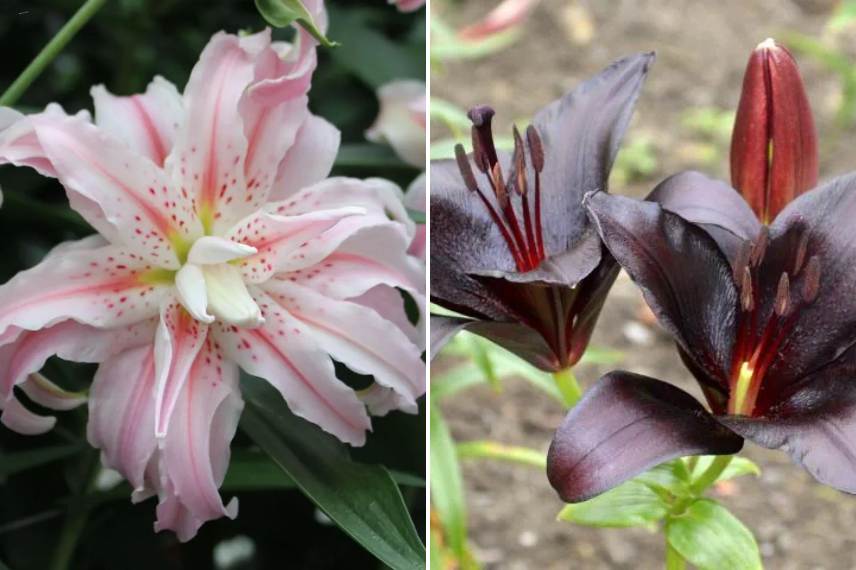
The Asian lilies ‘Broken Heart’ and ‘Landini’
Planting and growing: humus-bearing soil, neutral to slightly acidic, light and perfectly drained. Sunny exposure
For more information: Lily: planting, growing and care.
- Subscribe!
- Contents
Comments