





























How can I extend the flowering of sweet peas throughout the summer?
Months of flowers, even in summer
Contents
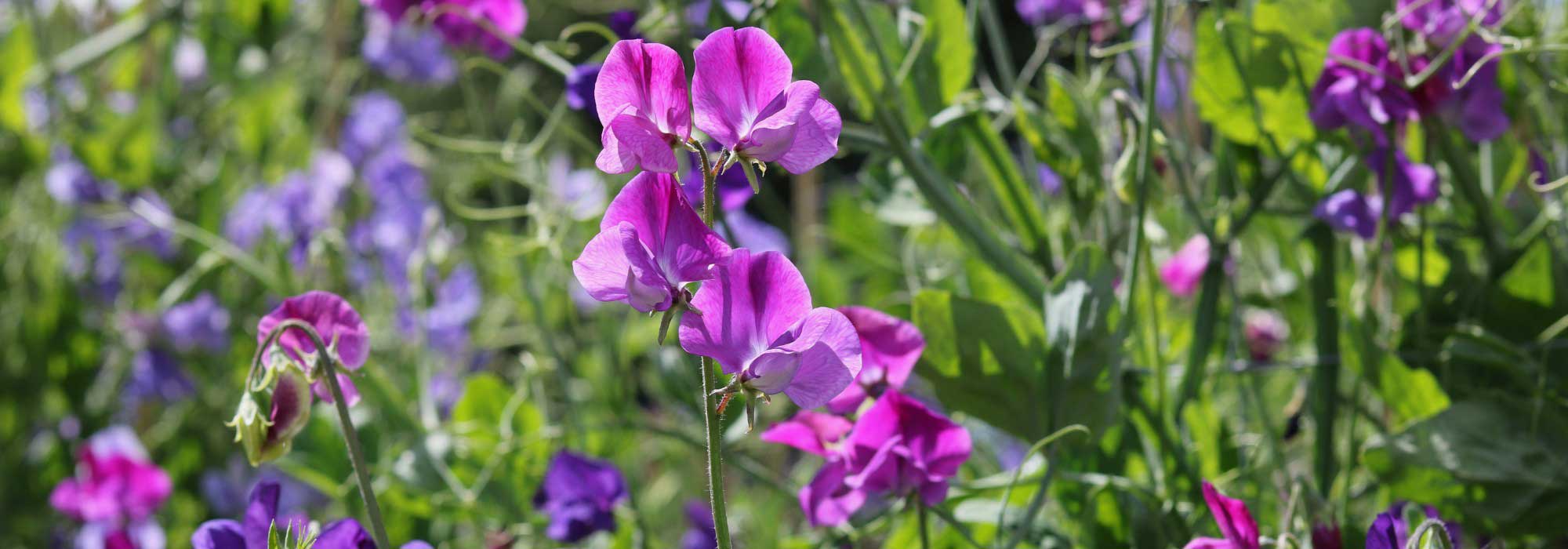
With their intoxicating fragrance, their delicate hues and a touch of retro charm, sweet peas are a summer garden staple. However, despite often promising starts in spring, it’s not unusual to see them slow down, or even stop their flowering altogether as midsummer approaches. The good news is that, with a few well-chosen steps, you can encourage them to flower without letting up until the end of the season. They typically bloom from June to August, but under optimal conditions and with careful care, they can be in flower for five months. Here are our simple and effective tips to enjoy their beauty all summer long!

Choose the right location
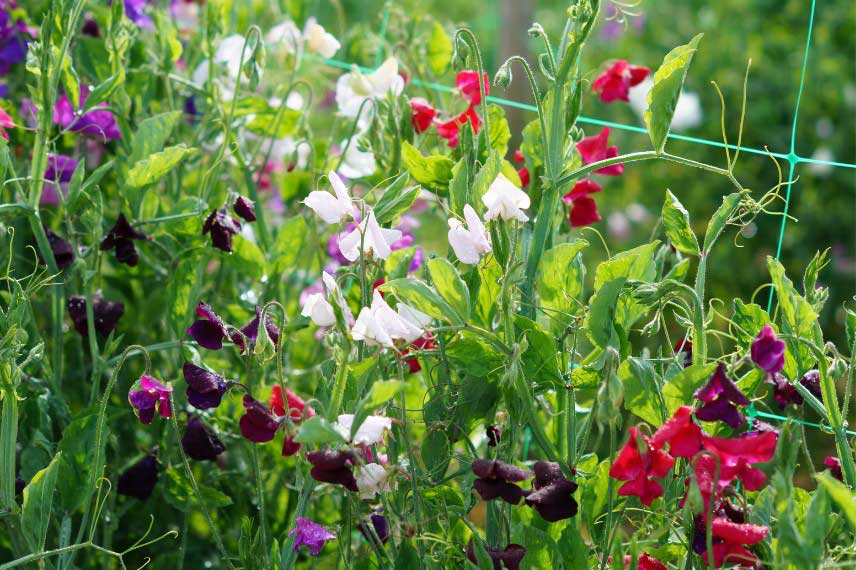
The first thing to do is to choose their location carefully. To bloom abundantly, sweet peas need a sunny exposure, ideally sheltered from strong winds. However, beware that varieties with red or purple flowers may fade if the sun is too intense: if you live in the south of France, plant them in partial shade. For the soil, they prefer well-drained soils rich in organic matter. A good mix of home-made compost or light, enriched potting compost is perfect to support their growth and provide the nutrients they need to bloom generously. Soil that is too heavy or too compact can suffocate their roots and hamper their growth.
Also consider installing a support for them to climb, because their stems can reach 1.5 to 2 m tall. You can plant them next to a trellis or install a stake for them. Guide the stems of the young plants along their support to help them cling.
If you are growing them in pots, choose a container at least 30 cm deep, with drainage holes, and plant them in good potting compost, perhaps with a little extra compost.
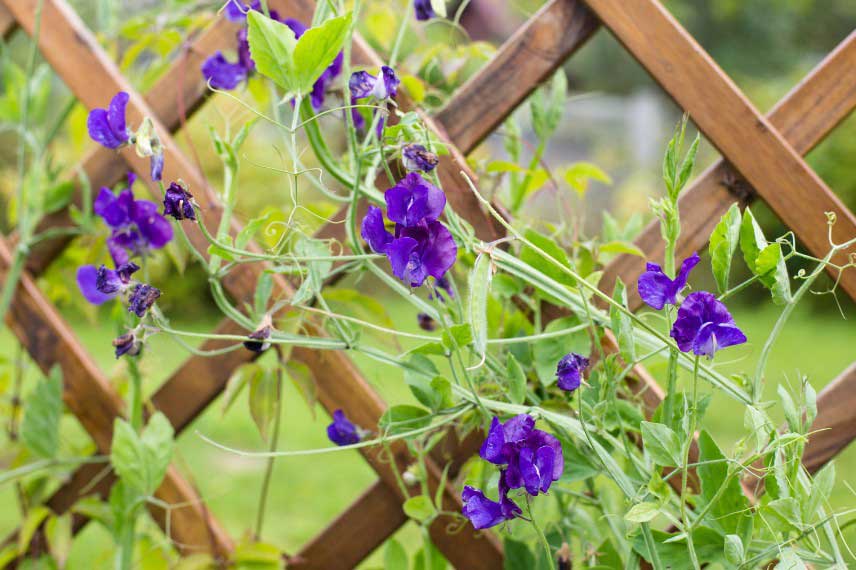
Install the sweet pea in full sun, on a trellis or any other support where it can climb
Read also
Sweet peas: the most beautiful varietiesWater them regularly
It’s important that soil stays cool, as even a temporary drought could halt emergence of new flowers. Ideally, water regularly, especially in hot periods, ensuring that water penetrates the soil well and does not stagnate. However, sweet peas do not like their feet in water. Excess moisture could cause their roots to rot. Water early in the morning or late in the day, to limit evaporation. To retain moisture and reduce water needs, we recommend installing an organic mulch at their feet. It will also limit weed growth.
Be particularly vigilant about watering if you grow them in pots, as the substrate dries out faster than in open ground!
Pinch the young plants so that they ramify
To encourage the plants to ramify and to stimulate flowering in the future, it is important to pinch the young plants as soon as they have produced their second pair of leaves (when they are about 20 cm tall). Cut off the tips of the stems (just above a node, the point where the leaves are attached to the stem), with your fingers or with scissors. This will cause your plants to produce new shoots and become naturally bushier.
Read also
Pairing Sweet PeasRemove wilted flowers
The most important step for prolonging flowering is to regularly cut spent flowers. As soon as a flower begins to wilt, it must be removed without delay. This will prevent the plant from expending energy on producing seeds, which will encourage it to produce new flowers as it naturally seeks to reproduce by producing flowers and then seeds. It’s a small routine to adopt, but it changes everything. If you cut them before they are completely wilted, you can use them to make cut flower arrangements to decorate your home. And if any flowers have escaped you, remove them even if the plant has already started producing pods.
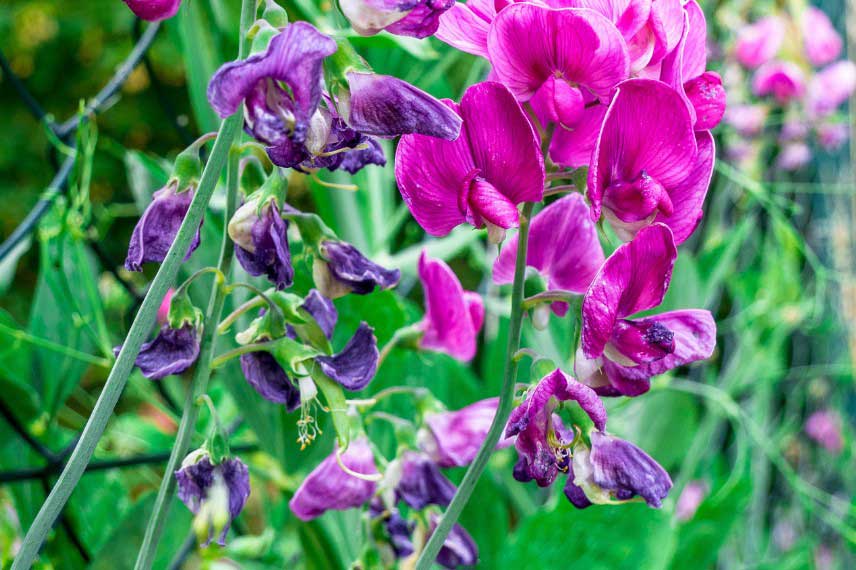
Remember to remove spent flowers as soon as you see them; this will encourage the plant to produce new flowers!
Feed
To support this vigorous flowering, sweet peas also need a little nutritional boost. A regular supply of a fertiliser rich in potassium helps to stimulate flower production. It’s best to avoid fertilisers that are too rich in nitrogen, which mainly promote leaf growth. An application every ten to fifteen days is sufficient to keep the plants vigorous without overloading them. You can also use well-decomposed compost.
Fertilisation is all the more important if you grow them in pots, as the potting mix can quickly become depleted. You can also use a liquid fertiliser for flowering plants, to be applied every 15 days by diluting it in the water used for watering.
Choose varieties that bloom abundantly
The choice of variety also plays a role: some are naturally more generous than others. For example, varieties ‘Cupani’ or ‘Old Spice’ are renowned for their fragrance and extended flowering, while the varieties in the Spencer series, with their large undulating flowers, provide a stunning display throughout the summer. Mixing several varieties helps stagger the flowering and adds diversity to the garden.
You can also pair different varieties so that their flowering comes in succession. For example, don’t hesitate to grow ‘Winter Sunshine Opal’ which flowers in late winter (March to April), alongside ‘Spring Sunshine Scarlet’, which flowers from April to June, accompanied by summer-flowering varieties, such as ‘Pinkie’.
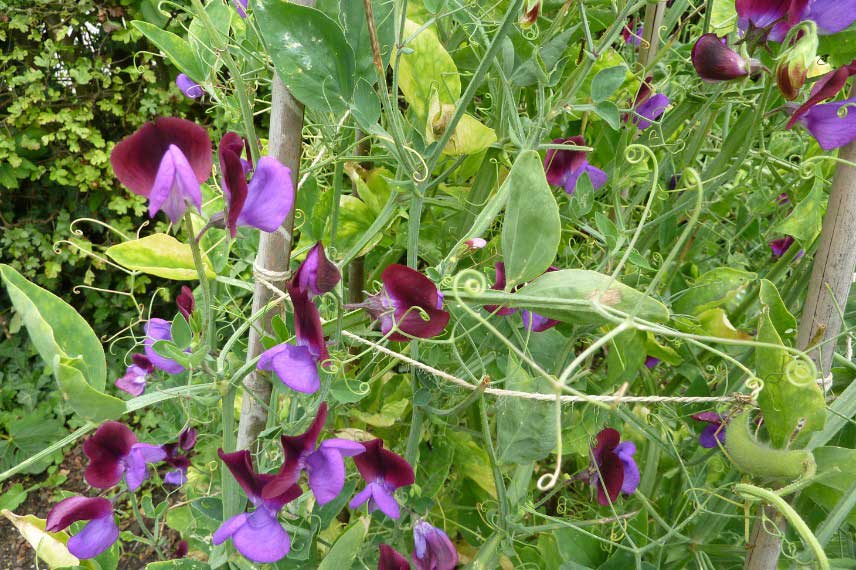
Lathyrus odoratus ‘Cupani’
- Subscribe!
- Contents
Comments