





























How to care for snowdrops after flowering?
The steps to take to maximise the regrowth of your snowdrops!
Contents
Snowdrops or Galanthus nivalis are small, delicate bulbs that herald the end of winter with their early flowering. Their small white flowers, often the first to emerge from beneath the snow, as early as January or February, bring a touch of poetry to our gardens. These small bulbous plants are prized for their ability to naturalise borders, woodland areas and lawns, bringing a touch of freshness to dormant gardens. However, to ensure their longevity and vibrant flowering year after year, it is essential to look after them well after flowering. Should the foliage be cut back? What simple steps promote their health?
Discover in this article all the tips for looking after your snowdrops after flowering and ensuring their splendour season after season!
And to learn everything about snowdrops and their cultivation, be sure to consult Snowdrops, Galanthus nivalis: plant, grow, maintain.

Snowdrops: these tiny, early-blooming bulbs
Snowdrops belong to the genus Galanthus, in the Amaryllidaceae family. There are about 20 snowdrop species, originating mainly from Europe and Asia Minor. From the small Galanthus nivalis to the giant Galanthus elwesii, via the Galanthus woronowii with bright green foliage or the Galanthus plicatus, with pleated leaves, these bulbous perennial plants are particularly valued for their ability to flower from the late winter, often in January or February, despite low temperatures and harsh conditions.
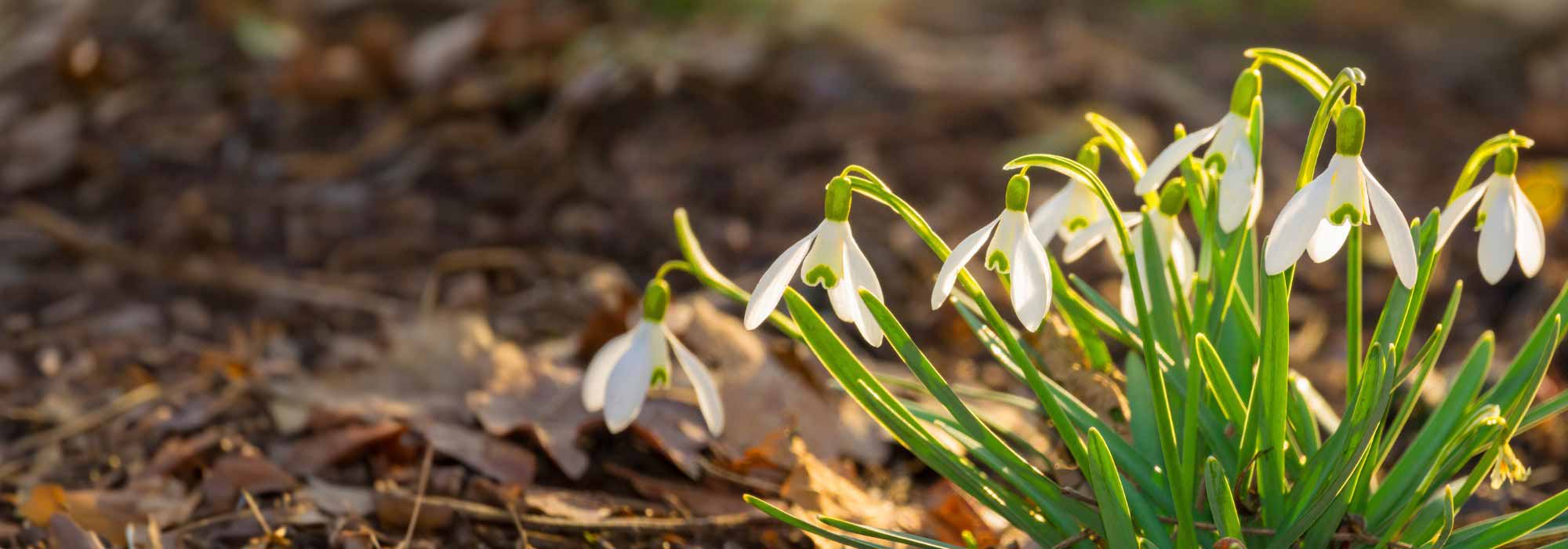
Snowdrops are easily recognised by their pendant bell-shaped white flowers, single or double, consisting of three longer outer petals and three inner petals marked with a green or yellow spot. Their linear leaves, a soft green, complete their graceful appearance. These bulbous perennials are known for their hardiness. They thrive in cool, well-drained and slightly moist soils, preferably rich in humus. Snowdrops prefer partially shaded locations, often under deciduous trees where they benefit from winter light before the foliage develops in spring. Too much sun can dry the soil, while an excess of moisture risks rotting the bulbs. Autumn planting, between September and November, allows the bulbs to establish well before winter.
The particularity of snowdrop bulbs lies in their ability to naturalise. Once established, they multiply spontaneously and form pretty floral carpets over the years. However, to keep this vigour, some post-flowering care is required.
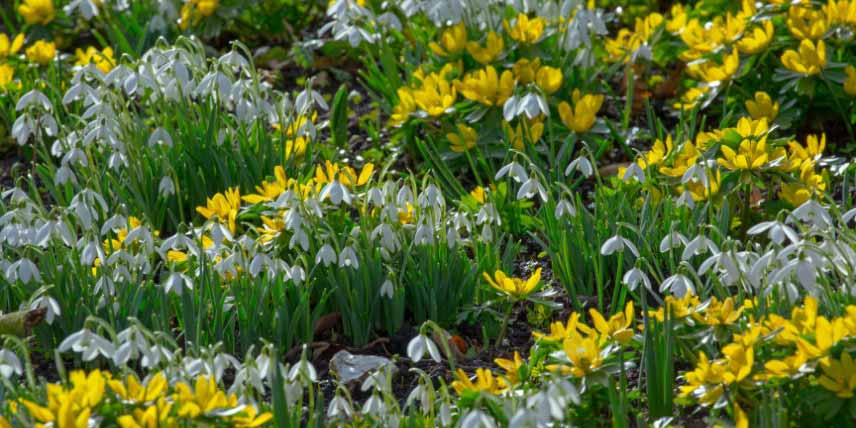
Snowdrops can naturalise and form extensive carpets. Here, in association with the winter aconite, Eranthis hyemalis
Why looking after snowdrops after flowering?
Post-flowering care of snowdrops is essential to ensure their vigour and flowering in coming years. Once the flowers have faded, the plant enters a phase of rebuilding its nutritional reserves. The foliage then plays a fundamental role: through photosynthesis, it supplies the bulb with energy, essential for preparing the flowering of the following year. Cutting or mowing the leaves too early would compromise this energy reserve, thereby weakening the plant and reducing future flowering. It is therefore imperative to leave the foliage in place until it dries naturally, even if it begins to wither.
What to do with snowdrops once flowering is finished?
Once the snowdrop flowering is finished, it is essential to support them gently to ensure their vigorous return the following year. Here are the essential steps for caring for your snowdrops:
- Do not cut the foliage too early: The foliage of snowdrops plays an essential role after flowering. The leaves continue to produce energy via photosynthesis, energy that will be stored in the bulb to support the flowering the following year. It is therefore important to let the foliage yellow naturally before cutting it. This can take several weeks, but this step is essential.
- Remove faded flowers: To prevent the plant from wasting energy unnecessarily in seed formation and to avoid self-seeding, it is advisable to remove faded flowers. This also helps maintain a neat and tidy appearance in your garden.
- Fertilisers and watering: In autumn, snowdrops will wake up by themselves, ready to restart their cycle. It is at that moment that you can resume regular watering and add some compost or fertiliser to encourage them. Only snowdrops grown in pots require regular watering. You can enrich the soil with an organic fertiliser. This helps the bulbs regenerate and to store nutrients for the next flowering.
- Once everything is in place, snowdrops do very well on their own! No need to dig them up for winter, unless you wish to divide the bulbs to multiply your plants (which is best done in spring or autumn, but not just before winter).
How to prepare snowdrops for summer dormancy?
These small, delicate flowers that brighten the end of winter disappear underground once spring arrives. Here’s how to care for them so they come back in good shape the following year:
Don’t overwater
Once leaves start to yellow, gradually reduce watering. Snowdrops do not like excess moisture during their summer dormancy. The grey mould, caused by excess water, could attack the bulbs. A well-drained soil keeps them vigorous and slows the spread of this fungus. However, if your soil is very dry, especially during a heatwave, a light watering may be beneficial.
Clean the soil
Once foliage is completely dry, you can cut it back gently. Also remove any plant debris around the bulbs to prevent disease and keep the soil clean. This step also helps to aerate the soil.
Mulching or not?
If your snowdrops are planted in the ground, there’s no need to mulch for summer. But if your plants are exposed to scorching sun, you can add a thin layer of mulch (dead leaves, bark…) to keep the soil cool and protect the bulbs from excessive heat.
Think about dividing the bulbs
Summer is an excellent time to divide the bulbs, especially if your snowdrop clumps become too dense or if their flowering has declined. Over time, snowdrops form denser clumps. Every three to five years, when the foliage yellows, it’s time to divide the large clumps to maintain good vigour. Here is how to proceed:
- Once leaves are completely withered, dig up the bulbs gently.
- Separate the daughter bulbs from the mother bulb.
- Replant them immediately in well-drained soil, at a depth of about 8–10 cm.
How to store snowdrop bulbs?
If you want to move or divide your snowdrops, here are the steps to follow:
- Transplanting after flowering: Snowdrops are ideally moved “in the green”, that is, just after flowering, when the foliage is still present. Carefully dig up snowdrop bulbs taking care not to damage the roots.
- Storage of bulbs: If you cannot replant them immediately, clean the bulbs and allow them to dry in a shaded and well-ventilated place. Once dry, store them in a paper bag or a crate filled with dry sand. Place them in a cool, dark and dry place until replanting in autumn.
- Replanting: In autumn, replant the bulbs at a depth of about 5 to 10 cm, with a spacing of 5 to 10 cm between each bulb. Make sure to choose well-drained soil to prevent the bulbs rotting.
Should snowdrops be pruned?
No, snowdrops should not be pruned after flowering. It is important to leave the foliage in place until it yellows and dries naturally. This foliage is essential, as it allows the bulb to replenish its nutrient stores so it can bloom well next year.
However, you can cut faded flowering stems (the flower stems) to prevent the plant from spending energy producing seeds. This light intervention focuses resources on the bulb without harming its health.
In summary:
- Yes, faded flowers can be cut.
- No, pruning the foliage before it is completely dry is not advised.
- Subscribe!
- Contents

Comments